Quick answer
A slab leak is a break in a water or drain line running under or inside a concrete foundation. Common signs are a water bill that jumps for no reason, a warm spot on the floor, the sound of running water with everything off, damp carpet or cupped flooring, and a meter that keeps turning. Confirm it with a meter test, then have the leak located.
Why so many Valley homes get slab leaks
Tract homes from the 1940s through the 1960s filled the Valley, from Reseda across to Panorama City. Many were poured on slabs with copper supply lines running through the concrete or the gravel bed beneath it, and some older ones used galvanized steel. After decades in the ground, those buried lines wear thin.
Copper under a slab fails in a few familiar ways. Pinholes open where hot water moves fast through a bend. Lines rub against rebar, gravel or rough concrete as they expand and shrink with every hot water draw, and the wall slowly wears through. Hard water and certain soils add corrosion from both sides.
The ground moves too. Parts of the Valley sit on expansive clay that swells when wet and shrinks when dry, and that seasonal movement stresses both the slab and the pipe inside it. Houses that were shaken hard in the 1994 Northridge earthquake can also carry hairline foundation cracks that add strain to buried lines.
Slab leak signs you can check yourself
Slab leaks rarely start with a puddle. More often you notice something small and odd, and those clues deserve attention because water under a slab keeps running day and night.
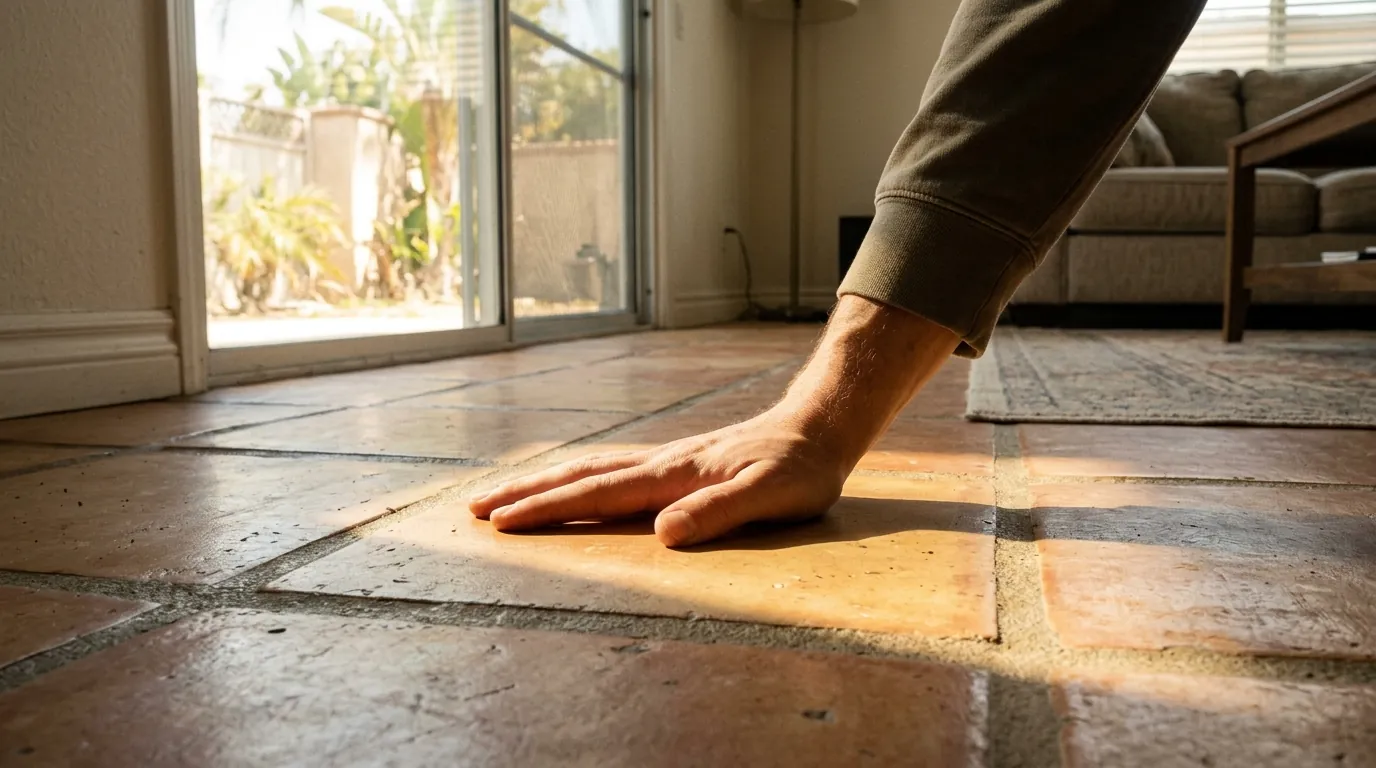
A warm patch is the classic sign of a hot water leak. Walk the floor barefoot in the morning before anyone showers. Pets often find warm spots first, so a cat that suddenly naps in the same spot on the kitchen tile is worth a second look.
Drain lines under a slab can leak too, and they give different clues. Instead of a high bill, you may smell sewer gas indoors, see slow drains that cleaning does not fix, or find damp spots near a bathroom that has no supply leak. A camera run through the drain shows a cracked or separated pipe under the floor.
- A water bill that climbs with no change in how you use water
- A warm or hot patch on tile or a bare floor
- The sound of running water when every fixture is off
- Damp or musty carpet, or wood flooring that cups or lifts
- New cracks in tile or grout that look darker at the edges
- A water heater that seems to run constantly
The meter test that confirms a slab leak
Shut off every faucet, the dishwasher, the washing machine and the irrigation controller, and make sure no toilet is refilling. Then find your water meter, usually in a concrete box near the curb, and watch the small leak indicator, a little triangle or dial that spins with even tiny flow.
If the indicator moves with everything off, water is going somewhere. Next, close the main shutoff at the house. If the meter stops, the leak is inside the house or under it. If it keeps moving, the leak is on the service line between the meter and the house, which calls for a different repair.
To narrow it further, reopen the main and close the cold inlet valve on top of the water heater. If the meter stops now, the leak is almost certainly on a hot line. Jot down what you saw at each step, because it shortens the visit when the plumber arrives.
How we pinpoint a leak under concrete
Once a leak is confirmed, the goal is to find it without breaking up more floor than necessary. On a leak location visit we isolate hot and cold, pressure test each side, then listen with acoustic ground microphones that pick up the hiss of water escaping under concrete. Thermal imaging helps trace a hot line across the floor.
With the spot found, we mark it on the floor and walk you through the options before anyone picks up a hammer. Good detection usually narrows the leak to a small patch of floor, which keeps any opening small as well.
Single story homes with a long hallway between the kitchen and the bathrooms are the hardest to read by ear, because the lines run a long way under tile and carpet. In those houses we may combine acoustic listening with a tracer gas test, which pushes a harmless gas into the drained line and detects where it comes up through the slab.
Repair options: spot repair, reroute or repipe
A spot repair means opening the slab right over the leak, replacing the damaged section and patching the concrete. It makes sense for a single pinhole in otherwise healthy pipe. The drawback is that flooring comes up at that spot, and copper that failed once tends to fail again close by.
A reroute abandons the line under the slab and runs a new one through the attic or walls, usually in PEX or copper. It avoids jackhammering, which is why it is common on single story Valley homes with a reachable attic. When several lines have aged out, repiping the house overhead solves the whole problem in one project.
Typical ranges, not a quote, in Los Angeles: leak location runs about $250 to $600, a direct repair through the slab $1,500 to $4,000 before flooring, and a single line reroute $1,500 to $4,500. Our page on fixing slab leaks covers each method in more depth.
Limiting the damage while you wait
If the meter test shows a leak and the floor is wet, close the main shutoff and open it only when you need water. If the leak is on the hot side, set the water heater to vacation or pilot and close its cold inlet, so the rest of the house still has cold water.
Pull up wet rugs, move furniture off damp carpet and run fans. Water sitting under laminate or carpet pad grows mold quickly in a warm house. Take photos of the meter, the floor and any damage before cleanup, since you will want a record later.
Call the line any hour if water is spreading or you cannot find the shutoff. A leak under a slab does not pause overnight, and after-hours plumbing calls are something we answer 24/7, including nights, weekends and holidays.