Sewer Camera Inspection
A waterproof camera run through your sewer lateral to show cracks, roots, bellies and offsets on video, with depth and location marked before any digging is planned.
See the detailsRepairs & emergencies
Emergency PlumbingLeak DetectionSlab Leak RepairBurst Pipe RepairToilet RepairFaucet RepairGarbage Disposal RepairShower Valve RepairPressure Regulator ReplacementOutdoor Spigot RepairDrains & sewer
Drain CleaningMain Line Clog ClearingHydro JettingSewer Camera InspectionSewer Line RepairTrenchless Sewer ReplacementSewer Cleanout InstallationStorm & Yard Drain CleaningWater heaters
Water Heater RepairWater Heater ReplacementTankless Water Heater InstallationTankless Water Heater ServiceHeat Pump Water Heater InstallationWater Heater Earthquake StrappingHot Water Recirculation PumpPipes, gas & water lines
Whole-House RepipingMain Water Line ReplacementShutoff Valve ReplacementGas Line RepairGas Line InstallationSeismic Gas Shutoff ValveBackflow TestingWater Softener InstallationWhole-House Water FiltrationFixtures, remodels & property
Toilet InstallationFaucet & Sink InstallationKitchen PlumbingBathroom Remodel PlumbingADU PlumbingPlumbing InspectionApartment Building PlumbingCommercial PlumbingGrease Trap ServiceCity of Los Angeles
Los AngelesResedaWinnetkaCanoga ParkWest HillsTarzanaChatsworthPorter RanchGranada HillsNorth HillsLake BalboaPanorama CityValley GlenSun ValleyPacoimaSylmarSunland-TujungaSan PedroWilmingtonMission HillsValley VillageHarbor CityLA and Ventura county cities
Santa ClaritaSan FernandoBurbankGlendalePasadenaCalabasasThousand OaksSimi ValleySanta MonicaInglewoodHawthorneTorranceCarsonLong BeachComptonMore LA County cities
DowneyNorwalkLakewoodEl MonteWest CovinaWhittierPomonaAlhambraArcadiaCovinaBeverly HillsCulver CityRedondo BeachBellflowerSouth GateOrange County and Inland Empire
AnaheimSanta AnaIrvineHuntington BeachOrangeFullertonGarden GroveCosta MesaRancho CucamongaOntarioCoronaCounties
Los Angeles CountyVentura CountyOrange CountySan Bernardino CountyRiverside CountyA general home inspection flags that the water heater is old and the pipes look original. It stops there. A plumbing inspection tells you what those pipes are, how they are holding up and what fixing them involves.
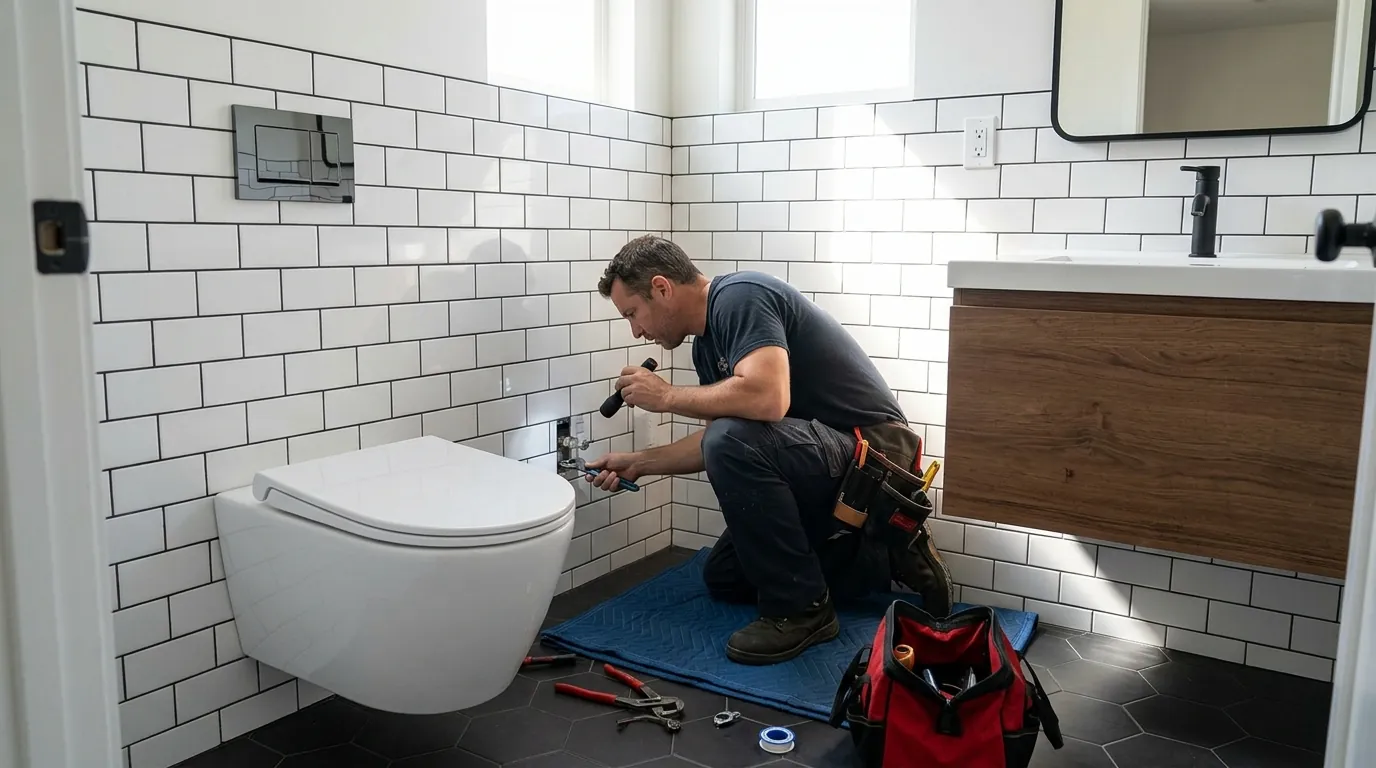
A plumbing inspection is a focused check of the whole system by a plumber: supply pipe material and pressure, drains and the sewer lateral, the water heater and its strapping, gas lines and shutoffs, fixtures and visible leaks. You need one before buying an older home, before a remodel, when selling, or when you have owned a house for years without anyone looking closely.
We start at the water meter and follow the system inward. That means the main shutoff, the pressure regulator, static water pressure, supply pipe material at every visible spot, and each fixture's angle stops. We run every faucet, flush every toilet and fill every tub to see how the drains keep up.
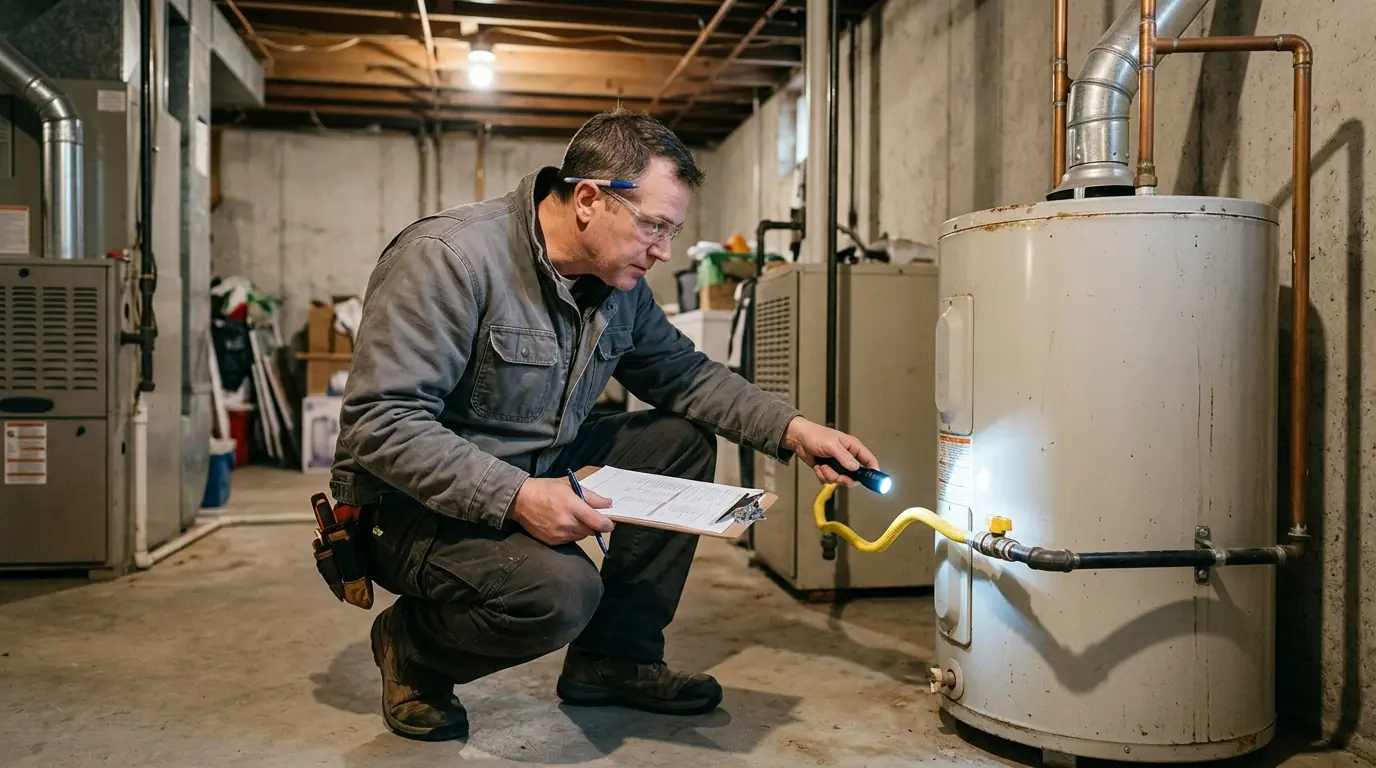
Then we look at the water heater: its age from the serial number, the venting, the relief valve and discharge pipe, the gas connector and the seismic straps. Loose or single straps are one of the most common findings, and proper two-strap bracing is a quick fix. We check the gas meter area, the visible gas piping, appliance connectors and whether a seismic gas shutoff valve is installed. Outside, we look at hose bibs, any backflow device and the sewer cleanout.
A home inspection rarely includes the sewer lateral, yet it is often the most expensive pipe on the property. In older Los Angeles neighborhoods many laterals are clay or cast iron, and mature street trees push roots through clay joints. A cracked or bellied line can cost far more than the water heater and fixtures combined.
We run a camera down the lateral from the cleanout and record the footage. You see the material, root intrusion, cracks, sags and offset joints, along with roughly where they sit. If the house has no usable cleanout, we tell you, since that changes how future clogs get handled. Our article on clay sewer pipe and roots explains what the footage usually shows.
Galvanized steel supply pipe was standard in older homes. It rusts from the inside, shrinking the opening, which shows up as low pressure and brown water after the water sits. Copper replaced it in many houses, and some homes have a mix, with copper repairs grafted onto old galvanized runs.
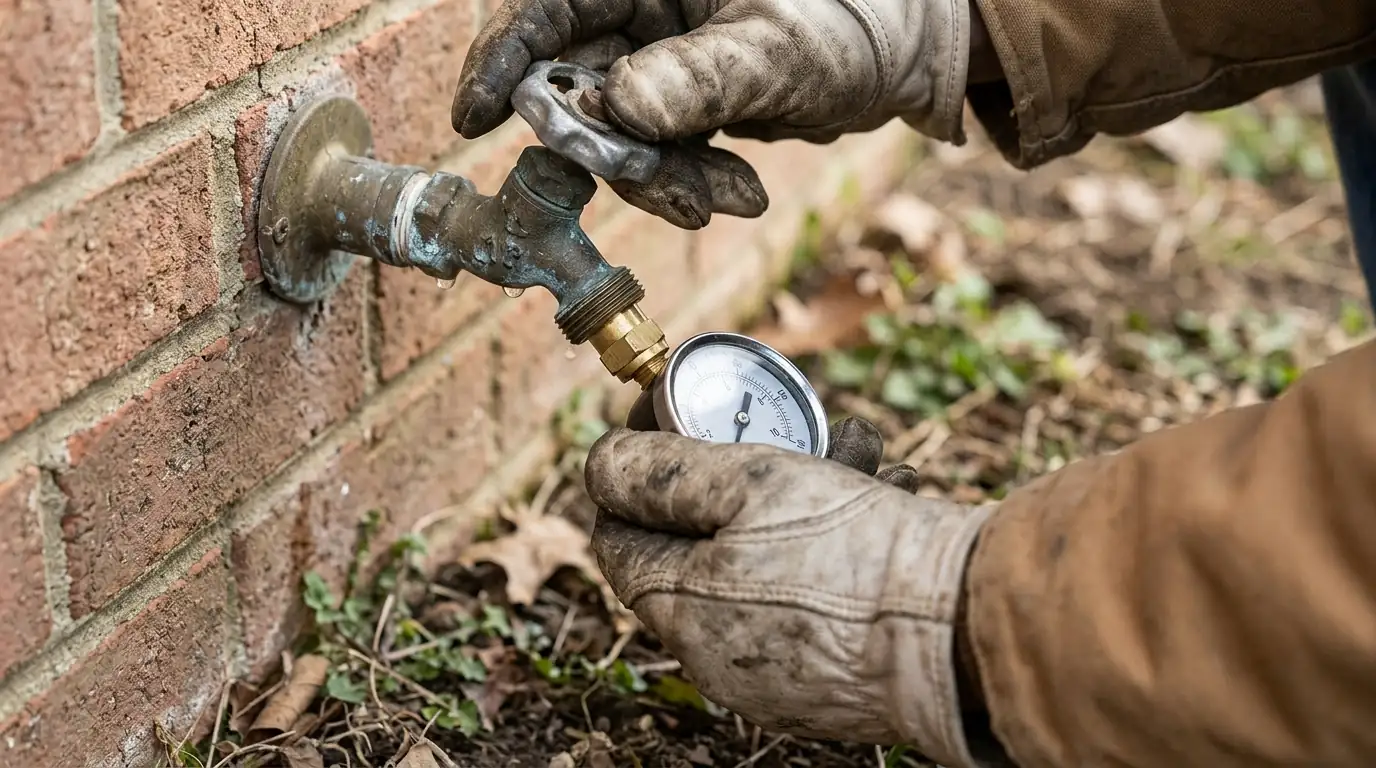
We note where each material is visible and test pressure with a gauge at a hose bib. Pressure that is too high stresses water heaters, valves and supply lines, and points to a failed regulator. Pressure that is low at fixtures but normal at the hose bib points to restricted pipe inside the house. For the decision that follows, our whole-house repiping page explains the options.
You get a written list of what we found, grouped by urgency: safety items such as gas leaks or missing water heater straps, items likely to fail soon, and items to plan for over the next few years. Each item says where it is and what fixing it involves.
We give typical cost ranges for the major findings so you can weigh them during escrow or budgeting. We do not pad the list. If the system is in good shape, the report says so, and that is a useful answer too when you are deciding how much to offer or how to plan a remodel budget. If you want the work done, call us and we schedule it, but nothing in the report requires that.
Across the San Fernando Valley, postwar slab homes often have copper or galvanized supply under the slab, which raises slab leak risk as the pipe ages. Older central and hillside homes more often show galvanized supply, cast iron drains and clay laterals that tree roots have entered. Hard imported water leaves scale in heaters, regulators and valves. California requires water heaters to be strapped in the upper and lower thirds of the tank, and we check that on every visit, since many straps from past decades no longer meet it or have loosened.
Warning signs
On the job
We ask the home's age, any known repairs and what you are worried about so we know where to spend extra time.
Meter, main shutoff, regulator, pressure, pipe material and every fixture stop are checked and noted.
Every fixture is run, and the water heater, its venting and straps are inspected.
Gas meter area, connectors, hose bibs, backflow device and cleanout are checked.
We run the camera from the cleanout and record the footage.
You get a plain list of findings by urgency, with typical cost ranges for the larger items.
Typical pricing
Price depends on house size, the number of bathrooms, and whether a sewer camera is added.
| Job | Typical LA range |
|---|---|
| Plumbing inspection of a single-family home | $200 to $450 |
| Plumbing inspection with sewer camera and recorded video | $375 to $750 |
| Duplex or small multi-unit property | $400 to $900 |
| Leak trace added for an unexplained water bill | $250 to $600 |
These are typical ranges, not a quote, and a missing cleanout, roof access to vents or extra units can change the price. See every job in our LA price guide.
Questions we hear
Yes. A home inspector covers the whole house briefly and often recommends a plumber for anything unclear. A plumbing inspection spends the whole visit on water, drains, the sewer line, the heater and gas, with pressure tests and an optional sewer camera that most home inspections do not include.
For houses built before the 1970s, yes. Clay and cast iron laterals are common, and roots, cracks and sags are hard to see any other way. The lateral is usually the costliest plumbing item a buyer inherits, so seeing it during escrow is worth the cost.
A typical single-family home takes one to two hours. Adding a sewer camera adds roughly half an hour to an hour depending on cleanout access and line length. Multi-unit properties take longer because each unit's fixtures and heaters are checked.
It can show signs of one, like a meter that moves with all fixtures off, warm spots on the floor or a running sound. Pinpointing the exact spot takes acoustic and thermal leak tracing, which we can do on the same visit or schedule separately.
Coverage
These are the communities that call us for this most often, with their main ZIP codes. The same 24/7 line covers every one of our 68 service areas.
Often booked together
A waterproof camera run through your sewer lateral to show cracks, roots, bellies and offsets on video, with depth and location marked before any digging is planned.
See the detailsHidden supply, slab and drain leaks pinpointed with meter checks, pressure isolation, acoustic listening and thermal imaging, so repairs start with one small opening.
See the detailsWhole-house repiping for Los Angeles homes with corroded galvanized or pinholing copper, using copper or PEX routed through attics and walls instead of the slab.
See the detailsTwo-strap seismic bracing for tank water heaters in Los Angeles, anchored into framing or masonry, with flexible connectors and a gas shutoff check.
See the detailsCall the line any hour. A plumber answers, asks what you are seeing and tells you what happens next.