Main Line Clog Clearing
Main sewer line clearing from the cleanout with heavy cable machines and root cutters, for backups that hit the lowest drains in the house at the same time.
See the detailsRepairs & emergencies
Emergency PlumbingLeak DetectionSlab Leak RepairBurst Pipe RepairToilet RepairFaucet RepairGarbage Disposal RepairShower Valve RepairPressure Regulator ReplacementOutdoor Spigot RepairDrains & sewer
Drain CleaningMain Line Clog ClearingHydro JettingSewer Camera InspectionSewer Line RepairTrenchless Sewer ReplacementSewer Cleanout InstallationStorm & Yard Drain CleaningWater heaters
Water Heater RepairWater Heater ReplacementTankless Water Heater InstallationTankless Water Heater ServiceHeat Pump Water Heater InstallationWater Heater Earthquake StrappingHot Water Recirculation PumpPipes, gas & water lines
Whole-House RepipingMain Water Line ReplacementShutoff Valve ReplacementGas Line RepairGas Line InstallationSeismic Gas Shutoff ValveBackflow TestingWater Softener InstallationWhole-House Water FiltrationFixtures, remodels & property
Toilet InstallationFaucet & Sink InstallationKitchen PlumbingBathroom Remodel PlumbingADU PlumbingPlumbing InspectionApartment Building PlumbingCommercial PlumbingGrease Trap ServiceCity of Los Angeles
Los AngelesResedaWinnetkaCanoga ParkWest HillsTarzanaChatsworthPorter RanchGranada HillsNorth HillsLake BalboaPanorama CityValley GlenSun ValleyPacoimaSylmarSunland-TujungaSan PedroWilmingtonMission HillsValley VillageHarbor CityLA and Ventura county cities
Santa ClaritaSan FernandoBurbankGlendalePasadenaCalabasasThousand OaksSimi ValleySanta MonicaInglewoodHawthorneTorranceCarsonLong BeachComptonMore LA County cities
DowneyNorwalkLakewoodEl MonteWest CovinaWhittierPomonaAlhambraArcadiaCovinaBeverly HillsCulver CityRedondo BeachBellflowerSouth GateOrange County and Inland Empire
AnaheimSanta AnaIrvineHuntington BeachOrangeFullertonGarden GroveCosta MesaRancho CucamongaOntarioCoronaCounties
Los Angeles CountyVentura CountyOrange CountySan Bernardino CountyRiverside CountyIf every main line clog means pulling a toilet or sending a cable down a roof vent, your house probably has no usable cleanout. Adding one at the foundation makes every future cleaning faster, cleaner and cheaper.
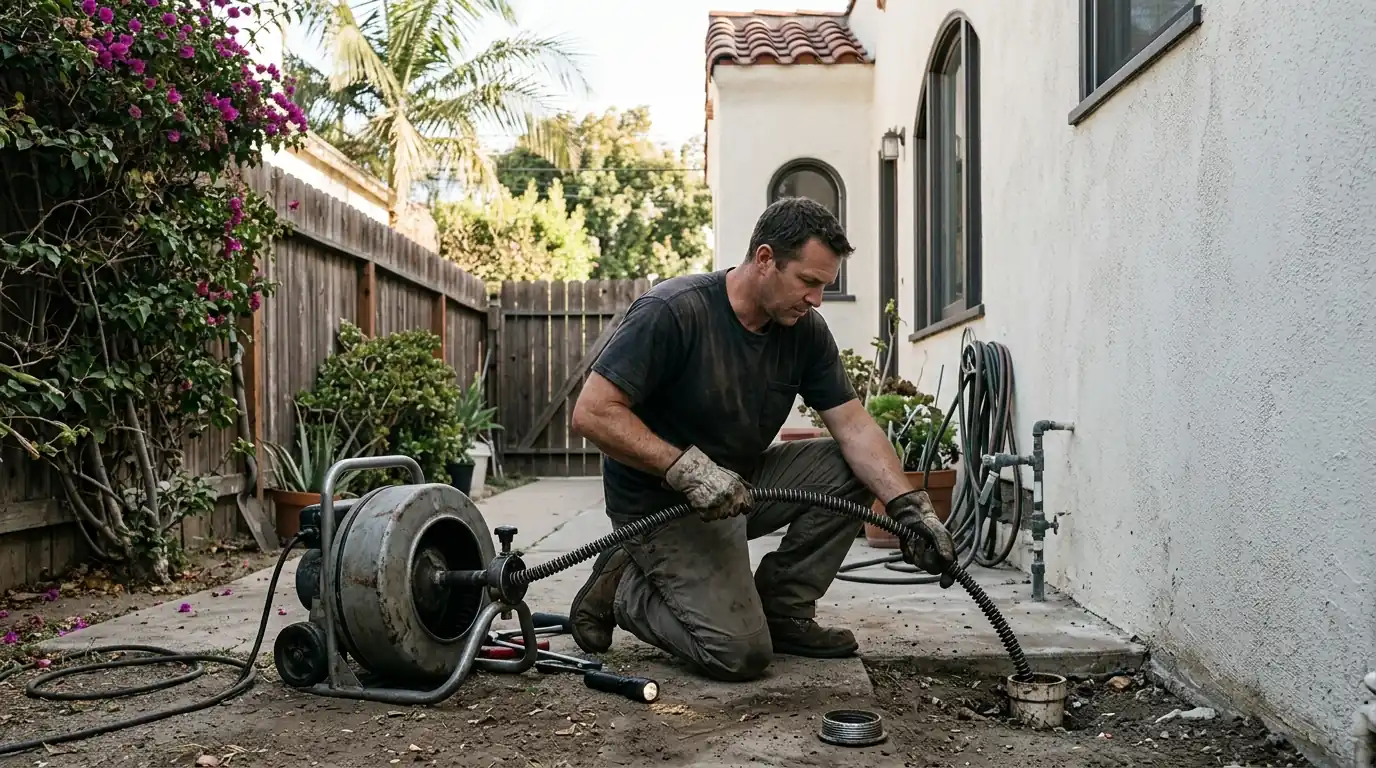
A sewer cleanout is a capped fitting on your main sewer line, usually just outside the foundation, that gives direct access to the pipe. Installation means exposing the line, cutting in a wye or two-way fitting and bringing a riser to grade with a cap. You need one if your house has none, if it is buried or broken, or if it sits inside.
A one-way cleanout points downstream, toward the street. It lets a plumber send a cable or jetter out to the city main, which covers most clogs. The limitation shows up when the blockage sits between the cleanout and the house, or when the camera needs to look back under the slab.
A two-way cleanout has two openings, one aimed toward the street and one aimed back toward the house. It costs a little more because the fitting is larger and needs a wider hole, but it gives full access in both directions. On most Los Angeles homes we recommend the two-way version, especially where the line under the house is old cast iron.
Some properties benefit from a second cleanout near the property line as well. That second point helps on long laterals, on lots where the line changes direction and on duplexes where two buildings share one lateral.
The best spot is within a few feet of the foundation, on the side where the sewer exits, and on a straight run rather than at a bend. We locate the line first, usually by sending a camera with a transmitter from inside so the path and depth are marked on the ground.
The riser should come up where it will stay accessible. That means out of a planter bed that will get mulched over, clear of the driveway apron where a car parks on it, and away from a spot that collects runoff. A cleanout that floods every time it rains lets stormwater into the sewer and can cause backups.
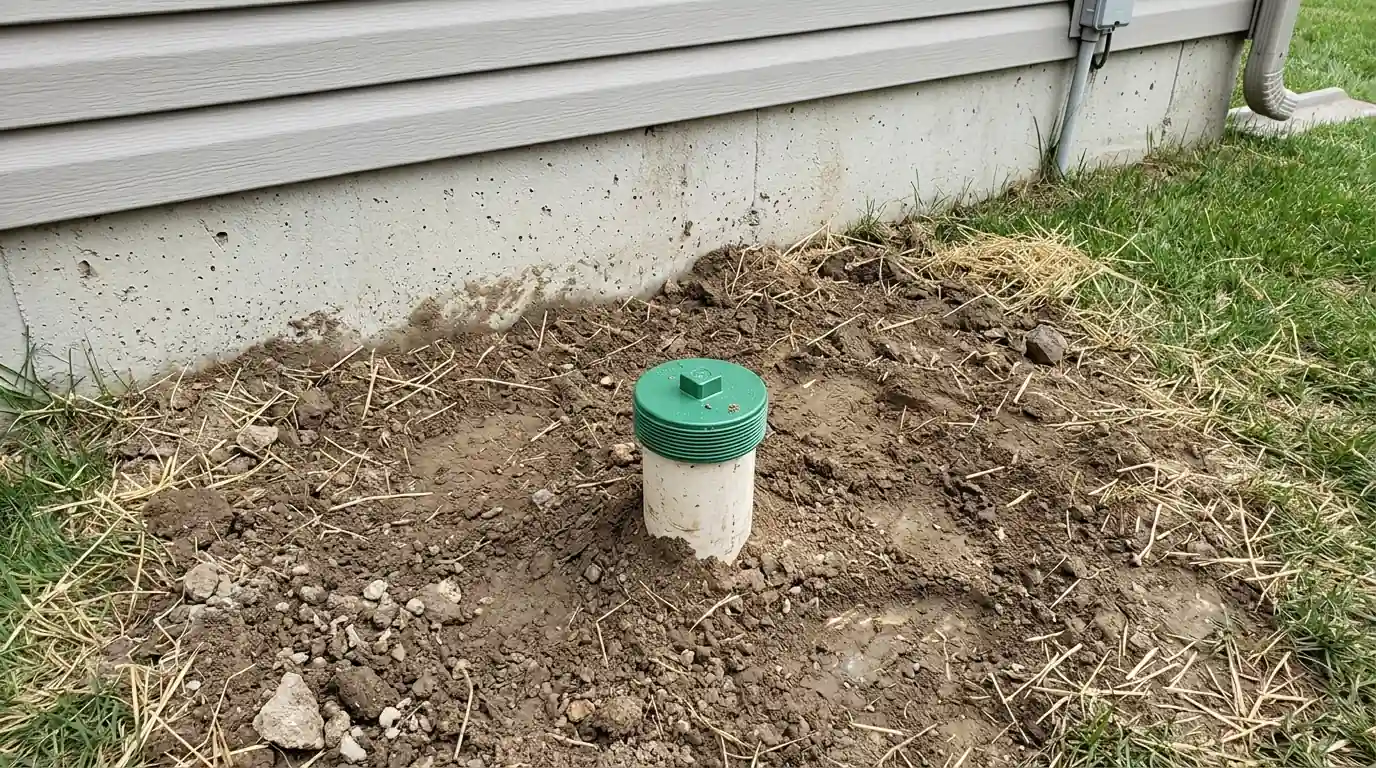
The cheapest time to add a cleanout is when the pipe is already exposed. If you are scheduling a repair on the lateral or a full replacement, the dig at the foundation is already happening, so the extra fitting adds only a modest cost.
Cleanouts also turn a later inspection into a simple visit. A home buyer's inspector, an insurance adjuster or a plumber checking for roots can drop a camera in without disturbing the house. That access matters on older homes where root intrusion in clay pipe is likely to need attention again.
Keep the cap visible and loose enough to turn by hand with a wrench. Plastic caps can crack if a lawn mower or string trimmer hits them, so a small concrete or plastic box around the riser protects it in a lawn.
Do not pour anything into the cleanout to fix a slow drain, and never leave the cap off. An open cleanout lets sewer gas escape near the house and gives rats a direct route into the line. If you ever see water standing in the riser when you open it, the line is blocked downstream and needs a main line clearing before anything else drains into it.
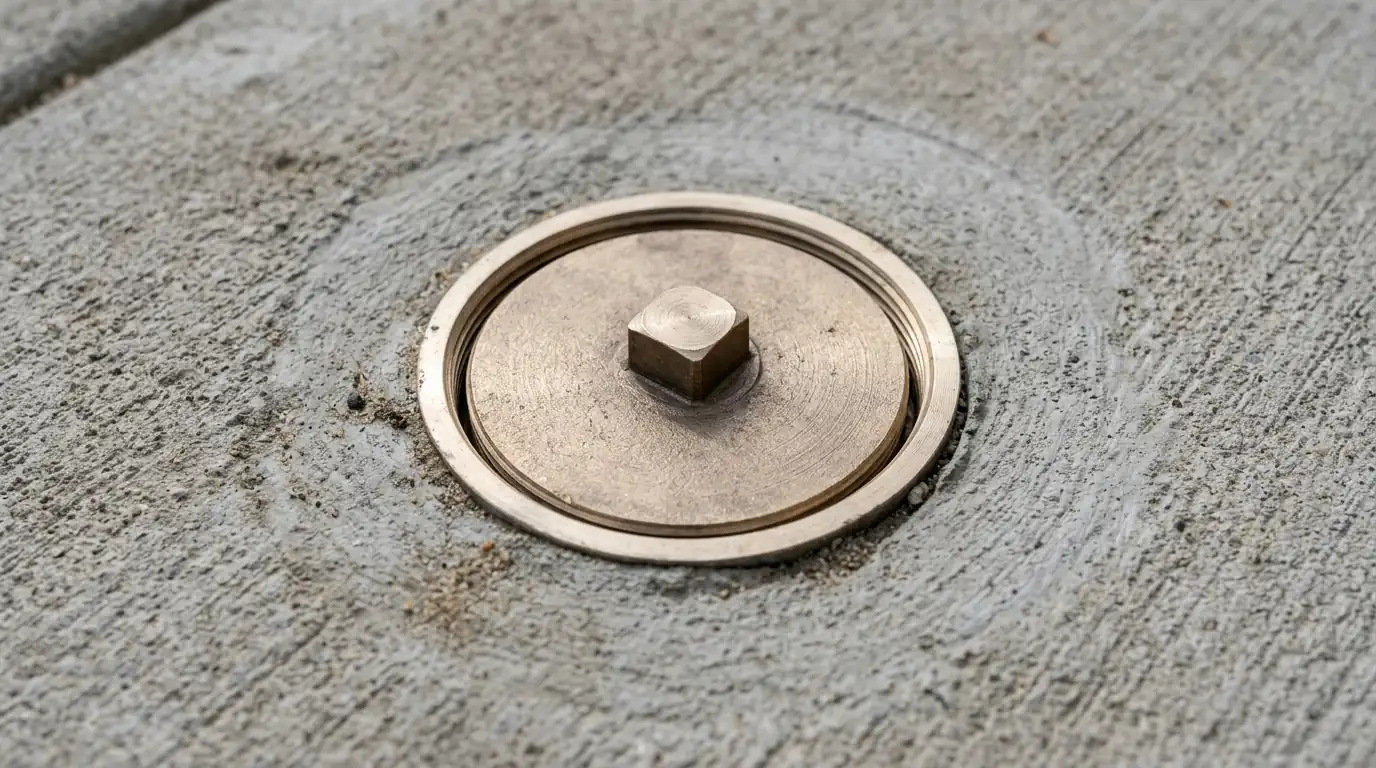
Plenty of houses built in Los Angeles before the 1960s went up with no exterior cleanout, or with one inside a crawlspace or laundry room. Decades of patios, driveway widening and room additions have buried many of the outdoor ones that did exist. In Valley neighborhoods such as Panorama City and North Hills, slab-built tract homes often need the cleanout added at the foundation edge. City of Los Angeles cleanout work is permitted through LADBS. Other cities, including Burbank, Glendale and Long Beach, have their own building departments with their own inspection steps.
Warning signs
On the job
We send a camera or locator through the drain from inside the house to find the sewer's exit point and depth near the foundation.
We dig by hand at the marked spot, working carefully around irrigation, gas and electrical lines that may share the area.
A section of old pipe is removed and a one-way or two-way cleanout fitting is set in with shielded couplings matched to clay, cast iron or ABS.
PVC or ABS risers carry the access up to the surface, finished with threaded caps sized for standard cleaning equipment.
We run water and camera the new fitting, then backfill, compact and finish the surface around the cap.
Typical pricing
Line depth, the old pipe material, and whether the riser comes up through soil or concrete shape the cost. Permits are required for this work in most cities.
| Job | Typical LA range |
|---|---|
| One-way cleanout, shallow line in soil | $700 to $1,500 |
| Two-way cleanout at the foundation | $1,200 to $2,800 |
| Cleanout through concrete or at depth | $2,000 to $4,000 |
| Cleanout added during a sewer repair | $350 to $900 |
These are typical ranges, not a quote; depth, concrete removal, nearby utilities and the condition of the old pipe change the price. See every job in our LA price guide.
Questions we hear
Walk the side of the house where the bathrooms are and look near the foundation for a capped pipe, usually three or four inches across, sometimes with a square nut on top. Check under shrubs, mulch and garden boxes. If nothing turns up, look for an interior cap in a laundry area or crawlspace. We can locate the line with a camera if you cannot find any access.
Yes, adding a cleanout changes the building sewer, so it needs a plumbing permit in the City of Los Angeles through LADBS and in most other cities through their building departments. The inspector checks the fitting, the materials and the backfill. We handle the permit and arrange the inspection as part of the job.
Almost always. The line has to leave the slab somewhere on its way to the street, so we install the cleanout just outside the foundation where the pipe exits. That spot gives access both out toward the street and, with a two-way fitting, back under the house for a camera.
Most installations take three to six hours once the line is located. Deep lines, rocky soil or concrete over the pipe can stretch that to a full day. The water stays on the whole time, but you should avoid draining sinks, tubs or toilets for the hour or two when the pipe is open.
Coverage
These are the communities that call us for this most often, with their main ZIP codes. The same 24/7 line covers every one of our 68 service areas.
Often booked together
Main sewer line clearing from the cleanout with heavy cable machines and root cutters, for backups that hit the lowest drains in the house at the same time.
See the detailsA waterproof camera run through your sewer lateral to show cracks, roots, bellies and offsets on video, with depth and location marked before any digging is planned.
See the detailsKitchen, bathroom, laundry and floor drain clearing with sized cables and cutters, plus a clear explanation of what caused the clog and how to avoid the next one.
See the detailsBroken, bellied or root-choked sewer laterals repaired by spot excavation or sectional liner, after a camera shows exactly where the failure sits.
See the detailsCall the line any hour. A plumber answers, asks what you are seeing and tells you what happens next.