Slab Leak Repair
Leaks in copper lines beneath concrete floors fixed by spot repair, attic or wall reroute, or a full repipe, chosen for your house and slab.
See the detailsRepairs & emergencies
Emergency PlumbingLeak DetectionSlab Leak RepairBurst Pipe RepairToilet RepairFaucet RepairGarbage Disposal RepairShower Valve RepairPressure Regulator ReplacementOutdoor Spigot RepairDrains & sewer
Drain CleaningMain Line Clog ClearingHydro JettingSewer Camera InspectionSewer Line RepairTrenchless Sewer ReplacementSewer Cleanout InstallationStorm & Yard Drain CleaningWater heaters
Water Heater RepairWater Heater ReplacementTankless Water Heater InstallationTankless Water Heater ServiceHeat Pump Water Heater InstallationWater Heater Earthquake StrappingHot Water Recirculation PumpPipes, gas & water lines
Whole-House RepipingMain Water Line ReplacementShutoff Valve ReplacementGas Line RepairGas Line InstallationSeismic Gas Shutoff ValveBackflow TestingWater Softener InstallationWhole-House Water FiltrationFixtures, remodels & property
Toilet InstallationFaucet & Sink InstallationKitchen PlumbingBathroom Remodel PlumbingADU PlumbingPlumbing InspectionApartment Building PlumbingCommercial PlumbingGrease Trap ServiceCity of Los Angeles
Los AngelesResedaWinnetkaCanoga ParkWest HillsTarzanaChatsworthPorter RanchGranada HillsNorth HillsLake BalboaPanorama CityValley GlenSun ValleyPacoimaSylmarSunland-TujungaSan PedroWilmingtonMission HillsValley VillageHarbor CityLA and Ventura county cities
Santa ClaritaSan FernandoBurbankGlendalePasadenaCalabasasThousand OaksSimi ValleySanta MonicaInglewoodHawthorneTorranceCarsonLong BeachComptonMore LA County cities
DowneyNorwalkLakewoodEl MonteWest CovinaWhittierPomonaAlhambraArcadiaCovinaBeverly HillsCulver CityRedondo BeachBellflowerSouth GateOrange County and Inland Empire
AnaheimSanta AnaIrvineHuntington BeachOrangeFullertonGarden GroveCosta MesaRancho CucamongaOntarioCoronaCounties
Los Angeles CountyVentura CountyOrange CountySan Bernardino CountyRiverside CountyYour water runs brown after a vacation, pressure has faded at every tap, or you have patched a third pinhole leak this year. Those are signs the supply pipes are wearing out, and replacing them all at once ends the cycle.
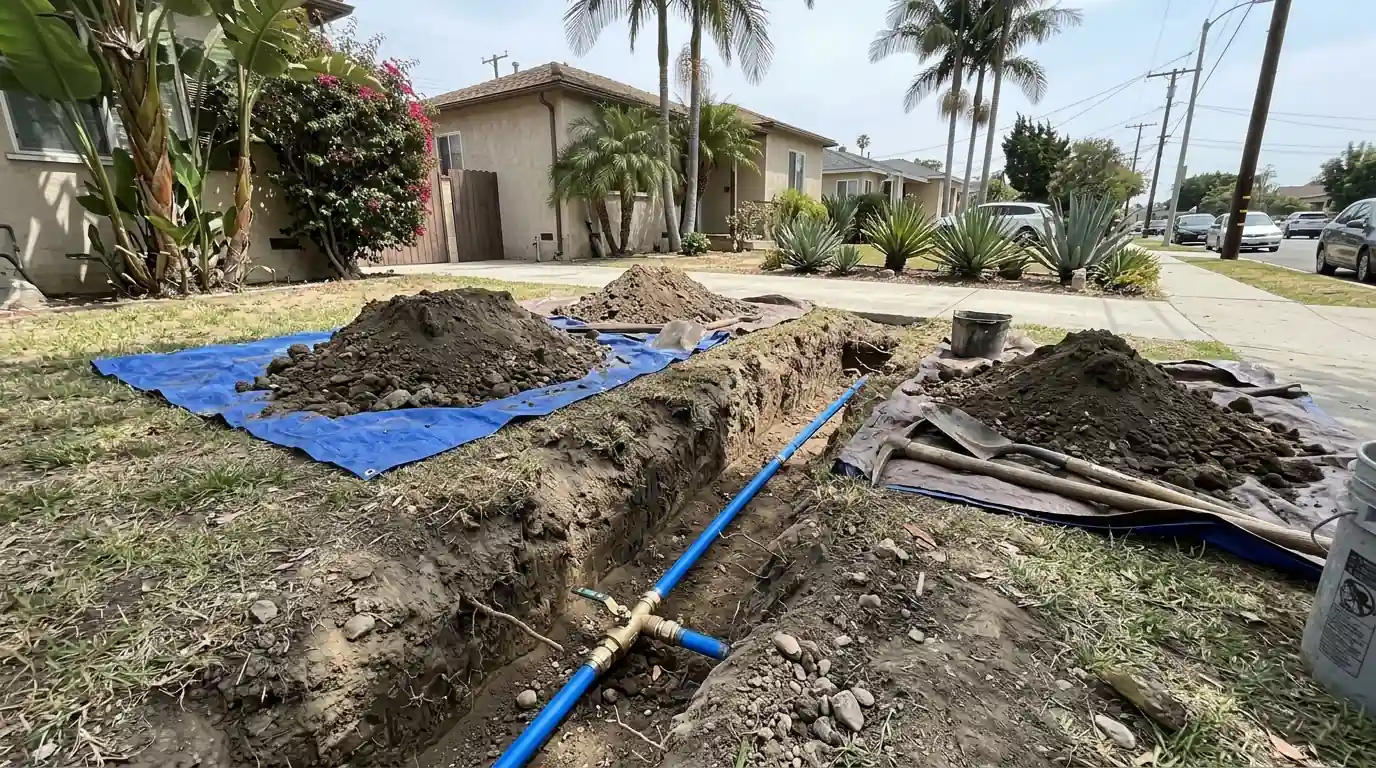
Repiping replaces every hot and cold supply line in the house, from the main shutoff to each fixture, with new copper or PEX. In slab homes we usually reroute through the attic and walls instead of breaking the floor. Most houses are repiped in a few days, with water restored each evening. It makes sense when leaks keep recurring or galvanized pipe has closed up inside.
Type L copper has decades of track record, holds up to heat and does not mind sunlight in an exposed run. It costs more in material and labor, and in very hard or aggressive water it can still pinhole eventually. Some homeowners simply prefer it, and we install it cleanly with soldered or press fittings.
PEX is a flexible plastic tubing that bends around framing, so we need fewer fittings and smaller openings in walls. It resists scale and freezing, installs faster, and generally costs less. It must be kept out of direct sunlight and away from heat sources, and it needs proper support so lines do not sag in the attic.
Either pipe beats corroded galvanized by a wide margin. We walk you through the tradeoffs for your house rather than pushing one material, and our article on patching versus repiping covers the decision in more detail.
Many San Fernando Valley houses from the 1940s through the 1960s sit on concrete slabs with supply lines buried beneath. When those lines fail, breaking up floors to replace them in place is slow, dusty and destroys finished flooring. We abandon the buried lines and run new pipe through the attic, dropping down inside walls to each fixture.
Attic runs get insulated to protect against heat in summer and to hold hot water temperature. Where a fixture sits in an exterior wall with no attic above, we may come through a cabinet back or a closet instead. If you are dealing with an active leak right now, our slab leak repair service can stop the immediate problem while you plan the repipe.
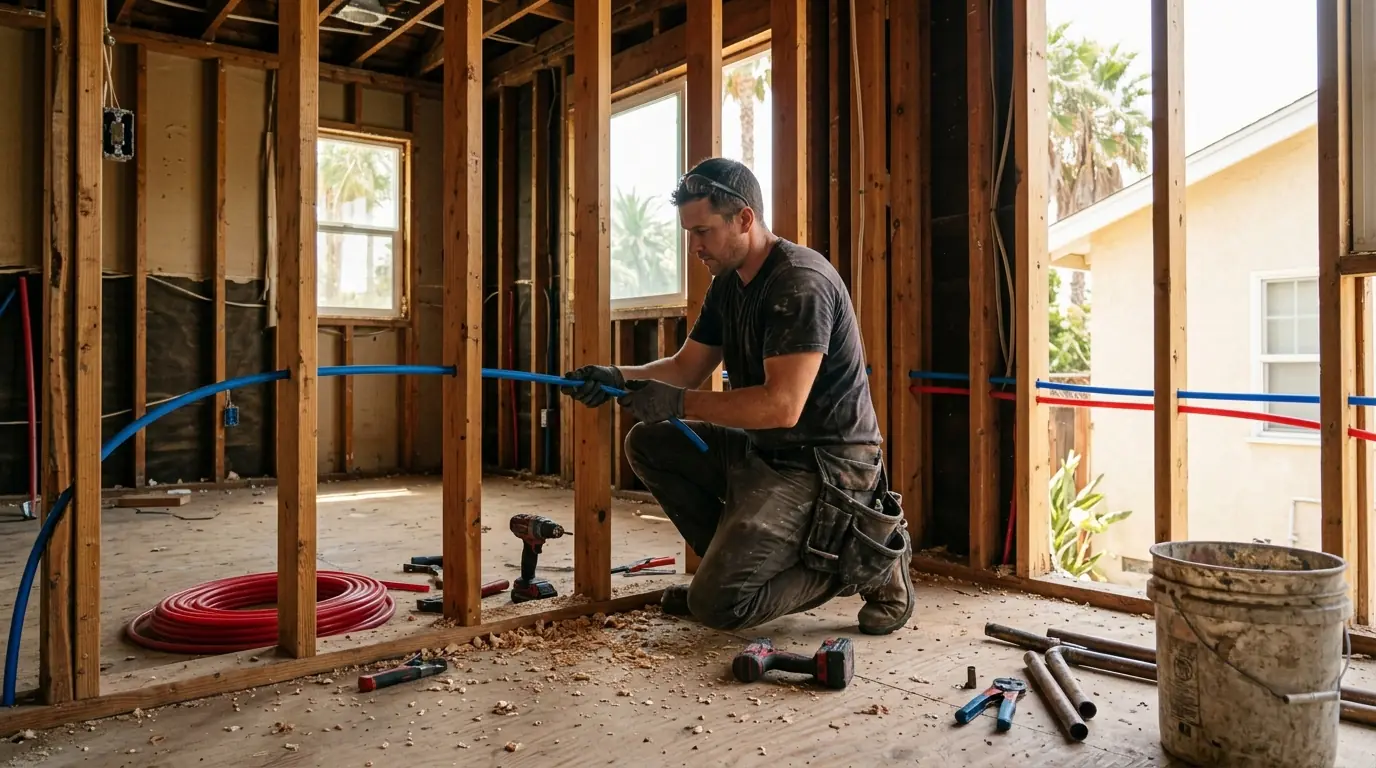
We cover floors and furniture, then cut neat access openings at planned spots, usually small squares behind fixtures and along hallway walls. New lines go in run by run while the old system stays connected, so you keep water most of the day. Each evening we restore service before leaving.
Once the new pipe is in and pressure tested, we switch each fixture over, cap the old lines and remove what is reachable. The final step is a building department inspection and then patching the wall openings so they are ready for paint.
Most single-family homes take two to five working days, depending on size, bathroom count and how much wall is accessible from the attic.
Not every house needs a full repipe. If one branch, such as the kitchen and laundry run, has failed while the rest is newer copper, a partial repipe can be the right call. We test and inspect the rest of the system first, then tell you plainly whether a partial job will last.
A repipe is also the cheapest moment to replace fixture stops, the main shutoff and the pressure regulator, since the water is already off and the lines are exposed. Our shutoff valve work and regulator replacement fold into a repipe easily. If the line from the meter is also galvanized, we often recommend replacing it during the same project.
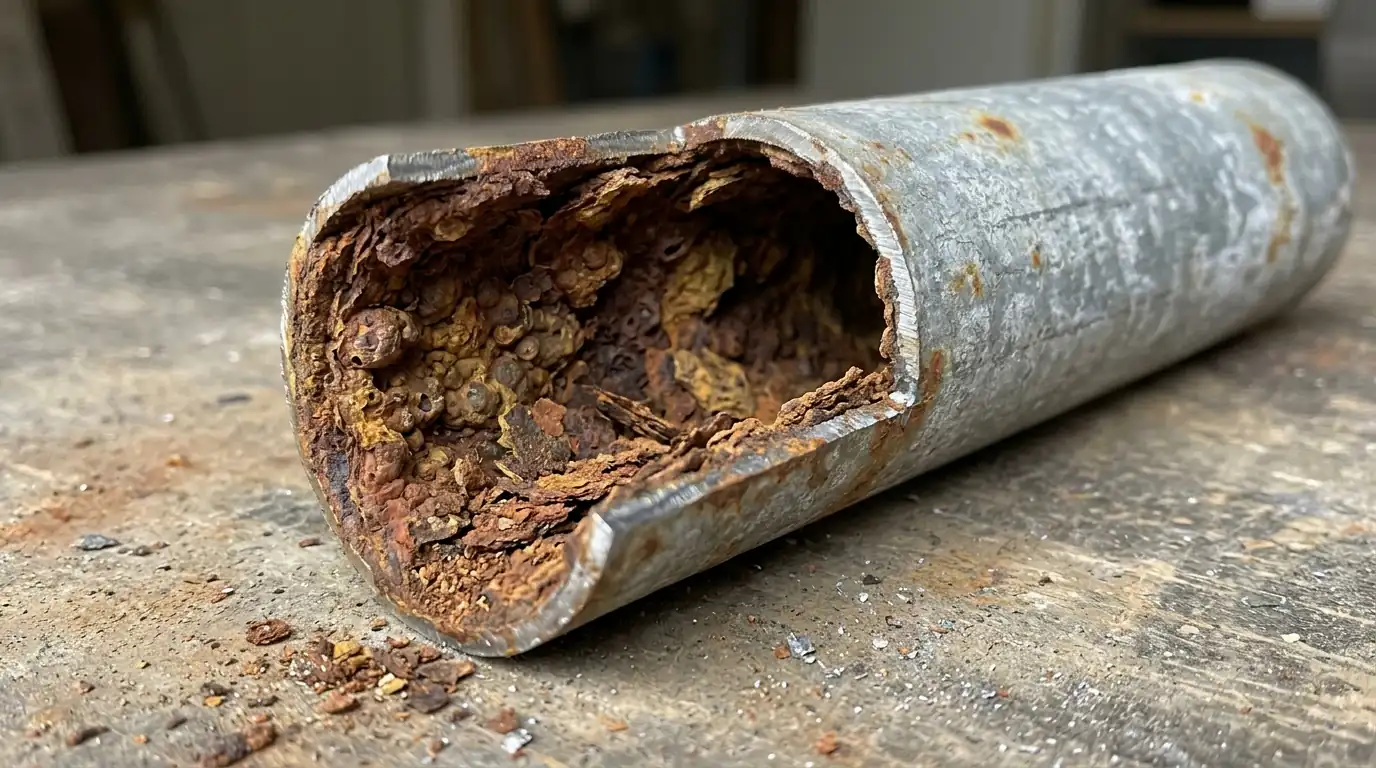
Warning signs
Typical pricing
Size, number of bathrooms, pipe material, attic access and how much wall must be opened drive the price more than anything else.
| Job | Typical LA range |
|---|---|
| Two-bedroom, one-bath home repiped in PEX | $5,500 to $9,000 |
| Three-bedroom, two-bath home repiped in PEX | $8,000 to $14,000 |
| Three-bedroom, two-bath home repiped in copper | $11,000 to $19,000 |
| Partial repipe of one branch | $1,800 to $4,500 |
These are typical ranges, not a quote; two-story homes, limited attic access, plaster walls, permit fees and patching scope can move the final price. See every job in our LA price guide.
On the job
We check pipe material at several points, measure pressure, and look at the attic and walls to plan routes.
You get a written plan showing pipe type, route, the number of wall openings and the expected schedule.
LADBS handles permits in the City of Los Angeles, and other cities use their own building departments.
We install the new hot and cold lines fixture by fixture while keeping water available each evening.
The new system is pressure tested, switched over and inspected by the building department.
We close the openings with drywall patches and leave the house clean and ready for paint.
Older LA houses often still carry galvanized steel supply lines, especially prewar bungalows and early postwar tract homes. Valley slab homes in neighborhoods like Panorama City and Van Nuys add the challenge of buried lines that are best abandoned. Lath-and-plaster walls in older homes need more careful cutting and patching than drywall. Hard water from LADWP and nearby suppliers speeds scale and corrosion in metal pipe, which is one reason PEX has become popular here. Expansive clay soils that shift slabs also stress buried lines, which makes overhead routing the more durable choice.
Questions we hear
Most single-family homes take two to five working days, plus a day or so for inspection timing and wall patching. A small one-bath bungalow can finish quickly, while a two-story house with three or more bathrooms takes longer. You have running water each evening throughout the job.
Yes, PEX is an accepted supply pipe material in California and is widely used for repipes in Los Angeles. It must be installed to the manufacturer's instructions, supported properly, and kept out of direct sunlight. The repipe still needs a permit and inspection through LADBS or your city's building department.
In almost every case, yes. We leave the old lines under the slab, cap them, and run new pipe through the attic and down inside walls. This avoids jackhammering, flooring damage and moving furniture out. It is the standard approach for slab homes in the Valley and across LA.
If you have had one isolated leak in otherwise sound copper, repair it. If leaks keep showing up on different runs, the water is rusty, or the house still has galvanized pipe, a repipe usually costs less over time than repeated leak hunts, repairs and water damage cleanup.
Yes. We patch every opening we make with drywall, tape and texture so the walls are ready for paint. Plaster walls get a matching patch method. Painting is usually left to you or your painter so you can choose the exact finish and color match.
Coverage
These are the communities that call us for this most often, with their main ZIP codes. The same 24/7 line covers every one of our 68 service areas.
Often booked together
Leaks in copper lines beneath concrete floors fixed by spot repair, attic or wall reroute, or a full repipe, chosen for your house and slab.
See the detailsReplacement of the private water service line between the meter and your house, in copper or approved plastic, by trenching or trenchless pull methods.
See the detailsReplacement of seized or leaking main shutoffs and fixture stop valves, swapping old gate and multi-turn valves for quarter-turn ball valves.
See the detailsHidden supply, slab and drain leaks pinpointed with meter checks, pressure isolation, acoustic listening and thermal imaging, so repairs start with one small opening.
See the detailsCall the line any hour. A plumber answers, asks what you are seeing and tells you what happens next.