Sewer Camera Inspection
A waterproof camera run through your sewer lateral to show cracks, roots, bellies and offsets on video, with depth and location marked before any digging is planned.
See the detailsRepairs & emergencies
Emergency PlumbingLeak DetectionSlab Leak RepairBurst Pipe RepairToilet RepairFaucet RepairGarbage Disposal RepairShower Valve RepairPressure Regulator ReplacementOutdoor Spigot RepairDrains & sewer
Drain CleaningMain Line Clog ClearingHydro JettingSewer Camera InspectionSewer Line RepairTrenchless Sewer ReplacementSewer Cleanout InstallationStorm & Yard Drain CleaningWater heaters
Water Heater RepairWater Heater ReplacementTankless Water Heater InstallationTankless Water Heater ServiceHeat Pump Water Heater InstallationWater Heater Earthquake StrappingHot Water Recirculation PumpPipes, gas & water lines
Whole-House RepipingMain Water Line ReplacementShutoff Valve ReplacementGas Line RepairGas Line InstallationSeismic Gas Shutoff ValveBackflow TestingWater Softener InstallationWhole-House Water FiltrationFixtures, remodels & property
Toilet InstallationFaucet & Sink InstallationKitchen PlumbingBathroom Remodel PlumbingADU PlumbingPlumbing InspectionApartment Building PlumbingCommercial PlumbingGrease Trap ServiceCity of Los Angeles
Los AngelesResedaWinnetkaCanoga ParkWest HillsTarzanaChatsworthPorter RanchGranada HillsNorth HillsLake BalboaPanorama CityValley GlenSun ValleyPacoimaSylmarSunland-TujungaSan PedroWilmingtonMission HillsValley VillageHarbor CityLA and Ventura county cities
Santa ClaritaSan FernandoBurbankGlendalePasadenaCalabasasThousand OaksSimi ValleySanta MonicaInglewoodHawthorneTorranceCarsonLong BeachComptonMore LA County cities
DowneyNorwalkLakewoodEl MonteWest CovinaWhittierPomonaAlhambraArcadiaCovinaBeverly HillsCulver CityRedondo BeachBellflowerSouth GateOrange County and Inland Empire
AnaheimSanta AnaIrvineHuntington BeachOrangeFullertonGarden GroveCosta MesaRancho CucamongaOntarioCoronaCounties
Los Angeles CountyVentura CountyOrange CountySan Bernardino CountyRiverside CountyWhen the toilet bubbles as the washer drains, or sewage rises into the shower after a flush, the blockage is in your main sewer line. We clear it from the cleanout, roots and all, and we answer around the clock.
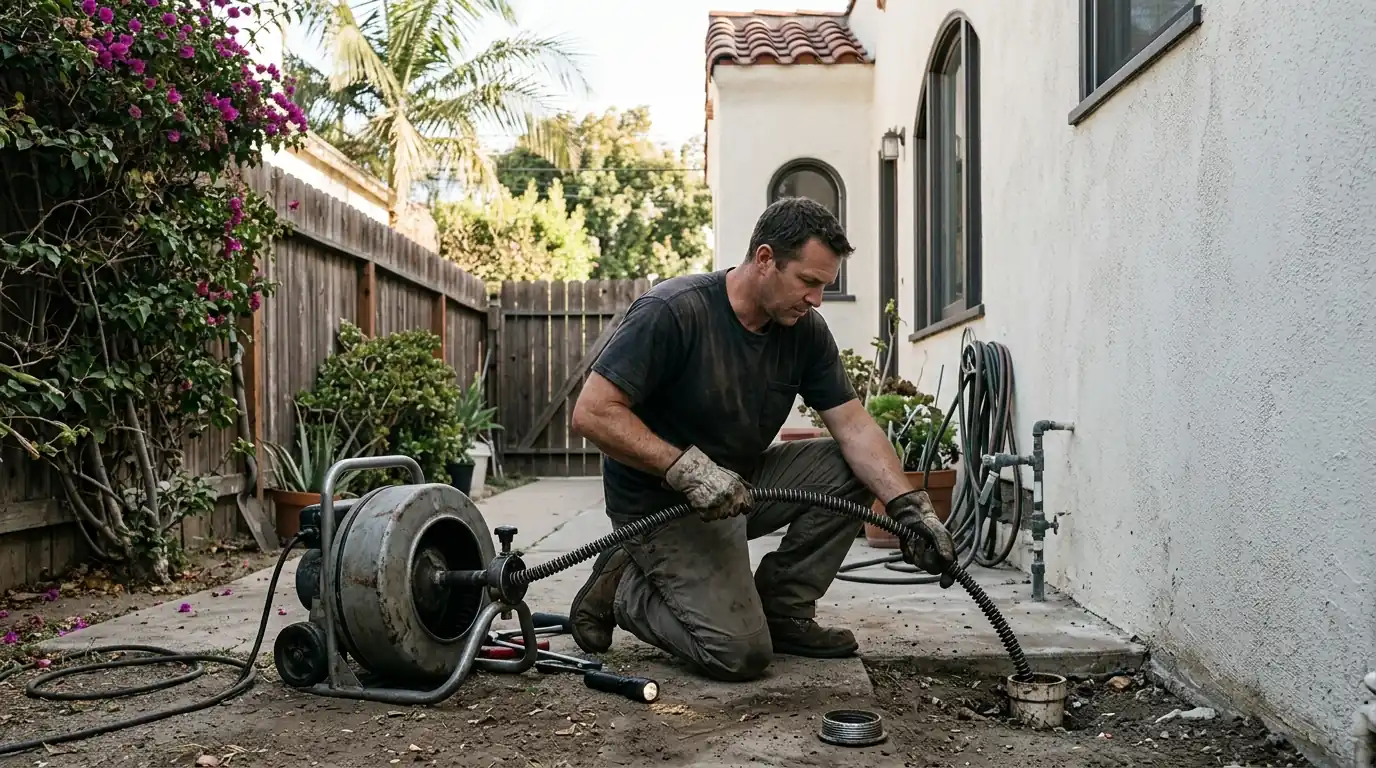
Main line clog clearing opens the sewer pipe that carries all of a house's wastewater to the city sewer. We access it from an outside cleanout, run a heavy-duty cable with a cutter sized to the pipe, and pull out roots, grease or debris. You need it when several fixtures back up together, especially toilets, tubs and floor drains on the lowest level.
Warning signs
Tree roots are the leading cause under older LA houses. Clay sewer pipe has joints every few feet, and fine roots from ficus, sycamore, eucalyptus and other mature trees find those joints, grow in, and build a mat that catches paper and waste. The clog clears, the roots regrow, and the backup returns months later.
Grease is the second big cause, especially in duplexes, fourplexes and apartment buildings where several kitchens drain into one line. It cools and hardens partway to the street. Wipes labeled flushable, paper towels and feminine products add to it, because they don't break down the way toilet paper does.
The pipe itself can be the cause. Cast iron under pre-1970s houses scales and corrodes on the inside, a section of clay can crack or sag into a low spot called a belly, and a lateral can partly collapse. Clearing gets water moving, but it can't fix a broken pipe, and a look inside with a camera tells us which situation you are in.
A sewer cleanout is a capped pipe, usually near the house or by the property line, that opens straight into the main. Clearing from there means we push the cable downstream toward the city sewer without fighting toilet traps or the tight bends inside the house. It is faster, safer for your fixtures, and gives better results.
Many older Los Angeles homes have no accessible cleanout, or one buried under a planter or paved over during a remodel. Then we pull a toilet and clear through the flange, or use a roof vent on houses where that is safe. If you are calling us more than once for the same main line, adding a proper cleanout usually pays for itself on the next visit.
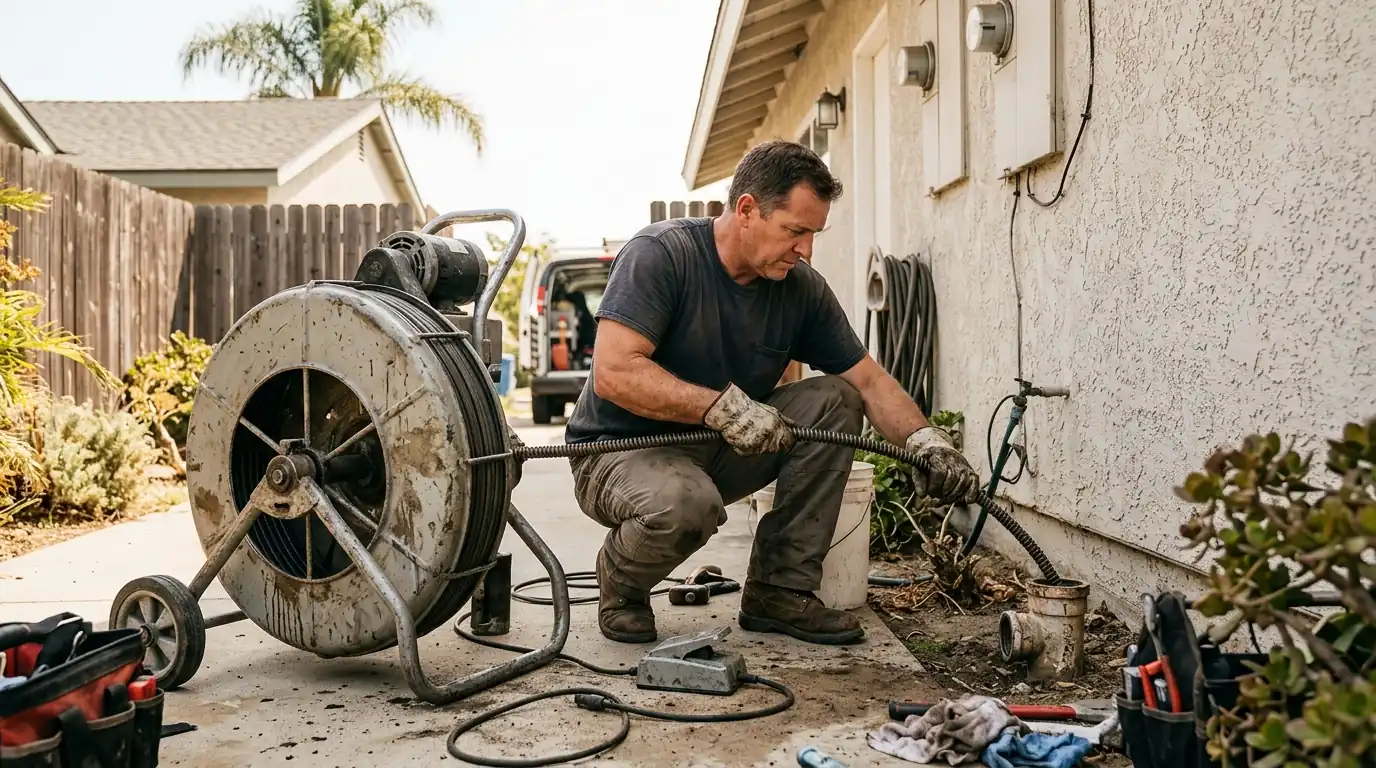
On a root clog, we run a cable machine with a cutting head close to the full diameter of the pipe. A small spearhead only pokes a hole through the root mass and lets the line clog again quickly. Running the right blade through the whole run and pulling back the root material gives you the most time before the next problem.
Even after a full cut, roots come back to the same joints because they are still getting water there. If a line has needed clearing more than once a year, we talk about jetting it clean and inspecting it, then about repairs at the specific joints the roots use. Our guide to clay sewer pipe and tree roots covers what to expect over time.
We never recommend digging up a yard on a guess. Clear first, camera second, then decide on repair from what the footage shows.
Stop running water. Every flush, shower or load of laundry adds to what's already backed up, and the lowest drain will take it. Tell everyone in the house, and in a multi-unit building, let the other tenants know so they hold off too.
If you know where the outside cleanout is and it is safe to reach, you can carefully loosen the cap. If the line is backed up, sewage will drain out there instead of into the house. Stand to the side, use gloves, and don't force a stuck cap. Keep children and pets away from any wastewater, and we'll handle cleanup advice when we arrive.
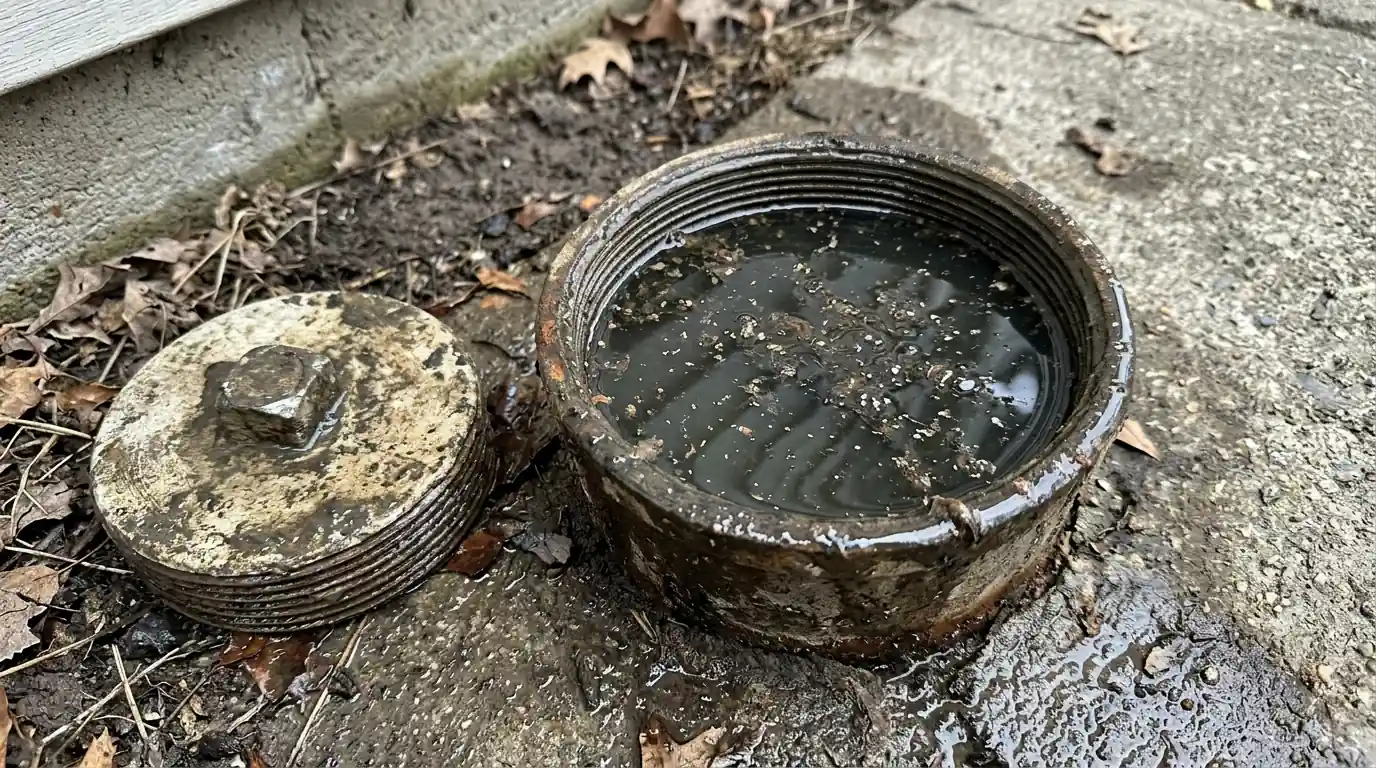
On the job
We check which fixtures are affected and open the cleanout to see if it is full, which tells us whether the clog is upstream or downstream.
Drop cloths go down, the machine is placed outside where possible, and we contain any water that comes out of the cleanout.
A heavy cable with a root cutter or grease blade sized to the pipe goes in and works through the blockage toward the street.
What comes back on the cutter, roots, grease, paper, or bits of pipe, tells us what caused the clog and whether the pipe is damaged.
We run water through several fixtures at once and watch the cleanout to confirm the line drains freely all the way out.
If the debris or history suggests damage, we suggest a camera inspection and explain what it would show.
Clay laterals are common under houses built before about 1970 in neighborhoods from Sherman Oaks to San Pedro, and many sit under parkway trees planted when the tracts were new. Cast iron runs under many raised-foundation homes of the same era. The homeowner usually owns the lateral all the way to the city sewer main. Long front setbacks in the Valley can mean long laterals, and hillside homes may have steep runs or pumped sections. Expansive clay soils in parts of the Valley can shift pipes over time and create bellies where waste collects.
Typical pricing
Access is the biggest factor: an open cleanout is the quickest job, while pulling a toilet or clearing from a roof vent takes longer.
| Job | Typical LA range |
|---|---|
| Main line clearing from an accessible cleanout | $250 to $550 |
| Main line clearing through a pulled toilet | $350 to $700 |
| Heavy root cutting on a long clay lateral | $400 to $850 |
| Clearing plus camera inspection and recording | $550 to $1,100 |
These are typical ranges, not a quote; nights and holidays, buried cleanouts, very long runs and multi-unit buildings all change the final cost. See every job in our LA price guide.
Questions we hear
We answer 24/7, including nights, weekends and holidays, and we treat a main line backup as urgent because nobody in the house can use the plumbing. Once we're on site with good cleanout access, most main line clogs clear in an hour or two. Buried cleanouts, long laterals and heavy roots take longer.
Clearing removes the roots that are in the pipe now. It doesn't seal the joints they came through, so roots regrow, often within a year in older clay lines. Using a full-size cutter buys the most time. If the line keeps clogging, a camera inspection shows where roots are entering so the specific joints can be repaired.
In the City of Los Angeles and most surrounding cities, the property owner is generally responsible for the lateral from the house to the connection at the public sewer main, including the part under the parkway. If the clog is in the city's main, we can usually tell from the cleanout and the camera, and we'll explain what we see.
If this is the first clog in years and the cutter brought back paper or grease, it may not be needed. If roots came back, the line has clogged before, the house is older, or you're buying the home, a camera inspection is worth it. It shows cracks, bellies and root entry points so you can make an informed choice.
Coverage
These are the communities that call us for this most often, with their main ZIP codes. The same 24/7 line covers every one of our 68 service areas.
Often booked together
A waterproof camera run through your sewer lateral to show cracks, roots, bellies and offsets on video, with depth and location marked before any digging is planned.
See the detailsHigh-pressure water jetting that scours grease, scale, sludge and fine roots off the pipe wall, for lines that keep clogging after a cable has gone through.
See the detailsBroken, bellied or root-choked sewer laterals repaired by spot excavation or sectional liner, after a camera shows exactly where the failure sits.
See the detailsA two-way sewer cleanout added outside the house so the main line can be cleared, inspected and repaired without pulling toilets or climbing onto the roof.
See the detailsCall the line any hour. A plumber answers, asks what you are seeing and tells you what happens next.