Drain Cleaning
Kitchen, bathroom, laundry and floor drain clearing with sized cables and cutters, plus a clear explanation of what caused the clog and how to avoid the next one.
See the detailsRepairs & emergencies
Emergency PlumbingLeak DetectionSlab Leak RepairBurst Pipe RepairToilet RepairFaucet RepairGarbage Disposal RepairShower Valve RepairPressure Regulator ReplacementOutdoor Spigot RepairDrains & sewer
Drain CleaningMain Line Clog ClearingHydro JettingSewer Camera InspectionSewer Line RepairTrenchless Sewer ReplacementSewer Cleanout InstallationStorm & Yard Drain CleaningWater heaters
Water Heater RepairWater Heater ReplacementTankless Water Heater InstallationTankless Water Heater ServiceHeat Pump Water Heater InstallationWater Heater Earthquake StrappingHot Water Recirculation PumpPipes, gas & water lines
Whole-House RepipingMain Water Line ReplacementShutoff Valve ReplacementGas Line RepairGas Line InstallationSeismic Gas Shutoff ValveBackflow TestingWater Softener InstallationWhole-House Water FiltrationFixtures, remodels & property
Toilet InstallationFaucet & Sink InstallationKitchen PlumbingBathroom Remodel PlumbingADU PlumbingPlumbing InspectionApartment Building PlumbingCommercial PlumbingGrease Trap ServiceCity of Los Angeles
Los AngelesResedaWinnetkaCanoga ParkWest HillsTarzanaChatsworthPorter RanchGranada HillsNorth HillsLake BalboaPanorama CityValley GlenSun ValleyPacoimaSylmarSunland-TujungaSan PedroWilmingtonMission HillsValley VillageHarbor CityLA and Ventura county cities
Santa ClaritaSan FernandoBurbankGlendalePasadenaCalabasasThousand OaksSimi ValleySanta MonicaInglewoodHawthorneTorranceCarsonLong BeachComptonMore LA County cities
DowneyNorwalkLakewoodEl MonteWest CovinaWhittierPomonaAlhambraArcadiaCovinaBeverly HillsCulver CityRedondo BeachBellflowerSouth GateOrange County and Inland Empire
AnaheimSanta AnaIrvineHuntington BeachOrangeFullertonGarden GroveCosta MesaRancho CucamongaOntarioCoronaCounties
Los Angeles CountyVentura CountyOrange CountySan Bernardino CountyRiverside CountyIf a drain clogs again a few weeks after it was cleared, the cable likely punched a hole through buildup that still lines the pipe. Hydro jetting washes that buildup off the walls so the line runs at full size again.
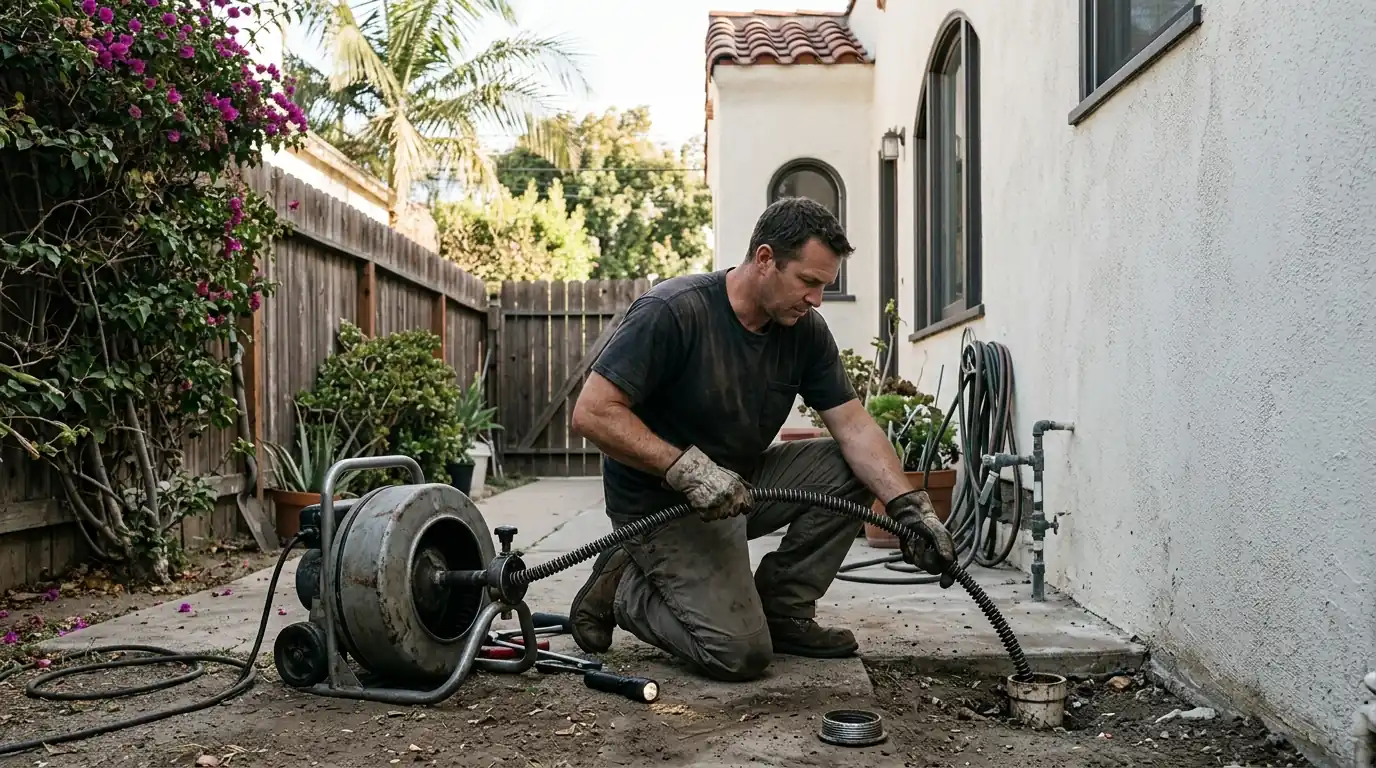
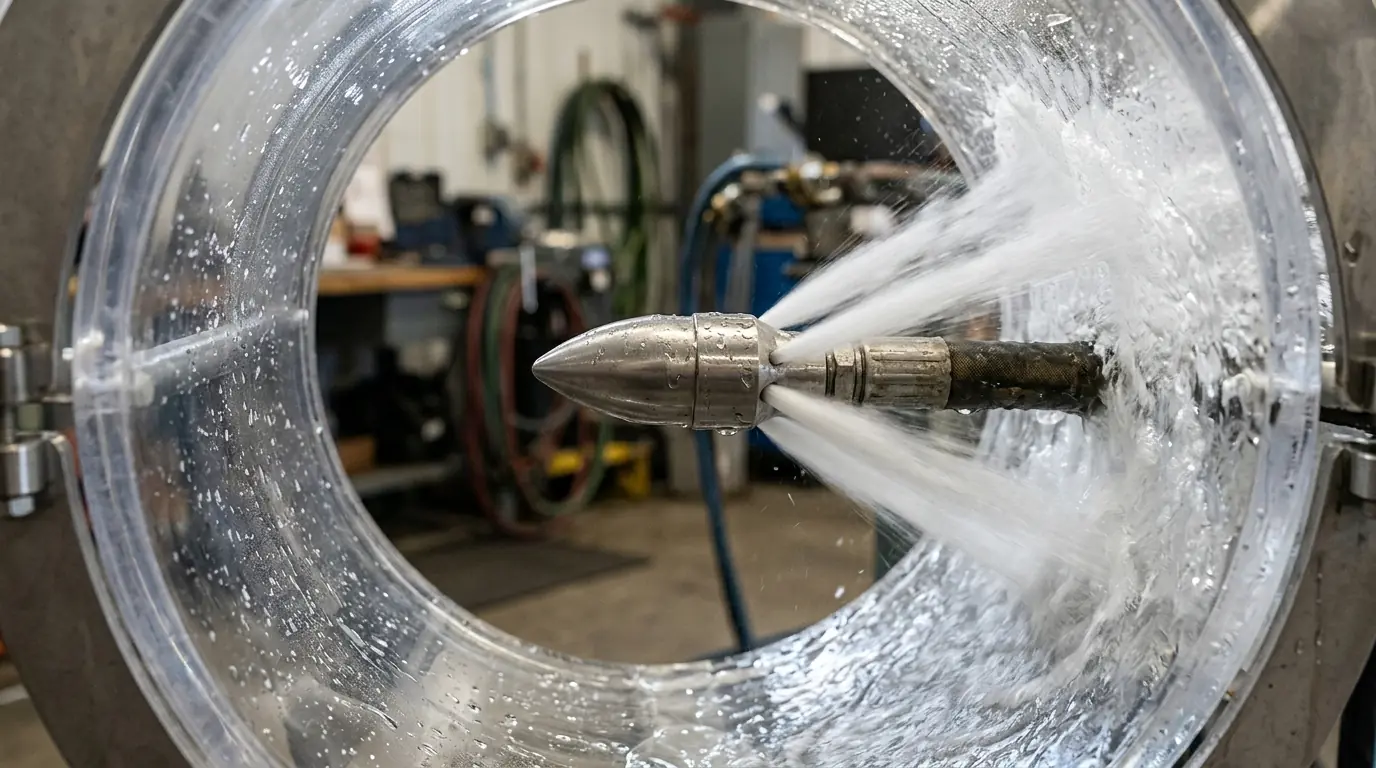
Hydro jetting sends water at very high pressure through a hose with a nozzle that has jets angled backward and forward. The rear jets pull the hose up the line while scouring grease, scale and roots off the pipe wall, and the flow carries the debris out to the sewer. It suits recurring clogs, grease-heavy kitchen lines and multi-unit buildings, after a camera confirms the pipe is sound.
A drain cable is a rotating steel spring with a cutter on the end. It is excellent for breaking through a blockage, but it only touches part of the pipe wall as it turns. In a four-inch line coated with grease, it might leave a two-inch opening that closes again as new grease sticks to what's left.
A jetter works differently. Water at high pressure leaves a nozzle through several small openings. The rear-facing jets drive the hose forward and spray the full circumference of the pipe, and the forward jet breaks up anything ahead. Grease, soap scum, mineral scale and sludge come off the walls and wash down to the sewer main.
We choose the nozzle for the job: a penetrating nozzle for a hard blockage, a spinning nozzle for grease, and a root-cutting nozzle when fine roots remain after cabling. Pressure and flow are set for the pipe size and material, which matters a great deal on older lines.
Jetting is powerful, and that is exactly why we don't run it blind. Old clay with cracked or offset joints, cast iron rusted thin, or a lateral that has partly collapsed can be made worse by high pressure, and water can push out of a broken section into the soil. A short camera inspection before jetting shows the pipe's condition and where any trouble spots sit.
If the pipe is sound, we jet with confidence and run the camera again afterward so you can see the clean wall. If the pipe is broken, jetting is not the right step, and we talk about repairing the damaged section instead. Either way you see the footage and the decision is yours.
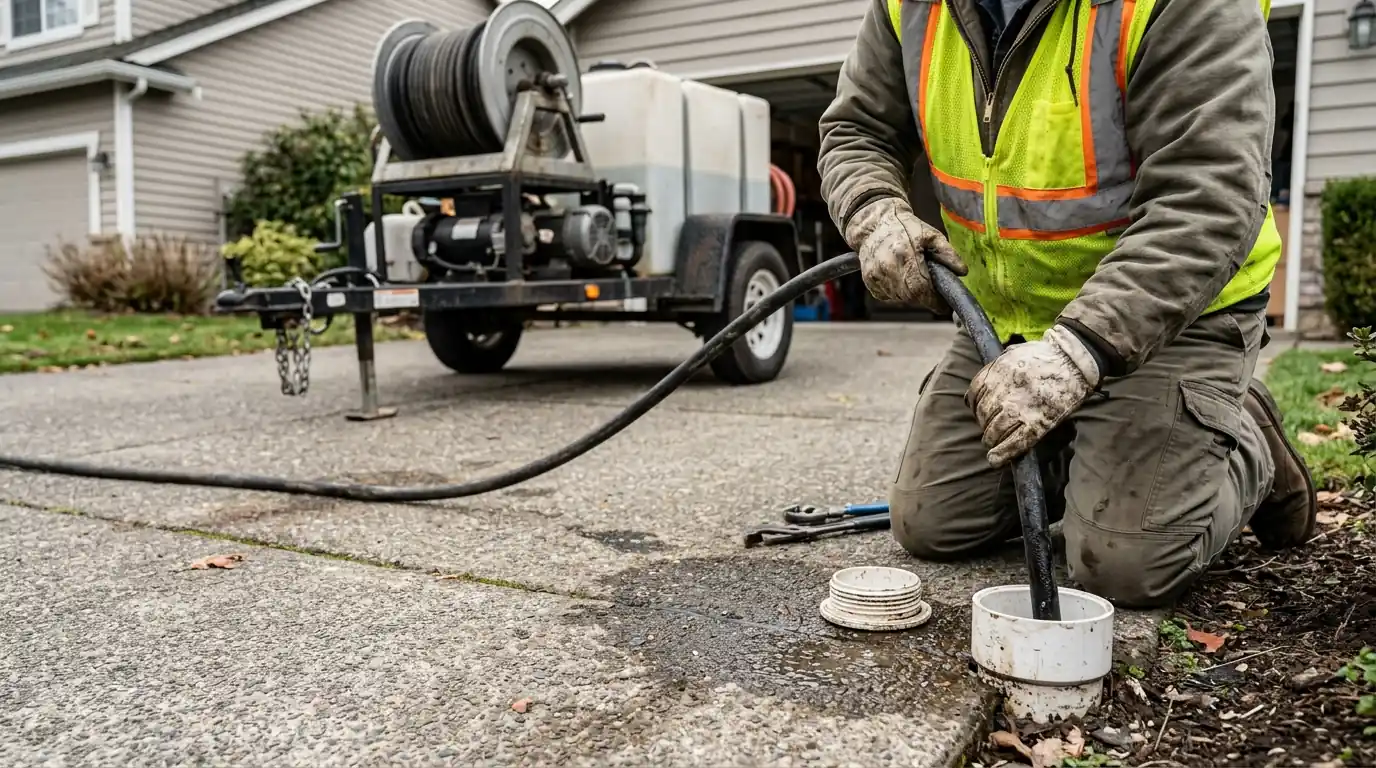
Kitchen lines are where jetting earns its cost. In a house, a heavy cook or a busy disposal can coat the kitchen branch within a few years. In a fourplex or a larger building in Koreatown or Mid-City, several kitchens share one stack, and the bottom of that stack can close down to a small fraction of its original size.
For restaurants and food service, jetting the line from the grease interceptor to the sewer is routine maintenance, and it pairs with grease trap pumping and cleaning. Clearing the line without dealing with the trap, or the reverse, leaves half the problem in place.
For apartment buildings, we often recommend jetting main kitchen stacks on a schedule. It costs less than repeat emergency calls and keeps lower-floor tenants from having water come up through their sinks.
Cast iron develops tubercles, hard rust-and-scale bumps inside the pipe that catch debris. A jetter with the right nozzle removes the softer layers, and a chain or descaling tool can do more on badly scaled pipe. But jetting cannot rebuild metal that's already gone. If the camera shows deep pitting or holes, cleaning reveals the damage rather than fixing it.
The same is true for roots. Jetting clears fine roots and the sludge they hold, but a mature root mass needs a cutter first, and roots return to joints that leak water. Jetting is a strong maintenance tool, not a pipe repair. We will be clear about which one your line needs.
Many LA lines are good candidates and some are not. Cast iron under 1940s to 1960s raised-foundation homes scales heavily and cleans up well with jetting if the walls are sound. Clay laterals under pre-1970s homes need a camera first, because cracked or offset joints are common where parkway trees have grown in. Hard water speeds scale buildup in drain lines. Older courtyard apartments and dingbats share kitchen stacks, which makes scheduled jetting practical. Street parking near the cleanout matters too, because the jetter has to be close to the line.
Warning signs
On the job
We run a camera through the line to check material, condition and the location of buildup, cracks and bellies.
Based on what we saw, we choose a nozzle and set the pressure and flow suited to the pipe size and material.
The hose goes in at the cleanout and works upstream or downstream in passes, scouring the wall and flushing debris to the sewer.
We run the camera through a second time so you can see the cleaned pipe and confirm nothing was missed.
You get a straight recommendation on whether the line needs a maintenance schedule and what habits will slow the next buildup.
Typical pricing
The line size, its length, how heavy the buildup is, and whether camera inspection is included set most of the cost.
| Job | Typical LA range |
|---|---|
| Kitchen branch line jetting in a single-family home | $350 to $700 |
| Main sewer lateral jetting from a cleanout | $500 to $1,000 |
| Jetting with before and after camera inspection | $700 to $1,400 |
| Apartment kitchen stack or restaurant line jetting | $800 to $2,000 |
These are typical ranges, not a quote; no cleanout access, very long runs, heavy scale and after-hours work all change the final cost. See every job in our LA price guide.
Questions we hear
It can be, if the clay is intact. Clay that is cracked, offset or missing pieces can be damaged further, and water can wash out soil around the break. That's why we camera the line before jetting. If we see damage, we explain repair options instead of jetting a pipe that can't take it.
Much longer than cabling in most lines, because the walls are clean. A home kitchen line may stay clear for years with sensible habits. A restaurant line or a shared apartment stack still builds grease and may need jetting on a regular schedule. Roots return where joints leak, so jetting delays root clogs but doesn't stop them.
Jetters use far less water than people expect, because the hose moves a modest flow at very high pressure. The water carries debris to the sewer and doesn't pool in the house. We run the job from the cleanout so the work stays outside where possible.
It removes fine roots and the sludge they hold, and a root-cutting nozzle handles moderate growth. Heavy root masses are cut out with a cable cutter first, then the line is jetted clean. Neither method seals the joint the roots came through, so jetting is a maintenance step. A camera shows whether a joint repair would stop the cycle.
Coverage
These are the communities that call us for this most often, with their main ZIP codes. The same 24/7 line covers every one of our 68 service areas.
Often booked together
Kitchen, bathroom, laundry and floor drain clearing with sized cables and cutters, plus a clear explanation of what caused the clog and how to avoid the next one.
See the detailsA waterproof camera run through your sewer lateral to show cracks, roots, bellies and offsets on video, with depth and location marked before any digging is planned.
See the detailsPumping, cleaning and repair of under-sink grease traps and in-ground interceptors, plus jetting of the kitchen lines that feed them.
See the detailsCatch basins, channel drains, downspout lines and buried yard drains cleared of silt, leaves and roots so rainwater leaves the lot instead of pooling at the house.
See the detailsCall the line any hour. A plumber answers, asks what you are seeing and tells you what happens next.