Drain Cleaning
Kitchen, bathroom, laundry and floor drain clearing with sized cables and cutters, plus a clear explanation of what caused the clog and how to avoid the next one.
See the detailsRepairs & emergencies
Emergency PlumbingLeak DetectionSlab Leak RepairBurst Pipe RepairToilet RepairFaucet RepairGarbage Disposal RepairShower Valve RepairPressure Regulator ReplacementOutdoor Spigot RepairDrains & sewer
Drain CleaningMain Line Clog ClearingHydro JettingSewer Camera InspectionSewer Line RepairTrenchless Sewer ReplacementSewer Cleanout InstallationStorm & Yard Drain CleaningWater heaters
Water Heater RepairWater Heater ReplacementTankless Water Heater InstallationTankless Water Heater ServiceHeat Pump Water Heater InstallationWater Heater Earthquake StrappingHot Water Recirculation PumpPipes, gas & water lines
Whole-House RepipingMain Water Line ReplacementShutoff Valve ReplacementGas Line RepairGas Line InstallationSeismic Gas Shutoff ValveBackflow TestingWater Softener InstallationWhole-House Water FiltrationFixtures, remodels & property
Toilet InstallationFaucet & Sink InstallationKitchen PlumbingBathroom Remodel PlumbingADU PlumbingPlumbing InspectionApartment Building PlumbingCommercial PlumbingGrease Trap ServiceCity of Los Angeles
Los AngelesResedaWinnetkaCanoga ParkWest HillsTarzanaChatsworthPorter RanchGranada HillsNorth HillsLake BalboaPanorama CityValley GlenSun ValleyPacoimaSylmarSunland-TujungaSan PedroWilmingtonMission HillsValley VillageHarbor CityLA and Ventura county cities
Santa ClaritaSan FernandoBurbankGlendalePasadenaCalabasasThousand OaksSimi ValleySanta MonicaInglewoodHawthorneTorranceCarsonLong BeachComptonMore LA County cities
DowneyNorwalkLakewoodEl MonteWest CovinaWhittierPomonaAlhambraArcadiaCovinaBeverly HillsCulver CityRedondo BeachBellflowerSouth GateOrange County and Inland Empire
AnaheimSanta AnaIrvineHuntington BeachOrangeFullertonGarden GroveCosta MesaRancho CucamongaOntarioCoronaCounties
Los Angeles CountyVentura CountyOrange CountySan Bernardino CountyRiverside CountyWater pooling against the house, a driveway drain that overflows, or a downspout that spills onto the patio during the first storm all point to a clogged yard drain. We clear the line and find out why it filled.
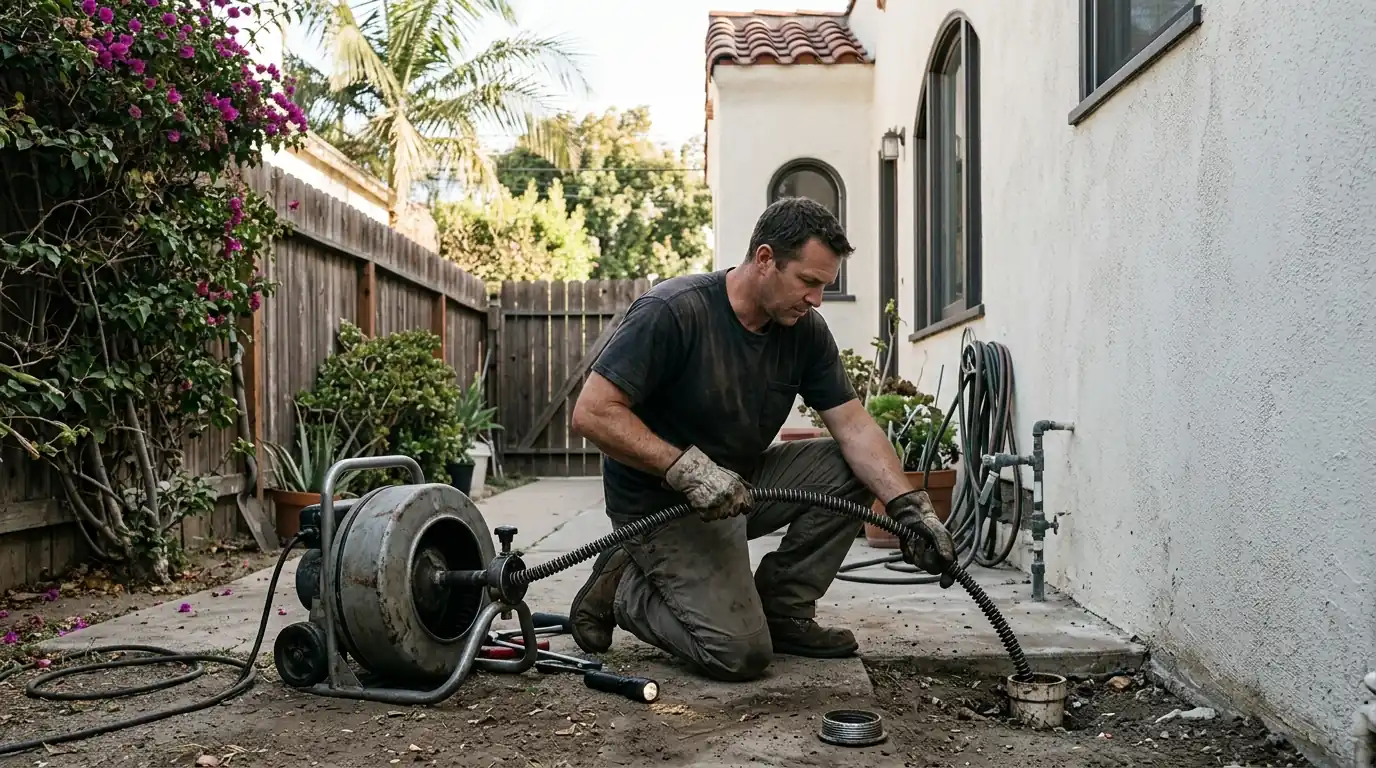
Storm and yard drain cleaning clears the pipes that carry rainwater away from your house: catch basins, channel drains, downspout connections and the buried lines to the curb or a sump. We flush or jet out silt and leaves, cut roots, and camera the line to check for breaks. You need it before the rainy season and after any overflow.
Southern California's long dry season works against yard drains. Leaves, eucalyptus bark, palm fronds and windblown dust settle into catch basins and lines for months with no rain to flush them. By the time the first real storm arrives, the pipe may be half full of compacted silt.
Roots are the other common cause. Shallow corrugated drain pipe and old clay storm lines sit right in the root zone of lawn trees and hedges, and roots go after the moisture that lingers in the pipe long after the last rain. Corrugated pipe is especially vulnerable because its ridges trap silt and its seams split easily.
Rainwater and sewage should never share a pipe at a house. Yard drains carry storm runoff to the street gutter, a curb outlet, a drywell or an approved dispersal area. The sewer carries waste from toilets and sinks to the city main and the treatment plant.
Connecting downspouts or yard drains to the sewer is prohibited, and it causes real trouble: heavy rain overloads the lateral and can push sewage back into the lowest fixture in the house. If we find a storm line tied into the sewer during cleaning, we tell you and can reroute it. A blocked sewer is a different job, handled through main sewer line clearing from the cleanout.
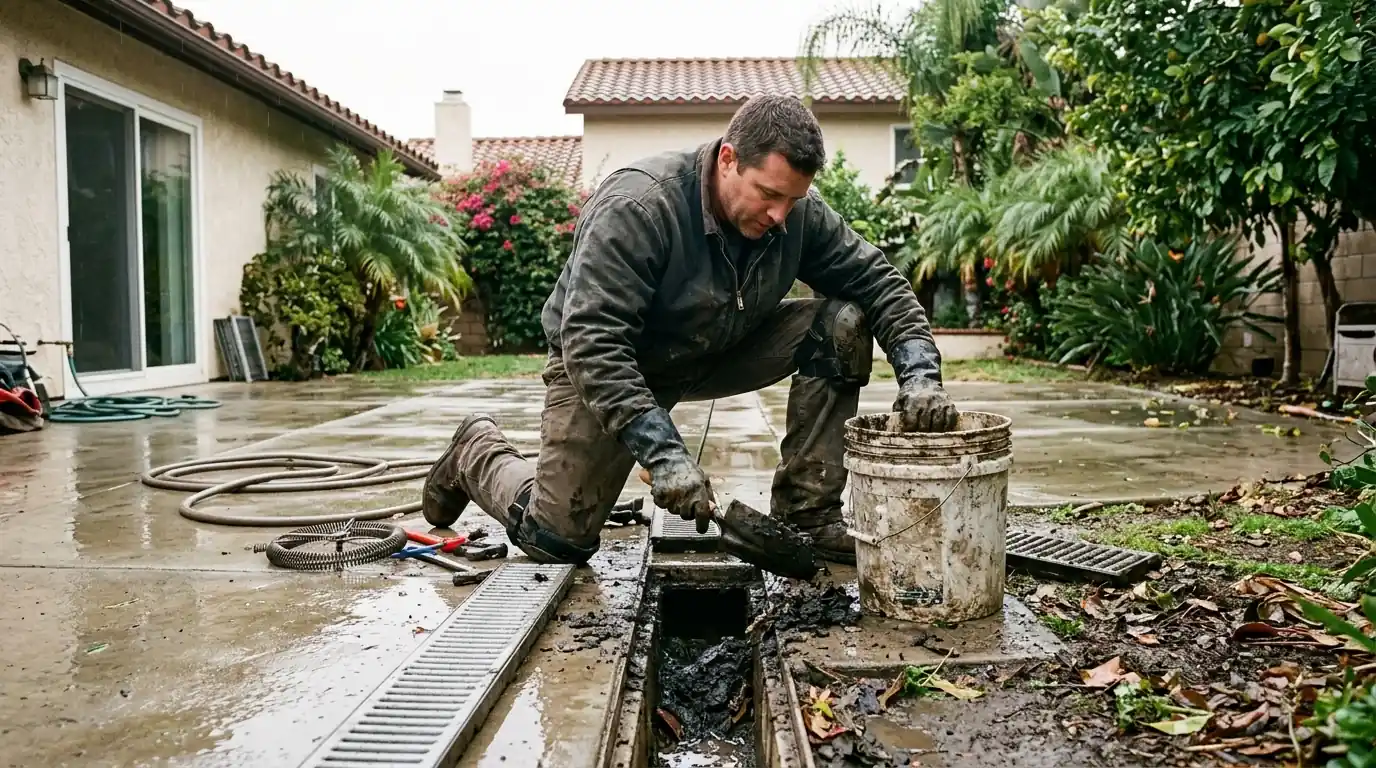
Light debris in a short line comes out with a hose flush and a hand cable. Longer runs, and pipes packed with mud, need a water jetter, which scours the full diameter and pushes silt toward the outlet. We use high-pressure jetting with a nozzle sized for thin-walled plastic so we do not split corrugated pipe.
Roots call for a cutting head on a cable machine, followed by a jet flush to carry the cut material out. After cleaning, we run a camera through the line to check for crushed sections, separated joints and spots where the pipe slopes the wrong way. A drain that clogs every year at the same distance almost always has a sag or break at that point.
If the camera shows broken or crushed pipe, we replace that section with smooth-wall PVC, which carries silt through much better than corrugated pipe and resists roots at its glued joints.
The best time to clean yard drains is early fall, before the first storm. Lift each grate, scoop out the leaves and sediment by hand, and run a garden hose into each inlet for a few minutes. If water backs up or drains slowly, the line needs a professional cleaning.
Check that every downspout connects firmly to its underground fitting and that splash blocks have not been knocked aside. Keep mulch and soil a few inches below grates so they do not wash in during the first heavy rain. On hillside lots, clear the terrace drains and V-ditches too, since a blocked bench drain can push water toward the slope and the house.
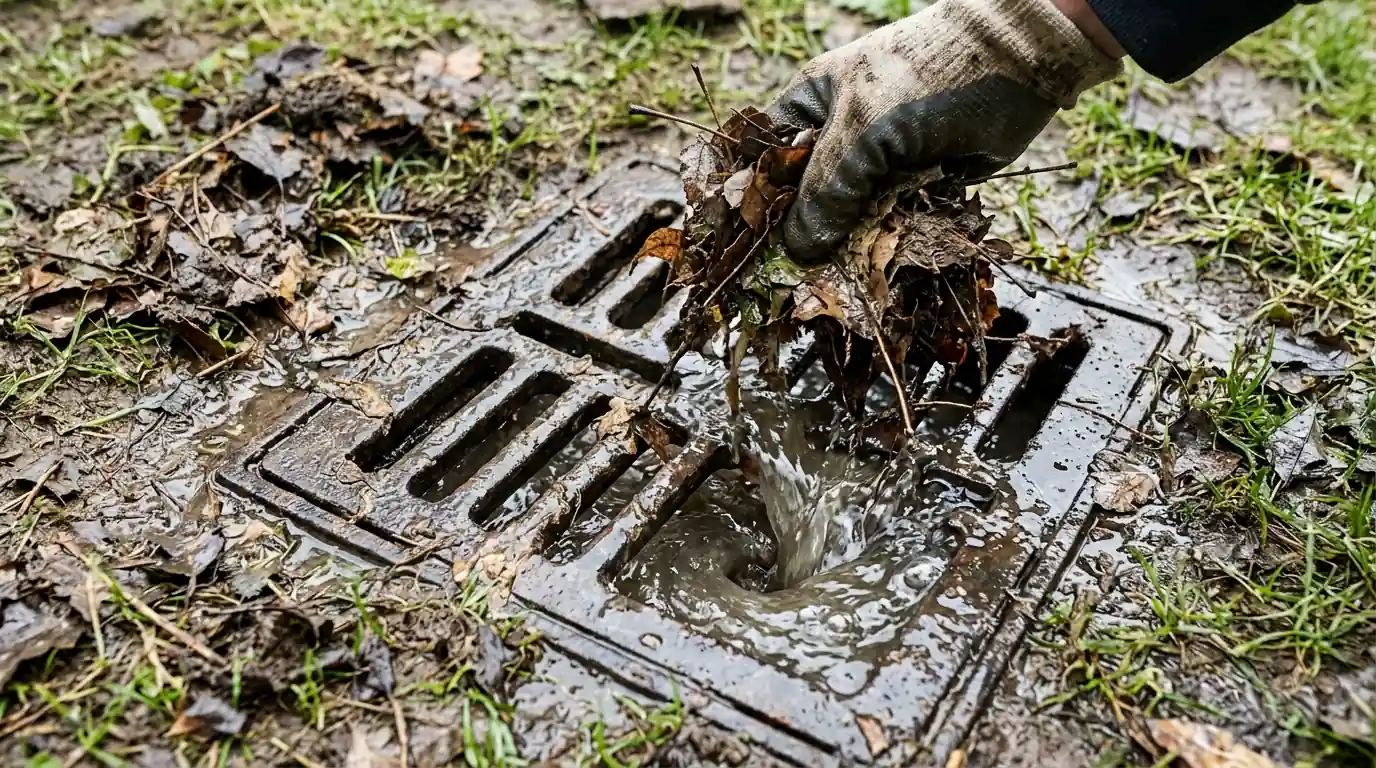
Los Angeles goes months without rain and then gets heavy storms in a short window, so drains that look fine all summer fail on the first wet night. Hillside homes in neighborhoods like Sunland-Tujunga and above Porter Ranch depend on terrace drains and V-ditches that fill with debris and ash after brush fires. Flat Valley lots often drain toward a driveway trench that empties through a curb outlet. Many older properties still have corrugated drain pipe from past landscaping jobs, which crushes under tree roots and car tires. Storm water goes to the street, never into the sewer.
Warning signs
On the job
We trace every inlet, downspout connection and outlet on the property so we know where each line starts and where it should discharge.
Grates come off and catch basins are emptied of leaves, mud and gravel so the outlet pipe is open before we work on the line.
We run a cable for roots or a jetter for silt, working from the outlet back toward the inlets to push debris the right way.
A camera pass shows crushed sections, roots and low spots, with the distance to each problem marked on the surface.
We run water through each inlet to confirm it reaches the outlet, then show you the footage and any repairs worth considering.
Typical pricing
The number of inlets, the length of each line and whether roots or broken pipe are involved set the price. Hillside lots with many terrace drains take longer.
| Job | Typical LA range |
|---|---|
| Single yard drain or downspout line cleared | $200 to $450 |
| Full yard drain system, several inlets | $450 to $1,100 |
| Jetting a long or mud-packed storm line | $500 to $1,200 |
| Camera inspection of a storm line | $200 to $450 |
| Replace a crushed section with PVC | $800 to $2,500 |
These are typical ranges, not a quote; line length, depth, roots, concrete and slope access all change what a given job costs. See every job in our LA price guide.
Questions we hear
Once a year before the rainy season is enough for most properties. Homes under large trees, near eucalyptus or pines, or on hillside lots with terrace drains benefit from a second check midway through winter. After a brush fire nearby, ash and sediment can fill drains quickly, so a cleaning before the next storm is worth scheduling.
Often, yes. Garage flooding usually comes from a driveway channel drain that is packed with debris or draining into a crushed pipe. Clearing and camera checking that line solves most cases. If the driveway slopes toward the garage with no working drain at all, the fix may involve adding a trench drain or regrading the apron.
No. Cities across the region prohibit connecting roof or yard drainage to the sanitary sewer. Rainwater overloads the lateral and the treatment system, and it can cause sewage backups inside your house during storms. Downspouts should discharge to the yard, a storm line, a curb outlet or a drywell, depending on what your city allows.
Clear the grate of leaves first, since a covered grate is the most common cause. If water still backs up, redirect downspouts away from the house with a temporary extension and keep water from reaching the foundation. Call us any hour and we can jet the line once the heavy rain eases enough to work safely.
Coverage
These are the communities that call us for this most often, with their main ZIP codes. The same 24/7 line covers every one of our 68 service areas.
Often booked together
Kitchen, bathroom, laundry and floor drain clearing with sized cables and cutters, plus a clear explanation of what caused the clog and how to avoid the next one.
See the detailsHigh-pressure water jetting that scours grease, scale, sludge and fine roots off the pipe wall, for lines that keep clogging after a cable has gone through.
See the detailsA waterproof camera run through your sewer lateral to show cracks, roots, bellies and offsets on video, with depth and location marked before any digging is planned.
See the detailsBurst lines, sewage backups, failed water heaters and gas smells handled around the clock, starting with the shutoff steps you can take before we arrive.
See the detailsCall the line any hour. A plumber answers, asks what you are seeing and tells you what happens next.