Tankless Water Heater Installation
Gas and electric tankless water heaters installed with a properly sized gas line, sealed venting, isolation valves for descaling and a condensate drain where needed.
See the detailsRepairs & emergencies
Emergency PlumbingLeak DetectionSlab Leak RepairBurst Pipe RepairToilet RepairFaucet RepairGarbage Disposal RepairShower Valve RepairPressure Regulator ReplacementOutdoor Spigot RepairDrains & sewer
Drain CleaningMain Line Clog ClearingHydro JettingSewer Camera InspectionSewer Line RepairTrenchless Sewer ReplacementSewer Cleanout InstallationStorm & Yard Drain CleaningWater heaters
Water Heater RepairWater Heater ReplacementTankless Water Heater InstallationTankless Water Heater ServiceHeat Pump Water Heater InstallationWater Heater Earthquake StrappingHot Water Recirculation PumpPipes, gas & water lines
Whole-House RepipingMain Water Line ReplacementShutoff Valve ReplacementGas Line RepairGas Line InstallationSeismic Gas Shutoff ValveBackflow TestingWater Softener InstallationWhole-House Water FiltrationFixtures, remodels & property
Toilet InstallationFaucet & Sink InstallationKitchen PlumbingBathroom Remodel PlumbingADU PlumbingPlumbing InspectionApartment Building PlumbingCommercial PlumbingGrease Trap ServiceCity of Los Angeles
Los AngelesResedaWinnetkaCanoga ParkWest HillsTarzanaChatsworthPorter RanchGranada HillsNorth HillsLake BalboaPanorama CityValley GlenSun ValleyPacoimaSylmarSunland-TujungaSan PedroWilmingtonMission HillsValley VillageHarbor CityLA and Ventura county cities
Santa ClaritaSan FernandoBurbankGlendalePasadenaCalabasasThousand OaksSimi ValleySanta MonicaInglewoodHawthorneTorranceCarsonLong BeachComptonMore LA County cities
DowneyNorwalkLakewoodEl MonteWest CovinaWhittierPomonaAlhambraArcadiaCovinaBeverly HillsCulver CityRedondo BeachBellflowerSouth GateOrange County and Inland Empire
AnaheimSanta AnaIrvineHuntington BeachOrangeFullertonGarden GroveCosta MesaRancho CucamongaOntarioCoronaCounties
Los Angeles CountyVentura CountyOrange CountySan Bernardino CountyRiverside CountyYou turn on the shower at the far end of the house and stand there running cold water down the drain while you wait. A recirculation pump keeps hot water close to the fixtures so it arrives in seconds.
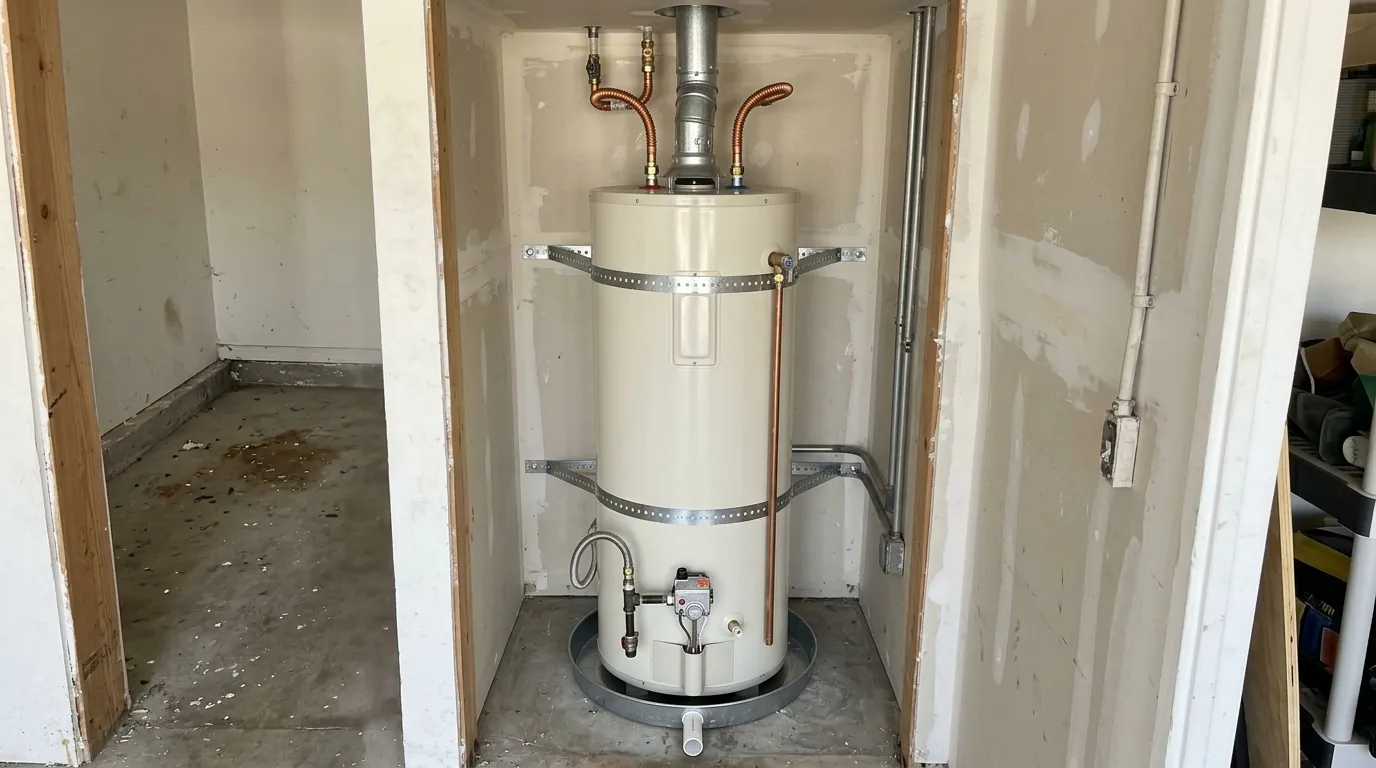
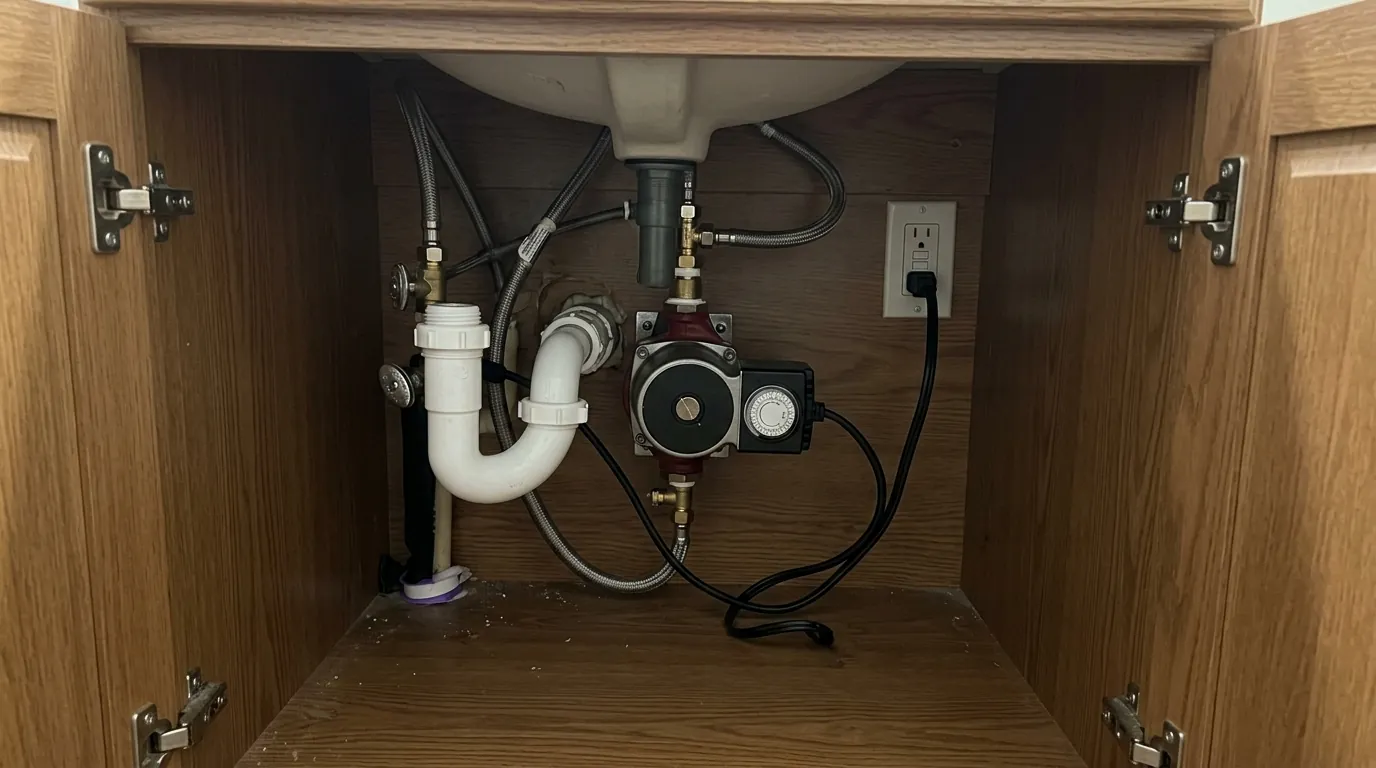
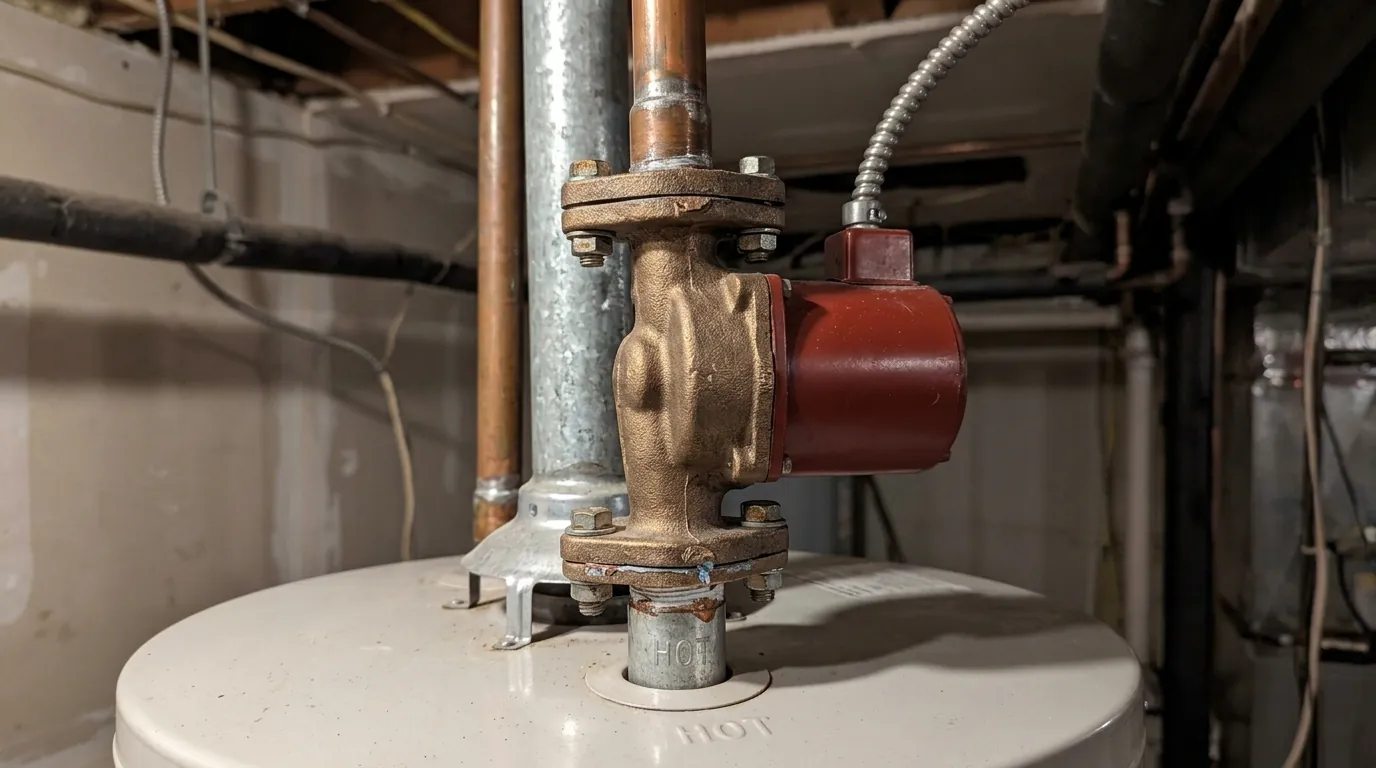
A hot water recirculation pump moves water from the heater through the hot line and back again, so the pipe stays warm and hot water reaches distant taps quickly. Homes without a return line use a crossover valve under the farthest sink. Timers, temperature sensors or push-button controls keep the pump from running all day and wasting energy.
Some homes, mostly newer or custom ones, were built with a dedicated hot water return line that loops from the farthest fixture back to the heater. In those houses we mount the pump at the heater on the return side, add a check valve, and the loop does the rest. It is the cleanest system and keeps the cold line truly cold.
Most Los Angeles houses never got a return line. For them we use a crossover setup: a pump at the heater and a thermostatic bridge valve under the sink farthest from the heater. The pump pushes cooled water from the hot line into the cold line until warm water reaches the valve, then the valve closes.
The tradeoff with a crossover is that the cold tap at that one sink runs slightly warm for a few seconds after the pump cycles. Most families stop noticing within a week, but we mention it before the job.
A pump that runs around the clock keeps the hot line at temperature even at three in the morning, which costs gas or electricity and shortens the pump's life. The right control matters as much as the pump.
Timers suit households with predictable mornings and evenings. Temperature-sensing pumps cycle only when the line cools. On-demand systems, triggered by a button, a motion sensor or an app, run only for the minute before you need hot water and are the most efficient choice for many homes.
Tankless units need special handling. Many current models have a built-in recirculation pump and a setting for it, and those are the simplest to set up. Older or basic tankless heaters may not tolerate an external pump pushing low flow through them, which can cause short cycling or error codes.
Where the heater supports it, we connect the return or crossover and set the controller to the right mode. Where it does not, we sometimes add a small buffer tank so the pump cycles water through the tank instead of firing the tankless burner over and over. Our tankless service visits often uncover this kind of mismatch on existing setups.
Recirculation also increases how much water passes through the heat exchanger, so scale builds faster in hard-water areas. If you add a pump to a tankless unit, plan on a yearly flush.
A recirculation pump treats the symptom of a long pipe run. If you are already opening walls for a remodel, rerouting the hot supply with a shorter, insulated trunk line can cut wait times on its own. Insulating accessible hot lines under a raised floor or in the attic also helps the pipe hold heat between uses.
In homes with one remote bathroom, a small point-of-use heater under that sink can sometimes beat a whole-house pump. We look at the layout and talk through which approach fits your house before recommending equipment.
If the real issue is a heater that cannot keep up, a pump will not fix it. Our water heater selection guide covers sizing when capacity is the actual problem.
Warning signs
Typical pricing
Cost depends on whether a return line exists, the pump and control type, and whether power is already near the water heater.
| Job | Typical LA range |
|---|---|
| Crossover pump kit with under-sink bridge valve | $450 to $900 |
| Pump on an existing dedicated return line | $500 to $1,000 |
| On-demand system with button or motion triggers | $700 to $1,400 |
| New dedicated return line in an accessible attic or crawlspace | $1,500 to $4,000 |
These are typical ranges, not a quote; slab homes without attic access, new outlets, tankless compatibility parts and pipe length all change the price. See every job in our LA price guide.
On the job
We find the heater, trace the hot supply, and identify the fixture farthest along the run where the bridge valve or return belongs.
Based on the heater type and your routine, we recommend a timer, sensor or on-demand system.
The pump goes at the heater with isolation valves and a check valve, plus an outlet for power if one is not close by.
We install the thermostatic crossover valve under the far sink or tie the pump into an existing return loop.
We time hot water at each fixture before and after, adjust the setpoint and confirm the cold side at the crossover sink settles quickly.
The long single-story ranch houses common across the Valley, in places like West Hills and Chatsworth, often put the water heater in the garage at one end and the main bath at the other. With slab foundations, adding a dedicated return line through the floor is rarely practical, so crossover systems and attic-run returns are the usual fix. Hillside homes with split levels can have long vertical runs too. Water conservation matters here, and running cold water down the drain every morning is exactly the waste many LA households want to stop.
Questions we hear
A little, if it runs constantly. A pump on a timer or temperature sensor uses far less, and on-demand systems use the least. The pump motor itself draws little power. Most of the cost comes from heat lost through warm pipes, which good controls and pipe insulation reduce.
Often, yes. Many current tankless models have built-in recirculation and just need the right setting and a crossover valve or return line. Some older units do not handle external pumps well. We check the model before recommending anything, and sometimes add a small buffer tank to protect the burner from rapid cycling.
With a crossover system, the bridge valve under the far sink sends warm water into the cold line until it reaches its setpoint. The cold tap at that sink can run warm for a few seconds. If it lasts longer or shows up at other taps, the valve may be set too high or failing, and we can adjust or replace it.
Yes. Slab homes almost always use the crossover method, which needs no new pipe in the floor. If the attic is accessible, a dedicated return line can sometimes run overhead instead. Before any of that, we suggest a quick check for hidden slab leaks, since added circulation would push more water through a leaking line.
Coverage
These are the communities that call us for this most often, with their main ZIP codes. The same 24/7 line covers every one of our 68 service areas.
Often booked together
Gas and electric tankless water heaters installed with a properly sized gas line, sealed venting, isolation valves for descaling and a condensate drain where needed.
See the detailsFailed or aging tank water heaters swapped for new gas or electric units, with seismic straps, venting, relief piping, gas connections and the permit handled.
See the detailsWhole-house repiping for Los Angeles homes with corroded galvanized or pinholing copper, using copper or PEX routed through attics and walls instead of the slab.
See the detailsDescaling flushes, inlet screen cleaning, error code diagnosis and part repairs for gas tankless water heaters across Los Angeles, built around our hard water.
See the detailsCall the line any hour. A plumber answers, asks what you are seeing and tells you what happens next.