Water Heater Replacement
Failed or aging tank water heaters swapped for new gas or electric units, with seismic straps, venting, relief piping, gas connections and the permit handled.
See the detailsRepairs & emergencies
Emergency PlumbingLeak DetectionSlab Leak RepairBurst Pipe RepairToilet RepairFaucet RepairGarbage Disposal RepairShower Valve RepairPressure Regulator ReplacementOutdoor Spigot RepairDrains & sewer
Drain CleaningMain Line Clog ClearingHydro JettingSewer Camera InspectionSewer Line RepairTrenchless Sewer ReplacementSewer Cleanout InstallationStorm & Yard Drain CleaningWater heaters
Water Heater RepairWater Heater ReplacementTankless Water Heater InstallationTankless Water Heater ServiceHeat Pump Water Heater InstallationWater Heater Earthquake StrappingHot Water Recirculation PumpPipes, gas & water lines
Whole-House RepipingMain Water Line ReplacementShutoff Valve ReplacementGas Line RepairGas Line InstallationSeismic Gas Shutoff ValveBackflow TestingWater Softener InstallationWhole-House Water FiltrationFixtures, remodels & property
Toilet InstallationFaucet & Sink InstallationKitchen PlumbingBathroom Remodel PlumbingADU PlumbingPlumbing InspectionApartment Building PlumbingCommercial PlumbingGrease Trap ServiceCity of Los Angeles
Los AngelesResedaWinnetkaCanoga ParkWest HillsTarzanaChatsworthPorter RanchGranada HillsNorth HillsLake BalboaPanorama CityValley GlenSun ValleyPacoimaSylmarSunland-TujungaSan PedroWilmingtonMission HillsValley VillageHarbor CityLA and Ventura county cities
Santa ClaritaSan FernandoBurbankGlendalePasadenaCalabasasThousand OaksSimi ValleySanta MonicaInglewoodHawthorneTorranceCarsonLong BeachComptonMore LA County cities
DowneyNorwalkLakewoodEl MonteWest CovinaWhittierPomonaAlhambraArcadiaCovinaBeverly HillsCulver CityRedondo BeachBellflowerSouth GateOrange County and Inland Empire
AnaheimSanta AnaIrvineHuntington BeachOrangeFullertonGarden GroveCosta MesaRancho CucamongaOntarioCoronaCounties
Los Angeles CountyVentura CountyOrange CountySan Bernardino CountyRiverside CountyYour gas water heater is near the end of its life and you keep hearing about heat pump models. They work well in Los Angeles, but only if the space, wiring and drain are planned before the old tank comes out.
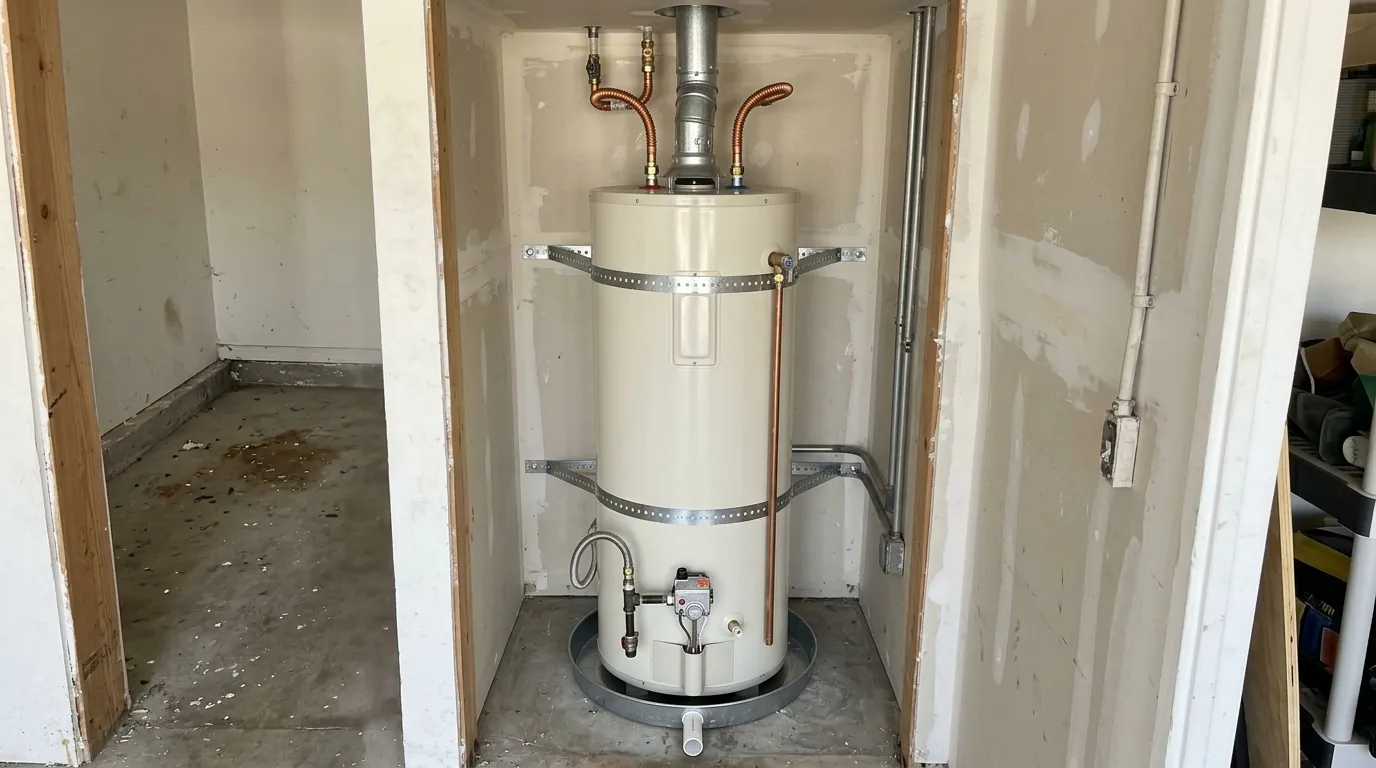
A heat pump water heater pulls warmth from the surrounding air and moves it into the tank using a compressor, so it runs on electricity and uses far less of it than a standard electric tank. Installing one means confirming room size and airflow, a dedicated circuit or a 120-volt plug-in model, a condensate drain, and earthquake strapping, then capping the old gas line.
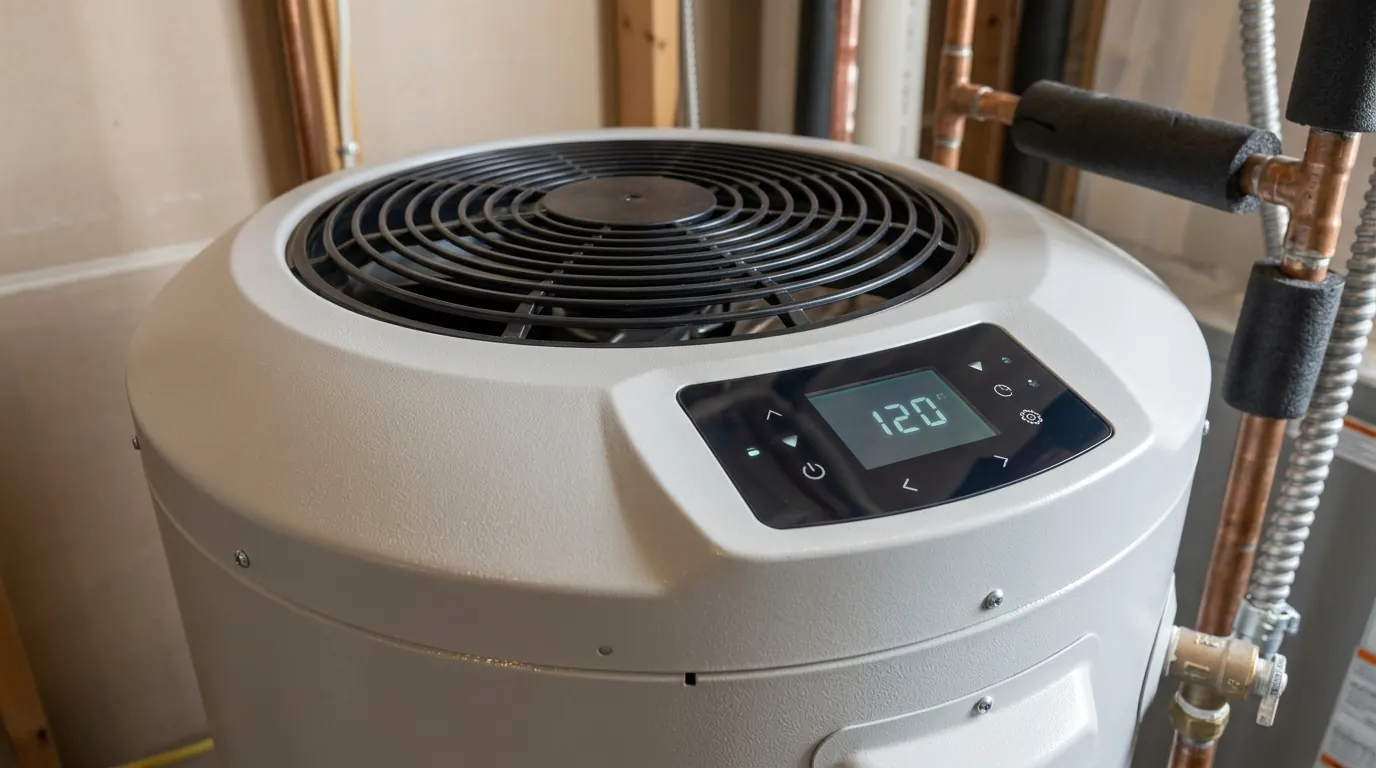
A heat pump model is taller and heavier than most gas tanks because the compressor and fan sit on top. Each manufacturer lists a minimum room volume or the need for louvered doors or ducting. Squeeze one into a tight closet and it starves for air, falls back on its backup heating elements, and loses most of its efficiency.
The fan and compressor make a steady hum, roughly like a refrigerator. In a garage nobody notices. In a closet beside a bedroom it can bother light sleepers, so we talk through placement before anything gets ordered.
The unit also exhausts cool, dry air. In a garage that is a small bonus during August. In an interior closet we may duct the exhaust out so the house does not get a cold corner in winter.
Most heat pump water heaters want a dedicated 240-volt circuit, typically 30 amps. Many older LA houses have 100-amp panels that are already busy, and in those homes the circuit is the hardest part of the project. We look at the panel on the first visit so you know whether an electrician will be needed alongside us.
Newer 120-volt models plug into a standard outlet and were designed for retrofits where a big circuit is not practical. They recover more slowly, so we size the tank larger, often 65 or 80 gallons, to make up for it. For a household of two or three that tradeoff usually works fine.
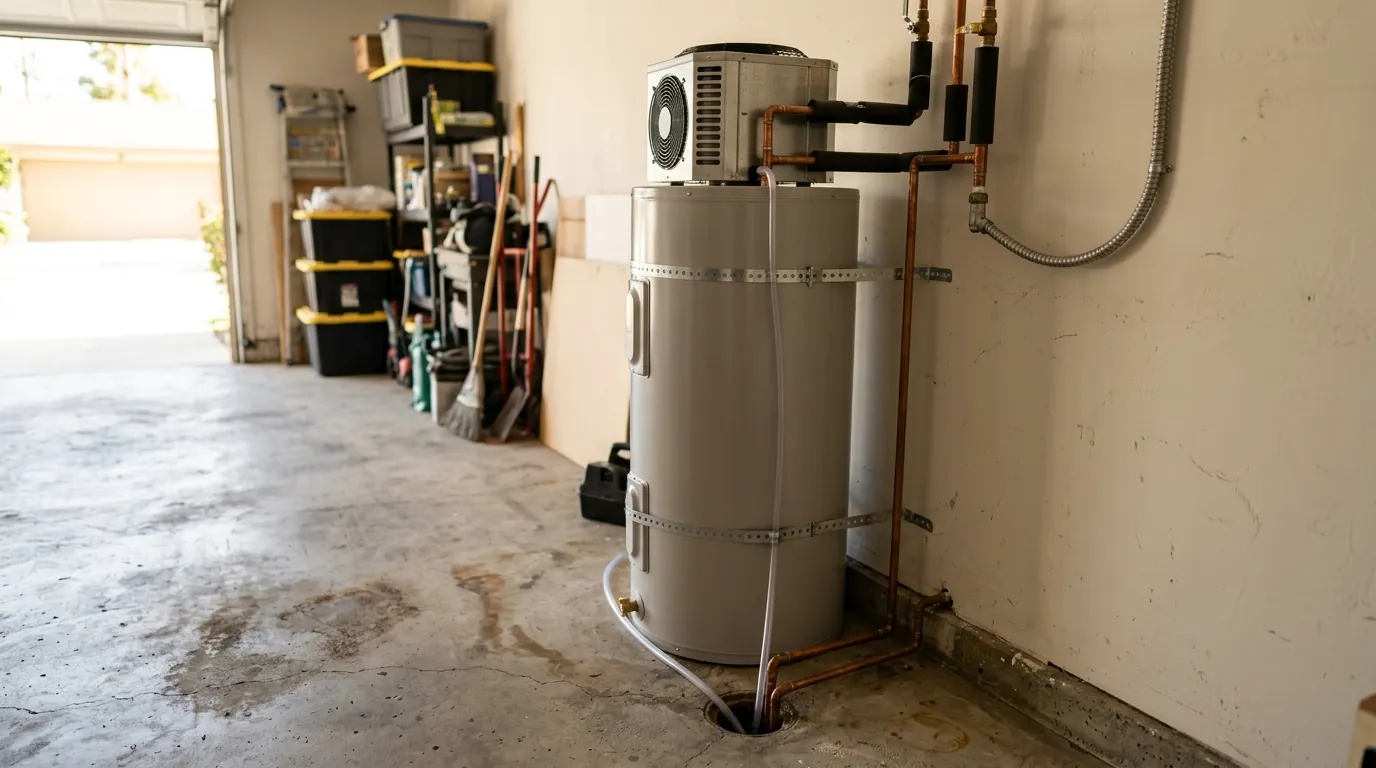
Every heat pump water heater produces condensate, often a few cups to a gallon or more a day in humid weather. That water needs a real drain path: a floor drain, a laundry standpipe or a small condensate pump. Letting it drip onto a garage slab leads to stains and slip hazards.
We also add a thermostatic mixing valve when the tank is set high, add an expansion tank where the system is closed, and brace the new unit with two seismic straps, one in the upper third and one in the lower third. Our strapping work uses the same standard on every heater we set.
Finally, the old gas connection gets capped properly at the valve, not left as an open stub. If the tank was the only gas appliance on that run, we can discuss whether that line is needed at all with our gas piping service.
Heat pumps cost more upfront than a basic gas tank, and installation can climb if electrical work is needed. Utility and state programs in California frequently offer incentives for heat pump water heaters, which narrow that gap, and we keep an eye on which programs apply when we price a job.
Recovery is the other tradeoff. In heat pump only mode, a tank takes longer to reheat after several showers than a gas unit does. Hybrid mode switches on the electric elements when demand spikes. For a large family we may suggest a bigger tank or a different technology, and our water heater comparison article goes through that decision.
If you would rather keep gas, a straightforward tank replacement is still a sound choice. The point is to pick on purpose instead of in the middle of a cold-shower emergency.
Warning signs
Typical pricing
The tank itself is only part of the price. Electrical work, condensate routing and how far the unit sits from the old gas location matter just as much.
| Job | Typical LA range |
|---|---|
| 50-gallon heat pump water heater, ready location | $3,500 to $5,500 |
| 65 to 80-gallon unit or 120-volt retrofit model | $4,500 to $7,000 |
| Condensate pump and drain routing | $250 to $650 |
| Exhaust ducting for a closet install | $400 to $1,000 |
| Capping and removing the old gas branch | $150 to $450 |
These are typical ranges, not a quote; electrical panel upgrades, attic or tight-closet locations, permit fees and available incentives all change the final cost. See every job in our LA price guide.
On the job
We measure the room, look at airflow, check the electrical panel and find a drain path for condensate before quoting.
Based on household size and the panel, we recommend a tank size and either a 240-volt or 120-volt model.
In the City of Los Angeles the permit goes through LADBS, and other cities use their own building departments.
We drain and disconnect the old tank, cap the gas line, and haul the old heater away.
The new unit goes on a level base with two seismic straps, new connectors, a relief line, an expansion tank where needed and a condensate drain.
We fill, power up, confirm the compressor runs, and show you the heat pump, hybrid and vacation settings.
Los Angeles is close to ideal for heat pump water heaters. Garages in the west Valley stay warm for much of the year, which keeps the compressor efficient, and even coastal winters rarely get cold enough to force the backup elements on for long. Title 24 energy rules and utility programs keep pushing California homes toward these units. The local catch is housing stock: many 1950s Valley ranch houses have small panels and a water heater in a cramped hall closet, so the location sometimes has to move to the garage. Hard water still applies, so we flush tanks and check the anode rod on schedule.
Questions we hear
Yes, usually very well. LA garages stay above the temperature where most units lose efficiency for nearly the whole year, and many Valley garages run hot in summer, which helps. The unit needs enough air volume around it and a drain for condensate. Garages packed floor to ceiling with storage may need clearing near the heater.
Sometimes. Each model lists a minimum room volume, and most hall closets fall short unless we add louvered doors or duct the intake and exhaust. We measure the space first. If it will not breathe, the unit spends its time on electric backup, so relocating to a garage or laundry room is often the smarter move.
A straightforward swap with an existing circuit and a nearby drain usually takes most of a day. Jobs that need a new circuit, a condensate pump or relocation can stretch to two days, partly because of the electrical work and inspection timing. You will have hot water again before we leave on install day in most cases.
Less, but not none. The air filter on top needs rinsing every few months, the condensate line must stay clear, and the tank still collects sediment from hard water. We suggest a yearly tank flush and an anode rod check every few years, the same care a conventional tank needs.
Coverage
These are the communities that call us for this most often, with their main ZIP codes. The same 24/7 line covers every one of our 68 service areas.
Often booked together
Failed or aging tank water heaters swapped for new gas or electric units, with seismic straps, venting, relief piping, gas connections and the permit handled.
See the detailsTwo-strap seismic bracing for tank water heaters in Los Angeles, anchored into framing or masonry, with flexible connectors and a gas shutoff check.
See the detailsGas and electric tankless water heaters installed with a properly sized gas line, sealed venting, isolation valves for descaling and a condensate drain where needed.
See the detailsGas and electric tank water heaters diagnosed and repaired: pilot and thermocouple faults, gas valves, burners, elements, relief valves and leaking fittings.
See the detailsCall the line any hour. A plumber answers, asks what you are seeing and tells you what happens next.