Faucet Repair
Dripping spouts, stiff handles, weak flow and leaks under the sink fixed by replacing cartridges, seats, O-rings and supply stops worn down by hard water.
See the detailsRepairs & emergencies
Emergency PlumbingLeak DetectionSlab Leak RepairBurst Pipe RepairToilet RepairFaucet RepairGarbage Disposal RepairShower Valve RepairPressure Regulator ReplacementOutdoor Spigot RepairDrains & sewer
Drain CleaningMain Line Clog ClearingHydro JettingSewer Camera InspectionSewer Line RepairTrenchless Sewer ReplacementSewer Cleanout InstallationStorm & Yard Drain CleaningWater heaters
Water Heater RepairWater Heater ReplacementTankless Water Heater InstallationTankless Water Heater ServiceHeat Pump Water Heater InstallationWater Heater Earthquake StrappingHot Water Recirculation PumpPipes, gas & water lines
Whole-House RepipingMain Water Line ReplacementShutoff Valve ReplacementGas Line RepairGas Line InstallationSeismic Gas Shutoff ValveBackflow TestingWater Softener InstallationWhole-House Water FiltrationFixtures, remodels & property
Toilet InstallationFaucet & Sink InstallationKitchen PlumbingBathroom Remodel PlumbingADU PlumbingPlumbing InspectionApartment Building PlumbingCommercial PlumbingGrease Trap ServiceCity of Los Angeles
Los AngelesResedaWinnetkaCanoga ParkWest HillsTarzanaChatsworthPorter RanchGranada HillsNorth HillsLake BalboaPanorama CityValley GlenSun ValleyPacoimaSylmarSunland-TujungaSan PedroWilmingtonMission HillsValley VillageHarbor CityLA and Ventura county cities
Santa ClaritaSan FernandoBurbankGlendalePasadenaCalabasasThousand OaksSimi ValleySanta MonicaInglewoodHawthorneTorranceCarsonLong BeachComptonMore LA County cities
DowneyNorwalkLakewoodEl MonteWest CovinaWhittierPomonaAlhambraArcadiaCovinaBeverly HillsCulver CityRedondo BeachBellflowerSouth GateOrange County and Inland Empire
AnaheimSanta AnaIrvineHuntington BeachOrangeFullertonGarden GroveCosta MesaRancho CucamongaOntarioCoronaCounties
Los Angeles CountyVentura CountyOrange CountySan Bernardino CountyRiverside CountyA shower that drips all night, swings hot and cold mid-rinse, or needs both hands to shut off usually has a worn cartridge or a valve body near the end of its life. We fix both.
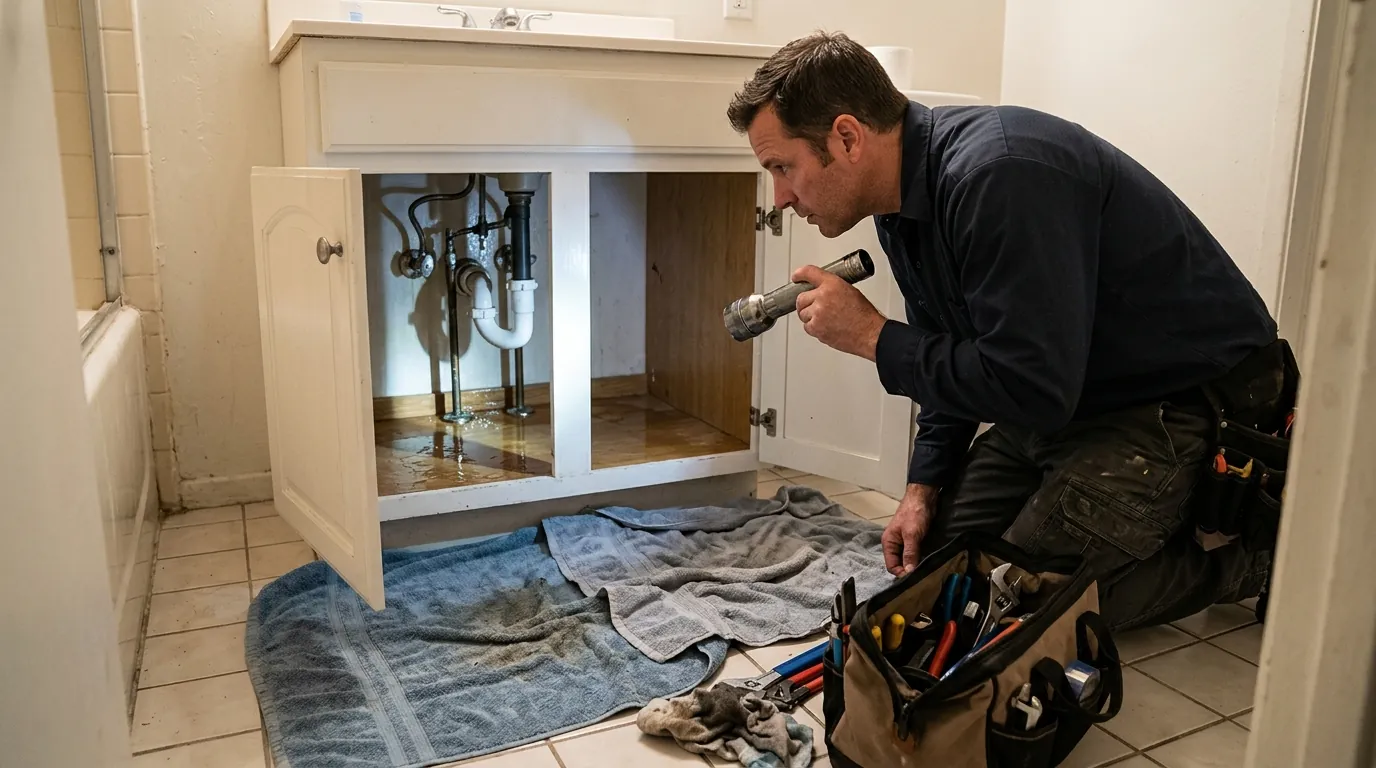
Shower valve repair means removing the trim, diagnosing the cartridge, stems or valve body, and rebuilding or replacing the part that controls flow and temperature. You need it when the shower drips after shutoff, the temperature jumps when a toilet flushes, the handle binds, or water shows up on the other side of the wall. Most repairs are done from the front without removing tile.
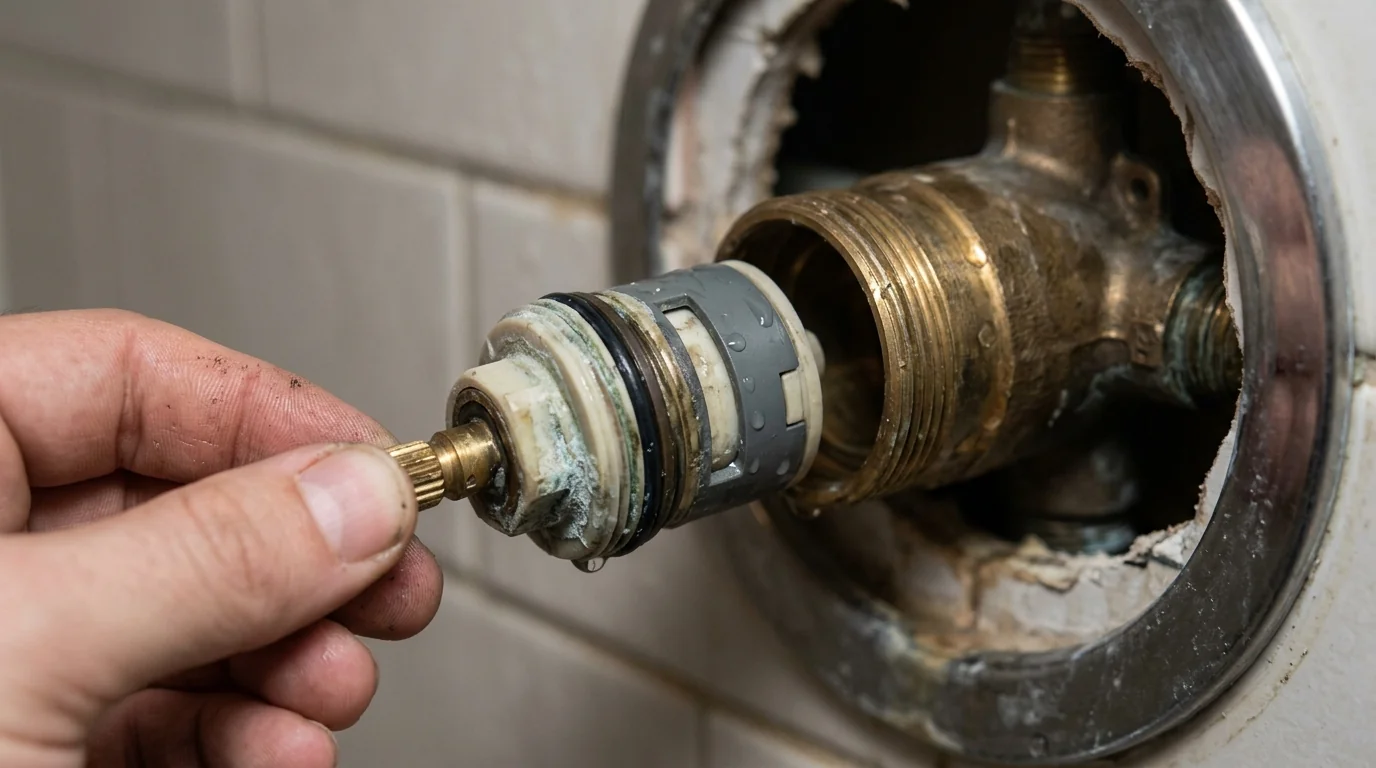
Single-handle showers use a cartridge, a plastic or brass insert that mixes hot and cold and usually holds the pressure-balance spool. When it wears, you get drips, temperature swings or a stiff handle. Replacing the cartridge is normally a one-visit job if we can match the brand, and the major brands still stock parts for valves installed decades ago.
Older two- and three-handle showers, common in Los Angeles houses built before the 1980s, use compression stems with rubber washers that press against brass seats. Many of these can be rebuilt with new washers, new seats and repacked stems. If the seats are pitted too deep to dress, or the stems no longer thread cleanly, a rebuild stops being worth the money.
The valve body itself, the brass casting soldered or threaded into the wall, fails less often. A cracked casting, rusted galvanized feed nipples, or a body so old no cartridge fits are the usual reasons we talk about replacement.
We lean toward repair whenever parts exist and the body is sound. A cartridge swap costs a fraction of a replacement and leaves your tile alone. We will still flag a valve with no anti-scald protection, since sudden hot water is a real burn risk for children and older adults.
Replacement makes sense when you are already planning a remodel, when the valve is obsolete, or when you want to go from three handles to one. Moving to a new pressure-balance or thermostatic valve means opening the wall, and on a larger update we plan it together with the rest of the bathroom rough-in.
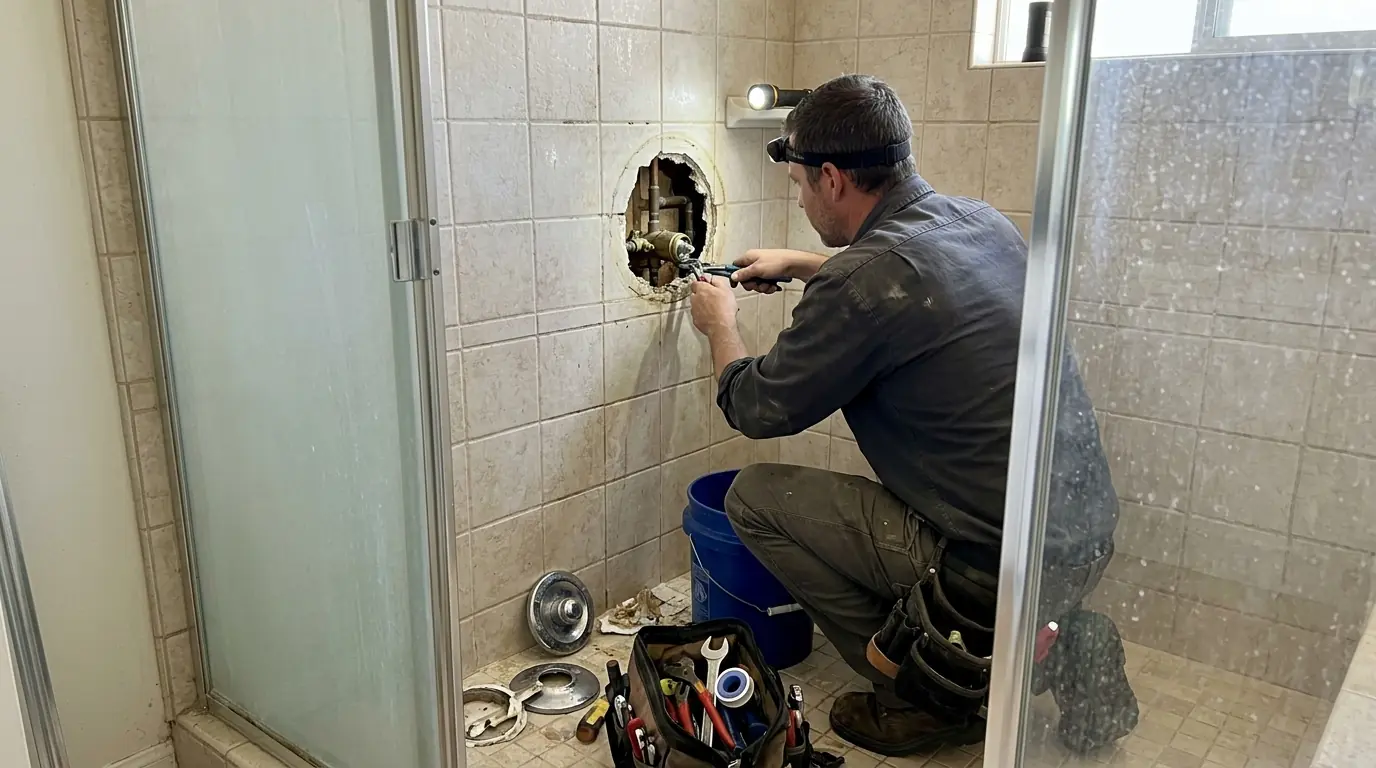
Most cartridge and stem work happens from the front: trim plate off, water off, part out. When the valve body needs work, we check what sits on the other side of the wall first. In tract homes from Granada Hills to the harbor, a closet or hallway often backs onto the shower, and cutting a clean square of drywall there costs far less than removing tile.
After the repair we can leave a screwed-on access panel, so the next person never has to cut anything. If the back of the wall is tile too, or the shower sits on an exterior stucco wall, we work through the front and fit an oversized trim plate that covers a modest cut around the valve.
Much of Los Angeles gets hard imported water, and shower cartridges show it. Scale builds on the O-rings and the balancing spool, which is why so many valves start sticking after a few years. When we install a new cartridge, we coat the O-rings with silicone grease rated for drinking water so they slide and seal smoothly.
If every cartridge in the house keeps failing early, the water is the cause and the valve is only the symptom. We can talk through softening the water, and our write-up on hard water and LA fixtures explains the tradeoffs so you can decide whether treatment fits your home.
Warning signs
Typical pricing
Price depends mostly on whether we can work from the front, whether parts still exist for your valve, and how much wall has to open.
| Job | Typical LA range |
|---|---|
| Cartridge replacement, common brand, front access | $250 to $550 |
| Two- or three-handle stem and seat rebuild | $300 to $700 |
| Valve body replacement through a rear access panel | $900 to $2,200 |
| New pressure-balance or thermostatic valve with tile cut and oversized trim | $1,500 to $3,500 |
These are typical ranges, not a quote; obsolete parts, plaster walls, galvanized supply nipples and permit requirements all move the final number. See every job in our LA price guide.
On the job
We close the valve's integral stops or the house main, pull the handle and trim, and identify the brand and cartridge from its markings and spline pattern.
We check the cartridge, seats, stops and body for scale, cracks and wear, and confirm whether any leak is at the valve or farther back in the wall.
You get a straight answer: rebuild, cartridge swap or replacement, what each involves, and a typical price range before work starts.
We clean the valve body, fit the new cartridge or stem parts with potable-grade grease, and set the limit stop so the hot side tops out at a safe temperature.
With water back on, we cycle the valve from hot to cold, flush a nearby toilet to check pressure balance, and watch the head and spout for drips.
Trim goes back with a fresh gasket. If we opened a wall, we leave an access panel or a clean opening ready for patching.
The valves we open around LA tell the age of the house. Spanish and Craftsman homes from the 1920s often still have three-handle valves on galvanized nipples behind mortar-bed tile. Valley tract homes from the 1950s and 1960s usually back the shower onto a hall closet, which makes rear access easy. Hard water from Colorado River and State Water Project supplies scales cartridges quickly. A valve replacement that opens the wall can call for a permit, which in the City of Los Angeles goes through LADBS, while cities like Burbank and Pasadena run their own building departments.
Questions we hear
Usually, yes. Cartridge swaps and stem rebuilds happen from the front once the trim comes off. When the valve body itself needs work, we look for a closet or hallway behind the shower and open drywall there instead. Only when both sides are tile or masonry do we plan a small tile cut, and we size the new trim plate to cover it.
A toilet refill pulls cold water pressure down for a moment. A working pressure-balance spool reacts by cutting hot flow to match, so the mix stays steady. If the spool is scaled, or the valve is an older two-handle type without one, the balance is lost and the shower spikes hot. A new cartridge or a new valve usually fixes it.
It varies with the brand and how hard your water is. On LA's hard water, cartridges often start to stiffen or drip years sooner than they would on soft water. Greasing the O-rings at install, softening the water, and moving rarely used handles now and then all stretch the life of a new cartridge.
A drip from the shower head can wait for a normal visit. Water leaking inside the wall is different, because it soaks framing and subfloor and can grow mold before a stain appears. Close the house main and call us any hour. We open the wall, stop the leak, and check how far the water spread with moisture and leak testing.
Coverage
These are the communities that call us for this most often, with their main ZIP codes. The same 24/7 line covers every one of our 68 service areas.
Often booked together
Dripping spouts, stiff handles, weak flow and leaks under the sink fixed by replacing cartridges, seats, O-rings and supply stops worn down by hard water.
See the detailsRough-in and finish plumbing for bathroom remodels: shower valves, curbless drains, tub-to-shower swaps, vanity moves and toilet relocations.
See the detailsHidden supply, slab and drain leaks pinpointed with meter checks, pressure isolation, acoustic listening and thermal imaging, so repairs start with one small opening.
See the detailsSofteners sized to your household and water hardness, plumbed at the main with a bypass, a proper drain and a separate unsoftened line where you want one.
See the detailsCall the line any hour. A plumber answers, asks what you are seeing and tells you what happens next.