Main Water Line Replacement
Replacement of the private water service line between the meter and your house, in copper or approved plastic, by trenching or trenchless pull methods.
See the detailsRepairs & emergencies
Emergency PlumbingLeak DetectionSlab Leak RepairBurst Pipe RepairToilet RepairFaucet RepairGarbage Disposal RepairShower Valve RepairPressure Regulator ReplacementOutdoor Spigot RepairDrains & sewer
Drain CleaningMain Line Clog ClearingHydro JettingSewer Camera InspectionSewer Line RepairTrenchless Sewer ReplacementSewer Cleanout InstallationStorm & Yard Drain CleaningWater heaters
Water Heater RepairWater Heater ReplacementTankless Water Heater InstallationTankless Water Heater ServiceHeat Pump Water Heater InstallationWater Heater Earthquake StrappingHot Water Recirculation PumpPipes, gas & water lines
Whole-House RepipingMain Water Line ReplacementShutoff Valve ReplacementGas Line RepairGas Line InstallationSeismic Gas Shutoff ValveBackflow TestingWater Softener InstallationWhole-House Water FiltrationFixtures, remodels & property
Toilet InstallationFaucet & Sink InstallationKitchen PlumbingBathroom Remodel PlumbingADU PlumbingPlumbing InspectionApartment Building PlumbingCommercial PlumbingGrease Trap ServiceCity of Los Angeles
Los AngelesResedaWinnetkaCanoga ParkWest HillsTarzanaChatsworthPorter RanchGranada HillsNorth HillsLake BalboaPanorama CityValley GlenSun ValleyPacoimaSylmarSunland-TujungaSan PedroWilmingtonMission HillsValley VillageHarbor CityLA and Ventura county cities
Santa ClaritaSan FernandoBurbankGlendalePasadenaCalabasasThousand OaksSimi ValleySanta MonicaInglewoodHawthorneTorranceCarsonLong BeachComptonMore LA County cities
DowneyNorwalkLakewoodEl MonteWest CovinaWhittierPomonaAlhambraArcadiaCovinaBeverly HillsCulver CityRedondo BeachBellflowerSouth GateOrange County and Inland Empire
AnaheimSanta AnaIrvineHuntington BeachOrangeFullertonGarden GroveCosta MesaRancho CucamongaOntarioCoronaCounties
Los Angeles CountyVentura CountyOrange CountySan Bernardino CountyRiverside CountyHigh water pressure wears out faucets, toilet fill valves, water heaters and hose bibbs long before their time. A failed pressure regulator at your main lets street pressure into the house unchecked. We find it, replace it and set it right.
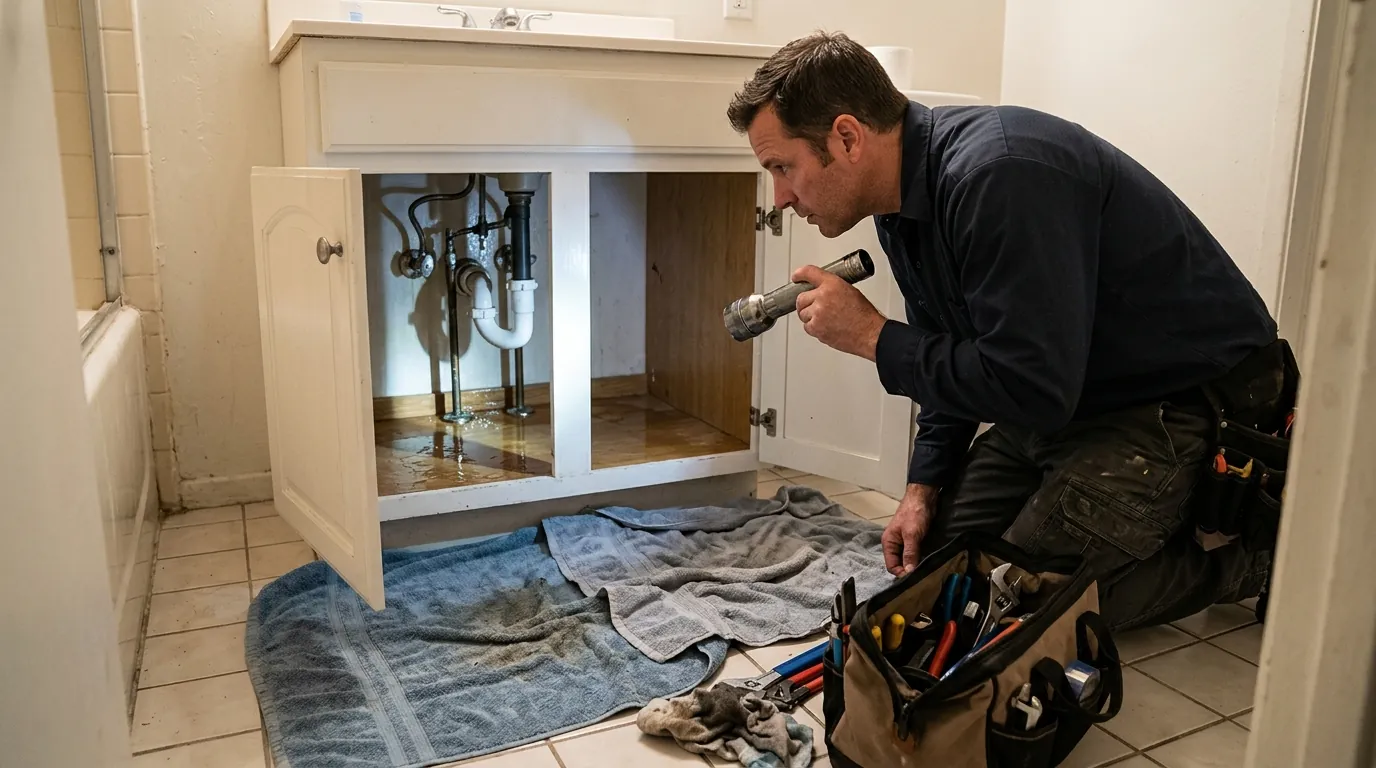
A pressure regulator, or pressure reducing valve, sits on the main water line and lowers street pressure to a safe level for household plumbing. Replacement means shutting the supply, cutting out the old bell-shaped valve, installing a new one with unions, and adjusting it against a gauge. You need it when pressure tests high, pipes bang, or relief valves and fixtures keep leaking.
Water pressure in the street depends on how high the reservoir or pump station sits above your house and on how the utility zones its mains. Homes low on a hillside, at the bottom of a canyon road or near a major transmission main can see street pressure well over 100 psi. Without a regulator, every fixture in the house lives at that pressure all day.
Most homes in the region built since the code began requiring regulators on high-pressure services have one near the main shutoff, usually a brass bell-shaped valve close to where the line enters the house or beside the meter box. Older homes may have none at all, or one so old that it stopped regulating years ago and nobody noticed until things started leaking.
Pressure damage is gradual. Faucet cartridges and toilet fill valves wear faster. Washing machine and dishwasher inlet valves fail early. Braided supply lines bulge and burst. Water heater tanks expand and contract more with each heating cycle, which stresses the welds and the relief valve.
On the pipe side, high pressure finds weak spots. Pinhole leaks in older copper show up sooner, galvanized joints that were holding start to seep, and a pipe in the slab that was close to failing tips over the edge. If you are dealing with repeated leaks, testing the pressure is one of the first things we do, often before chasing a slab leak.
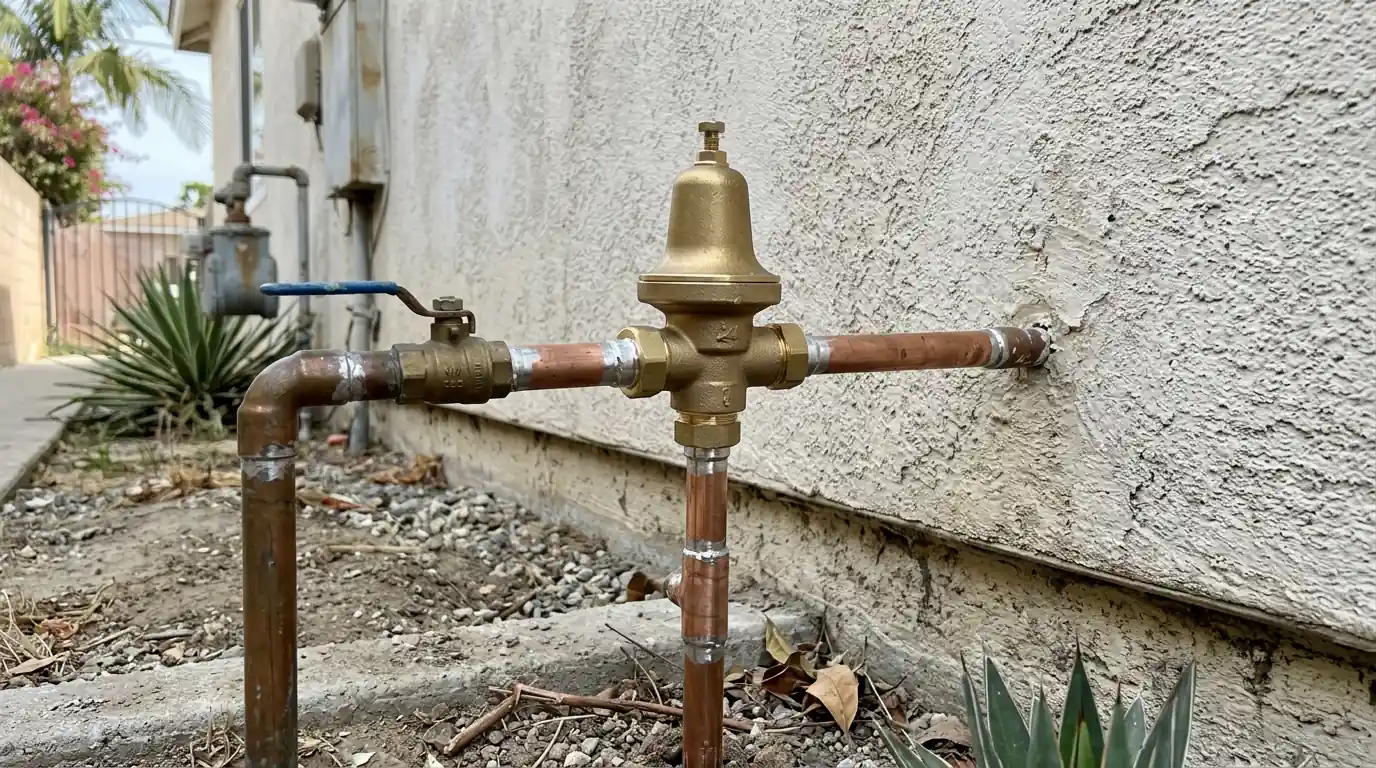
We size the replacement to your main line, usually three-quarter or one inch on houses, larger on small apartment buildings. A lead-free brass valve with a built-in strainer is the standard choice, and we install it with union ends where possible so the next replacement is a simple swap instead of more cutting.
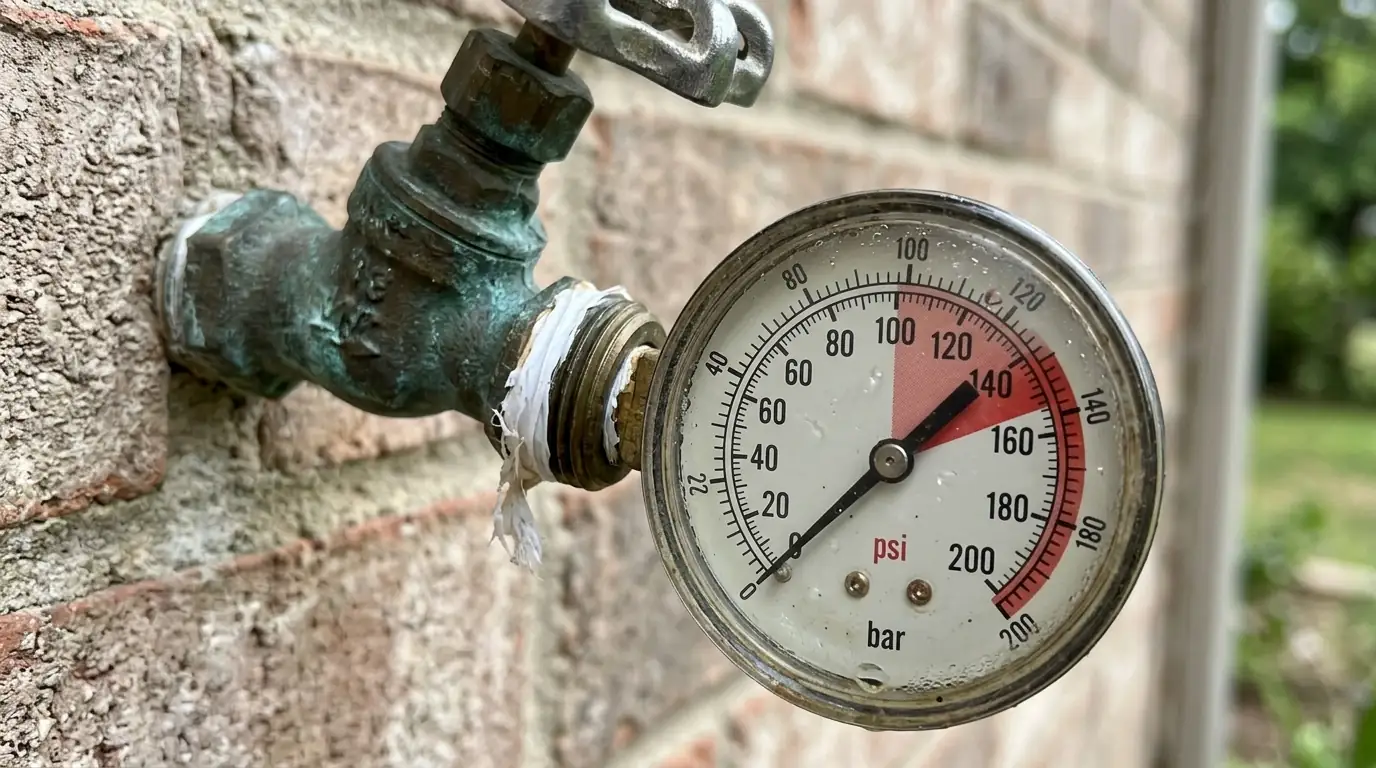
Setting the valve matters as much as the valve itself. We put a gauge on a nearby hose bibb, open a few fixtures, and adjust the regulator's screw until the house holds a steady pressure, usually in the 55 to 70 psi range unless your home's layout calls for something else. A two-story house or one with a long run to the back unit may need a slightly higher setting.
Once a regulator is in, the house becomes a closed system. Water heated in the tank has nowhere to expand, so we check for a working thermal expansion tank on the water heater and add or replace one if needed. Skipping that step is why relief valves keep dripping after a regulator swap.
Sometimes low or unsteady pressure is not the regulator at all. A partly closed main valve, a corroded galvanized main, or a clogged strainer screen can mimic a failed regulator. We open and clean the strainer as part of every visit and check the main shutoff while the water is off.
If the main line itself is galvanized and closing up with rust, a new regulator won't bring the flow back. In that case we talk about replacing the main water line and fitting the regulator on the new pipe at the same time.
LA's terrain drives water pressure. Homes at the base of the Santa Monica Mountains, the Verdugos and the San Gabriels often get very high street pressure, while flat parts of the Valley and the harbor run more moderate. LADWP supplies the City of Los Angeles, and cities like Glendale, Burbank, Pasadena and Long Beach run their own water departments with their own zones. Valley tract homes often have the regulator outside near the front hose bibb, where sun and hard water age it. Hard water deposits on the regulator's seat are a common reason they stop holding pressure.
Warning signs
On the job
We put a gauge on a hose bibb and record static pressure, then watch how it behaves with fixtures opening and closing and overnight if needed.
We find the existing regulator or the best spot for a new one, then close the main shutoff or the meter-side valve.
The old regulator comes out, and we inspect the pipe on both sides for corrosion, especially where galvanized meets copper.
The new lead-free valve goes in with unions and proper transitions, with the flow arrow pointing into the house.
We open the water, bleed air from the lines, and adjust the regulator to the target pressure while watching the gauge.
We confirm the water heater has a working expansion tank charged to match house pressure and that the relief valve has stopped weeping.
Typical pricing
The valve size, how easy the location is to reach, and whether the surrounding pipe needs repair set most of the price.
| Job | Typical LA range |
|---|---|
| Pressure test and regulator adjustment only | $150 to $300 |
| Replace a 3/4 inch regulator in an accessible location | $450 to $900 |
| Replace a 1 inch regulator with new unions and transition fittings | $650 to $1,300 |
| Regulator plus thermal expansion tank on the water heater | $800 to $1,600 |
These are typical ranges, not a quote; buried or boxed-in valves, corroded galvanized pipe and larger service sizes all raise the cost. See every job in our LA price guide.
Questions we hear
Put a gauge on an outdoor faucet. If turning the regulator's adjustment screw changes the reading and it holds steady afterward, adjustment may be enough. If the pressure creeps up overnight, won't come down when you turn the screw, or jumps around with use, the seat or diaphragm is worn and the valve needs replacement. We test both ways on every visit.
Plumbing code caps household pressure at 80 psi. Most single-family homes run comfortably around 55 to 70 psi, which gives good shower flow without stressing fixtures. A two-story house or a property with a rear unit far from the main may need the upper end of that range. We set it based on your layout, not a single number for every home.
A regulator stops water from flowing back to the street, so the expansion from heating has nowhere to go and pressure climbs in the tank. A thermal expansion tank absorbs that rise. If none exists, or its air charge is gone, the relief valve opens instead. Adding or recharging the expansion tank usually stops the drip.
It doesn't create corrosion, but it can be the last push. Copper or galvanized pipe that is already thin under a slab may hold at moderate pressure and fail at high pressure. When we find a slab leak, we test the house pressure as well, and our article on slab leak signs in Valley homes covers what to watch for.
Coverage
These are the communities that call us for this most often, with their main ZIP codes. The same 24/7 line covers every one of our 68 service areas.
Often booked together
Replacement of the private water service line between the meter and your house, in copper or approved plastic, by trenching or trenchless pull methods.
See the detailsGas and electric tank water heaters diagnosed and repaired: pilot and thermocouple faults, gas valves, burners, elements, relief valves and leaking fittings.
See the detailsReplacement of seized or leaking main shutoffs and fixture stop valves, swapping old gate and multi-turn valves for quarter-turn ball valves.
See the detailsRunning tanks, weak flushes, base leaks, rocking bowls and broken flanges fixed with stocked parts, plus a straight answer on when replacement makes more sense.
See the detailsCall the line any hour. A plumber answers, asks what you are seeing and tells you what happens next.