Slab Leak Repair
Leaks in copper lines beneath concrete floors fixed by spot repair, attic or wall reroute, or a full repipe, chosen for your house and slab.
See the detailsRepairs & emergencies
Emergency PlumbingLeak DetectionSlab Leak RepairBurst Pipe RepairToilet RepairFaucet RepairGarbage Disposal RepairShower Valve RepairPressure Regulator ReplacementOutdoor Spigot RepairDrains & sewer
Drain CleaningMain Line Clog ClearingHydro JettingSewer Camera InspectionSewer Line RepairTrenchless Sewer ReplacementSewer Cleanout InstallationStorm & Yard Drain CleaningWater heaters
Water Heater RepairWater Heater ReplacementTankless Water Heater InstallationTankless Water Heater ServiceHeat Pump Water Heater InstallationWater Heater Earthquake StrappingHot Water Recirculation PumpPipes, gas & water lines
Whole-House RepipingMain Water Line ReplacementShutoff Valve ReplacementGas Line RepairGas Line InstallationSeismic Gas Shutoff ValveBackflow TestingWater Softener InstallationWhole-House Water FiltrationFixtures, remodels & property
Toilet InstallationFaucet & Sink InstallationKitchen PlumbingBathroom Remodel PlumbingADU PlumbingPlumbing InspectionApartment Building PlumbingCommercial PlumbingGrease Trap ServiceCity of Los Angeles
Los AngelesResedaWinnetkaCanoga ParkWest HillsTarzanaChatsworthPorter RanchGranada HillsNorth HillsLake BalboaPanorama CityValley GlenSun ValleyPacoimaSylmarSunland-TujungaSan PedroWilmingtonMission HillsValley VillageHarbor CityLA and Ventura county cities
Santa ClaritaSan FernandoBurbankGlendalePasadenaCalabasasThousand OaksSimi ValleySanta MonicaInglewoodHawthorneTorranceCarsonLong BeachComptonMore LA County cities
DowneyNorwalkLakewoodEl MonteWest CovinaWhittierPomonaAlhambraArcadiaCovinaBeverly HillsCulver CityRedondo BeachBellflowerSouth GateOrange County and Inland Empire
AnaheimSanta AnaIrvineHuntington BeachOrangeFullertonGarden GroveCosta MesaRancho CucamongaOntarioCoronaCounties
Los Angeles CountyVentura CountyOrange CountySan Bernardino CountyRiverside CountyYour water bill jumped, a baseboard feels soft, or you hear water running when every tap is off. We track the leak to a specific spot so the repair starts with one small opening instead of a torn-up room.
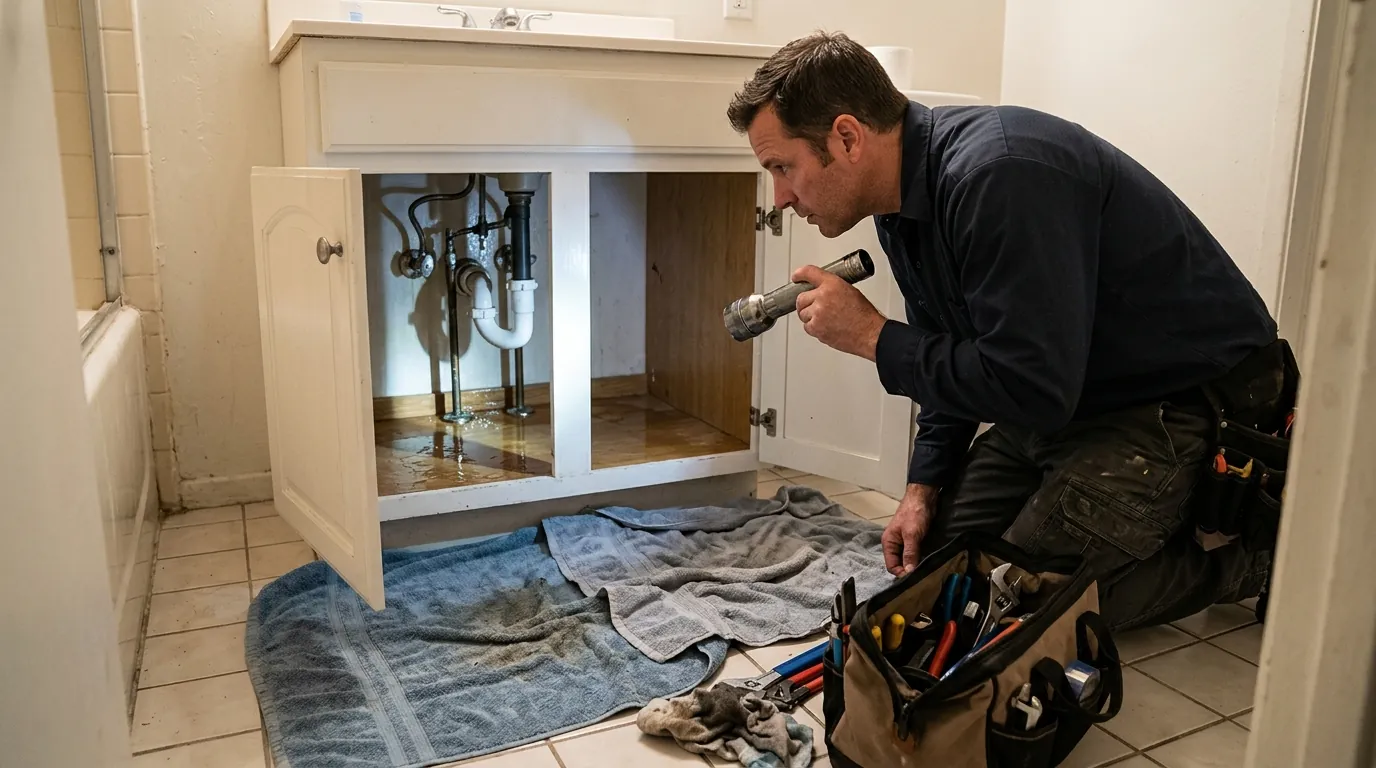
Leak detection is the process of confirming that water is escaping somewhere you cannot see, then narrowing it to an exact spot before anything is cut. We read the meter, isolate hot and cold lines, pressure test sections, and use acoustic listening and thermal imaging. You need it when the bill rises without explanation, the meter moves with everything off, or floors and walls show moisture.
Warning signs
The first job is to split the house into pieces. We close the valve at the water heater to separate hot from cold, then watch the meter again. If the dial stops, the leak is on the hot side. If it keeps moving, we close individual fixture stops and branch valves until the loss disappears and we know which run of pipe is responsible.
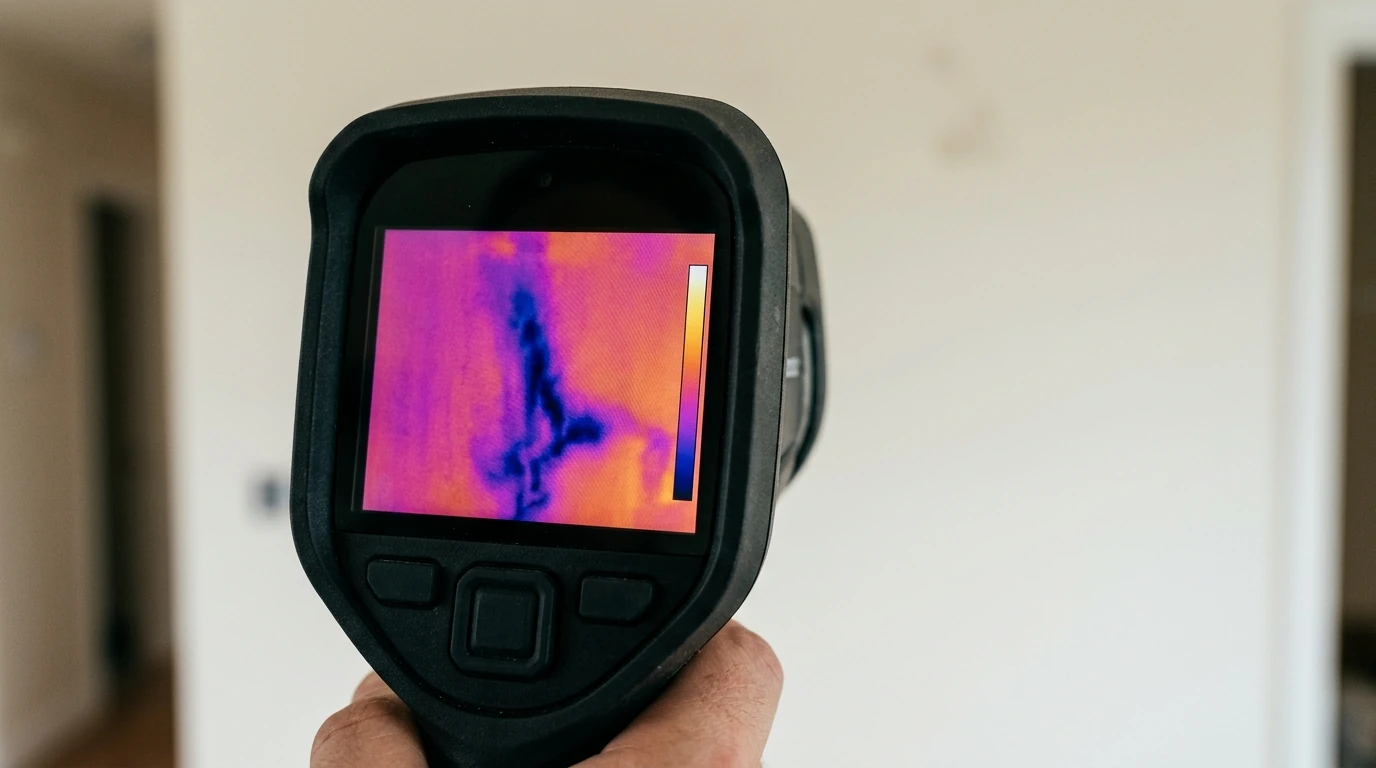
With the section isolated, we listen. An acoustic ground microphone picks up the sound water makes as it sprays out of a pinhole or split. Thermal imaging helps on hot lines and on wet drywall, which shows up cooler than the dry wall around it. A moisture meter confirms what the camera suggests before we mark anything.
Only after those readings agree do we mark the spot. That way the opening is usually the size of a hand or a single floor tile, not a trench across the kitchen.
A pressurized supply leak loses water all the time and moves the meter. A drain leak only loses water when someone runs a fixture, so the meter stays still and the evidence is a stain, an odor or a wet ceiling below a bathroom. We test drains by running one fixture at a time and watching with a camera or a moisture meter.
Irrigation lines and the pipe between the meter and the house are a third category. A broken sprinkler lateral or a split main service line can push water into a lawn or driveway joint for months. If the leak is outside, we check the yard line and, when it is old galvanized pipe, talk about replacing the service line rather than patching it again.
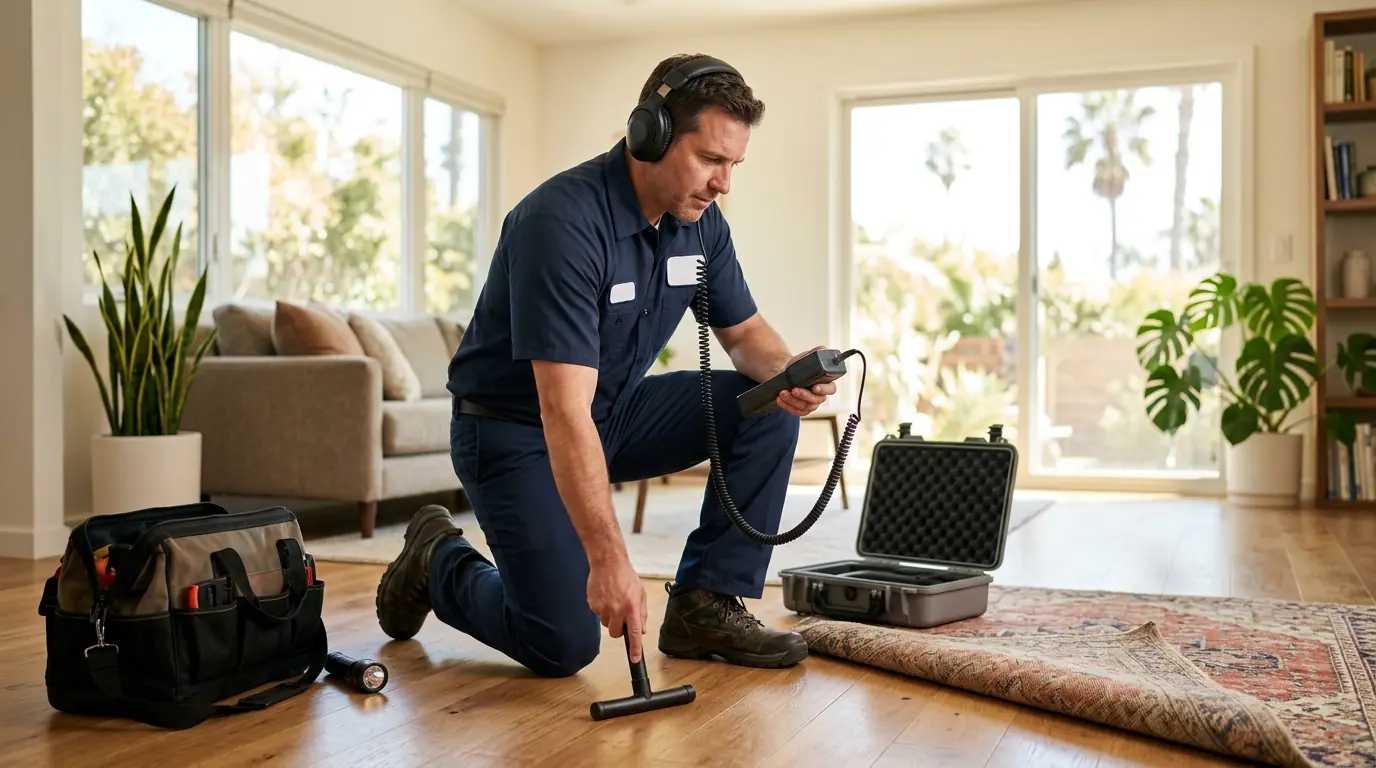
A large share of Valley houses from the 1940s through the 1960s were built on slabs with copper supply lines run through or under the concrete. Hot water lines in particular expand and contract every day, and where the copper rubs against concrete or gravel it thins until a pinhole opens. Expansive clay soil in parts of the Valley can also shift the slab and stress the pipe.
When the readings point under the floor, our next call is whether to repair at that spot or abandon the line and run a new one through the attic or walls. Our slab leak repair page explains that choice in detail, and the article on slab leak signs in Valley homes lists what owners usually notice first.
You get a clear answer: where the leak is, what kind of pipe it is in, how fast it is losing water, and the repair options with prices. We mark the location on the floor or wall and photograph the readings so you have them for your records and for any insurance conversation you choose to have.
If we find more than one problem, such as a weeping toilet flapper on top of a hidden line leak, we tell you both. Running toilets are one of the most common reasons for a high bill in LA, and a quick toilet repair sometimes solves the mystery without opening anything at all.
On the job
We confirm the loss on the meter, then rule out toilets, faucets, the water heater relief valve and irrigation before looking inside walls.
Closing valves in sequence tells us whether the leak is on the hot side, the cold side, a branch line or the yard service.
We cap and pressurize suspect runs with a gauge to watch for a drop that confirms which section is failing.
Acoustic microphones, thermal imaging and moisture meters close in on the exact spot along that run.
We mark the location, show you the readings, and price the repair or reroute before any opening is made.
Slab-on-grade tract homes across the San Fernando Valley hide copper in concrete, while older raised-foundation houses in neighborhoods closer to downtown let us crawl underneath and often see the drip directly. Hard water from Colorado River and State Water Project supplies leaves scale that roughens pipe interiors and wears valve seats. In the City of Los Angeles the meter belongs to LADWP and sits in a sidewalk box; other cities read their own meters and set their own leak adjustment rules. Hillside homes with long service lines up steep driveways add another place for water to escape.
Typical pricing
Cost follows the size of the house, how many systems need testing, and whether the leak is under a slab, in a wall or out in the yard.
| Job | Typical LA range |
|---|---|
| Meter test and fixture check for a single-family home | $150 to $350 |
| Electronic leak detection on a slab or wall line | $350 to $750 |
| Yard service line or irrigation leak locate | $300 to $650 |
| Multi-unit building leak search across several units | $600 to $1,500 |
These are typical ranges, not a quote, and the price moves with the number of units, access to the meter, and how many separate systems we have to test. See every job in our LA price guide.
Questions we hear
Locating the leak does not require cutting. We use the meter, valve isolation, pressure testing, acoustic listening and thermal imaging to pinpoint it from outside the wall or floor. The repair itself usually needs one small opening at the marked spot, and on slab leaks we sometimes avoid opening the floor entirely by rerouting the line overhead.
On a pressurized line under a slab, acoustic and thermal readings usually narrow the leak to within about a foot, which is close enough to open one tile. Accuracy drops on very deep lines, thick carpet pads or noisy houses, so we confirm with more than one method before we mark the floor.
LADWP and many other city water departments have a process for adjusting a bill after a leak is fixed, and policies change. Keep the repair invoice and the photos we take of the leak and readings, since those are the documents a utility usually asks for. We do not handle the application, but we give you clear paperwork for it.
That points to the irrigation system rather than the house plumbing. A cracked lateral, a broken head or a leaking valve in the control box can lose a lot of water during each cycle. Run one zone at a time and look for soggy ground or a geyser. We can trace the line if the leak is buried.
Coverage
These are the communities that call us for this most often, with their main ZIP codes. The same 24/7 line covers every one of our 68 service areas.
Often booked together
Leaks in copper lines beneath concrete floors fixed by spot repair, attic or wall reroute, or a full repipe, chosen for your house and slab.
See the detailsSplit copper, rusted galvanized nipples, failed PEX fittings and cracked yard lines repaired fast, with the cause found so the next joint does not go too.
See the detailsA plumber's walk-through of supply pipe, drains, sewer lateral, water heater, gas lines and fixtures, with a plain written list of findings.
See the detailsWhole-house repiping for Los Angeles homes with corroded galvanized or pinholing copper, using copper or PEX routed through attics and walls instead of the slab.
See the detailsCall the line any hour. A plumber answers, asks what you are seeing and tells you what happens next.