Commercial Plumbing
Restroom repairs, flushometer valves, floor drains, commercial water heaters, gas lines and backflow work for LA storefronts, offices and light industrial spaces.
See the detailsRepairs & emergencies
Emergency PlumbingLeak DetectionSlab Leak RepairBurst Pipe RepairToilet RepairFaucet RepairGarbage Disposal RepairShower Valve RepairPressure Regulator ReplacementOutdoor Spigot RepairDrains & sewer
Drain CleaningMain Line Clog ClearingHydro JettingSewer Camera InspectionSewer Line RepairTrenchless Sewer ReplacementSewer Cleanout InstallationStorm & Yard Drain CleaningWater heaters
Water Heater RepairWater Heater ReplacementTankless Water Heater InstallationTankless Water Heater ServiceHeat Pump Water Heater InstallationWater Heater Earthquake StrappingHot Water Recirculation PumpPipes, gas & water lines
Whole-House RepipingMain Water Line ReplacementShutoff Valve ReplacementGas Line RepairGas Line InstallationSeismic Gas Shutoff ValveBackflow TestingWater Softener InstallationWhole-House Water FiltrationFixtures, remodels & property
Toilet InstallationFaucet & Sink InstallationKitchen PlumbingBathroom Remodel PlumbingADU PlumbingPlumbing InspectionApartment Building PlumbingCommercial PlumbingGrease Trap ServiceCity of Los Angeles
Los AngelesResedaWinnetkaCanoga ParkWest HillsTarzanaChatsworthPorter RanchGranada HillsNorth HillsLake BalboaPanorama CityValley GlenSun ValleyPacoimaSylmarSunland-TujungaSan PedroWilmingtonMission HillsValley VillageHarbor CityLA and Ventura county cities
Santa ClaritaSan FernandoBurbankGlendalePasadenaCalabasasThousand OaksSimi ValleySanta MonicaInglewoodHawthorneTorranceCarsonLong BeachComptonMore LA County cities
DowneyNorwalkLakewoodEl MonteWest CovinaWhittierPomonaAlhambraArcadiaCovinaBeverly HillsCulver CityRedondo BeachBellflowerSouth GateOrange County and Inland Empire
AnaheimSanta AnaIrvineHuntington BeachOrangeFullertonGarden GroveCosta MesaRancho CucamongaOntarioCoronaCounties
Los Angeles CountyVentura CountyOrange CountySan Bernardino CountyRiverside CountyThe three-compartment sink drains slowly, the dish area smells sour, and the grease trap has not been opened in months. A full trap pushes grease into your lines and toward the street sewer.
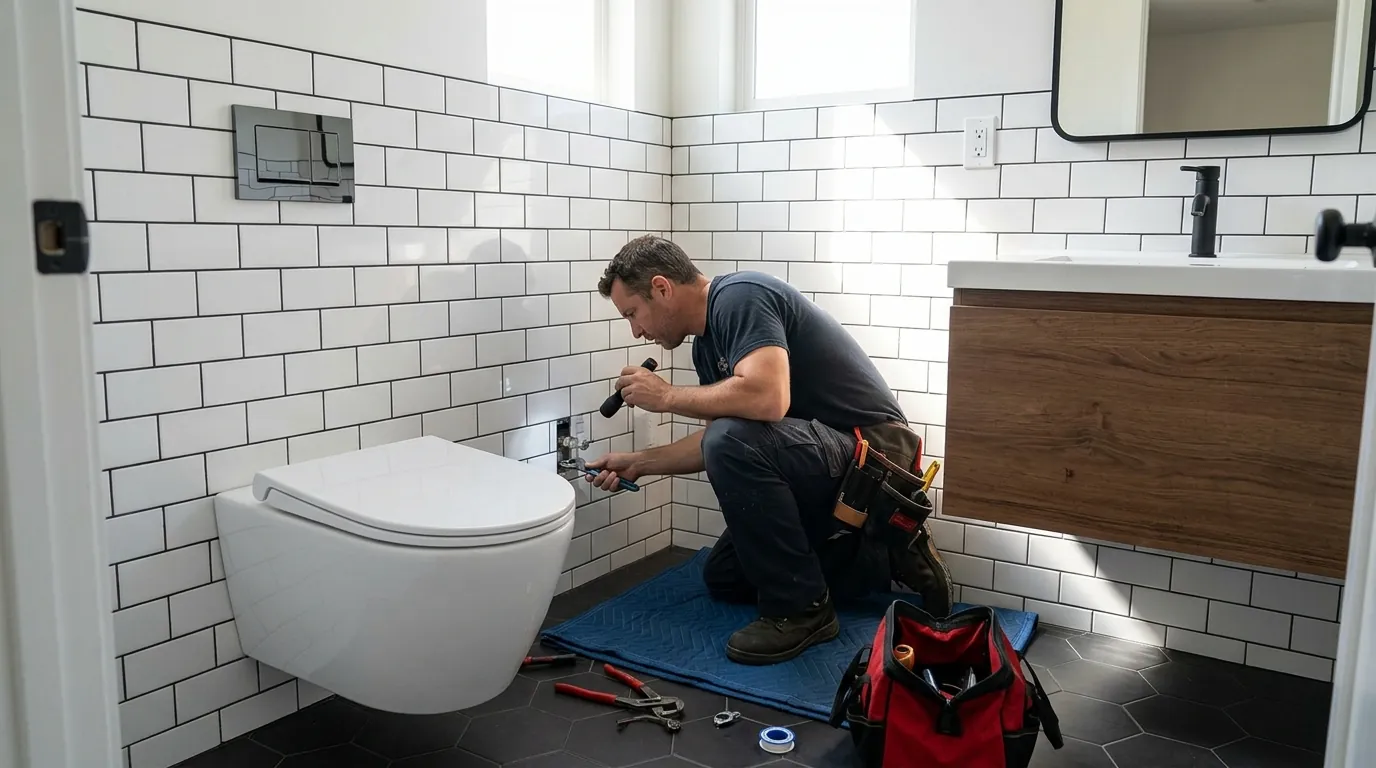
Grease trap service means removing the fats, oils, grease and food solids that collect in a kitchen's grease trap or interceptor, cleaning the baffles and inlet and outlet, and checking the device for damage. Restaurants, cafes, bakeries and other food businesses need it on a regular schedule set by how fast grease builds up, and right away when kitchen drains slow or backups start.
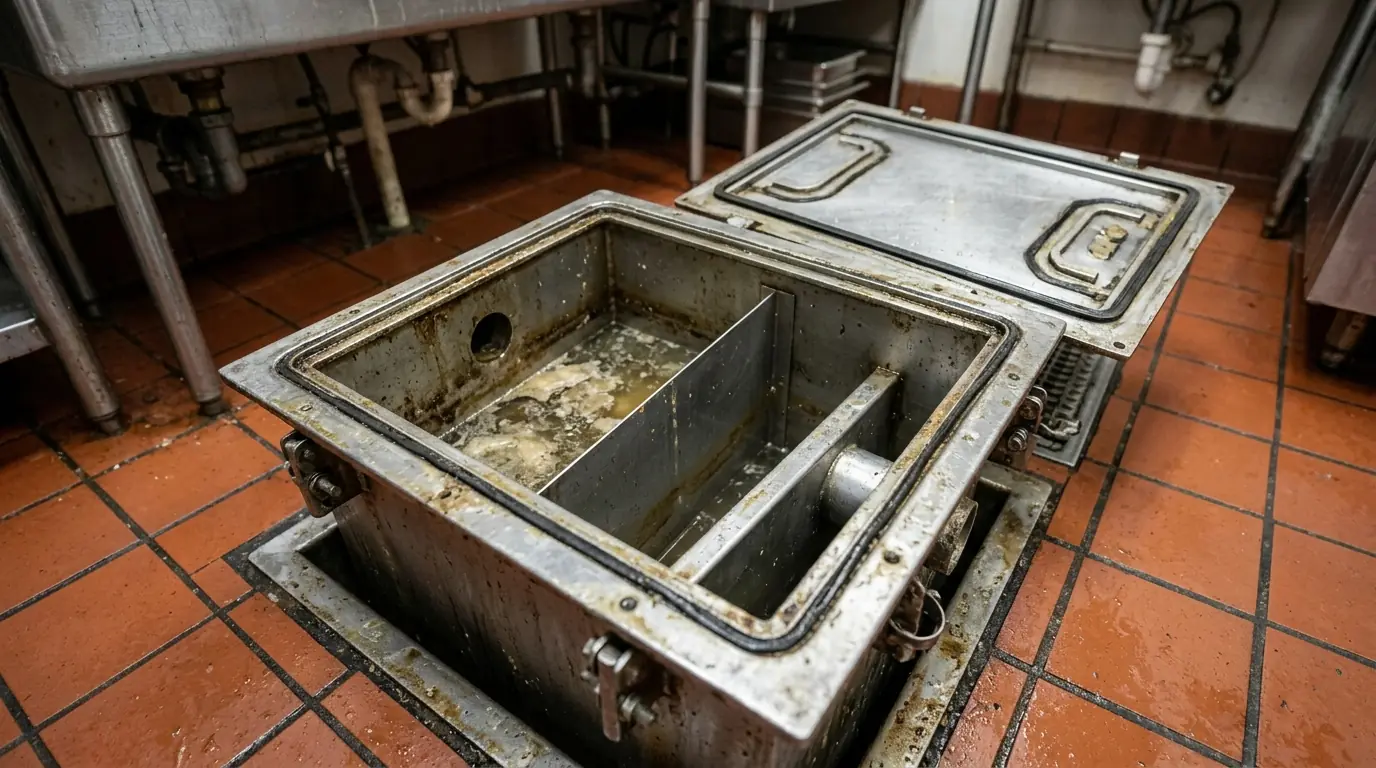
Smaller kitchens often have a hydromechanical grease trap under or beside the dish sink. It is a compact box with baffles that slow the water so grease floats and solids settle. Because it is small, it fills quickly and needs frequent cleaning, often weekly or every couple of weeks in a busy kitchen.
Larger restaurants usually have an in-ground gravity interceptor, a concrete or plastic tank outside or under the parking area, sometimes holding a large volume. It holds much more grease and solids and is pumped out with a vacuum truck on a longer schedule. Both types need the same thing: grease removed before it reaches a set share of the device's capacity.
We handle both. For under-sink units we clean on site. For interceptors we pump, scrape the walls and baffles, and inspect the inlet and outlet tees.
How often a trap needs cleaning depends on the menu, cooking methods, volume, dishwashing practice and trap size. A fryer-heavy kitchen fills a trap far faster than a cafe that mostly bakes. Restaurants that scrape plates well and wipe pans before washing extend the time between services.
Many sewer agencies around Los Angeles County have fats, oils and grease programs with their own rules for pumping frequency and record keeping. We note the depth of grease and solids each visit so you can see how quickly the trap fills and set a schedule that keeps it within the limits your local agency uses.
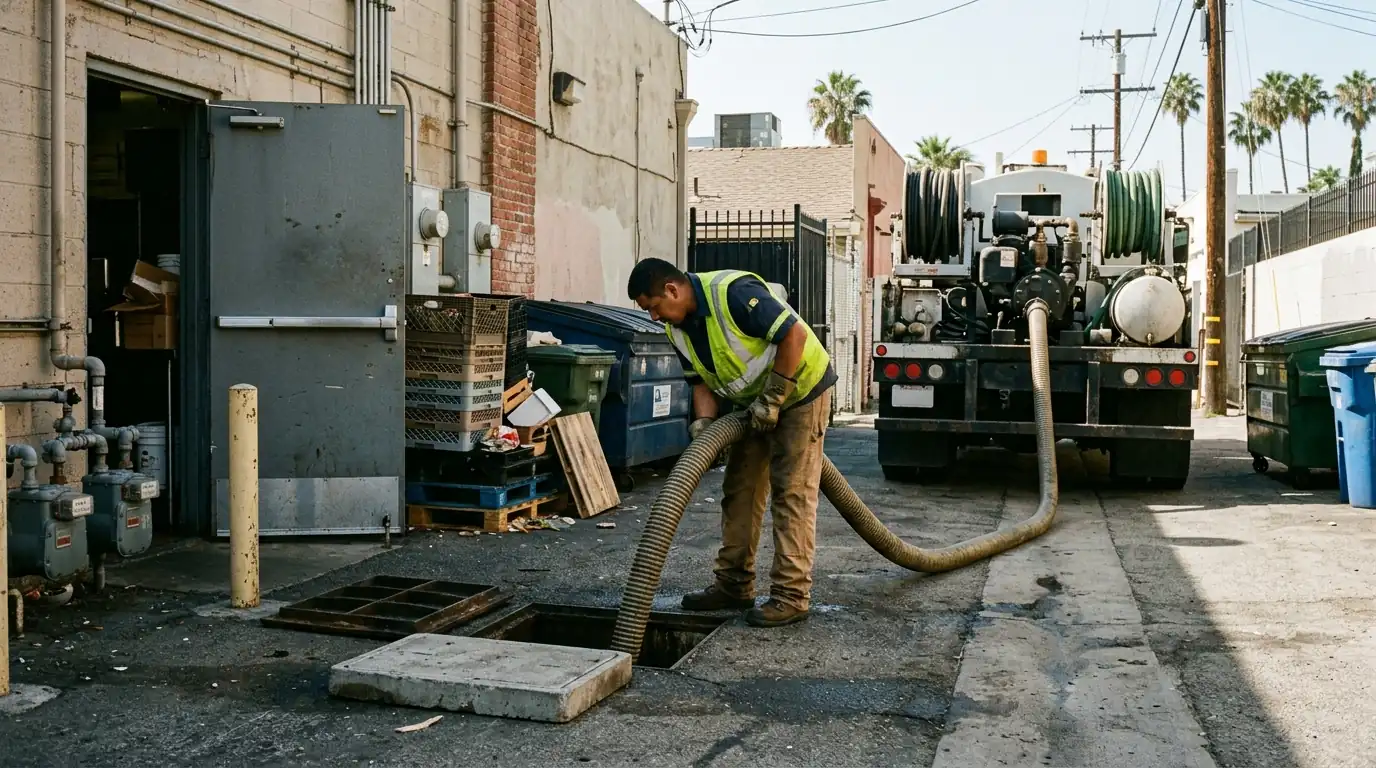
A trap only catches grease that reaches it. Lines between the kitchen fixtures and the trap get coated with grease that cools and hardens, and the line from the trap to the sewer gets whatever slips through. When the kitchen still drains slowly after the trap is pumped, those lines are the problem.
We clean them with high-pressure jetting, which scours grease off the pipe walls instead of punching a hole through it. After jetting, we often run a sewer camera to confirm the pipe is clear and check for sags where grease collects. For small cafes with a single sink line, standard drain cleaning may be enough.
Grease is acidic as it breaks down, and over years it eats at concrete interceptors and corrodes steel traps. Broken baffles, missing outlet tees and cracked lids are common in older kitchens. A trap with a missing baffle is no longer separating grease, even if it gets pumped on time.
We replace baffles, tees, gaskets and lids, and replace traps that are too small for the current kitchen or rusted through. New or replacement grease interceptors need a permit and must match the sizing the local agency requires. For kitchens moving into a new space, our commercial plumbing work covers the full fixture and drain layout.
Food businesses across Los Angeles run from small taco stands and cafes in older storefronts to large restaurants in strip centers and food halls downtown. Older buildings often have undersized traps and cast iron or clay lines between the kitchen and the street, where grease clings to rough pipe walls. The City of Los Angeles and many other sewer agencies in the county run fats, oils and grease programs and inspect food businesses. Tight alleys and limited parking make interceptor pumping harder in dense areas, so early morning service is common.
Warning signs
On the job
We set the visit before opening or after close so the kitchen is not running water into the trap.
We measure the grease layer and settled solids so you have a record of how full the trap was.
Grease, water and solids are removed, and the walls, baffles and tees are scraped clean.
We check baffles, tees, gaskets and lid for damage and note anything that needs repair.
We run the sinks and floor drains to make sure they flow freely through the trap.
You get a written record with date, grease depth and condition, for your files and inspections.
Typical pricing
Price depends on trap type and size, how full it is, how often it is serviced and how easy it is to reach.
| Job | Typical LA range |
|---|---|
| Clean an under-sink grease trap | $175 to $400 |
| Pump a small in-ground interceptor | $350 to $800 |
| Pump a large in-ground interceptor | $600 to $1,500 |
| Jet kitchen lines feeding the trap | $450 to $1,200 |
| Replace baffles, tees or a damaged lid | $300 to $1,100 |
These are typical ranges, not a quote, and overdue traps, hard access, disposal fees and after-hours work can change the price. See every job in our LA price guide.
Questions we hear
It depends on the kitchen. Under-sink traps in busy kitchens often need weekly or biweekly cleaning, while in-ground interceptors are usually pumped every one to three months. Your local sewer agency may set requirements, so measure the grease layer each visit and adjust the schedule to keep within those limits.
Some small under-sink traps can be cleaned by kitchen staff, but grease must be disposed of properly, not poured down another drain or into the trash. Many operators prefer a service so there is a written record. In-ground interceptors need a vacuum truck and should always be pumped by a service.
The trap may be clean but the lines feeding it are coated with grease. Jetting the kitchen lines removes that buildup. If drains are still slow after jetting, a camera will show whether there is a sag or broken section collecting grease.
Yes. Each visit you get a written record with the date, grease and solids depth, condition of the trap and any repairs needed. Keep these with your other records, since sewer agency inspectors often ask to see them, and a steady log also shows whether your pumping interval is right.
Coverage
These are the communities that call us for this most often, with their main ZIP codes. The same 24/7 line covers every one of our 68 service areas.
Often booked together
Restroom repairs, flushometer valves, floor drains, commercial water heaters, gas lines and backflow work for LA storefronts, offices and light industrial spaces.
See the detailsHigh-pressure water jetting that scours grease, scale, sludge and fine roots off the pipe wall, for lines that keep clogging after a cable has gone through.
See the detailsKitchen, bathroom, laundry and floor drain clearing with sized cables and cutters, plus a clear explanation of what caused the clog and how to avoid the next one.
See the detailsA waterproof camera run through your sewer lateral to show cracks, roots, bellies and offsets on video, with depth and location marked before any digging is planned.
See the detailsCall the line any hour. A plumber answers, asks what you are seeing and tells you what happens next.