Sewer Camera Inspection
A waterproof camera run through your sewer lateral to show cracks, roots, bellies and offsets on video, with depth and location marked before any digging is planned.
See the detailsRepairs & emergencies
Emergency PlumbingLeak DetectionSlab Leak RepairBurst Pipe RepairToilet RepairFaucet RepairGarbage Disposal RepairShower Valve RepairPressure Regulator ReplacementOutdoor Spigot RepairDrains & sewer
Drain CleaningMain Line Clog ClearingHydro JettingSewer Camera InspectionSewer Line RepairTrenchless Sewer ReplacementSewer Cleanout InstallationStorm & Yard Drain CleaningWater heaters
Water Heater RepairWater Heater ReplacementTankless Water Heater InstallationTankless Water Heater ServiceHeat Pump Water Heater InstallationWater Heater Earthquake StrappingHot Water Recirculation PumpPipes, gas & water lines
Whole-House RepipingMain Water Line ReplacementShutoff Valve ReplacementGas Line RepairGas Line InstallationSeismic Gas Shutoff ValveBackflow TestingWater Softener InstallationWhole-House Water FiltrationFixtures, remodels & property
Toilet InstallationFaucet & Sink InstallationKitchen PlumbingBathroom Remodel PlumbingADU PlumbingPlumbing InspectionApartment Building PlumbingCommercial PlumbingGrease Trap ServiceCity of Los Angeles
Los AngelesResedaWinnetkaCanoga ParkWest HillsTarzanaChatsworthPorter RanchGranada HillsNorth HillsLake BalboaPanorama CityValley GlenSun ValleyPacoimaSylmarSunland-TujungaSan PedroWilmingtonMission HillsValley VillageHarbor CityLA and Ventura county cities
Santa ClaritaSan FernandoBurbankGlendalePasadenaCalabasasThousand OaksSimi ValleySanta MonicaInglewoodHawthorneTorranceCarsonLong BeachComptonMore LA County cities
DowneyNorwalkLakewoodEl MonteWest CovinaWhittierPomonaAlhambraArcadiaCovinaBeverly HillsCulver CityRedondo BeachBellflowerSouth GateOrange County and Inland Empire
AnaheimSanta AnaIrvineHuntington BeachOrangeFullertonGarden GroveCosta MesaRancho CucamongaOntarioCoronaCounties
Los Angeles CountyVentura CountyOrange CountySan Bernardino CountyRiverside CountyYour ADU plans are drawn, but nobody has checked whether the backyard drain can reach the house sewer, or whether the gas meter can carry another water heater. Those answers shape the whole project.
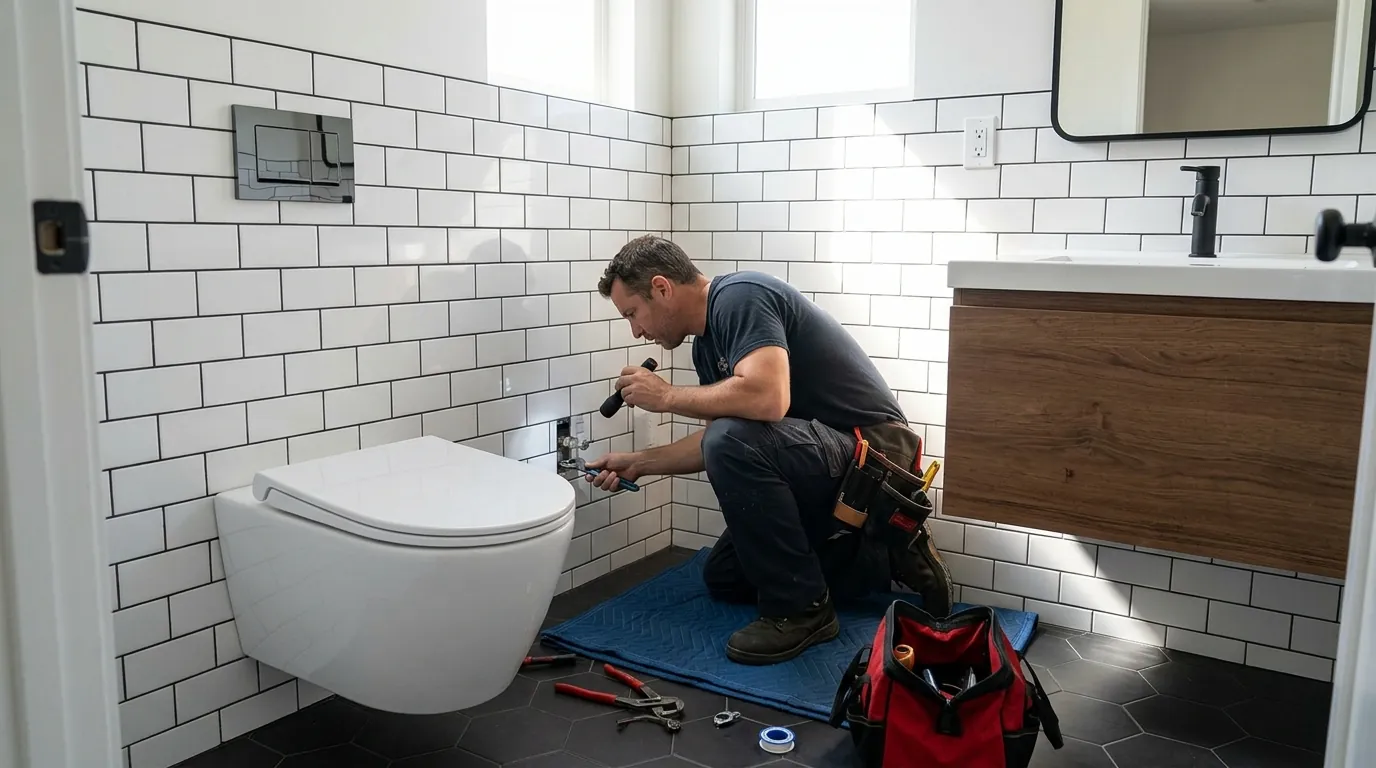
ADU plumbing is the sewer, water and gas work that serves a backyard unit, garage conversion or junior unit. It covers tying the new drain line into the house lateral, running water from the main or a new meter, sizing gas for added appliances, and rough-in for the kitchen and bath. Plan it before design is final, because grade and existing line depth decide what is possible.
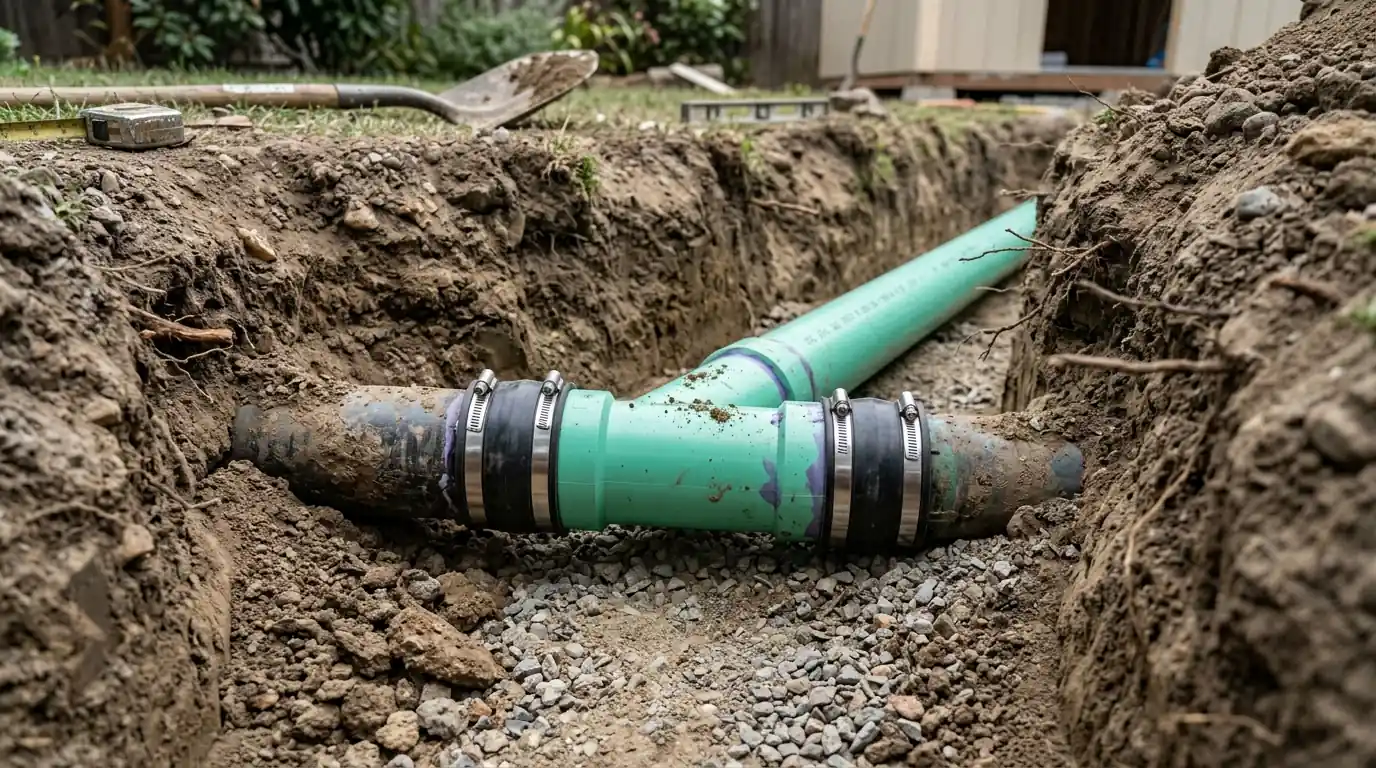
Most backyard units drain by gravity into the existing house lateral, the pipe running from the house to the street sewer. The connection needs enough slope over the full run, so we check the depth of the lateral, the distance and the finished floor height of the unit before anything is designed around it.
We start with a camera inspection of the lateral. In houses built before the 1970s it is often clay or cast iron, and roots from street trees and backyard trees can crack it. If the line is damaged, adding a second unit's waste will turn a slow problem into backups for both homes. Repair or replacement then becomes part of the ADU budget.
When the yard falls away from the street, the unit may sit lower than the sewer. Then a sewage ejector pump and a pressure line become part of the design, and the pump needs power and a service route for the future.
Most ADUs share the main house water meter, with a branch line run from the main to the unit and its own shutoff valve. The question is whether the existing meter and main line can supply both homes at the same time. Older homes often have a small main, and adding a second shower and washer can drop pressure when both are running.
We look at the meter size, the main line material and size, and the static pressure. If the main is old galvanized or undersized, replacing it during the ADU work is cheaper than doing it later. Our page on main water line replacement explains that job. Some owners choose a separate meter for billing, which involves the water utility and changes the cost and timeline.
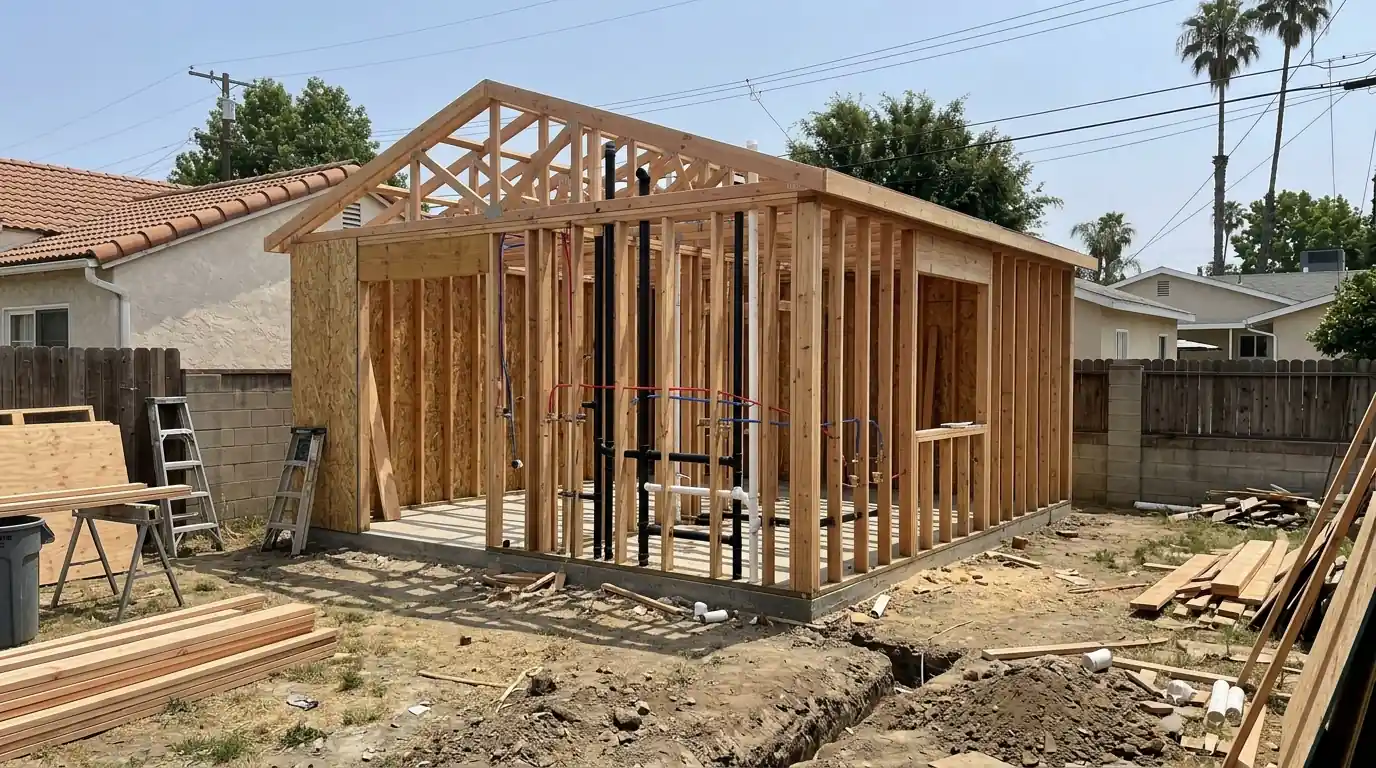
If the ADU will have gas appliances, we total up the demand of every appliance in both homes and compare it to the meter and the pipe sizes. A tankless gas heater is a big load, and it often needs a larger line from the meter. That work ties into new gas line runs and a pressure test for the inspector.
Many owners now go all-electric in the unit to skip the gas work entirely. A heat pump water heater fits that plan well, as long as it has room to pull air and somewhere for condensate to drain. Our article on choosing a water heater type covers the tradeoffs, and planning the electric panel early avoids surprises.
Whichever heater you pick, a tank model has to be strapped in the upper and lower third, the same seismic rule that applies to the main house.
A garage conversion keeps the existing slab, so every drain has to be trenched into it. We place the bathroom and kitchen close together and near the side of the garage facing the house lateral, which cuts trench length. Garages also tend to sit lower than the house, which affects slope.
A new detached unit lets us lay drains before the slab is poured, which is cleaner and cheaper per fixture. The tradeoff is a longer trench across the yard for sewer, water and sometimes gas. Our article on planning backyard ADU plumbing goes deeper into layouts.
Warning signs
Typical pricing
ADU plumbing costs depend on trench length, the condition of the existing lateral, whether gas is involved, and whether gravity drainage works.
| Job | Typical LA range |
|---|---|
| Sewer, water and gas trench and lines for a detached unit | $6,000 to $18,000 |
| Interior rough-in and finish for one bath and kitchen | $8,000 to $18,000 |
| Garage conversion slab trenching and drain rough-in | $4,000 to $10,000 |
| Sewage ejector pump system where gravity fails | $3,500 to $9,000 |
These are typical ranges, not a quote, and lateral repairs, meter upgrades, long trenches and permit fees can change them a lot. See every job in our LA price guide.
On the job
We camera the lateral, check main line size and pressure, and look at the gas meter and existing piping.
We share tie-in depth, slope and sizing so the drawings reflect what the site can support.
Sewer, water and gas trenches are dug and pipe is laid, tested and inspected before backfill or slab pour.
Drains, vents, supply lines and gas stubs go into the framing, then get pressure tested and inspected.
Fixtures, the water heater and appliances are set and the unit is tied into service and run.
Backyard units are now common across the city, from Valley tract lots to hillside parcels. Flat Valley lots usually allow gravity drainage, while hillside yards that drop away from the street often need an ejector pump. Older homes frequently have clay or cast iron laterals that street trees have cracked, so a camera check comes first. Water comes from LADWP in the city and from local departments elsewhere, which matters if you want a separate meter. Gas sizing involves SoCalGas service, and permits and inspections in the City of Los Angeles go through LADBS.
Questions we hear
Usually, yes, if the lateral is in good shape and there is enough slope from the ADU to the tie-in point. We camera the line first. If it is cracked clay or rotted cast iron, repairing or replacing it becomes part of the project so both units drain reliably.
Not necessarily. Many ADUs share the main house meter with a separate branch and shutoff. A separate meter is optional and involves the water utility, which adds cost and time. The bigger question is whether the existing main line can supply both homes at once.
It is a sealed basin with a pump that pushes waste uphill through a pressure line to the sewer. An ADU needs one when the unit sits below the sewer connection, which happens on lots that slope down from the street. It needs power and occasional service.
Before the design is finished. The depth of the lateral, slope across the yard, main line size and gas capacity can change where the bathroom and kitchen go. Learning that after plans are approved often means revisions, resubmittals and delays while the contractor waits.
Coverage
These are the communities that call us for this most often, with their main ZIP codes. The same 24/7 line covers every one of our 68 service areas.
Often booked together
A waterproof camera run through your sewer lateral to show cracks, roots, bellies and offsets on video, with depth and location marked before any digging is planned.
See the detailsReplacement of the private water service line between the meter and your house, in copper or approved plastic, by trenching or trenchless pull methods.
See the detailsNew gas piping sized to your meter and appliance load, run to ranges, dryers, pool heaters, fire pits and barbecues, permitted and pressure tested.
See the detailsHeat pump water heater installs for Los Angeles homes, including space and airflow checks, electrical planning, condensate routing, strapping and gas tank removal.
See the detailsCall the line any hour. A plumber answers, asks what you are seeing and tells you what happens next.