Leak Detection
Hidden supply, slab and drain leaks pinpointed with meter checks, pressure isolation, acoustic listening and thermal imaging, so repairs start with one small opening.
See the detailsRepairs & emergencies
Emergency PlumbingLeak DetectionSlab Leak RepairBurst Pipe RepairToilet RepairFaucet RepairGarbage Disposal RepairShower Valve RepairPressure Regulator ReplacementOutdoor Spigot RepairDrains & sewer
Drain CleaningMain Line Clog ClearingHydro JettingSewer Camera InspectionSewer Line RepairTrenchless Sewer ReplacementSewer Cleanout InstallationStorm & Yard Drain CleaningWater heaters
Water Heater RepairWater Heater ReplacementTankless Water Heater InstallationTankless Water Heater ServiceHeat Pump Water Heater InstallationWater Heater Earthquake StrappingHot Water Recirculation PumpPipes, gas & water lines
Whole-House RepipingMain Water Line ReplacementShutoff Valve ReplacementGas Line RepairGas Line InstallationSeismic Gas Shutoff ValveBackflow TestingWater Softener InstallationWhole-House Water FiltrationFixtures, remodels & property
Toilet InstallationFaucet & Sink InstallationKitchen PlumbingBathroom Remodel PlumbingADU PlumbingPlumbing InspectionApartment Building PlumbingCommercial PlumbingGrease Trap ServiceCity of Los Angeles
Los AngelesResedaWinnetkaCanoga ParkWest HillsTarzanaChatsworthPorter RanchGranada HillsNorth HillsLake BalboaPanorama CityValley GlenSun ValleyPacoimaSylmarSunland-TujungaSan PedroWilmingtonMission HillsValley VillageHarbor CityLA and Ventura county cities
Santa ClaritaSan FernandoBurbankGlendalePasadenaCalabasasThousand OaksSimi ValleySanta MonicaInglewoodHawthorneTorranceCarsonLong BeachComptonMore LA County cities
DowneyNorwalkLakewoodEl MonteWest CovinaWhittierPomonaAlhambraArcadiaCovinaBeverly HillsCulver CityRedondo BeachBellflowerSouth GateOrange County and Inland Empire
AnaheimSanta AnaIrvineHuntington BeachOrangeFullertonGarden GroveCosta MesaRancho CucamongaOntarioCoronaCounties
Los Angeles CountyVentura CountyOrange CountySan Bernardino CountyRiverside CountyA hot spot on the tile, a hissing floor or a meter that never stops usually means a pipe has failed inside or under your concrete slab. We fix it with the least floor demolition the house allows.
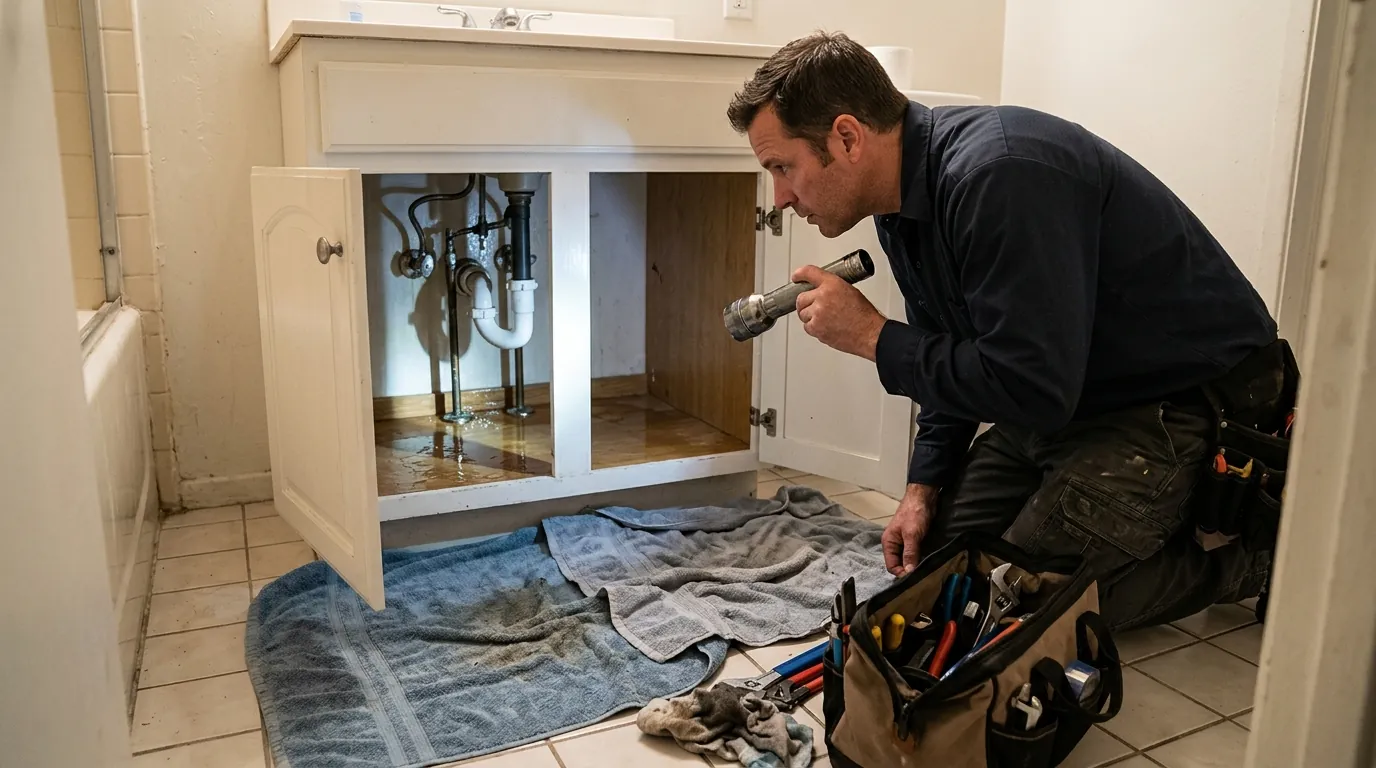
Slab leak repair fixes a water line that has failed below a concrete floor. There are three paths: open the slab at the leak and splice the pipe, abandon the failed line and reroute new pipe through walls or the attic, or repipe the house. The right choice depends on the age of the copper, how many leaks you have had, and what sits on top of the floor.
Warning signs
A spot repair means cutting a small opening in the slab right over the leak, digging down to the pipe, replacing the damaged section, and patching the concrete. It works best when the copper is otherwise in good shape, the leak is easy to reach, and it is the first failure the house has had.
A reroute abandons the leaking line in place and runs new pipe, usually PEX or copper, through the attic and down inside the walls to the fixtures it served. It avoids breaking the floor, which matters when the leak sits under hardwood, a kitchen island or an oversized tile you cannot match.
A repipe replaces every supply line in the house. If you have already had two or three slab leaks, the copper is likely thinning everywhere, and paying for one leak at a time stops making sense. Our whole-house repiping page covers what that project involves.
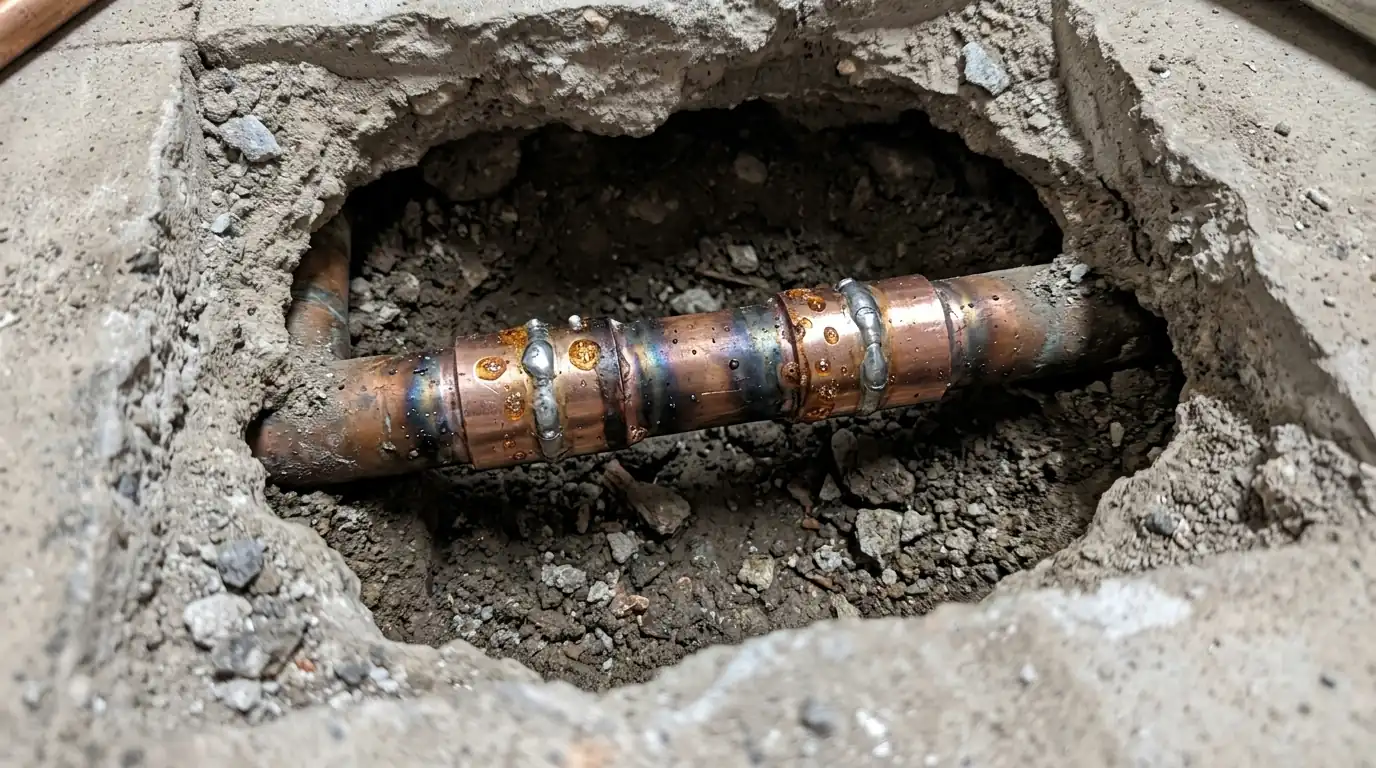
Many tract homes from the 1940s through the 1960s were plumbed with soft copper laid in trenches before the concrete was poured. Hot lines expand and contract each time water runs, and over decades the pipe rubs against concrete, rebar or rocks in the fill until a pinhole opens. Hard LA water can also leave pitting on the inside of the pipe wall.
Expansive clay soils in parts of the Valley swell when wet and shrink when dry. That movement shifts the slab a little each season, which stresses pipe where it rises through the floor. Older houses that went through the 1994 Northridge earthquake may also have pipe that was bent or kinked and has been weakening ever since.
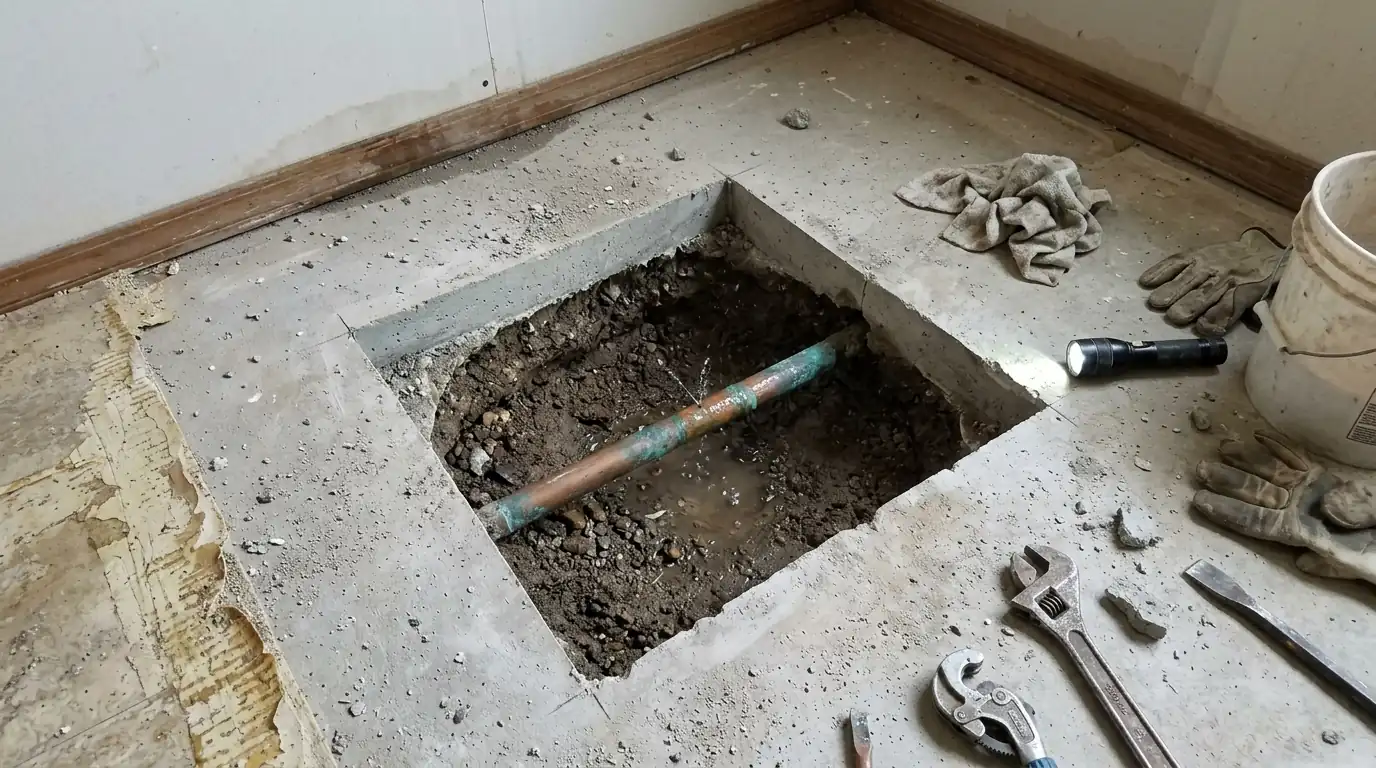
Before any cutting, the leak has to be located precisely. We start every slab job with electronic leak locating so the opening is small and in the right place. When we do open a slab, we cover furniture, seal off the room with plastic, and use a saw with water feed to cut down on dust.
On a reroute, the openings are in drywall instead of concrete. We cut neat rectangles at the top and bottom of each wall run, pull new pipe through, and leave the openings clean for a drywall patch. Most reroutes are finished in one or two days, and you keep water for most of that time.
On a reroute, the failed line is cut and capped at both ends where it enters and leaves the slab, so it cannot leak again or send water into the soil. Nothing is left pressurized under the floor.
On a spot repair, we backfill the hole with sand around the new pipe, then pour fresh concrete flush with the slab. Flooring is a separate trade, so we leave the patch level and ready for tile or a floor installer.
Once the work is done, it is worth checking a few other things that slab leaks affect. A pressure regulator that has failed high puts extra stress on every pipe, and a new regulator protects the rest of the copper still in the slab.
On the job
We verify the loss at the meter, isolate hot or cold, and pinpoint the leak under the slab with acoustic and thermal tools.
You get prices for spot repair, reroute and, when it fits, a repipe, along with an honest read on the condition of the copper.
Reroutes and repipes usually need a plumbing permit through LADBS or your city's building department, which we file.
We open the slab or walls, install new pipe, and pressure test it before anything is closed back up.
Abandoned lines are capped, concrete is patched or wall openings are left ready for drywall, and water is turned back on.
We watch the meter with all fixtures off to confirm the loss has stopped, and arrange the inspection if a permit was pulled.
Slab construction is everywhere in the San Fernando Valley, and it continues through Santa Clarita, Simi Valley, Thousand Oaks and much of Orange County. Low single-story ranch houses usually have an attic that makes rerouting practical, while two-story slab homes need careful planning through interior walls. Expansive clay soils in the Valley move slabs seasonally. Permits go through LADBS inside the City of Los Angeles and through each city's own department elsewhere. If you live in Reseda or a similar tract neighborhood, your neighbors have probably dealt with the same aging copper.
Typical pricing
The biggest drivers are which repair method fits, how long a reroute run is, what flooring sits over the leak, and whether a permit and inspection are needed.
| Job | Typical LA range |
|---|---|
| Spot repair through the slab, including concrete patch | $1,500 to $3,500 |
| Reroute of one hot or cold branch through attic and walls | $1,800 to $4,500 |
| Whole-house repipe of a typical single-story slab home | $7,000 to $16,000 |
| Leak locate on its own before a repair decision | $350 to $750 |
These are typical ranges, not a quote, and prices shift with house size, floor finish, attic access, drywall patching and permit requirements. See every job in our LA price guide.
Questions we hear
It depends on the copper and the floor. A reroute avoids demolition under finished flooring and replaces a whole branch with new pipe, so it often lasts longer. A spot repair is cheaper on a first leak in sound copper with easy access. We look at both and tell you which one fits your slab and finish.
A spot repair is usually done in one day, though the concrete patch needs time to cure before flooring goes back. A single branch reroute is often one to two days. A whole-house repipe on a slab home typically runs three to five days, with water restored each evening on most jobs.
A steady leak can wash out or soften the soil under the slab, and in expansive clay it can make the soil swell. Over time that can lead to cracks and uneven floors. Fixing the leak promptly is the best protection, and if you see large cracks we suggest having a structural professional look at it.
Often, yes. The conditions that caused the first pinhole, such as age, abrasion, water chemistry and slab movement, usually affect the rest of the copper too. A second leak within a few years is a strong sign the whole system is near the end. That is when a repipe usually becomes cheaper than chasing leaks.
Coverage
These are the communities that call us for this most often, with their main ZIP codes. The same 24/7 line covers every one of our 68 service areas.
Often booked together
Hidden supply, slab and drain leaks pinpointed with meter checks, pressure isolation, acoustic listening and thermal imaging, so repairs start with one small opening.
See the detailsWhole-house repiping for Los Angeles homes with corroded galvanized or pinholing copper, using copper or PEX routed through attics and walls instead of the slab.
See the detailsWe gauge your house water pressure, replace failed pressure reducing valves at the main, and set them to a safe level that protects pipes and fixtures.
See the detailsA plumber's walk-through of supply pipe, drains, sewer lateral, water heater, gas lines and fixtures, with a plain written list of findings.
See the detailsCall the line any hour. A plumber answers, asks what you are seeing and tells you what happens next.