Gas Line Repair
We trace gas leaks with gauges and detectors, repair or replace damaged pipe and fittings, and pressure test the line before your appliances go back on.
See the detailsRepairs & emergencies
Emergency PlumbingLeak DetectionSlab Leak RepairBurst Pipe RepairToilet RepairFaucet RepairGarbage Disposal RepairShower Valve RepairPressure Regulator ReplacementOutdoor Spigot RepairDrains & sewer
Drain CleaningMain Line Clog ClearingHydro JettingSewer Camera InspectionSewer Line RepairTrenchless Sewer ReplacementSewer Cleanout InstallationStorm & Yard Drain CleaningWater heaters
Water Heater RepairWater Heater ReplacementTankless Water Heater InstallationTankless Water Heater ServiceHeat Pump Water Heater InstallationWater Heater Earthquake StrappingHot Water Recirculation PumpPipes, gas & water lines
Whole-House RepipingMain Water Line ReplacementShutoff Valve ReplacementGas Line RepairGas Line InstallationSeismic Gas Shutoff ValveBackflow TestingWater Softener InstallationWhole-House Water FiltrationFixtures, remodels & property
Toilet InstallationFaucet & Sink InstallationKitchen PlumbingBathroom Remodel PlumbingADU PlumbingPlumbing InspectionApartment Building PlumbingCommercial PlumbingGrease Trap ServiceCity of Los Angeles
Los AngelesResedaWinnetkaCanoga ParkWest HillsTarzanaChatsworthPorter RanchGranada HillsNorth HillsLake BalboaPanorama CityValley GlenSun ValleyPacoimaSylmarSunland-TujungaSan PedroWilmingtonMission HillsValley VillageHarbor CityLA and Ventura county cities
Santa ClaritaSan FernandoBurbankGlendalePasadenaCalabasasThousand OaksSimi ValleySanta MonicaInglewoodHawthorneTorranceCarsonLong BeachComptonMore LA County cities
DowneyNorwalkLakewoodEl MonteWest CovinaWhittierPomonaAlhambraArcadiaCovinaBeverly HillsCulver CityRedondo BeachBellflowerSouth GateOrange County and Inland Empire
AnaheimSanta AnaIrvineHuntington BeachOrangeFullertonGarden GroveCosta MesaRancho CucamongaOntarioCoronaCounties
Los Angeles CountyVentura CountyOrange CountySan Bernardino CountyRiverside CountyAdding a gas range, a pool heater or a backyard fire pit means running pipe that can carry the extra load. We size the line to your meter, route it cleanly and get it inspected.
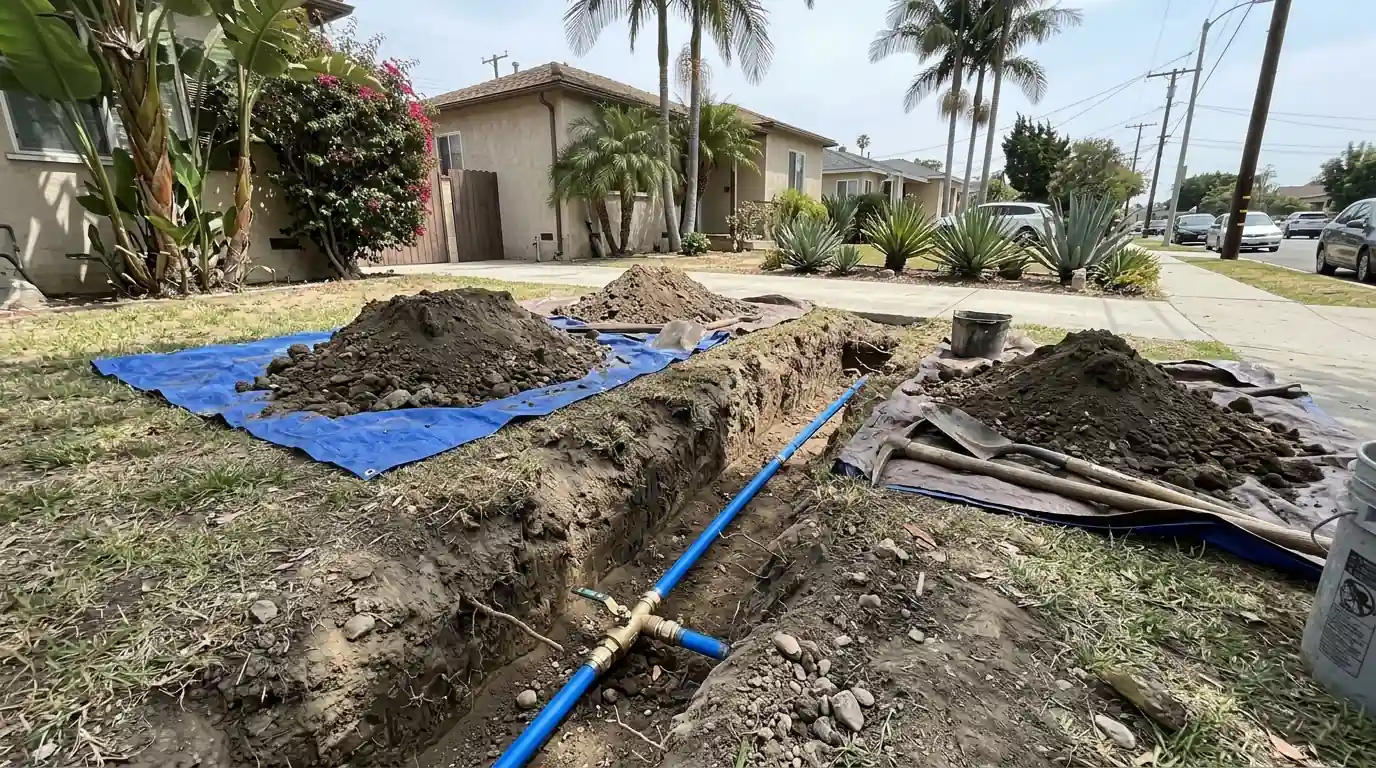
Gas line installation is running new piping to an appliance that doesn't have gas yet, such as a range, dryer, pool heater or fire pit. It involves sizing the pipe for the total load, choosing a route, pulling a permit and passing a pressure test before the appliance is connected. If you ever smell gas during a project, leave the building and call SoCalGas or 911 from outside.
Every gas appliance has a rating in BTUs per hour, and the piping has to deliver all of them at once without the pressure sagging. We add up the range, water heater, furnace, dryer and anything new, then measure the longest run from the meter. Those two numbers decide the pipe diameter for each branch.
This is where many do-it-yourself and handyman jobs go wrong. A half-inch line that's fine for a dryer ten feet from the meter can starve a pool heater sixty feet away. Undersized piping shows up as lazy yellow flames, pilots that drop out and a tankless heater that throws error codes. If your meter itself is too small for the new total, we tell you before we start so you can request an upgrade from SoCalGas.
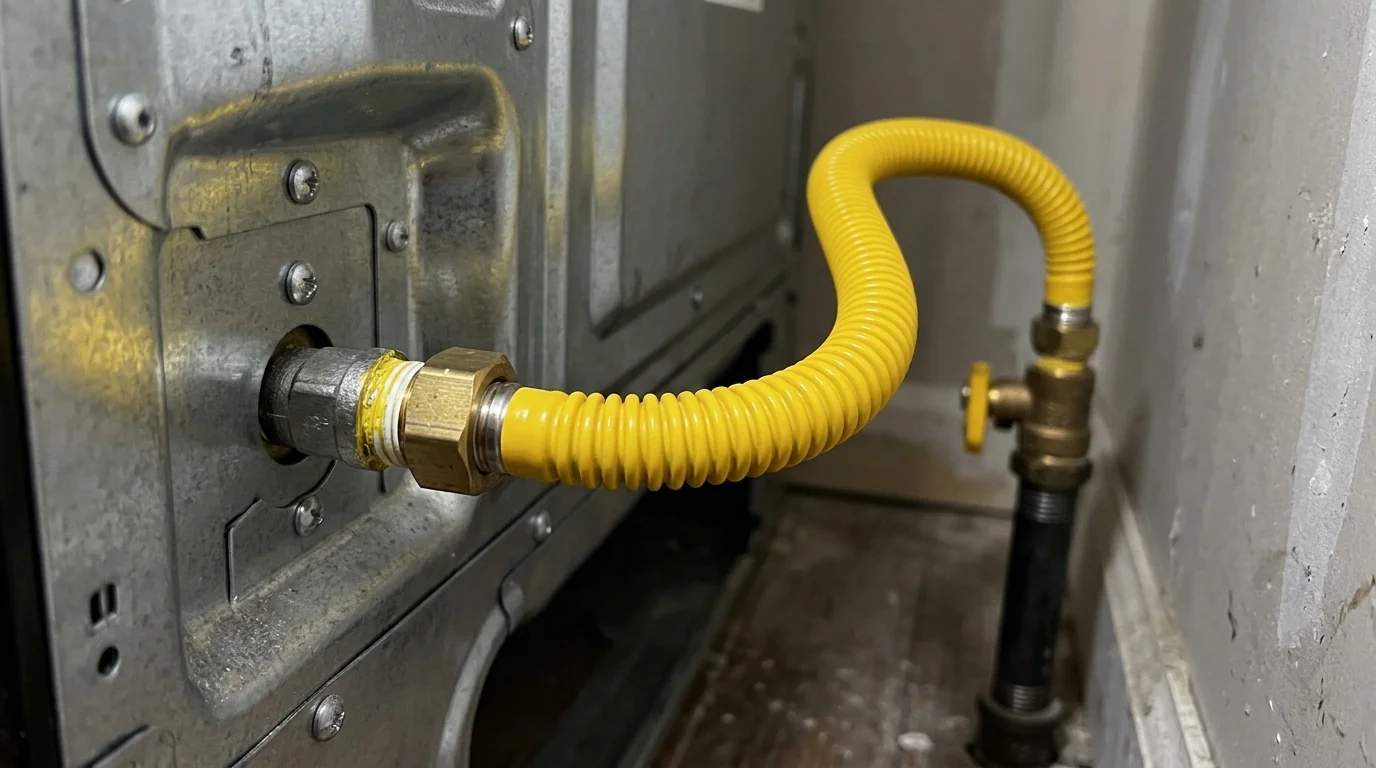
Inside the house, most of our runs are black iron through the crawlspace or attic, the same material that's already there. Corrugated stainless tubing is handy when a run has to snake through finished walls, since it needs fewer joints, but it must be tied into the home's electrical grounding. Exposed pipe on an exterior wall gets painted to slow rust.
Outdoors, buried gas line goes in polyethylene pipe at the depth the code requires, with a tracer wire so it can be located later and steel risers where it comes out of the ground. We route around tree roots, sprinkler mains and sewer laterals, and we plan the trench so concrete cutting is kept to a minimum.
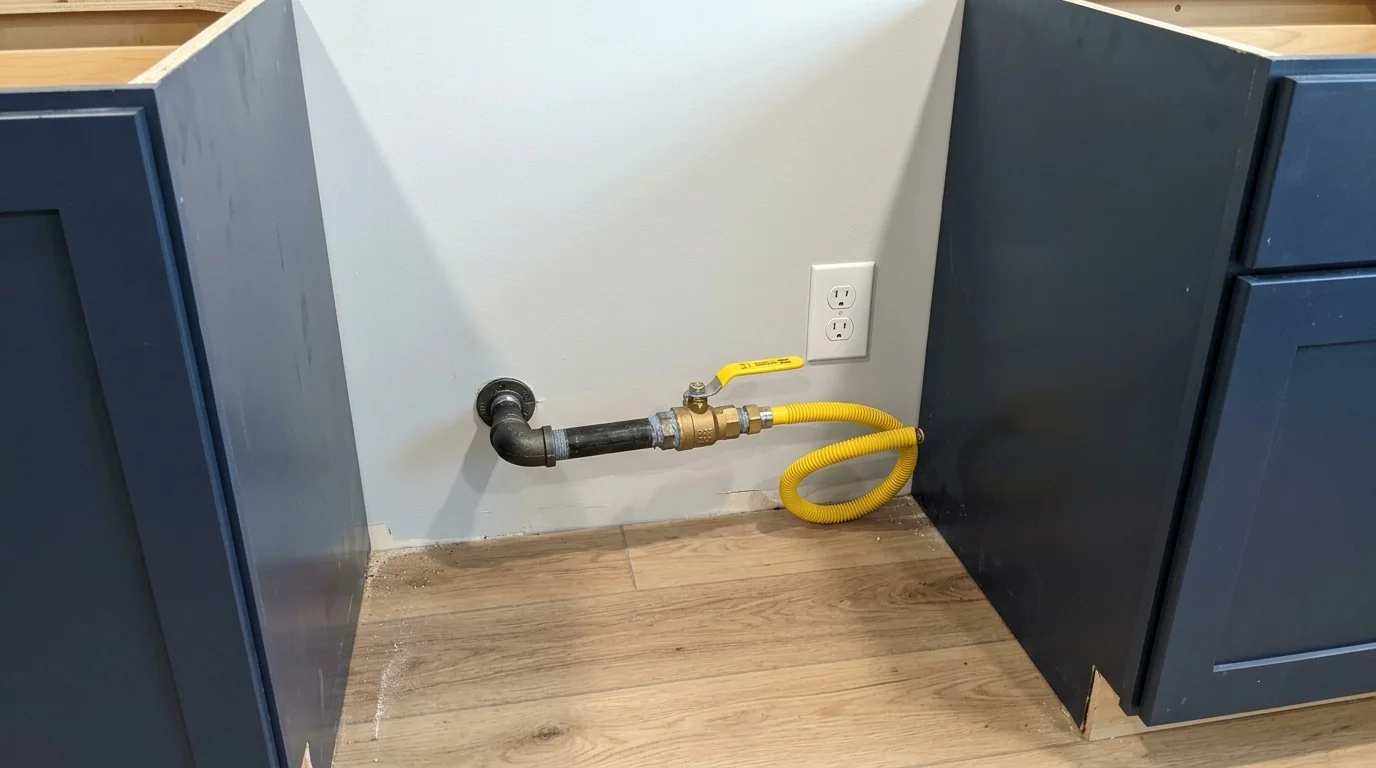
Gas work is easiest when it's planned before cabinets and drywall go in. On a kitchen layout change, we set the range stub at the right height and offset so the flex connector doesn't kink against the wall. A shutoff valve goes where you can actually reach it once the range is pushed back.
Backyard units are a different calculation. An ADU build may add a water heater, a range and a furnace far from the meter, which can push the system past what the current meter delivers. Some owners choose separate service from SoCalGas; others go all-electric in the ADU and save the gas capacity for the main house.
Switching to a tankless unit is another common trigger. A tankless water heater can draw several times what an old tank heater did, and the line feeding it usually has to be upsized from the meter.
New gas piping needs a permit. Inside the City of Los Angeles that goes through LADBS; in Burbank, Glendale, Pasadena, Long Beach and other cities, through their own building departments. We pull the permit and schedule the inspection, so you aren't left chasing paperwork.
Before the inspector arrives, the new piping is capped and pressurized with air on a test gauge. The inspector checks the material, supports, valves and test result. Once it passes, we connect the appliance, open the valve, purge air from the line and adjust the burner until the flame burns clean and steady.
Warning signs
Typical pricing
Length of the run, pipe size, how much concrete or hardscape sits in the way, and permit fees drive most of the cost.
| Job | Typical LA range |
|---|---|
| Short run for a range or dryer near existing pipe | $450 to $1,200 |
| Buried line to a fire pit or barbecue | $1,200 to $3,500 |
| Dedicated line to a pool or spa heater | $1,800 to $5,000 |
| Upsizing a supply for a tankless water heater | $800 to $2,500 |
These are typical ranges, not a quote; long trenches, concrete cutting, meter upgrades and permit fees move the final price. See every job in our LA price guide.
On the job
We list every gas appliance in the home, add the new one, and measure the run from the meter to set the pipe size.
We pick the path through crawlspace, attic, wall or yard and decide on black iron, stainless tubing or buried polyethylene.
We file with LADBS or your city's building department so inspection can follow the rough-in.
With gas off, we tie into the system, run the new line, add a shutoff valve at the appliance and support the pipe properly.
The new run holds air pressure on a gauge for the test period while the inspector reviews the work.
We hook up the appliance with a new connector, purge the line, light it and check the flame and every joint for leaks.
Lot layout shapes most of our gas work here. Valley tract homes on slabs often have no crawlspace, so new lines run through the attic or along an exterior wall instead of under the floor. Hillside homes in neighborhoods like Sunland-Tujunga can have the meter at the street and the patio forty feet below, which means long, steep trenches and careful pipe sizing. Older lots with mature trees take extra care routing around roots. In canyon areas, outdoor fire features also need clearances that make sense in wildfire season.
Questions we hear
If existing pipe runs nearby in the crawlspace or attic, the rough-in usually takes part of a day. The inspection is scheduled separately, so the range is typically connected within a few days of starting, depending on how quickly LADBS or your city can send an inspector.
It depends on what's already connected. Pool heaters draw a lot of gas, and a standard residential meter may not cover the heater, furnace, water heater and range all at full fire. We add up the loads before quoting and tell you if SoCalGas needs to upgrade the meter.
Yes, though going under existing concrete means either cutting a narrow trench and patching it or boring beneath the slab. Polyethylene pipe goes in the ground with a tracer wire, and a steel riser brings it up at the fire pit with a reachable shutoff valve.
Both are approved. Black iron is durable and matches most existing LA systems, but it takes more joints. Corrugated stainless tubing bends around obstacles and fishes through finished walls with fewer fittings, but it must be tied into the home's electrical grounding. We choose based on the route.
Coverage
These are the communities that call us for this most often, with their main ZIP codes. The same 24/7 line covers every one of our 68 service areas.
Often booked together
We trace gas leaks with gauges and detectors, repair or replace damaged pipe and fittings, and pressure test the line before your appliances go back on.
See the detailsAn earthquake-actuated valve at the gas meter that closes automatically in strong shaking, installed on a braced riser, permitted and tested.
See the detailsGas and electric tankless water heaters installed with a properly sized gas line, sealed venting, isolation valves for descaling and a condensate drain where needed.
See the detailsKitchen drains, dishwasher and ice maker hookups, pot fillers, gas range connections and remodel rough-in for Los Angeles houses and condos.
See the detailsCall the line any hour. A plumber answers, asks what you are seeing and tells you what happens next.