Water Heater Repair
Gas and electric tank water heaters diagnosed and repaired: pilot and thermocouple faults, gas valves, burners, elements, relief valves and leaking fittings.
See the detailsRepairs & emergencies
Emergency PlumbingLeak DetectionSlab Leak RepairBurst Pipe RepairToilet RepairFaucet RepairGarbage Disposal RepairShower Valve RepairPressure Regulator ReplacementOutdoor Spigot RepairDrains & sewer
Drain CleaningMain Line Clog ClearingHydro JettingSewer Camera InspectionSewer Line RepairTrenchless Sewer ReplacementSewer Cleanout InstallationStorm & Yard Drain CleaningWater heaters
Water Heater RepairWater Heater ReplacementTankless Water Heater InstallationTankless Water Heater ServiceHeat Pump Water Heater InstallationWater Heater Earthquake StrappingHot Water Recirculation PumpPipes, gas & water lines
Whole-House RepipingMain Water Line ReplacementShutoff Valve ReplacementGas Line RepairGas Line InstallationSeismic Gas Shutoff ValveBackflow TestingWater Softener InstallationWhole-House Water FiltrationFixtures, remodels & property
Toilet InstallationFaucet & Sink InstallationKitchen PlumbingBathroom Remodel PlumbingADU PlumbingPlumbing InspectionApartment Building PlumbingCommercial PlumbingGrease Trap ServiceCity of Los Angeles
Los AngelesResedaWinnetkaCanoga ParkWest HillsTarzanaChatsworthPorter RanchGranada HillsNorth HillsLake BalboaPanorama CityValley GlenSun ValleyPacoimaSylmarSunland-TujungaSan PedroWilmingtonMission HillsValley VillageHarbor CityLA and Ventura county cities
Santa ClaritaSan FernandoBurbankGlendalePasadenaCalabasasThousand OaksSimi ValleySanta MonicaInglewoodHawthorneTorranceCarsonLong BeachComptonMore LA County cities
DowneyNorwalkLakewoodEl MonteWest CovinaWhittierPomonaAlhambraArcadiaCovinaBeverly HillsCulver CityRedondo BeachBellflowerSouth GateOrange County and Inland Empire
AnaheimSanta AnaIrvineHuntington BeachOrangeFullertonGarden GroveCosta MesaRancho CucamongaOntarioCoronaCounties
Los Angeles CountyVentura CountyOrange CountySan Bernardino CountyRiverside CountyA tank leaking from the bottom, a heater past twelve years old or hot water that never keeps up means it is time for a new unit. We remove the old tank and install the new one to current code.
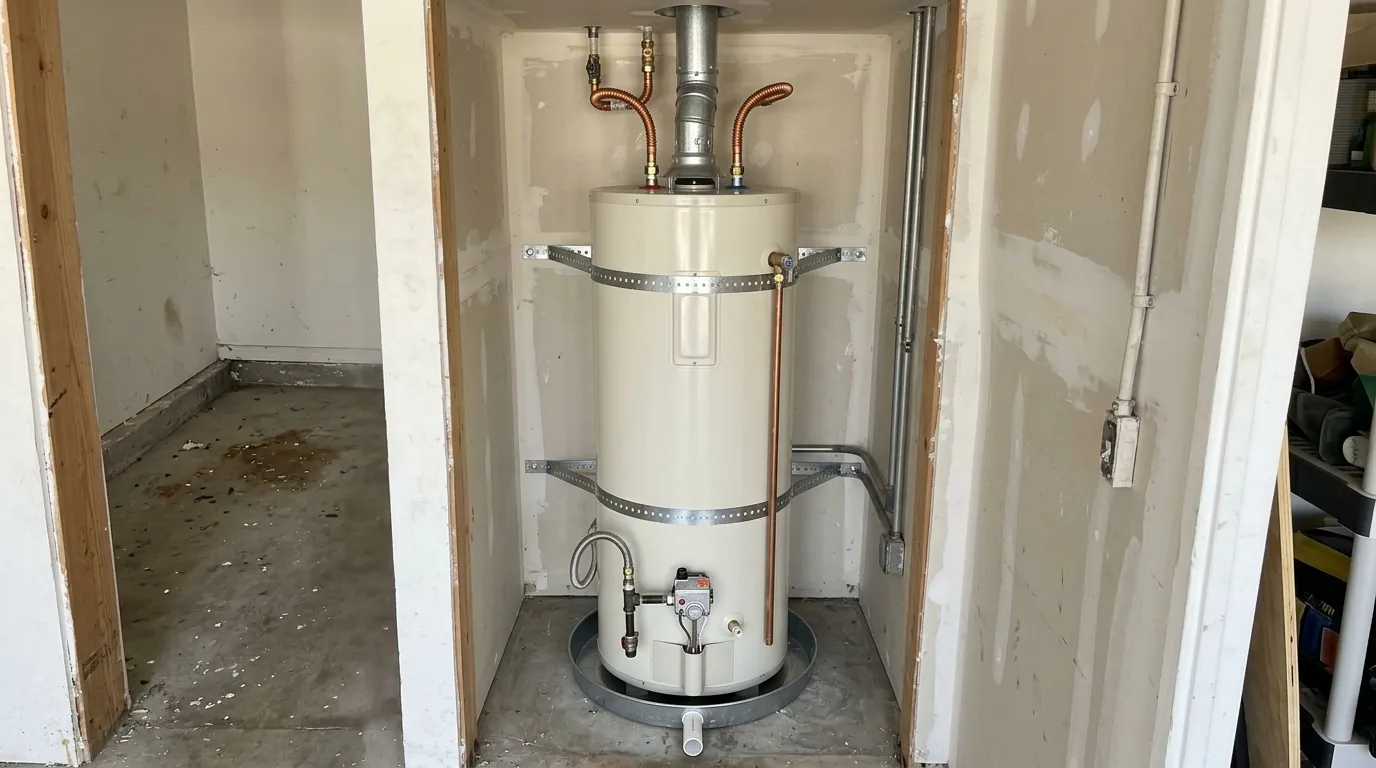
Water heater replacement means draining and removing the old tank and installing a new gas or electric heater sized for your household. A proper job includes two seismic straps, a new gas flex connector and sediment trap, correct venting, a relief valve line to an approved spot, and a permit. You need it when the tank leaks or keeps failing.
Tank size depends on how many people shower back to back and how quickly the heater recovers. A 40-gallon gas tank works for many two- to three-person households, while families of four or more usually move to a 50-gallon gas tank. Electric tanks recover slower, so they are often sized up by one step.
Look at the first-hour rating on the label, not just the gallons. It tells you how much hot water the heater can deliver in the first hour of heavy use, which matters more on a busy morning than the tank size alone.
If you are open to something different, a tankless unit or a heat pump tank might suit your house better. We compare those options in our guide to tank, tankless and heat pump heaters, and we can install any of them.
Swapping the tank is only part of the job. Codes have changed since many existing heaters went in, and the inspector checks every connection. A new install should leave the heater safe in an earthquake, safe to vent and easy to service.
Many replacements in Los Angeles also need a new expansion tank. When the water service has a pressure regulator or a check valve, heated water has nowhere to expand, and pressure spikes push the relief valve to drip. A small expansion tank on the cold line absorbs that.
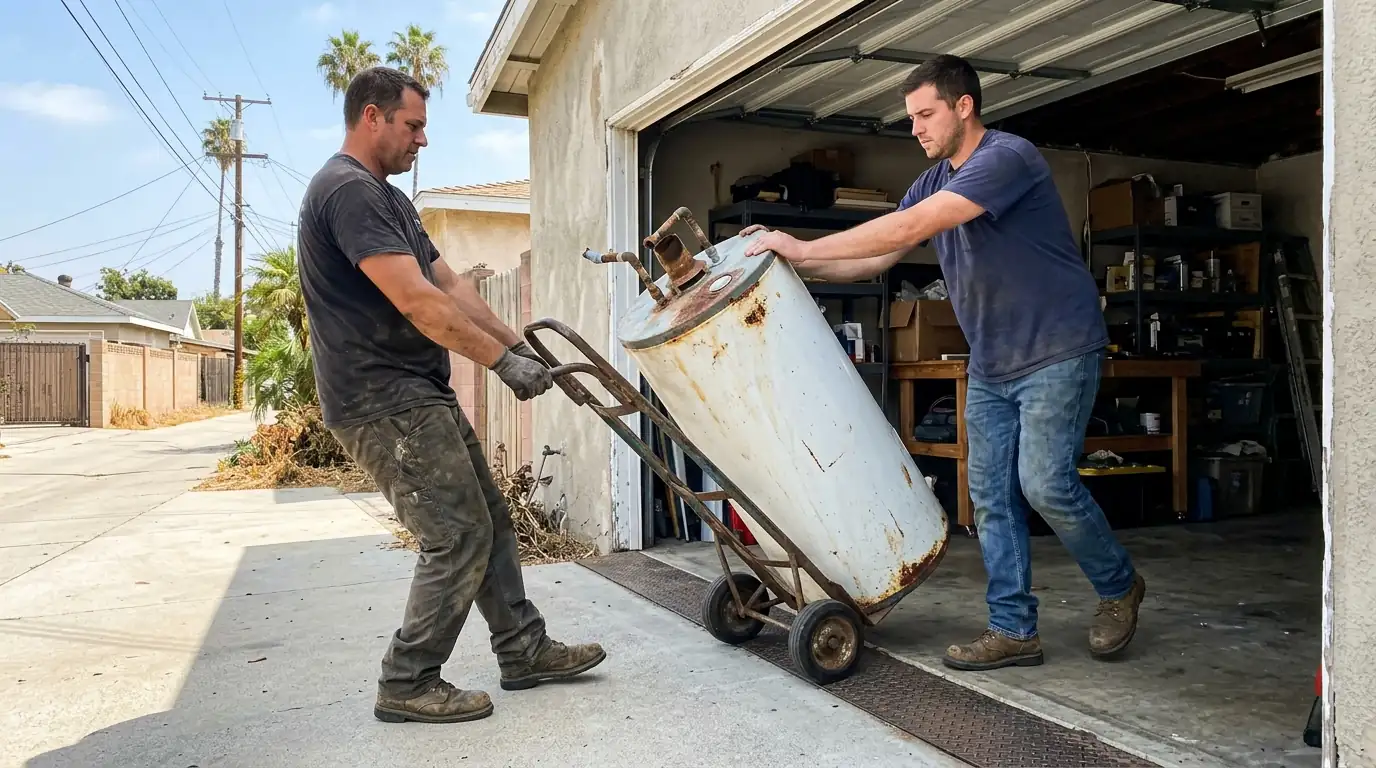
Some heaters sit in tight closets or attics that are too small for a modern tank. Newer low-emission gas units are taller and wider than the heaters installed decades ago, and the extra insulation adds bulk. Sometimes the doorway has to be widened or the heater moved.
Attic and interior closet installations need a drain pan with a line to the outside so a future leak does not end up on the ceiling below. Closets also need combustion air openings sized for the burner. If your current spot has none of that, we explain the changes and the cost before starting. An undersized gas line can also starve a larger burner, which a gas line correction fixes.
Hard water is the main enemy of a tank heater in Los Angeles. Flushing a few gallons from the drain valve once or twice a year removes loose sediment before it hardens into scale. Checking the anode rod every few years, and replacing it before it is gone, protects the tank lining.
Setting the thermostat around 120 degrees reduces scale buildup and the risk of scalding. If scale is a recurring problem across the house, a whole-house water softener cuts the mineral load reaching the heater, faucets and shower valves.
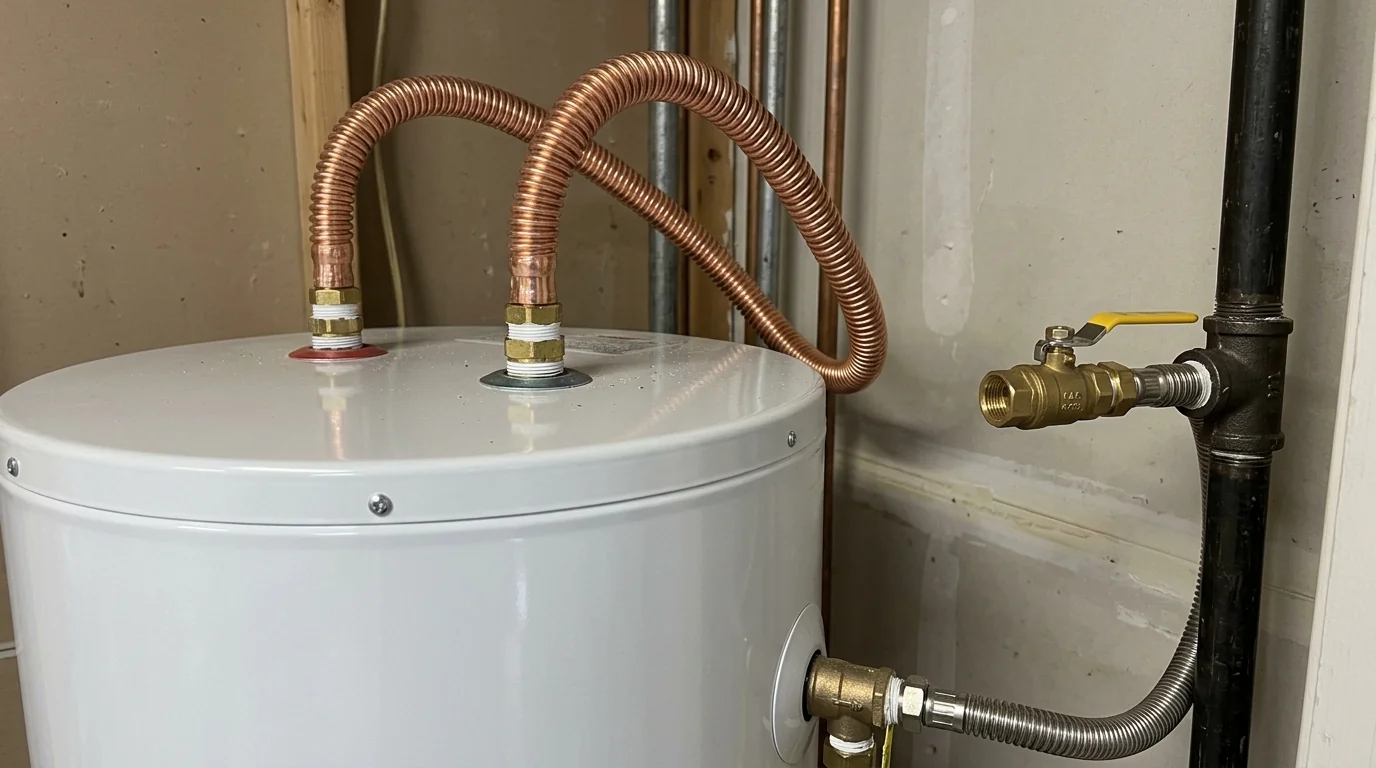
Warning signs
Typical pricing
Tank size, fuel type, location and how much of the venting and gas piping needs updating drive the price. Permit fees are separate and vary by city.
| Job | Typical LA range |
|---|---|
| 40-gallon gas tank, garage install | $1,800 to $3,000 |
| 50-gallon gas tank, garage install | $2,000 to $3,400 |
| 50-gallon electric tank | $1,600 to $2,800 |
| Attic or closet install with drain pan | $2,600 to $4,500 |
| Expansion tank added | $250 to $450 |
These are typical ranges, not a quote; model, access, venting changes, gas line upgrades and permit fees all change the total. See every job in our LA price guide.
On the job
We look at household size, current tank, space and venting, then recommend a model and confirm it fits before the install day.
Water heater replacements require a permit from LADBS in the City of Los Angeles or from your city's building department elsewhere.
We shut off gas or power and water, drain the old tank, disconnect it and haul it away for recycling.
The new heater goes in level with fresh water connectors, gas fittings, venting, relief line and seismic straps.
We fill the tank, purge air from the lines, light the burner or power the elements and check every joint for leaks.
We arrange the inspection and walk you through the shutoff, the relief valve and how to flush the tank.
Most San Fernando Valley tract homes from the 1950s and 1960s keep the heater in the garage, which makes replacement simple, though many need a platform and new bollards to meet code. Older houses near downtown and in hillside areas often tuck the heater into a service porch or closet with tight clearances. California requires two seismic straps on every tank, a lesson the 1994 Northridge earthquake taught when unstrapped heaters tipped and broke gas lines across the Valley. In Canoga Park and nearby neighborhoods we see plenty of original-location garage heaters ready for replacement. Hard water from imported supplies shortens tank life throughout the region.
Questions we hear
A straight garage swap with the same fuel and size takes about three to five hours. Attic installs, moving the heater, venting changes or upgrading the gas line can extend it to a full day. You will be without hot water during the work, and we aim to have it heating again before we leave.
Yes. Replacing a water heater requires a permit through LADBS in the City of Los Angeles, and other cities require one through their own building departments. The inspector checks strapping, venting, gas connections and the relief valve line. Unpermitted installs can create problems when you sell or file an insurance claim.
Not always. If you regularly run out of hot water, going up one size or choosing a higher first-hour rating helps. If the house has fewer people now, the same size is fine. Space, venting and the gas line also limit what fits, so we confirm all three before recommending a larger tank.
We drain it, disconnect it and haul it away as part of the job. Tanks go to metal recycling. If the old heater is in an attic or a tight closet, removal takes more time and is reflected in the price, which we tell you up front.
Coverage
These are the communities that call us for this most often, with their main ZIP codes. The same 24/7 line covers every one of our 68 service areas.
Often booked together
Gas and electric tank water heaters diagnosed and repaired: pilot and thermocouple faults, gas valves, burners, elements, relief valves and leaking fittings.
See the detailsGas and electric tankless water heaters installed with a properly sized gas line, sealed venting, isolation valves for descaling and a condensate drain where needed.
See the detailsHeat pump water heater installs for Los Angeles homes, including space and airflow checks, electrical planning, condensate routing, strapping and gas tank removal.
See the detailsTwo-strap seismic bracing for tank water heaters in Los Angeles, anchored into framing or masonry, with flexible connectors and a gas shutoff check.
See the detailsCall the line any hour. A plumber answers, asks what you are seeing and tells you what happens next.