Backflow Testing
Annual backflow assembly testing for homes, apartments and businesses, with repairs to failed checks and results filed with LADWP or your city water department.
See the detailsRepairs & emergencies
Emergency PlumbingLeak DetectionSlab Leak RepairBurst Pipe RepairToilet RepairFaucet RepairGarbage Disposal RepairShower Valve RepairPressure Regulator ReplacementOutdoor Spigot RepairDrains & sewer
Drain CleaningMain Line Clog ClearingHydro JettingSewer Camera InspectionSewer Line RepairTrenchless Sewer ReplacementSewer Cleanout InstallationStorm & Yard Drain CleaningWater heaters
Water Heater RepairWater Heater ReplacementTankless Water Heater InstallationTankless Water Heater ServiceHeat Pump Water Heater InstallationWater Heater Earthquake StrappingHot Water Recirculation PumpPipes, gas & water lines
Whole-House RepipingMain Water Line ReplacementShutoff Valve ReplacementGas Line RepairGas Line InstallationSeismic Gas Shutoff ValveBackflow TestingWater Softener InstallationWhole-House Water FiltrationFixtures, remodels & property
Toilet InstallationFaucet & Sink InstallationKitchen PlumbingBathroom Remodel PlumbingADU PlumbingPlumbing InspectionApartment Building PlumbingCommercial PlumbingGrease Trap ServiceCity of Los Angeles
Los AngelesResedaWinnetkaCanoga ParkWest HillsTarzanaChatsworthPorter RanchGranada HillsNorth HillsLake BalboaPanorama CityValley GlenSun ValleyPacoimaSylmarSunland-TujungaSan PedroWilmingtonMission HillsValley VillageHarbor CityLA and Ventura county cities
Santa ClaritaSan FernandoBurbankGlendalePasadenaCalabasasThousand OaksSimi ValleySanta MonicaInglewoodHawthorneTorranceCarsonLong BeachComptonMore LA County cities
DowneyNorwalkLakewoodEl MonteWest CovinaWhittierPomonaAlhambraArcadiaCovinaBeverly HillsCulver CityRedondo BeachBellflowerSouth GateOrange County and Inland Empire
AnaheimSanta AnaIrvineHuntington BeachOrangeFullertonGarden GroveCosta MesaRancho CucamongaOntarioCoronaCounties
Los Angeles CountyVentura CountyOrange CountySan Bernardino CountyRiverside CountyA tenant on the second floor reports water coming through the bathroom ceiling, and the ground-floor kitchen sink is backing up. In a multi-unit building, one plumbing failure quickly becomes several tenants' problem.
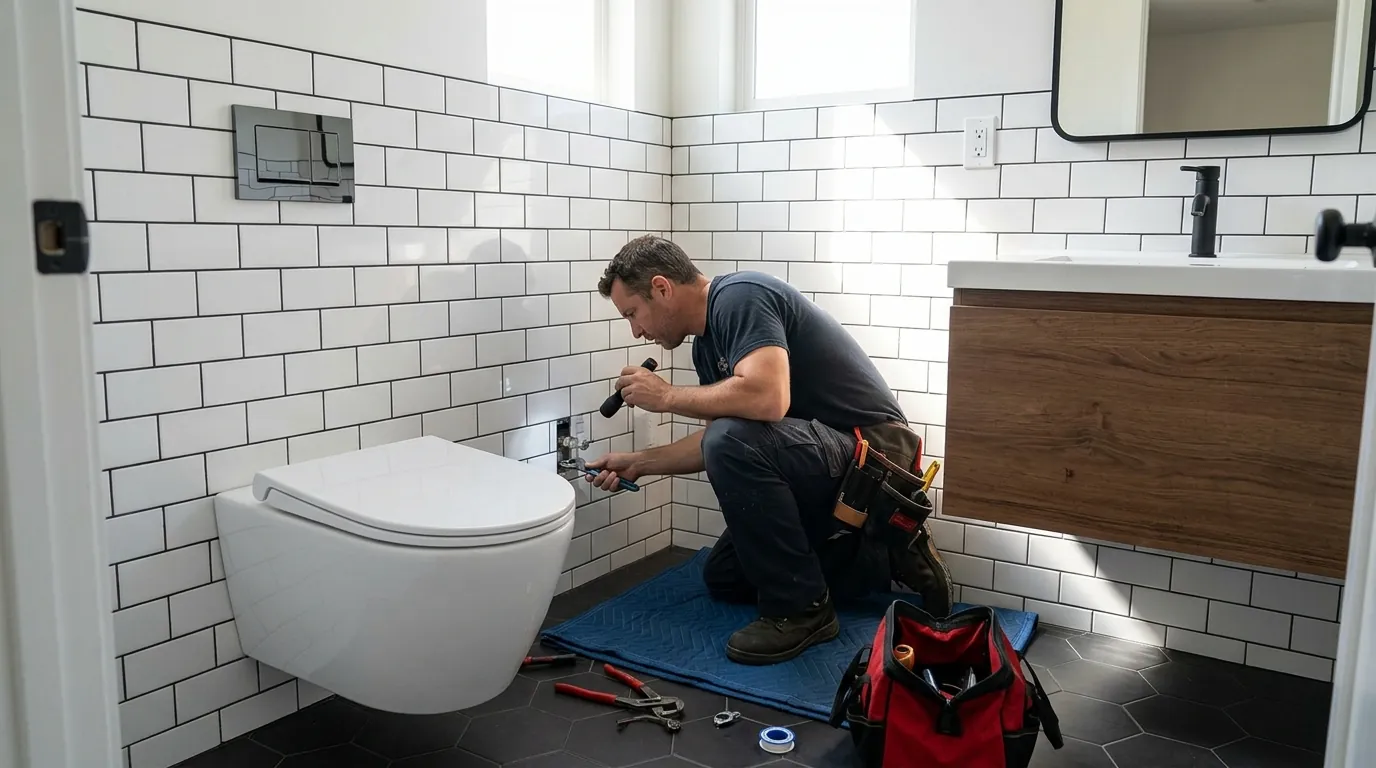
Apartment building plumbing covers the shared systems that serve many units: drain and vent stacks, the building sewer, central water heaters or boilers, supply risers and shutoffs, recirculation lines and backflow devices, plus repairs inside individual units. You need it for emergencies like stack backups and ceiling leaks, and for planned work like heater replacement, riser valve upgrades and annual testing.
In a multi-story building, each column of bathrooms and kitchens drains into a vertical stack that feeds a horizontal building drain and then the sewer lateral. Grease from kitchens, wipes and hair collect at the base of stacks and in the horizontal run. When that clogs, the lowest units take everyone else's water.
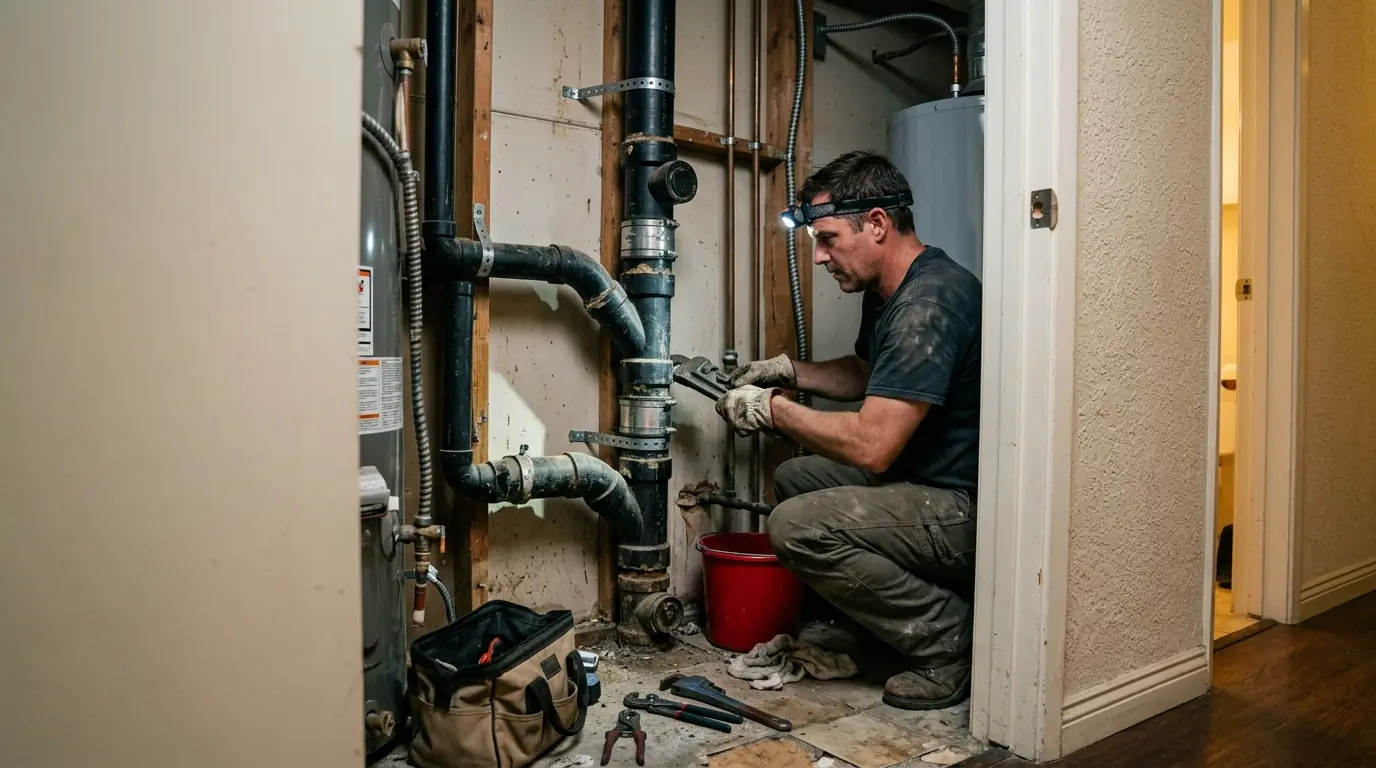
We clear stacks from roof vents or cleanouts and the building drain from its main cleanout. For buildings with repeat backups, we follow up with a camera and often water jetting of the building drain, since cabling alone leaves grease on the walls. Older buildings often have cast iron stacks that crack along the bottom or rot at the joints. We locate weak sections by camera before planning replacement.
Many Los Angeles apartment buildings heat water centrally with a large commercial tank, several residential tanks in a bank, or a boiler with a storage tank. A recirculation pump moves hot water through a loop so far units get it quickly. When the pump or a check valve fails, upper and end units wait for hot water and use more water while they wait.
We service and replace central heaters, rebuild or replace recirculation pumps and set mixing valves so the temperature at the taps stays safe. Banks of tanks need each unit strapped, vented and connected so they share load evenly. Scale from hard water collects in large tanks and boilers, which is why we flush and inspect them on a schedule.
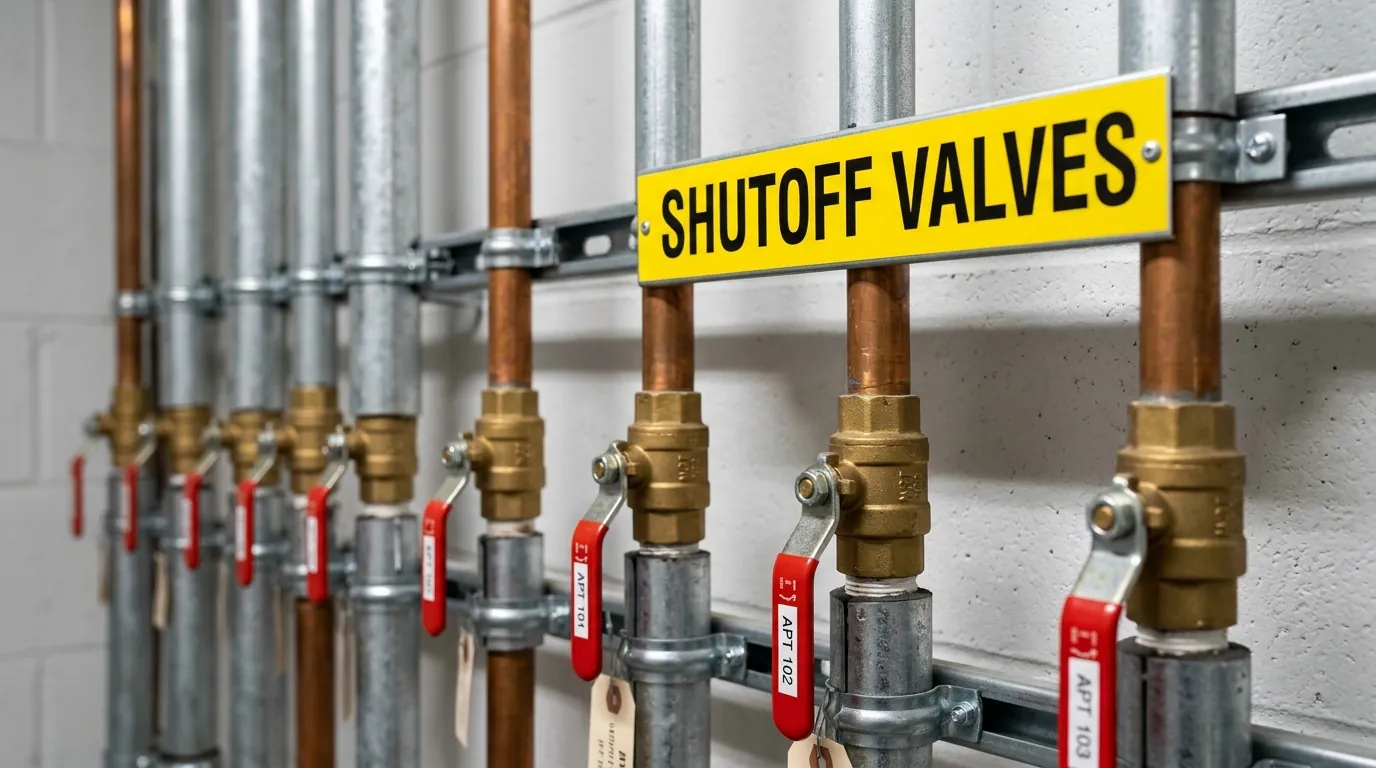
Good shutoffs save managers a lot of trouble. Buildings with working valves at each riser, each unit and each fixture let us repair one bathroom while the rest of the building keeps water. Older buildings often have gate valves that seize or never existed at the unit level. We add or replace them so the next repair affects one unit instead of twenty.
When water does have to be off, we coordinate notices with you, give a time window and keep the shutdown short. Inside units, we handle the usual calls: running toilets, leaking shower valves, slow tubs and failed angle stops. Unit work is scheduled with your entry notice so tenants know who is coming.
Galvanized supply risers in older buildings rust closed over time. When pressure and flow fall off on upper floors, we look at riser replacement in stages, often one stack at a time, so the building stays occupied. Our repiping page explains materials and staging.
Larger buildings almost always have backflow prevention assemblies on the domestic water service, fire lines or irrigation. LADWP requires these to be tested every year by a certified tester, and other water departments in the county have their own testing requirements. Our backflow testing page covers the process and paperwork.
A simple preventive schedule pays off in multi-unit buildings: jet the building drain before it backs up, flush central water heaters, exercise riser valves so they still turn when needed, and camera the lateral every few years. We can set up a schedule that fits your budget and tenant calendar.
Warning signs
Typical pricing
Costs depend on building size, access to cleanouts and mechanical rooms, pipe material and whether work happens after hours.
| Job | Typical LA range |
|---|---|
| Clear a backed-up drain stack or building drain | $350 to $1,200 |
| Replace a recirculation pump and check valves | $700 to $1,800 |
| Replace one central commercial water heater | $5,500 to $14,000 |
| Add or replace a riser shutoff valve | $450 to $1,200 |
| Jet and camera a building drain and lateral | $900 to $2,500 |
These are typical ranges, not a quote, and after-hours calls, roof access, ceiling openings and permit fees can change the cost. See every job in our LA price guide.
On the job
We confirm which units are affected, where shutoffs and cleanouts are, and what entry notice tenants have received.
We shut off the smallest section possible and clear any backup flooding lower units.
Stacks, risers, heaters and unit fixtures are checked in order until the cause is clear, with camera footage when the drain is involved.
We fix the failure and restore service, then check affected units for remaining leaks or backups.
You get a short written summary of the cause, the repair, and any follow-up worth scheduling.
Los Angeles has a huge range of apartment stock: courtyard buildings from the 1920s and 1930s with cast iron drains and galvanized risers, postwar dingbats over carports, and larger complexes from the 1960s through the 1980s with central boilers and recirculation loops. Many older buildings have clay or cast iron laterals under the street trees. Hard water scales central heaters fast. Tight street parking near buildings slows access, so we plan equipment staging with the manager. Work on buildings in the City of Los Angeles that needs permits goes through LADBS.
Questions we hear
Yes. We answer around the clock, including nights, weekends and holidays. For a stack backup or a leak coming through a ceiling, we first shut off the smallest section possible to stop damage, then find and fix the cause. Have cleanout and mechanical room access ready if you can.
Usually the recirculation system has failed. A dead pump, a stuck check valve or a timer set wrong stops hot water from looping through the building. Central heaters that are scaled up or undersized can also leave far units with lukewarm water during morning peak.
It depends on the building, but many buildings with kitchens on every floor benefit from jetting the main building drain every year or two. Buildings with repeat backups should be checked by camera to see whether grease, roots or a damaged section is the cause.
Often, yes, if the building has working riser or unit shutoff valves. Many older buildings do not, which is why we recommend adding them. Once they are in, most repairs affect one unit or one stack instead of every tenant.
Coverage
These are the communities that call us for this most often, with their main ZIP codes. The same 24/7 line covers every one of our 68 service areas.
Often booked together
Annual backflow assembly testing for homes, apartments and businesses, with repairs to failed checks and results filed with LADWP or your city water department.
See the detailsRecirculation pump installs that bring hot water to distant fixtures in seconds, using dedicated return lines or under-sink crossover valves in LA homes.
See the detailsHigh-pressure water jetting that scours grease, scale, sludge and fine roots off the pipe wall, for lines that keep clogging after a cable has gone through.
See the detailsRestroom repairs, flushometer valves, floor drains, commercial water heaters, gas lines and backflow work for LA storefronts, offices and light industrial spaces.
See the detailsCall the line any hour. A plumber answers, asks what you are seeing and tells you what happens next.