Tankless Water Heater Service
Descaling flushes, inlet screen cleaning, error code diagnosis and part repairs for gas tankless water heaters across Los Angeles, built around our hard water.
See the detailsRepairs & emergencies
Emergency PlumbingLeak DetectionSlab Leak RepairBurst Pipe RepairToilet RepairFaucet RepairGarbage Disposal RepairShower Valve RepairPressure Regulator ReplacementOutdoor Spigot RepairDrains & sewer
Drain CleaningMain Line Clog ClearingHydro JettingSewer Camera InspectionSewer Line RepairTrenchless Sewer ReplacementSewer Cleanout InstallationStorm & Yard Drain CleaningWater heaters
Water Heater RepairWater Heater ReplacementTankless Water Heater InstallationTankless Water Heater ServiceHeat Pump Water Heater InstallationWater Heater Earthquake StrappingHot Water Recirculation PumpPipes, gas & water lines
Whole-House RepipingMain Water Line ReplacementShutoff Valve ReplacementGas Line RepairGas Line InstallationSeismic Gas Shutoff ValveBackflow TestingWater Softener InstallationWhole-House Water FiltrationFixtures, remodels & property
Toilet InstallationFaucet & Sink InstallationKitchen PlumbingBathroom Remodel PlumbingADU PlumbingPlumbing InspectionApartment Building PlumbingCommercial PlumbingGrease Trap ServiceCity of Los Angeles
Los AngelesResedaWinnetkaCanoga ParkWest HillsTarzanaChatsworthPorter RanchGranada HillsNorth HillsLake BalboaPanorama CityValley GlenSun ValleyPacoimaSylmarSunland-TujungaSan PedroWilmingtonMission HillsValley VillageHarbor CityLA and Ventura county cities
Santa ClaritaSan FernandoBurbankGlendalePasadenaCalabasasThousand OaksSimi ValleySanta MonicaInglewoodHawthorneTorranceCarsonLong BeachComptonMore LA County cities
DowneyNorwalkLakewoodEl MonteWest CovinaWhittierPomonaAlhambraArcadiaCovinaBeverly HillsCulver CityRedondo BeachBellflowerSouth GateOrange County and Inland Empire
AnaheimSanta AnaIrvineHuntington BeachOrangeFullertonGarden GroveCosta MesaRancho CucamongaOntarioCoronaCounties
Los Angeles CountyVentura CountyOrange CountySan Bernardino CountyRiverside CountyRunning out of hot water halfway through the second shower, or losing garage space to a big tank, leads a lot of Los Angeles homeowners to tankless. The install lives or dies on gas supply, venting and hard water planning.
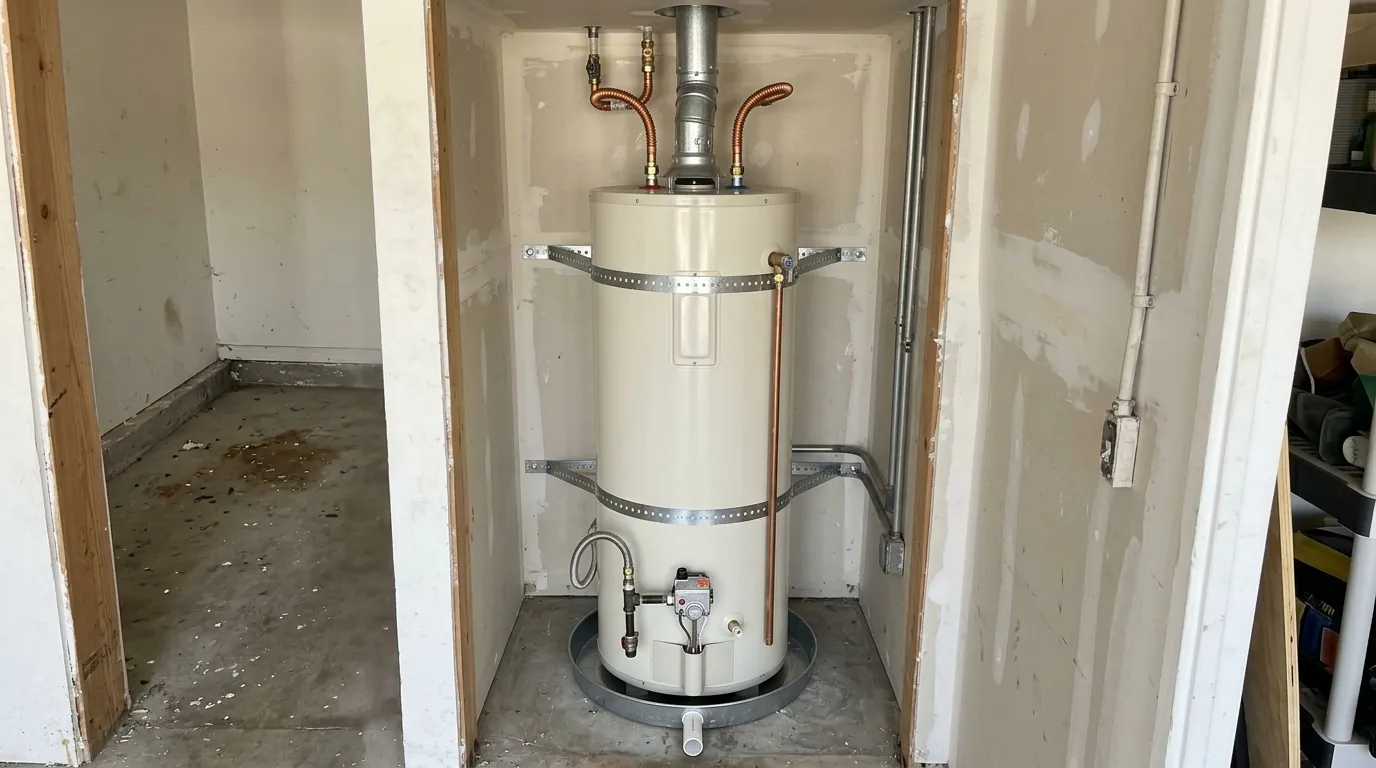
Tankless water heater installation replaces a storage tank with a wall-mounted unit that heats water only as it flows. The work includes sizing the unit to your peak demand, upgrading the gas line in most homes, running new sealed venting, adding isolation valves for annual descaling and a condensate drain on condensing models. It suits households wanting endless hot water.
A typical tank heater burner uses around 40,000 BTU per hour. Whole-house tankless units fire at several times that rate, so the half-inch gas line feeding most old tanks cannot carry enough gas. An undersized line causes the unit to throw error codes, lose temperature during showers or shut down entirely.
We measure the total length of gas pipe from the meter, add up every appliance on the system and size a new line to carry the combined load. That often means running a three-quarter-inch or one-inch line from the meter to the heater. Sometimes the meter itself needs a larger regulator, which is coordinated with SoCalGas. Our gas line installation work covers that run when it is needed.
Non-condensing tankless heaters send hot exhaust out through stainless steel venting. They cost less to buy but more to vent, since the flue material is expensive and the vent runs have strict limits on length and turns.
Condensing units pull extra heat from the exhaust, which cools it enough to vent through PVC or polypropylene pipe. They are more efficient and easier to vent through a side wall, but they produce acidic condensate that must drain to a proper point, usually through a neutralizer. Most of the units we install in Los Angeles homes are condensing models for that reason.
Both types need clearance from windows, doors and property lines for the vent termination. On tight side yards between houses, that clearance can decide where the unit goes.
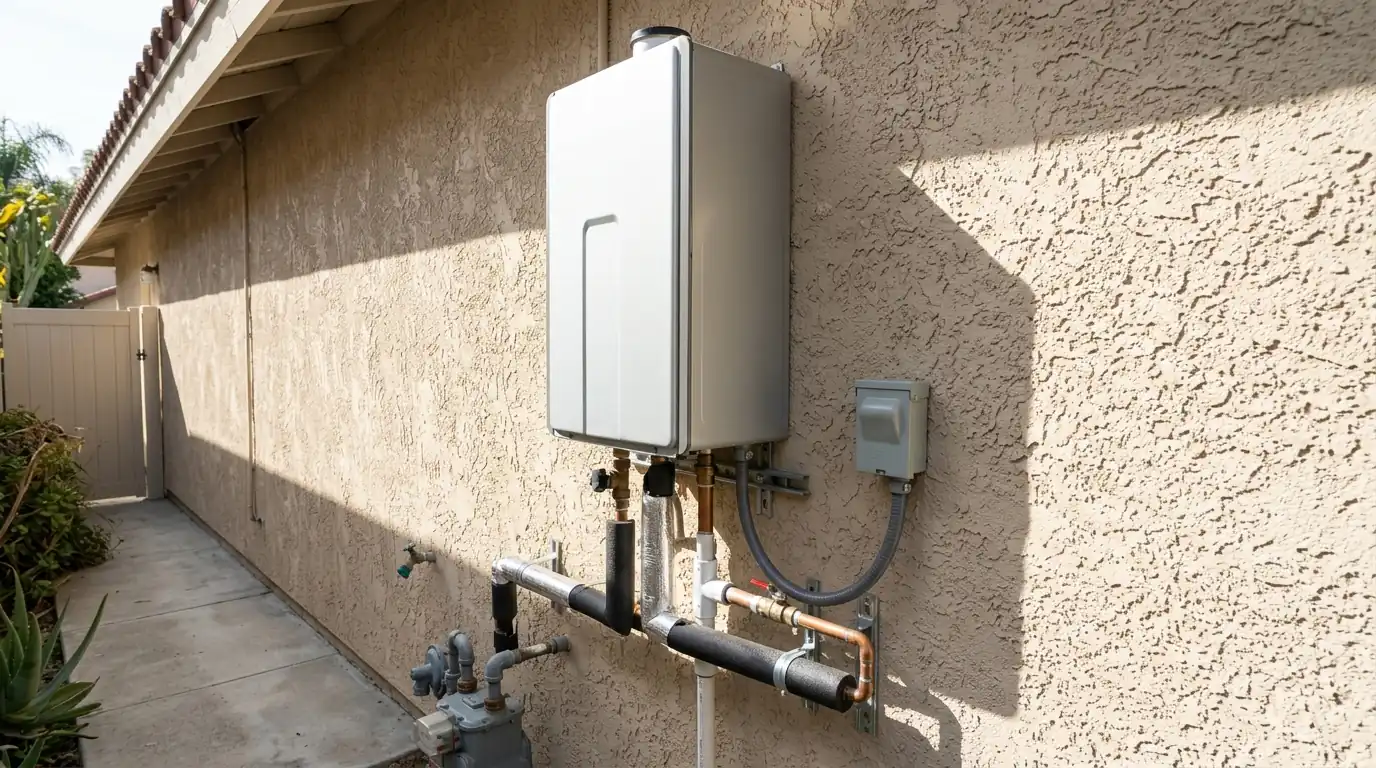
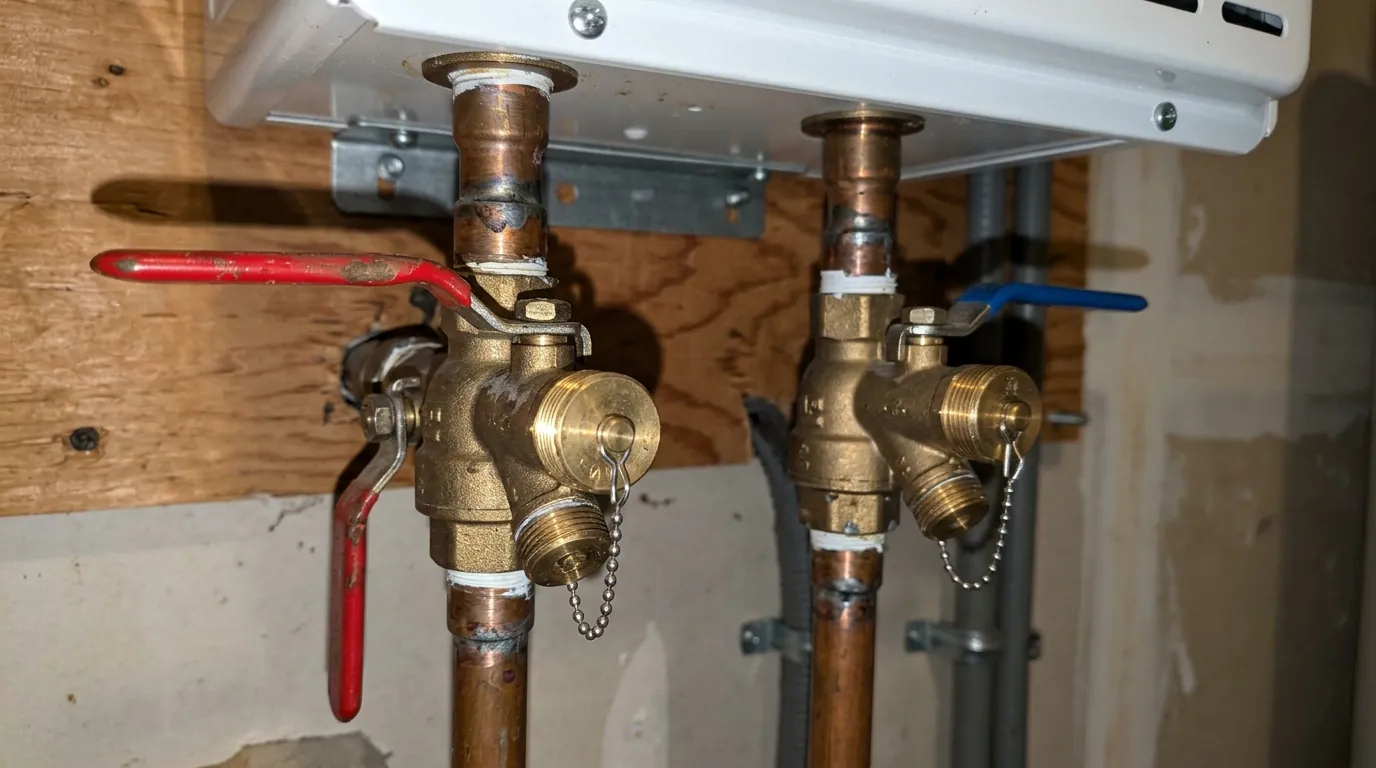
Tankless heaters push water through a narrow heat exchanger at high temperature, and hard water leaves scale on those passages quickly. Scale buildup reduces heat transfer, triggers error codes and can crack the exchanger over time. Every unit we install gets a set of isolation valves with service ports so the heat exchanger can be flushed with a descaling solution.
Plan on descaling once a year in most of the region, more often where the water is especially hard or no softener is installed. Our tankless descaling service handles that maintenance. A scale-reduction cartridge on the cold inlet or a softener for the whole house can stretch the time between flushes.
Tankless heaters deliver continuous hot water, but they do not deliver it faster to a far bathroom. The water sitting in the pipe still has to run out before hot arrives. A unit with a built-in recirculation pump, or a separate recirculation pump, solves that wait.
Very low flows, such as a single bathroom faucet barely open, can fall below the activation threshold on some units. Modern heaters have lowered that threshold, but it is still worth knowing. If you are comparing tankless with a heat pump tank, our water heater comparison guide lays out the tradeoffs in plain terms.
Warning signs
Typical pricing
The unit size, the gas line upgrade and the venting route set most of the price. Converting from a tank costs more than replacing an existing tankless unit.
| Job | Typical LA range |
|---|---|
| Condensing gas unit, tank conversion | $4,500 to $7,500 |
| Non-condensing gas unit, tank conversion | $4,000 to $6,800 |
| Gas line upgrade from meter to heater | $800 to $2,500 |
| Replace existing tankless with new unit | $3,000 to $5,000 |
These are typical ranges, not a quote; unit model, gas run length, meter upgrades, vent route and wall finishes all change the total. See every job in our LA price guide.
On the job
We count fixtures, estimate peak demand, check incoming water temperature and measure the gas line from meter to heater location.
We match the flow rating to your peak demand and choose a wall location that meets vent clearances and keeps service access easy.
We pull the permit through LADBS or your city, run any new gas line and coordinate a meter upgrade with SoCalGas when required.
The unit is mounted, vented, connected through isolation valves, and fitted with a condensate drain and relief valve line.
We purge air, verify gas pressure under full fire, set the temperature and show you the service valves and error display.
Hard water from imported supplies is the biggest long-term factor for tankless units across Los Angeles, so we plan every install around annual descaling. Older homes often have gas piping sized for a tank heater, a range and a furnace, and adding a large tankless burner usually means a bigger line from the meter. In Valley neighborhoods like Tarzana where garages hold the old tank, the exterior wall makes venting easy. Narrow side yards in older city neighborhoods limit where vents can terminate. Permits go through LADBS in the City of Los Angeles and through local building departments elsewhere.
Questions we hear
In most older Los Angeles homes, no. The line that fed a tank heater is usually too small for a whole-house tankless burner, especially when a furnace and range share it. We measure the pipe run from the meter and add up every appliance to size the line correctly. Many installs include a new line from the meter.
Once a year is the usual interval with typical local water. Homes with very hard water and no softener may need it more often, and you will notice warning codes or temperature swings when scale builds. Our installs include isolation valves so descaling takes about an hour without disconnecting any pipes.
Yes. Many models are rated for outdoor mounting, which avoids interior venting entirely. Our mild climate makes that practical across most of the region. The unit still needs proper clearance from windows and doors, protection from sprinklers and a location where it can be serviced easily.
It depends on how long you plan to stay and how much hot water you use. Tankless units cost more up front, mostly because of gas and venting work, but they last longer with regular descaling and never run out mid-shower. For a small household that never runs short, a new tank is often the simpler choice.
Coverage
These are the communities that call us for this most often, with their main ZIP codes. The same 24/7 line covers every one of our 68 service areas.
Often booked together
Descaling flushes, inlet screen cleaning, error code diagnosis and part repairs for gas tankless water heaters across Los Angeles, built around our hard water.
See the detailsFailed or aging tank water heaters swapped for new gas or electric units, with seismic straps, venting, relief piping, gas connections and the permit handled.
See the detailsNew gas piping sized to your meter and appliance load, run to ranges, dryers, pool heaters, fire pits and barbecues, permitted and pressure tested.
See the detailsRecirculation pump installs that bring hot water to distant fixtures in seconds, using dedicated return lines or under-sink crossover valves in LA homes.
See the detailsCall the line any hour. A plumber answers, asks what you are seeing and tells you what happens next.