Water Softener Installation
Softeners sized to your household and water hardness, plumbed at the main with a bypass, a proper drain and a separate unsoftened line where you want one.
See the detailsRepairs & emergencies
Emergency PlumbingLeak DetectionSlab Leak RepairBurst Pipe RepairToilet RepairFaucet RepairGarbage Disposal RepairShower Valve RepairPressure Regulator ReplacementOutdoor Spigot RepairDrains & sewer
Drain CleaningMain Line Clog ClearingHydro JettingSewer Camera InspectionSewer Line RepairTrenchless Sewer ReplacementSewer Cleanout InstallationStorm & Yard Drain CleaningWater heaters
Water Heater RepairWater Heater ReplacementTankless Water Heater InstallationTankless Water Heater ServiceHeat Pump Water Heater InstallationWater Heater Earthquake StrappingHot Water Recirculation PumpPipes, gas & water lines
Whole-House RepipingMain Water Line ReplacementShutoff Valve ReplacementGas Line RepairGas Line InstallationSeismic Gas Shutoff ValveBackflow TestingWater Softener InstallationWhole-House Water FiltrationFixtures, remodels & property
Toilet InstallationFaucet & Sink InstallationKitchen PlumbingBathroom Remodel PlumbingADU PlumbingPlumbing InspectionApartment Building PlumbingCommercial PlumbingGrease Trap ServiceCity of Los Angeles
Los AngelesResedaWinnetkaCanoga ParkWest HillsTarzanaChatsworthPorter RanchGranada HillsNorth HillsLake BalboaPanorama CityValley GlenSun ValleyPacoimaSylmarSunland-TujungaSan PedroWilmingtonMission HillsValley VillageHarbor CityLA and Ventura county cities
Santa ClaritaSan FernandoBurbankGlendalePasadenaCalabasasThousand OaksSimi ValleySanta MonicaInglewoodHawthorneTorranceCarsonLong BeachComptonMore LA County cities
DowneyNorwalkLakewoodEl MonteWest CovinaWhittierPomonaAlhambraArcadiaCovinaBeverly HillsCulver CityRedondo BeachBellflowerSouth GateOrange County and Inland Empire
AnaheimSanta AnaIrvineHuntington BeachOrangeFullertonGarden GroveCosta MesaRancho CucamongaOntarioCoronaCounties
Los Angeles CountyVentura CountyOrange CountySan Bernardino CountyRiverside CountyIf your tap water smells like a pool or leaves grit in the aerators, a whole-house filter at the main line treats every faucet and shower at once. We match the system to what your water actually contains.
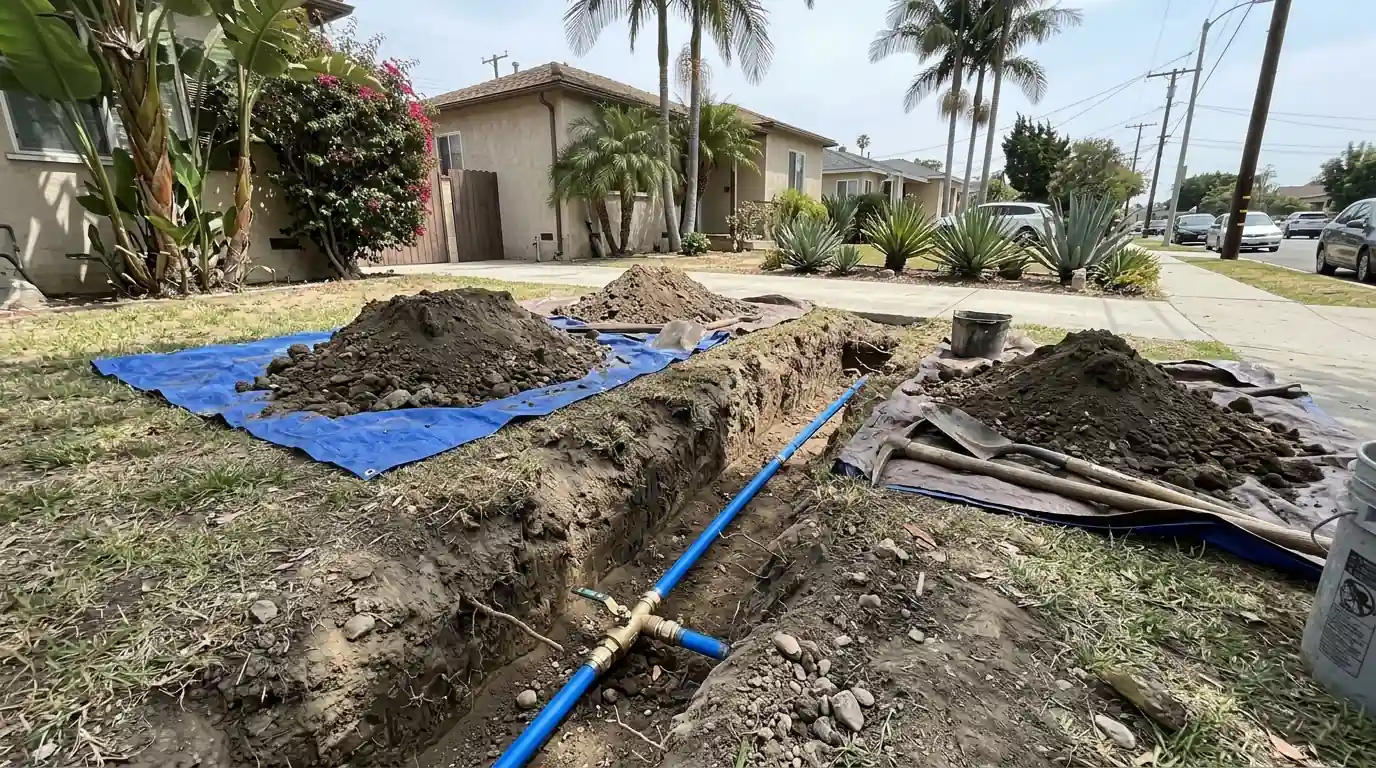
Whole-house water filtration puts one or more filter housings on the main supply line so every tap gets treated water. Most systems pair a sediment prefilter with activated carbon that reduces chlorine or chloramine taste and odor. Installation includes a bypass, shutoff valves and space for cartridge changes. It makes sense when taste, odor or sediment bothers you throughout the house, not just at the kitchen sink.
The right filter depends on what's in your water, so we start there. LADWP and other water departments publish an annual water quality report, and we test at your tap for hardness, chlorine level, pH and visible sediment. If you have a specific concern like lead from old fittings, we recommend a lab test so you have real numbers.
That matters because some suppliers disinfect with chloramine rather than free chlorine. Chloramine is harder to remove and needs a catalytic carbon media and more contact time. A standard carbon cartridge sized for chlorine won't do much against it.
A sediment prefilter catches sand, rust and pipe scale and protects the carbon stage behind it. Carbon reduces chlorine, chloramine, many taste and odor compounds and some organic chemicals. Together they cover the most common complaints in LA homes. Stacking the stages in that order also keeps the carbon from clogging early, which stretches the time between cartridge changes and keeps flow steady at the far bathrooms.
Carbon doesn't remove hardness. If scale is the problem, you want a softener on the main line alongside the filter, with the carbon stage first so chlorine doesn't wear down the resin. Carbon also doesn't remove dissolved salts or most minerals; for drinking water that's very low in everything, an under-sink reverse osmosis unit is the better tool.
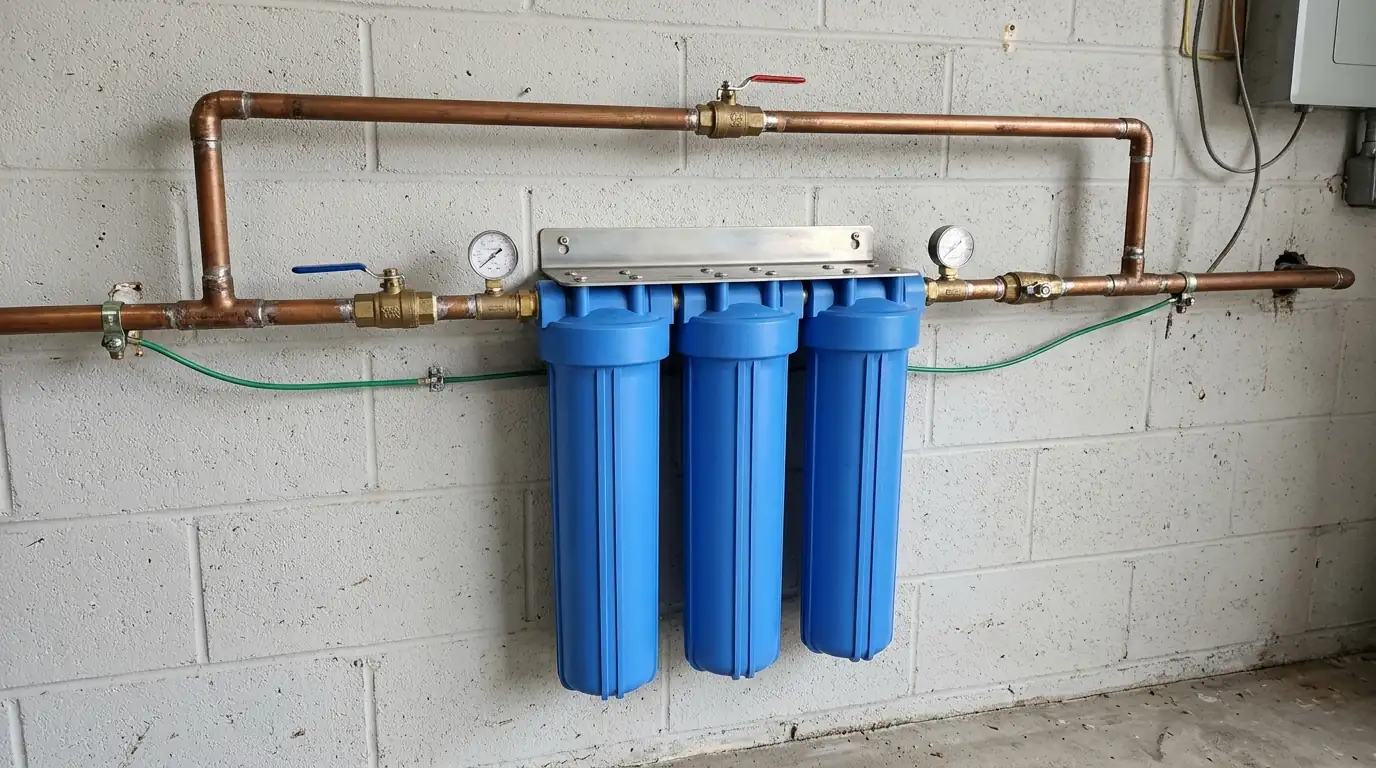
Cartridge systems use large housings with replaceable filters. They're compact, cost less up front and fit in a garage or along an exterior wall. The tradeoff is changing cartridges on a schedule, often every few months for sediment and longer for carbon.
Tank systems hold a bed of carbon that backwashes on its own, rinsing trapped particles to a drain. They last years between media changes and handle higher flow, which suits big homes and properties with several bathrooms. They need a drain and power, much like a softener, and more floor space.
Either way, we add a bypass and shutoffs so cartridges or media can be serviced without cutting water to the house for long.
In houses still on galvanized supply lines, rust and scale break loose inside the house, downstream of a filter at the main. A whole-house filter helps with sediment from the street, but it can't stop rust forming in the pipes behind your walls. If you see brown water mostly on hot lines or after the water sits overnight, the pipes are the source.
That's when a copper or PEX repipe does more than any filter. Our article on patching versus repiping galvanized lines covers how to decide. Many owners install filtration during the repipe, since the main is already open. Doing both in one visit means one water shutoff, one set of new fittings at the main, and a filter that starts life on clean pipe instead of catching years of loose scale.
Warning signs
Typical pricing
System type, flow capacity, the media needed for your water and how easy the main is to reach drive most of the cost.
| Job | Typical LA range |
|---|---|
| Two-stage cartridge system at the main | $900 to $2,200 |
| Backwashing catalytic carbon tank system | $2,500 to $5,500 |
| Under-sink reverse osmosis with faucet | $450 to $1,200 |
| Sediment prefilter only | $350 to $800 |
These are typical ranges, not a quote; equipment, drain and power needs and work at the main line change the final number. See every job in our LA price guide.
On the job
We check chlorine or chloramine, hardness, pH and sediment and review your supplier's water quality report.
We match media, housing size and flow rate to the test results and the number of bathrooms.
With water off, we cut the filter into the main line after the pressure regulator and add a bypass and shutoffs.
New carbon releases fine dust at first, so we flush the system until water runs clear at the faucets.
We label the housings with cartridge types and show you how to swap them and when.
Water in the region comes from a mix of local groundwater, the Los Angeles Aqueduct and imported supplies, and each supplier treats it differently. LADWP serves the City of Los Angeles, while cities like Glendale, Pasadena and Long Beach run their own systems with their own disinfection and blends. That's why a filter that works well in one city may be undersized in the next. Older neighborhoods with original galvanized service lines also send more rust and sediment, so the prefilter stage matters more there and its cartridge tends to load faster. We read your supplier's report before recommending media.
Questions we hear
No. Carbon and sediment filters don't remove calcium and magnesium, which cause scale. If hard water is the main complaint, you need a softener, often installed alongside a carbon filter. If taste, odor and sediment are the issue, filtration alone covers it.
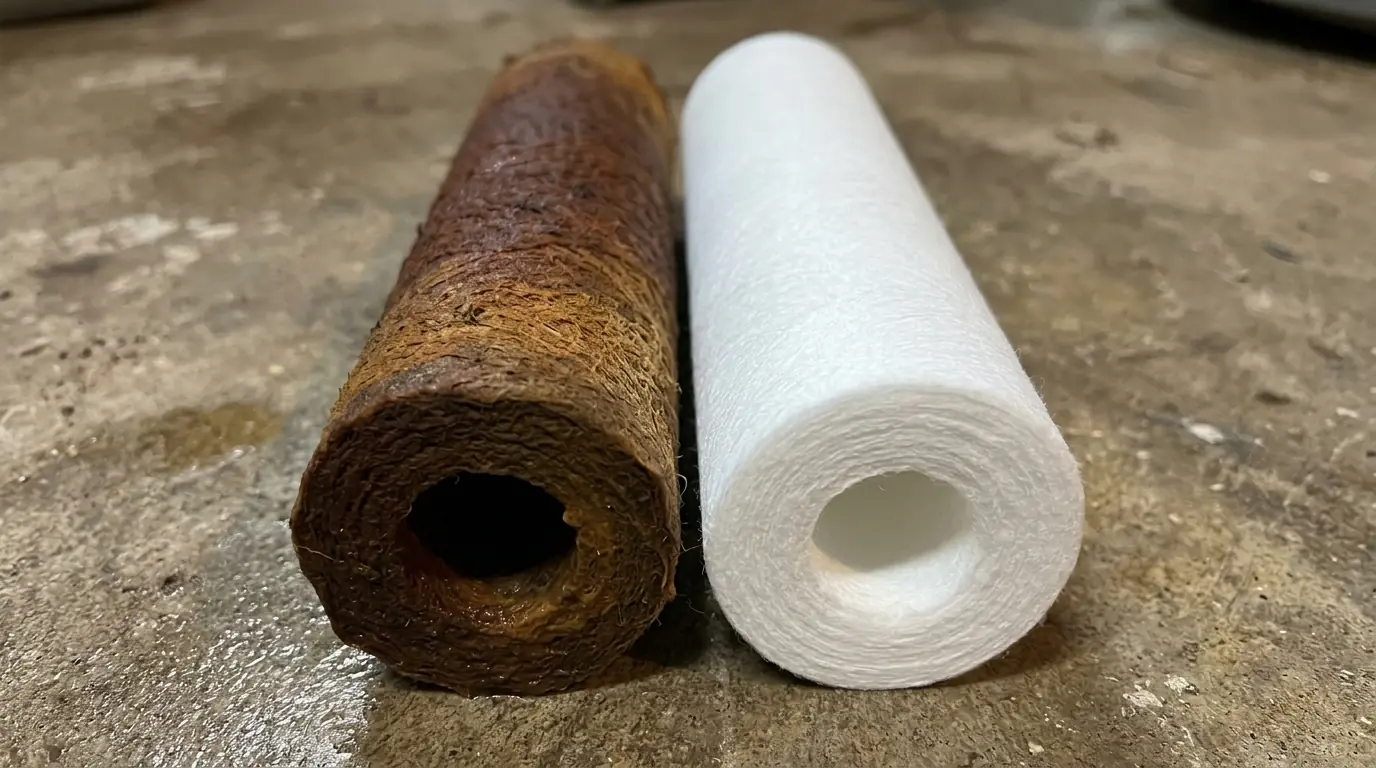
Sediment cartridges often need changing every few months, and sooner after street main work stirs up rust. Carbon cartridges usually last longer, depending on size and water use. A pressure gauge on each housing helps: when the drop across a filter grows, the cartridge is loaded.
A properly sized system causes only a small pressure drop. Problems come from housings that are too small for the house's flow, or cartridges left in too long. We size the housing ports and media to your bathroom count so pressure stays steady.
They do different jobs. Reverse osmosis removes far more dissolved material but makes water slowly and sends some to the drain, so it's used under the kitchen sink for drinking and cooking. Whole-house carbon treats every tap for taste, odor and chlorine. Many homes use both.
Coverage
These are the communities that call us for this most often, with their main ZIP codes. The same 24/7 line covers every one of our 68 service areas.
Often booked together
Softeners sized to your household and water hardness, plumbed at the main with a bypass, a proper drain and a separate unsoftened line where you want one.
See the detailsWhole-house repiping for Los Angeles homes with corroded galvanized or pinholing copper, using copper or PEX routed through attics and walls instead of the slab.
See the detailsNew kitchen, bath, bar and laundry sinks with faucets fitted to the deck, fresh angle stops and supply lines, and a trap that lines up.
See the detailsWe gauge your house water pressure, replace failed pressure reducing valves at the main, and set them to a safe level that protects pipes and fixtures.
See the detailsCall the line any hour. A plumber answers, asks what you are seeing and tells you what happens next.