Seismic Gas Shutoff Valve
An earthquake-actuated valve at the gas meter that closes automatically in strong shaking, installed on a braced riser, permitted and tested.
See the detailsRepairs & emergencies
Emergency PlumbingLeak DetectionSlab Leak RepairBurst Pipe RepairToilet RepairFaucet RepairGarbage Disposal RepairShower Valve RepairPressure Regulator ReplacementOutdoor Spigot RepairDrains & sewer
Drain CleaningMain Line Clog ClearingHydro JettingSewer Camera InspectionSewer Line RepairTrenchless Sewer ReplacementSewer Cleanout InstallationStorm & Yard Drain CleaningWater heaters
Water Heater RepairWater Heater ReplacementTankless Water Heater InstallationTankless Water Heater ServiceHeat Pump Water Heater InstallationWater Heater Earthquake StrappingHot Water Recirculation PumpPipes, gas & water lines
Whole-House RepipingMain Water Line ReplacementShutoff Valve ReplacementGas Line RepairGas Line InstallationSeismic Gas Shutoff ValveBackflow TestingWater Softener InstallationWhole-House Water FiltrationFixtures, remodels & property
Toilet InstallationFaucet & Sink InstallationKitchen PlumbingBathroom Remodel PlumbingADU PlumbingPlumbing InspectionApartment Building PlumbingCommercial PlumbingGrease Trap ServiceCity of Los Angeles
Los AngelesResedaWinnetkaCanoga ParkWest HillsTarzanaChatsworthPorter RanchGranada HillsNorth HillsLake BalboaPanorama CityValley GlenSun ValleyPacoimaSylmarSunland-TujungaSan PedroWilmingtonMission HillsValley VillageHarbor CityLA and Ventura county cities
Santa ClaritaSan FernandoBurbankGlendalePasadenaCalabasasThousand OaksSimi ValleySanta MonicaInglewoodHawthorneTorranceCarsonLong BeachComptonMore LA County cities
DowneyNorwalkLakewoodEl MonteWest CovinaWhittierPomonaAlhambraArcadiaCovinaBeverly HillsCulver CityRedondo BeachBellflowerSouth GateOrange County and Inland Empire
AnaheimSanta AnaIrvineHuntington BeachOrangeFullertonGarden GroveCosta MesaRancho CucamongaOntarioCoronaCounties
Los Angeles CountyVentura CountyOrange CountySan Bernardino CountyRiverside CountyYour water heater has no straps, one thin strap, or plumber's tape wrapped around it. In a strong quake an unbraced tank can tip, snap its gas connector and flood the room, and proper bracing is a short job.
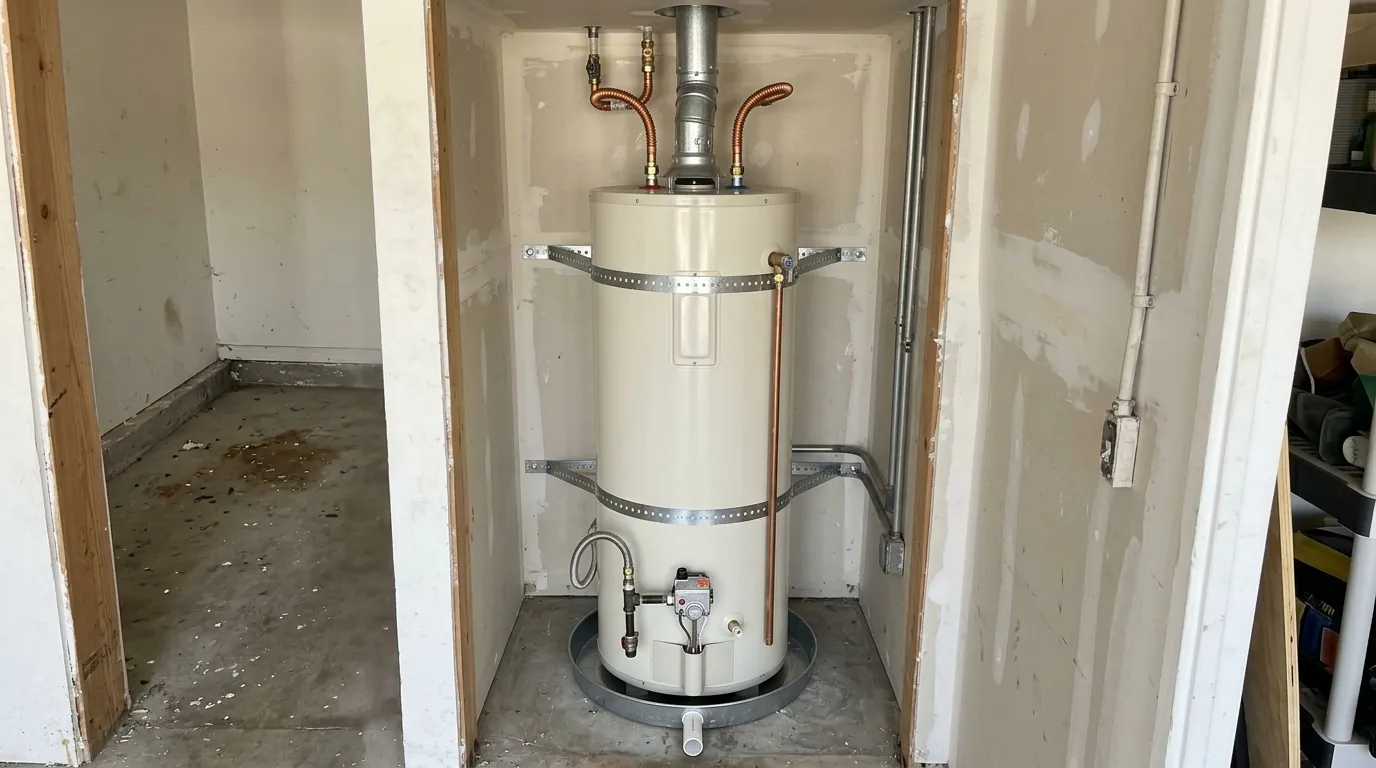
Earthquake strapping means wrapping a tank water heater with two heavy-gauge steel straps, one in the upper third and one in the lower third, and anchoring them into wall studs or concrete with lag bolts or masonry anchors. California requires it for residential heaters. We also check that gas and water connections are flexible so the tank can shift slightly without breaking a line.
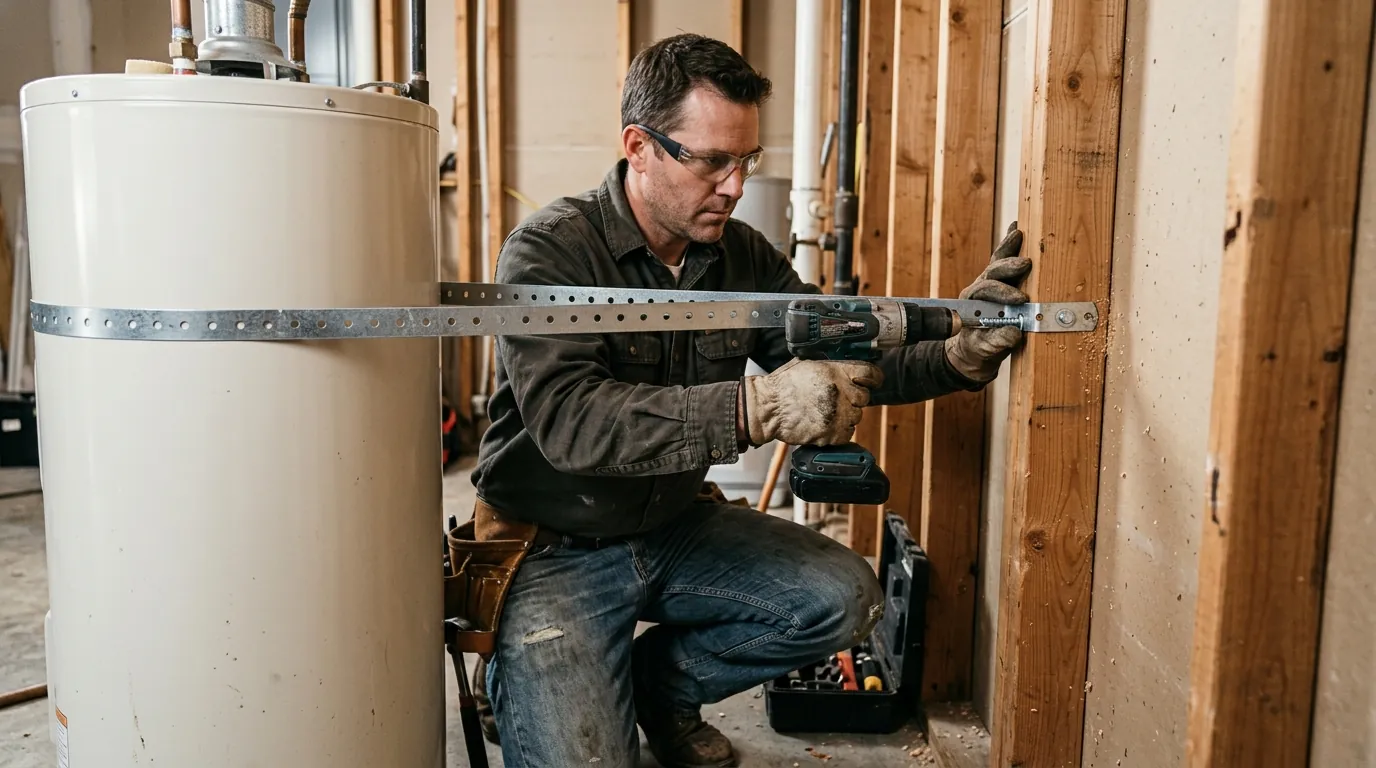
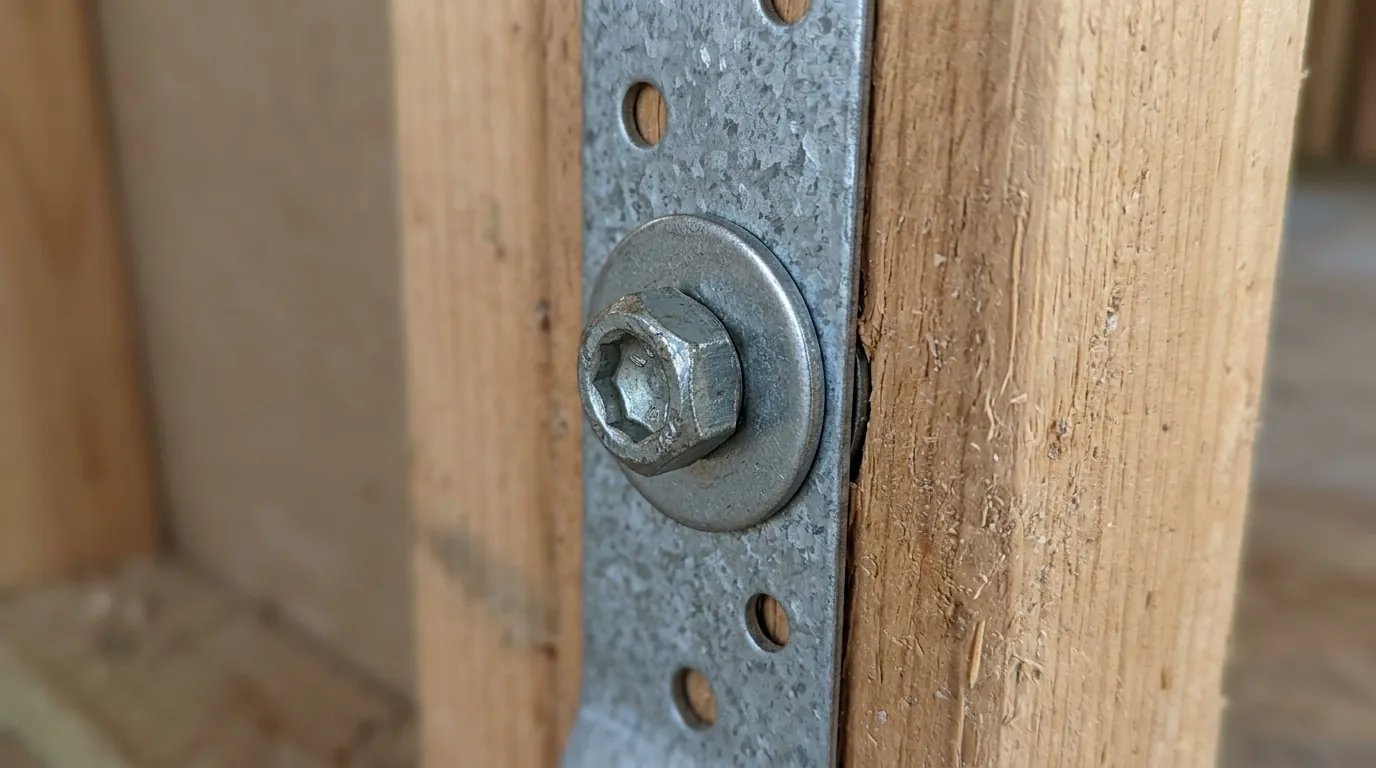
We use a listed strapping kit or heavy-gauge steel strap, wrapped fully around the tank at two heights: one strap in the upper third and one in the lower third, with the lower strap kept at least a few inches above the controls. Each strap end is lag bolted into a stud or into solid blocking we add between studs.
On a concrete or block wall, we switch to masonry anchors sized for the load. Where the heater sits in a corner, we anchor to both walls when that gives a better angle. We also fill any wide gap between tank and wall with wood blocking so the tank cannot get a running start.
A full 50-gallon tank weighs well over 400 pounds. Every piece of hardware in the chain, from strap gauge to bolt length, is chosen with that weight moving sideways in mind.
Even a well-strapped tank shifts a little in a strong quake. If the gas line is rigid black pipe or old copper running straight into the gas valve, that small movement can crack a fitting. We replace rigid gas connections with a new flexible gas connector and check that the appliance shutoff valve is reachable and turns.
Water connections get the same treatment. Rigid copper or galvanized nipples into the tank are swapped for braided flexible connectors, and we confirm the relief valve discharge line still drains where it should after the change.
Many homeowners pair strapping with an automatic gas shutoff at the meter, which stops gas flow to the whole house after strong shaking. Our seismic gas shutoff installation covers that, and our explainer on these valves lays out how they reset.
The magnitude 6.7 Northridge earthquake on January 17, 1994 toppled unbraced water heaters across the San Fernando Valley. Falling tanks broke gas connections and water lines, and some of those gas leaks contributed to the fires that followed. That experience is a large part of why bracing became standard practice in California homes.
Plenty of houses were braced right after 1994 and never looked at again. Those straps may now be rusted, attached to a tank that has since been replaced, or held on with hardware that was never adequate. When a newer heater was swapped in, some installers simply reused old straps that no longer sit at the right heights.
If you want to look before calling, our step-by-step strap check shows what to look for with a flashlight in about ten minutes.
Home inspectors in California flag missing or incomplete bracing all the time, and escrow often requires a fix before closing. We handle these quickly, bracing the tank to the expected standard and replacing rigid connectors in the same visit so the item comes off the inspection report cleanly.
If your tank is old enough that replacing it soon makes more sense, it is cheaper to do bracing once on the new heater. Our replacement installs always include new straps, connectors and an expansion tank where required, so nothing has to be redone a year later.
Tankless units mounted on walls are secured by their own brackets, but an expansion tank or a small storage tank paired with them still needs its own restraint.
Water heaters in LA sit in all kinds of places: detached garages with stud walls, slab-on-grade Valley ranch houses with heaters in hall closets, and older homes near Downtown with tanks against brick or block walls. Each needs different anchors. In hillside homes in Sunland-Tujunga and similar areas, heaters sometimes sit on raised platforms in the garage, which we inspect for rot or wobble because a strapped tank on a weak platform still falls. Many homes along fault-adjacent areas of the Valley were braced after 1994 and are now overdue for a second look.
Warning signs
On the job
We check existing straps, the wall behind the heater, gas and water connections, the relief line and the platform the tank sits on.
We locate studs or add blocking, and on masonry walls we choose anchors rated for the load.
Straps go around the upper and lower thirds of the tank and are lag bolted or anchored tight, with blocking behind if the gap is wide.
Rigid gas and water lines are replaced with flexible connectors, and the gas shutoff is tested.
We test the gas connection for leaks, check for water drips, and show you how the bracing is attached.
Typical pricing
Most of the cost depends on what the wall behind the heater is made of and whether rigid connectors also need replacing.
| Job | Typical LA range |
|---|---|
| Two-strap kit on wood framing, straightforward access | $150 to $300 |
| Bracing into concrete or block wall with masonry anchors | $225 to $400 |
| Strapping plus flexible gas and water connectors | $300 to $600 |
| Bracing a closet or attic heater with added blocking | $275 to $500 |
These are typical ranges, not a quote; tight closets, missing framing, platform repairs and extra gas fittings all change the final price. See every job in our LA price guide.
Questions we hear
Yes. California requires residential tank water heaters to be braced with two straps, one in the upper third and one in the lower third of the tank. Local building departments, including LADBS in the City of Los Angeles, enforce this on new installations, and inspectors check it during permit sign-off and often during home sales.
We would not. Perforated metal hanger tape stretches and tears at the holes under a sudden sideways load. A listed strapping kit or heavy-gauge solid steel strap holds far better. The anchors matter just as much: the bolts need to reach a stud, solid blocking or masonry, not drywall.
Most bracing jobs take one to two hours. Adding blocking, anchoring into concrete, or swapping rigid connectors for flexible ones can add another hour. Your hot water usually stays available the whole time, except for a short shutdown if we change the gas or water connectors.
If the replacement is more than a few months away, yes, because a quake will not wait. The strap kit is inexpensive. If you plan to replace within weeks, it can make sense to brace the new heater during a repair or replacement visit instead and avoid paying twice.
Coverage
These are the communities that call us for this most often, with their main ZIP codes. The same 24/7 line covers every one of our 68 service areas.
Often booked together
An earthquake-actuated valve at the gas meter that closes automatically in strong shaking, installed on a braced riser, permitted and tested.
See the detailsFailed or aging tank water heaters swapped for new gas or electric units, with seismic straps, venting, relief piping, gas connections and the permit handled.
See the detailsGas and electric tank water heaters diagnosed and repaired: pilot and thermocouple faults, gas valves, burners, elements, relief valves and leaking fittings.
See the detailsWe trace gas leaks with gauges and detectors, repair or replace damaged pipe and fittings, and pressure test the line before your appliances go back on.
See the detailsCall the line any hour. A plumber answers, asks what you are seeing and tells you what happens next.