Whole-House Water Filtration
Whole-house carbon and sediment filtration installed at the main, plus under-sink reverse osmosis where you want it, matched to a test of your water.
See the detailsRepairs & emergencies
Emergency PlumbingLeak DetectionSlab Leak RepairBurst Pipe RepairToilet RepairFaucet RepairGarbage Disposal RepairShower Valve RepairPressure Regulator ReplacementOutdoor Spigot RepairDrains & sewer
Drain CleaningMain Line Clog ClearingHydro JettingSewer Camera InspectionSewer Line RepairTrenchless Sewer ReplacementSewer Cleanout InstallationStorm & Yard Drain CleaningWater heaters
Water Heater RepairWater Heater ReplacementTankless Water Heater InstallationTankless Water Heater ServiceHeat Pump Water Heater InstallationWater Heater Earthquake StrappingHot Water Recirculation PumpPipes, gas & water lines
Whole-House RepipingMain Water Line ReplacementShutoff Valve ReplacementGas Line RepairGas Line InstallationSeismic Gas Shutoff ValveBackflow TestingWater Softener InstallationWhole-House Water FiltrationFixtures, remodels & property
Toilet InstallationFaucet & Sink InstallationKitchen PlumbingBathroom Remodel PlumbingADU PlumbingPlumbing InspectionApartment Building PlumbingCommercial PlumbingGrease Trap ServiceCity of Los Angeles
Los AngelesResedaWinnetkaCanoga ParkWest HillsTarzanaChatsworthPorter RanchGranada HillsNorth HillsLake BalboaPanorama CityValley GlenSun ValleyPacoimaSylmarSunland-TujungaSan PedroWilmingtonMission HillsValley VillageHarbor CityLA and Ventura county cities
Santa ClaritaSan FernandoBurbankGlendalePasadenaCalabasasThousand OaksSimi ValleySanta MonicaInglewoodHawthorneTorranceCarsonLong BeachComptonMore LA County cities
DowneyNorwalkLakewoodEl MonteWest CovinaWhittierPomonaAlhambraArcadiaCovinaBeverly HillsCulver CityRedondo BeachBellflowerSouth GateOrange County and Inland Empire
AnaheimSanta AnaIrvineHuntington BeachOrangeFullertonGarden GroveCosta MesaRancho CucamongaOntarioCoronaCounties
Los Angeles CountyVentura CountyOrange CountySan Bernardino CountyRiverside CountyWhite crust on faucets, cloudy glassware and a water heater that rumbles are what hard Los Angeles water leaves behind. A softener installed at the main stops the scale before it reaches your fixtures.
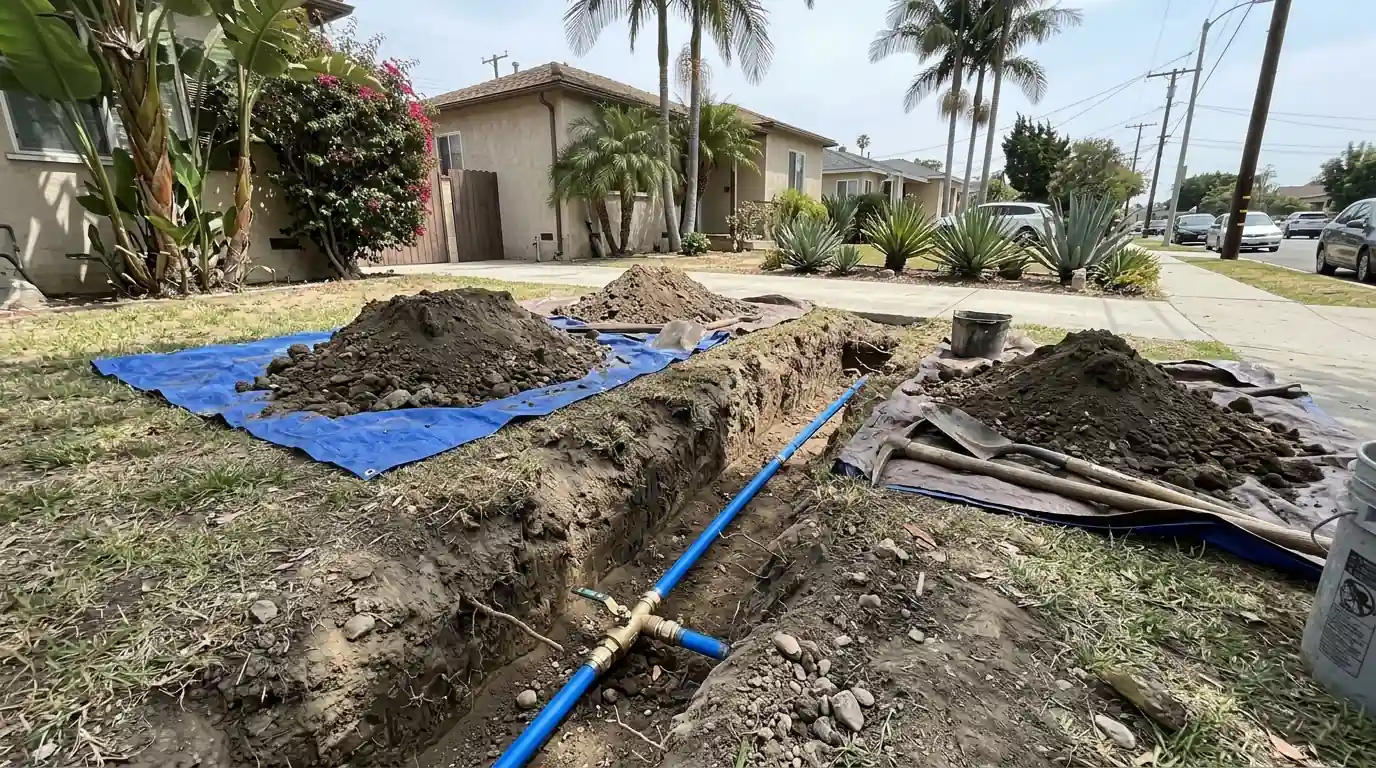
A water softener removes the calcium and magnesium that cause scale, using resin beads that trade those minerals for sodium or potassium. Installation means cutting the unit into the main supply after the pressure regulator, adding a bypass valve, running a drain line and a power outlet, and setting the regeneration schedule. You need one if scale is clogging aerators, shortening heater life or leaving spots on every surface.
A large share of the water in Southern California is imported through the Colorado River Aqueduct and the State Water Project, and much of it carries a heavy mineral load. LADWP in the City of LA and the separate departments in cities around it blend sources differently, so hardness varies by address and even by season.
Heat makes it worse. As water warms in a tank or tankless heater, dissolved minerals drop out and cling to the hottest surfaces. That's why scale shows up first in heaters, then in valves and aerators. Our article on what hard water does in LA homes walks through where it builds up and how fast.
We start by testing hardness at a faucet, since the number on the water department report is an average. That hardness, multiplied by how much water your household uses each day, tells us how many grains the softener has to remove between regenerations. A unit that's too small regenerates constantly and wastes salt; one that's too large can let resin sit and channel.
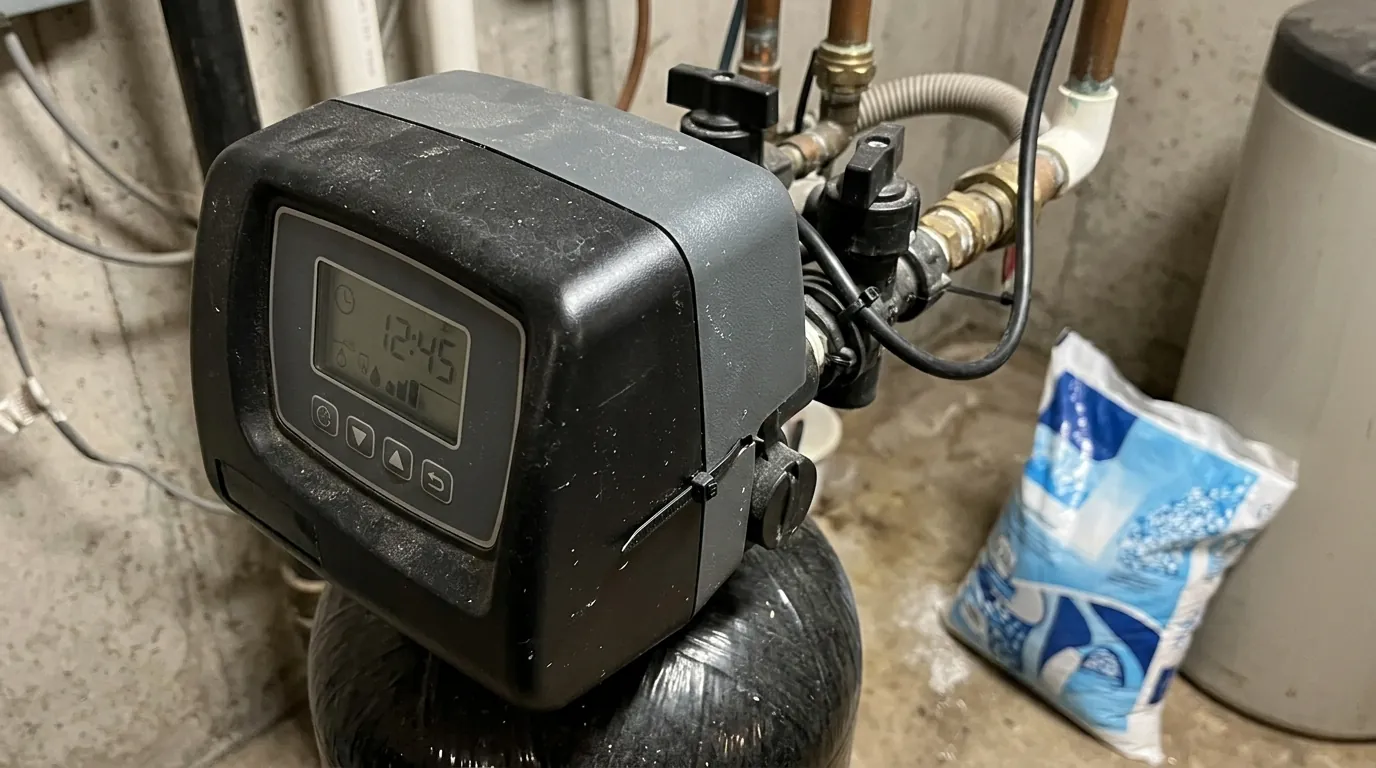
Metered regeneration, where the valve tracks gallons used, is usually the better choice over a fixed timer. It regenerates only when the resin is actually spent, which saves salt and water, especially in homes where people travel.
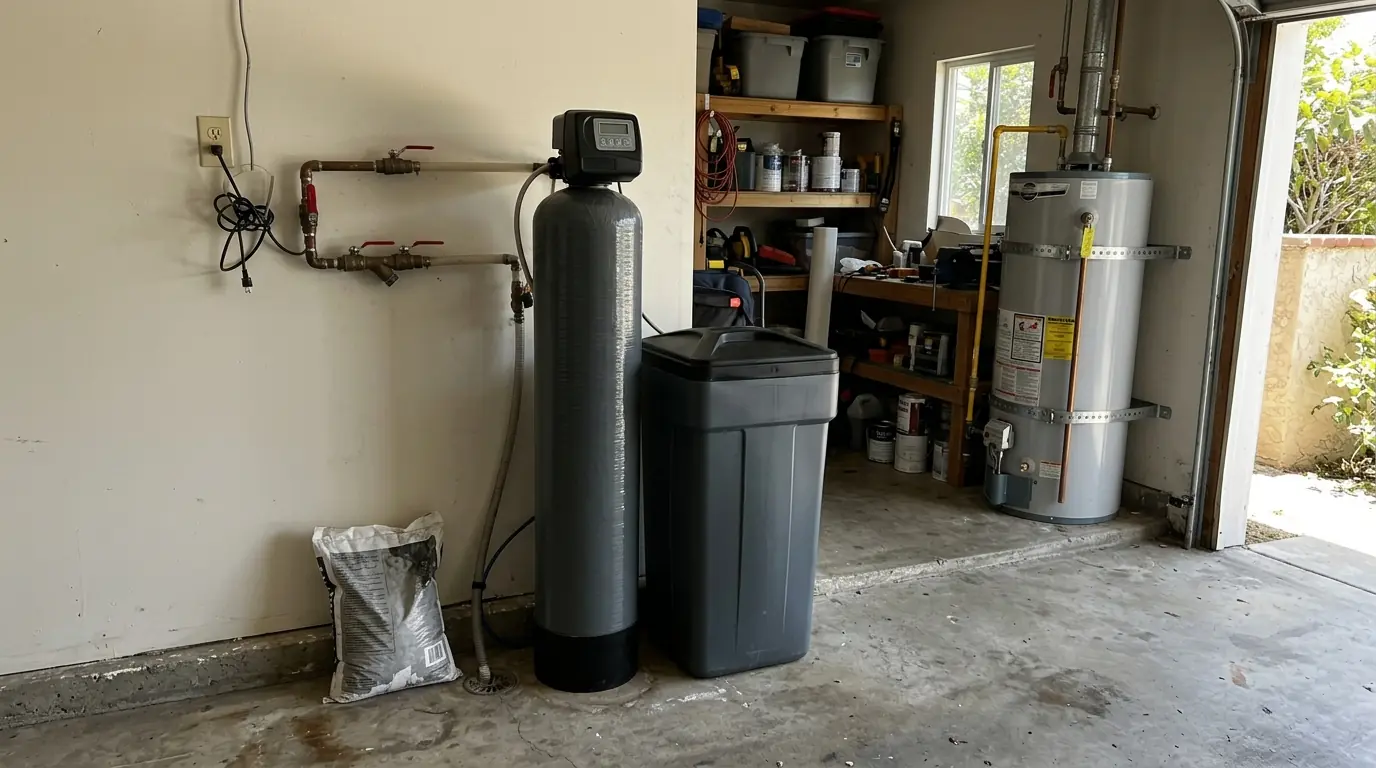
Most softeners go in the garage or beside the house where the main line enters, downstream of the pressure regulator. In Valley tract homes with the main on an outside wall, that often means a small enclosure or a spot along the side yard, with the brine tank shaded from direct sun.
We install a three-valve or built-in bypass so the softener can be isolated for service without shutting the house down. The drain line needs an air gap into a standpipe or approved receptor, and the valve needs a nearby outlet. Many owners ask us to leave the front hose bibs on hard water so the lawn isn't watered with softened water. Older homes with tired main shutoffs usually get a new one at the same time.
Some cities and water districts in California restrict self-regenerating softeners that discharge brine to the sewer. We check the rules for your city before recommending a type.
Softened water carries a small amount of added sodium. Most people don't notice it, but if anyone in the house watches sodium intake, we can leave the kitchen cold tap on unsoftened water or add an under-sink system. Pairing a softener with carbon filtration for taste and chlorine is common when the goal is better drinking water too.
The payoff shows up in the appliances. Water heaters stop collecting scale, a tankless unit's annual flush comes out cleaner, and faucet cartridges keep turning smoothly. Glass shower doors still need wiping, but spots rinse off instead of etching.
Warning signs
Typical pricing
Unit capacity, valve type, how far the main sits from a drain and power, and any repiping at the main drive the price.
| Job | Typical LA range |
|---|---|
| Standard softener installed at an accessible main | $1,400 to $3,000 |
| Larger capacity unit for a big household | $2,500 to $4,500 |
| Softener plus carbon prefilter | $2,200 to $4,800 |
| Separate hard water line to hose bibs | $300 to $900 |
These are typical ranges, not a quote; equipment brand, drain routing and changes needed at the main line move the final price. See every job in our LA price guide.
On the job
We test hardness at the tap, estimate daily use and pick a unit capacity and valve type that fit.
We find a spot near the main, after the pressure regulator, with access to a drain and an outlet.
With water off, we cut the main and install the softener with a bypass valve and new fittings.
We run the drain line with a proper air gap and confirm the valve has power and a clear brine tank overflow.
We set hardness, regeneration and time, run a manual cycle, then retest the softened water at a faucet.
Where the main enters the house decides most of the job. Slab-built Valley homes in places like Canoga Park usually have the main on an outside wall near the front hose bib, so the softener sits in the garage or a side yard enclosure. Condos and apartments often have no individual main to cut into, so a point-of-use unit may be the only option. Brine discharge rules differ between cities and sanitation districts, and some areas push salt-free conditioners instead. We confirm what's allowed at your address before you buy anything.
Questions we hear
A properly sized softener causes only a small pressure drop. Noticeable loss usually means the unit is undersized for the flow, the bypass is partly closed, or there's an old restriction at the main. We size the valve to your plumbing so showers and irrigation don't suffer.
It depends on hardness and how much water you use. Many households refill the brine tank every month or two. Keep the salt level above the water line in the tank and check for a hard crust, called a bridge, that can stop the softener from regenerating.
Sometimes. If your unit has its own shutoff and accessible supply, a compact softener can go in a closet or under a sink with a drain nearby. Many condos share one main, which limits options to point-of-use softening or a building-wide system the HOA would approve.
No. Salt-free conditioners change how minerals crystallize so they cling less, but they don't remove hardness. They need no drain or salt, which helps where brine discharge is restricted. A true softener removes the minerals, so you'll see a bigger difference in spotting and soap use.
Coverage
These are the communities that call us for this most often, with their main ZIP codes. The same 24/7 line covers every one of our 68 service areas.
Often booked together
Whole-house carbon and sediment filtration installed at the main, plus under-sink reverse osmosis where you want it, matched to a test of your water.
See the detailsDescaling flushes, inlet screen cleaning, error code diagnosis and part repairs for gas tankless water heaters across Los Angeles, built around our hard water.
See the detailsGas and electric tank water heaters diagnosed and repaired: pilot and thermocouple faults, gas valves, burners, elements, relief valves and leaking fittings.
See the detailsDripping spouts, stiff handles, weak flow and leaks under the sink fixed by replacing cartridges, seats, O-rings and supply stops worn down by hard water.
See the detailsCall the line any hour. A plumber answers, asks what you are seeing and tells you what happens next.