Main Line Clog Clearing
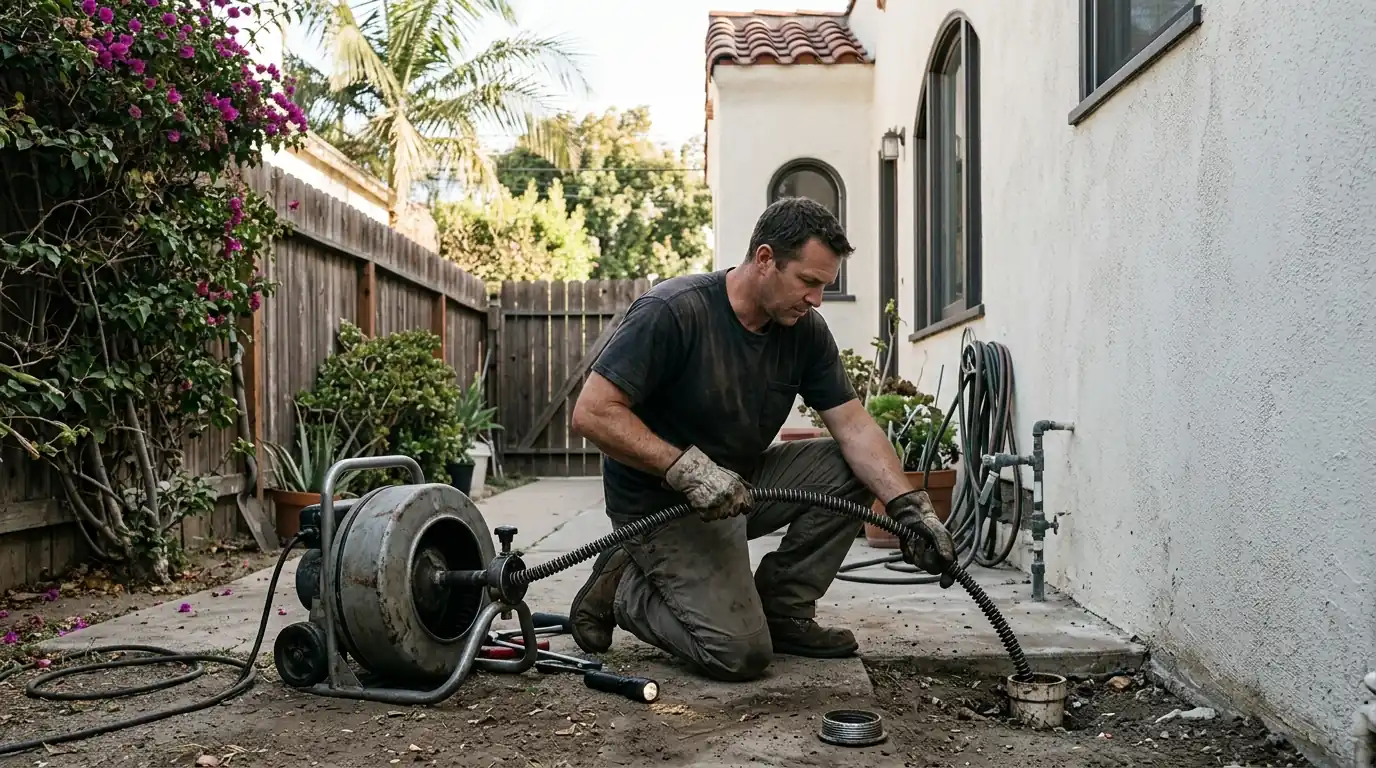
Main sewer line clearing from the cleanout with heavy cable machines and root cutters, for backups that hit the lowest drains in the house at the same time.
See the detailsRepairs & emergencies
Emergency PlumbingLeak DetectionSlab Leak RepairBurst Pipe RepairToilet RepairFaucet RepairGarbage Disposal RepairShower Valve RepairPressure Regulator ReplacementOutdoor Spigot RepairDrains & sewer
Drain CleaningMain Line Clog ClearingHydro JettingSewer Camera InspectionSewer Line RepairTrenchless Sewer ReplacementSewer Cleanout InstallationStorm & Yard Drain CleaningWater heaters
Water Heater RepairWater Heater ReplacementTankless Water Heater InstallationTankless Water Heater ServiceHeat Pump Water Heater InstallationWater Heater Earthquake StrappingHot Water Recirculation PumpPipes, gas & water lines
Whole-House RepipingMain Water Line ReplacementShutoff Valve ReplacementGas Line RepairGas Line InstallationSeismic Gas Shutoff ValveBackflow TestingWater Softener InstallationWhole-House Water FiltrationFixtures, remodels & property
Toilet InstallationFaucet & Sink InstallationKitchen PlumbingBathroom Remodel PlumbingADU PlumbingPlumbing InspectionApartment Building PlumbingCommercial PlumbingGrease Trap ServiceCity of Los Angeles
Los AngelesResedaWinnetkaCanoga ParkWest HillsTarzanaChatsworthPorter RanchGranada HillsNorth HillsLake BalboaPanorama CityValley GlenSun ValleyPacoimaSylmarSunland-TujungaSan PedroWilmingtonMission HillsValley VillageHarbor CityLA and Ventura county cities
Santa ClaritaSan FernandoBurbankGlendalePasadenaCalabasasThousand OaksSimi ValleySanta MonicaInglewoodHawthorneTorranceCarsonLong BeachComptonMore LA County cities
DowneyNorwalkLakewoodEl MonteWest CovinaWhittierPomonaAlhambraArcadiaCovinaBeverly HillsCulver CityRedondo BeachBellflowerSouth GateOrange County and Inland Empire
AnaheimSanta AnaIrvineHuntington BeachOrangeFullertonGarden GroveCosta MesaRancho CucamongaOntarioCoronaCounties
Los Angeles CountyVentura CountyOrange CountySan Bernardino CountyRiverside CountyBefore anyone digs up your yard or quotes a sewer replacement, the pipe should be seen. We push a camera through the line, record what it shows, and locate problem spots from the surface.
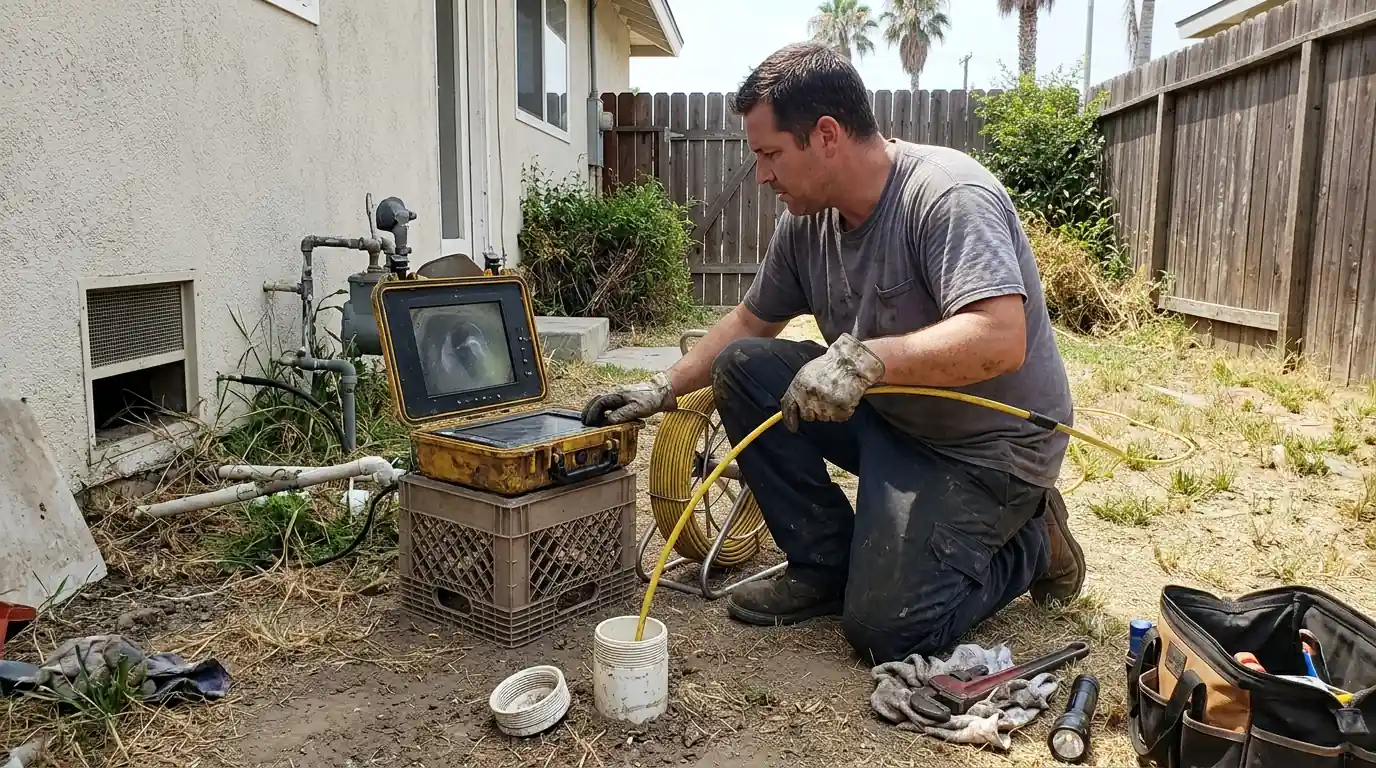
A sewer camera inspection sends a waterproof camera on a flexible push rod through your main sewer line, usually from a cleanout. It records the pipe's material, condition, joints, roots, cracks and sags, and a locator finds the camera head's position and depth from above ground. You need one after repeated main line clogs, before buying an older home, or before any sewer repair.
The camera head is a small waterproof unit with its own lights, mounted on a stiff but flexible push rod. As we feed it through the line, the picture appears on a monitor and records. A counter on the reel tracks distance from the access point, so every defect gets a footage mark.
Inside the pipe, we look for the material and any changes in it, the condition of each joint, roots coming through joints or cracks, offsets where one section has shifted relative to the next, bellies where the pipe sags and holds standing water, scale and corrosion in cast iron, and any section that's partly collapsed or crushed.
A built-in transmitter in the camera head lets a handheld locator find the camera from the surface. We mark the spot on the ground and read the depth, so if repair is needed, everyone knows exactly where to dig and how deep, instead of trenching the whole yard.
Not every flaw needs repair. A little root hair at one joint may be handled with periodic cutting. A slight belly holding an inch of water is often livable. On the other hand, a crushed section, a separated joint with soil visible, or a cast iron pipe with holes in the bottom is a repair that should not wait.
We walk you through the footage on screen and explain each item in plain language. If repair is needed, we talk about the options: a spot repair at a single bad joint, a sewer line repair by excavation, or trenchless replacement where the conditions allow it.
A general home inspection usually stops at the drains you can see. The lateral under the front yard, often clay or cast iron in homes built before 1970, is a separate item and one of the most expensive surprises a new owner can face. A camera inspection during escrow shows its real condition.
We record the full run and point out anything that will need attention soon. Some buyers use the video to negotiate a repair credit, others to plan work after closing. The seller should ideally confirm a cleanout exists and let us access it. A whole-house plumbing inspection can be done on the same visit if you want the supply side checked too.
The best inspections run from a cleanout outside the house, ideally a two-way cleanout that lets us look toward the street and back toward the house. Without one, we can go in through a pulled toilet, though a toilet's tight bends limit how far the camera reaches in some homes.
A camera can't see through a full clog or standing sewage. If the line is backed up, we clear it first, then inspect. On grease-heavy lines, jetting before the camera gives a much clearer picture. Our article on roots in clay sewer pipe shows the kinds of defects that video often turns up under older LA homes.
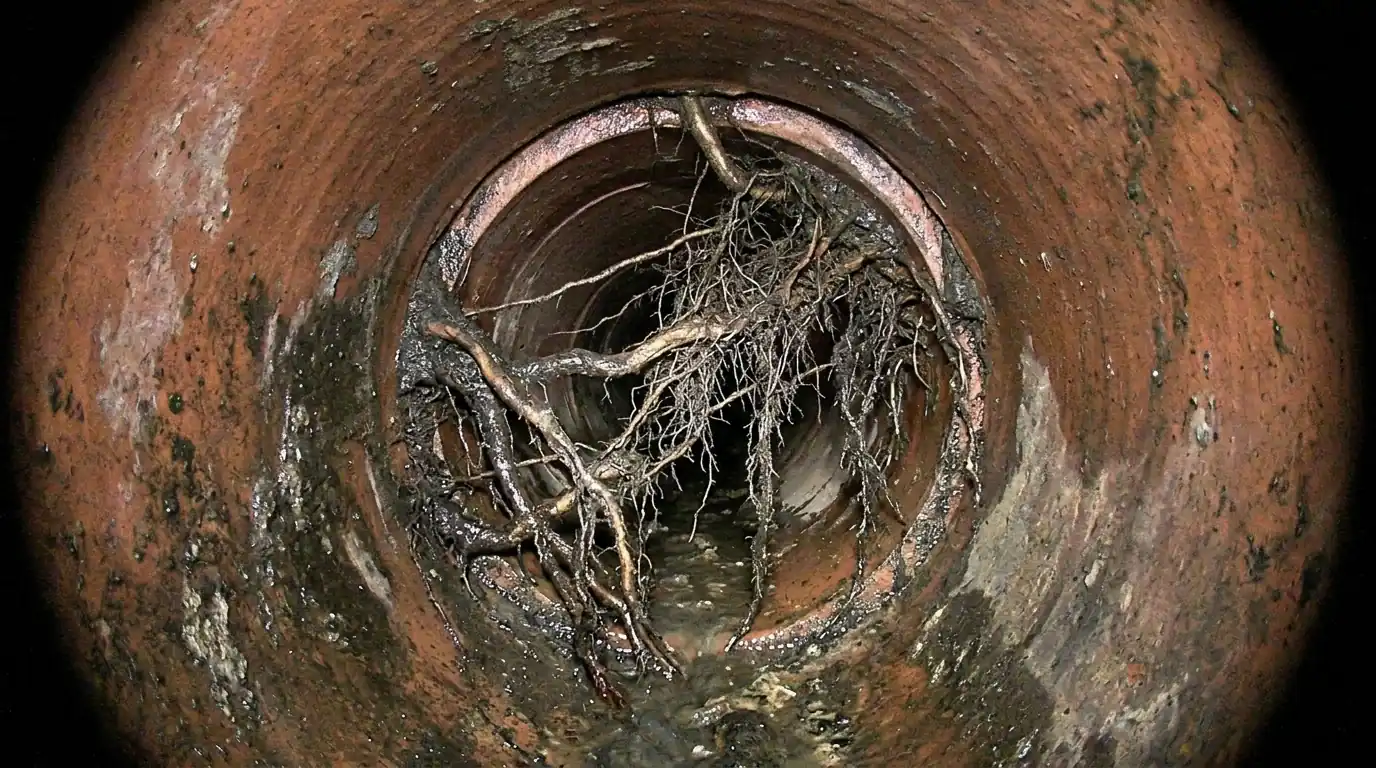
Clay laterals with root intrusion are the most common finding under LA homes built before about 1970, especially on streets lined with mature ficus and sycamore. Cast iron under raised foundations shows scale and thinning bottoms. In parts of the Valley with expansive clay soil, cameras often find bellies and offset joints where the ground has shifted. The 1994 Northridge earthquake cracked and separated sewer lines across the Valley, and some of that damage was never found. Sewer lateral work in the City of Los Angeles may need permits through LADBS and, in the street, Public Works approvals.
Warning signs
On the job
We find the cleanout, or if none exists, plan to go through a toilet flange or another fitting with a clear path to the main.
If the line is backed up or coated heavily, we clear or flush it so the camera can see the pipe wall.
The camera travels the full length to the city connection, pausing at joints and defects while the footage records.
At each important defect, a locator pinpoints the camera head from the surface and we mark the ground and note the depth.
We go through the footage with you, explain what each finding means, and give you the recording.
If repair is needed, you get the realistic choices for your line, from maintenance to spot repair to replacement, with typical ranges.
Typical pricing
The access point, the length of the line, and whether it needs clearing before the camera can see all affect the price.
| Job | Typical LA range |
|---|---|
| Camera inspection from an accessible cleanout, with recording | $250 to $500 |
| Inspection through a pulled toilet | $350 to $650 |
| Inspection with locating and depth marking of defects | $350 to $700 |
| Main line clearing plus camera inspection | $550 to $1,100 |
These are typical ranges, not a quote; no cleanout, a backed-up line, very long laterals and multi-unit buildings change the final number. See every job in our LA price guide.
Questions we hear
With an accessible cleanout and a clear line, most inspections take about an hour, including locating and reviewing the video with you. Lines that need clearing first, homes without a cleanout, or long laterals take longer. Large multi-unit buildings with several laterals may need half a day.
It can show cracks, separated joints and offsets that fit with old ground movement, though it can't date them. Many Valley homes had sewer lines shifted in 1994 without any obvious sign at the time. Roots often move into those gaps over the years, so the camera finds the damage once roots or backups start.
Yes. We give you the recording, with footage marks at each finding. It is useful if you are buying or selling a home, getting a second opinion, filing a claim, or planning repairs. You can share it with anyone you like.
For most homes with no history of backups, it's optional. It is worth doing when buying a pre-1970s house, before a remodel or an ADU adds fixtures, when big trees grow near the sewer path, or when the line has been cleared before. A modest inspection fee is small next to an unplanned lateral repair.
Coverage
These are the communities that call us for this most often, with their main ZIP codes. The same 24/7 line covers every one of our 68 service areas.
Often booked together
Main sewer line clearing from the cleanout with heavy cable machines and root cutters, for backups that hit the lowest drains in the house at the same time.
See the detailsBroken, bellied or root-choked sewer laterals repaired by spot excavation or sectional liner, after a camera shows exactly where the failure sits.
See the detailsA failing sewer lateral replaced end to end by pipe bursting or a cured-in-place liner, working from two small pits and leaving driveways and trees in place.
See the detailsHigh-pressure water jetting that scours grease, scale, sludge and fine roots off the pipe wall, for lines that keep clogging after a cable has gone through.
See the detailsCall the line any hour. A plumber answers, asks what you are seeing and tells you what happens next.