Leak Detection
Hidden supply, slab and drain leaks pinpointed with meter checks, pressure isolation, acoustic listening and thermal imaging, so repairs start with one small opening.
See the detailsRepairs & emergencies
Emergency PlumbingLeak DetectionSlab Leak RepairBurst Pipe RepairToilet RepairFaucet RepairGarbage Disposal RepairShower Valve RepairPressure Regulator ReplacementOutdoor Spigot RepairDrains & sewer
Drain CleaningMain Line Clog ClearingHydro JettingSewer Camera InspectionSewer Line RepairTrenchless Sewer ReplacementSewer Cleanout InstallationStorm & Yard Drain CleaningWater heaters
Water Heater RepairWater Heater ReplacementTankless Water Heater InstallationTankless Water Heater ServiceHeat Pump Water Heater InstallationWater Heater Earthquake StrappingHot Water Recirculation PumpPipes, gas & water lines
Whole-House RepipingMain Water Line ReplacementShutoff Valve ReplacementGas Line RepairGas Line InstallationSeismic Gas Shutoff ValveBackflow TestingWater Softener InstallationWhole-House Water FiltrationFixtures, remodels & property
Toilet InstallationFaucet & Sink InstallationKitchen PlumbingBathroom Remodel PlumbingADU PlumbingPlumbing InspectionApartment Building PlumbingCommercial PlumbingGrease Trap ServiceCity of Los Angeles
Los AngelesResedaWinnetkaCanoga ParkWest HillsTarzanaChatsworthPorter RanchGranada HillsNorth HillsLake BalboaPanorama CityValley GlenSun ValleyPacoimaSylmarSunland-TujungaSan PedroWilmingtonMission HillsValley VillageHarbor CityLA and Ventura county cities
Santa ClaritaSan FernandoBurbankGlendalePasadenaCalabasasThousand OaksSimi ValleySanta MonicaInglewoodHawthorneTorranceCarsonLong BeachComptonMore LA County cities
DowneyNorwalkLakewoodEl MonteWest CovinaWhittierPomonaAlhambraArcadiaCovinaBeverly HillsCulver CityRedondo BeachBellflowerSouth GateOrange County and Inland Empire
AnaheimSanta AnaIrvineHuntington BeachOrangeFullertonGarden GroveCosta MesaRancho CucamongaOntarioCoronaCounties
Los Angeles CountyVentura CountyOrange CountySan Bernardino CountyRiverside CountyThere is a soggy patch in the front lawn that never dries, your water bill jumped with no new habits, or pressure has dropped everywhere at once. The line from the meter to the house may be leaking or choked with rust.
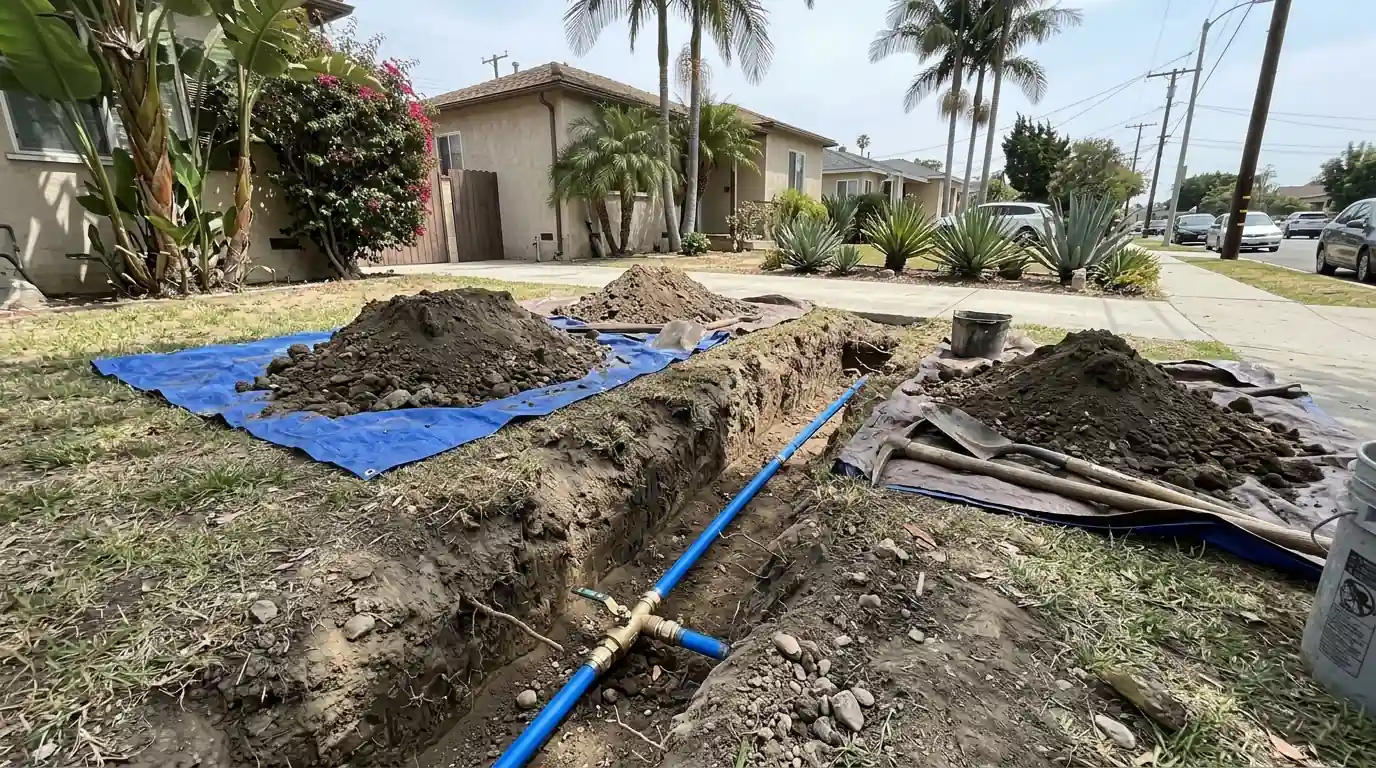
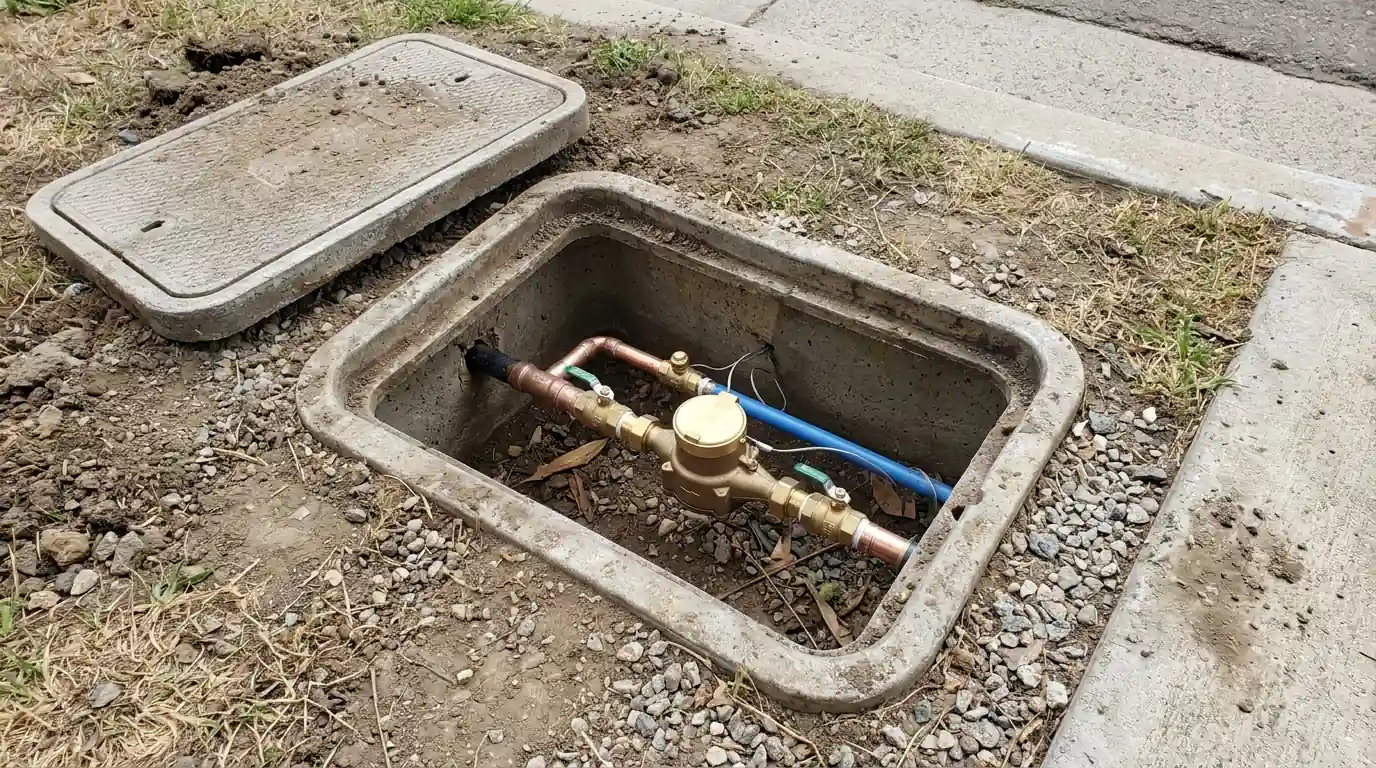
Main water line replacement swaps the buried service pipe that runs from your water meter to the house shutoff. In LA that line often belongs to the homeowner, while the meter side belongs to LADWP or your city water department. We replace it with copper or approved plastic pipe, either in an open trench or by pulling new pipe through a small launch and receive pit.
In the City of Los Angeles, LADWP supplies water and generally owns the meter and the pipe on the street side of it. The service line from the meter to your house is usually the homeowner's responsibility. Other cities such as Burbank, Glendale, Pasadena and Long Beach run their own water departments with similar splits, though details vary.
If the leak is on the utility side, the water department handles it. If it is on your side, the repair or replacement falls to you. We locate the leak first, using acoustic and pressure testing, so you know which side it is on before anyone digs.
When we need the water off at the meter, we coordinate with the utility where that is required. In many homes the meter valve is stiff or seized, so the house shutoff we install becomes your new first line of control.
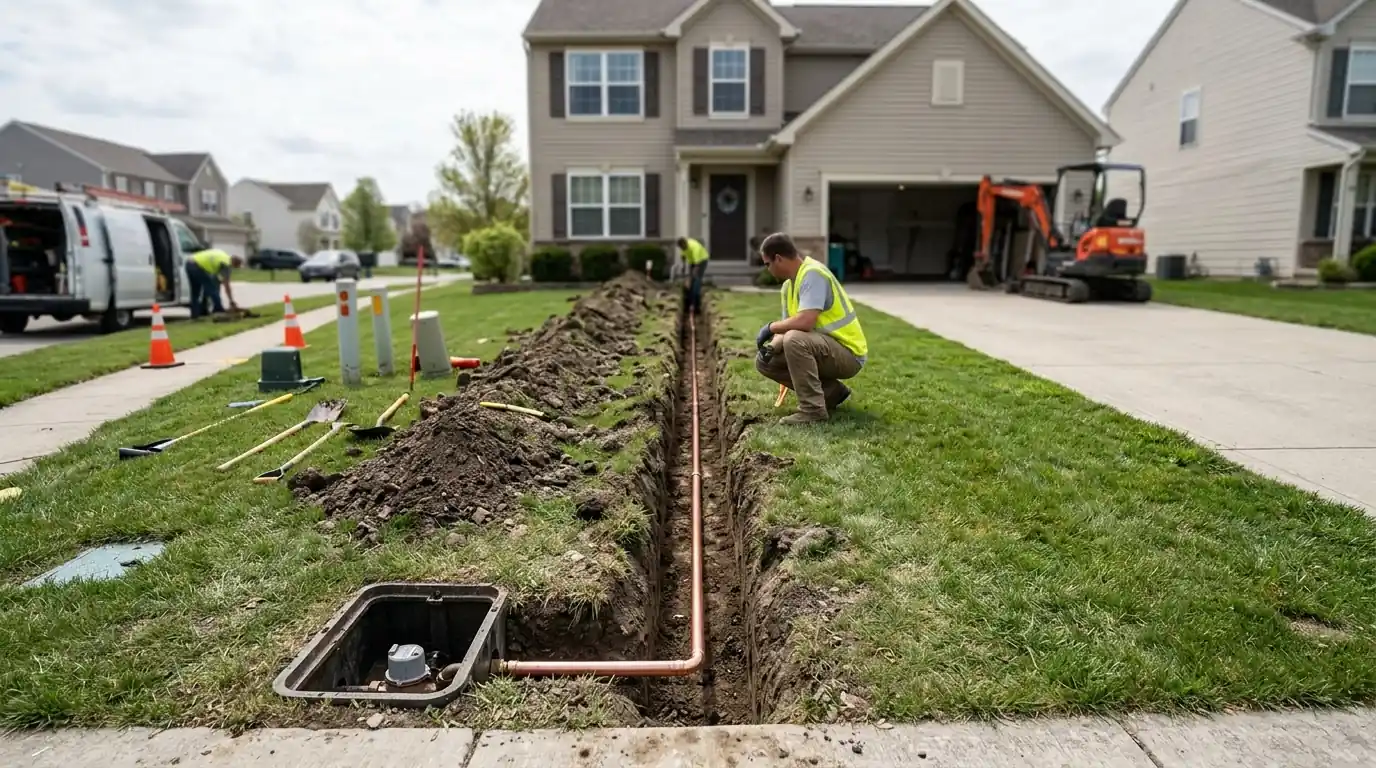
The traditional method digs a trench from meter to house, removes the old pipe, lays new copper or approved plastic pipe on sand bedding, and backfills. It is simple and lets us see the whole run, but it disturbs whatever sits above, whether that is lawn, a planter, a walkway or part of a driveway.
Trenchless replacement pulls new pipe through the ground from one small pit to another, often splitting or displacing the old pipe as it goes. It works well when the line runs under concrete, mature landscaping or hardscape you want to keep. Not every soil or route suits it, so we tell you plainly which method fits.
In both cases we bring the new line up to a new main shutoff at the house and a pressure regulator where pressure from the street runs high.
Many pre-1960s homes still have galvanized steel service lines. Over decades they rust from the inside, narrowing until pressure drops, and eventually rust through. Older copper lines can thin in aggressive soils or at points where they contact other metals. Some mid-century homes also have early plastic lines that crack with age.
Tree roots and soil movement add stress. Expansive clay soils in parts of the Valley swell and shrink with the seasons and can pull fittings apart. Ficus and other street trees push their roots against shallow lines near the sidewalk, and a line running under a driveway takes vibration from every car.
If your house is still on galvanized supply pipe inside too, the main and the house lines often fail on similar timelines. A combined project with our whole-house repiping service keeps the whole system on one material.
Before we dig, we call for underground utility markings so gas, electric and communication lines are flagged. On older lots, sprinkler lines and old drainage pipe also tend to run across the path of the water main, so we hand-dig near those.
Most replacements are done in a single day, with water off for a few hours while we tie in. We backfill and compact the trench and leave the surface level. Concrete cuts get patched, and lawn areas are returned as close to original as the soil allows, though sod or planting replacement is usually separate.
If the old line ran beside the sewer lateral, we take the chance to look at that too. A sewer camera check while the yard is already open costs little and can catch a clay pipe problem early.
Warning signs
Typical pricing
Length of the run, what sits above it, soil, method and whether concrete must be cut drive the price.
| Job | Typical LA range |
|---|---|
| Short run under lawn, open trench, up to about 50 feet | $2,500 to $5,000 |
| Longer run or partial concrete cutting and patching | $4,500 to $8,500 |
| Trenchless pull under driveway or hardscape | $4,000 to $9,000 |
| Spot repair of a single leak on the service line | $800 to $2,200 |
These are typical ranges, not a quote; very long runs, deep lines, rocky soil, hillside access and city permit fees all affect the final cost. See every job in our LA price guide.
On the job
We test the meter, isolate the house, and locate the leak or restriction to confirm it is on your side of the meter.
We decide between trench and trenchless based on what sits above the line, soil type and distance.
We pull the needed permit and request underground utility markings before any digging starts.
New pipe goes in from the meter connection to a new main shutoff at the house, with a regulator added where pressure is high.
We pressure test, flush the line, check the house for air and sediment at fixtures, then backfill and compact.
On flat Valley lots in places like North Hills and Northridge, the meter usually sits at the curb near the driveway, with a fairly short run to a hose bib or front wall shutoff. Hillside homes can have much longer runs climbing a slope, sometimes beneath retaining walls or steps, which pushes us toward trenchless pulls. Galvanized service lines remain common under older homes across the city. Street trees along older blocks send roots near shallow lines. Water pressure from the street can run high in some neighborhoods, so a regulator is often part of the job.
Questions we hear
LADWP generally maintains the meter and the pipe on the street side. The line from the meter to your house is usually the homeowner's responsibility. If the leak is on the utility side, contact LADWP. If it is on your side, the repair is yours, and we can confirm the leak location before any work starts.
Usually only a few hours. We install most of the new line while the old one still feeds the house, then shut off at the meter and make the final connections. Most residential main line replacements are completed within a day, with water back on by the evening.
Copper is durable and well proven, while approved plastic pipe such as PE or PEX resists corrosion and works well with trenchless pulling. In aggressive soils plastic can outlast copper. We recommend based on soil, route, local requirements and the method we plan to use.
Yes. Water can drain into sandy soil or a storm drain without ever surfacing. If your bill rose sharply and the meter's leak indicator moves with every tap closed, call us. If no leak turns up on the main, the next places we test are toilets and lines under the slab.
Coverage
These are the communities that call us for this most often, with their main ZIP codes. The same 24/7 line covers every one of our 68 service areas.
Often booked together
Hidden supply, slab and drain leaks pinpointed with meter checks, pressure isolation, acoustic listening and thermal imaging, so repairs start with one small opening.
See the detailsWhole-house repiping for Los Angeles homes with corroded galvanized or pinholing copper, using copper or PEX routed through attics and walls instead of the slab.
See the detailsWe gauge your house water pressure, replace failed pressure reducing valves at the main, and set them to a safe level that protects pipes and fixtures.
See the detailsReplacement of seized or leaking main shutoffs and fixture stop valves, swapping old gate and multi-turn valves for quarter-turn ball valves.
See the detailsCall the line any hour. A plumber answers, asks what you are seeing and tells you what happens next.