Toilet Installation
New toilets set on a sound flange with a fresh seal and supply line, shimmed level, caulked properly, with the old fixture hauled away.
See the detailsRepairs & emergencies
Emergency PlumbingLeak DetectionSlab Leak RepairBurst Pipe RepairToilet RepairFaucet RepairGarbage Disposal RepairShower Valve RepairPressure Regulator ReplacementOutdoor Spigot RepairDrains & sewer
Drain CleaningMain Line Clog ClearingHydro JettingSewer Camera InspectionSewer Line RepairTrenchless Sewer ReplacementSewer Cleanout InstallationStorm & Yard Drain CleaningWater heaters
Water Heater RepairWater Heater ReplacementTankless Water Heater InstallationTankless Water Heater ServiceHeat Pump Water Heater InstallationWater Heater Earthquake StrappingHot Water Recirculation PumpPipes, gas & water lines
Whole-House RepipingMain Water Line ReplacementShutoff Valve ReplacementGas Line RepairGas Line InstallationSeismic Gas Shutoff ValveBackflow TestingWater Softener InstallationWhole-House Water FiltrationFixtures, remodels & property
Toilet InstallationFaucet & Sink InstallationKitchen PlumbingBathroom Remodel PlumbingADU PlumbingPlumbing InspectionApartment Building PlumbingCommercial PlumbingGrease Trap ServiceCity of Los Angeles
Los AngelesResedaWinnetkaCanoga ParkWest HillsTarzanaChatsworthPorter RanchGranada HillsNorth HillsLake BalboaPanorama CityValley GlenSun ValleyPacoimaSylmarSunland-TujungaSan PedroWilmingtonMission HillsValley VillageHarbor CityLA and Ventura county cities
Santa ClaritaSan FernandoBurbankGlendalePasadenaCalabasasThousand OaksSimi ValleySanta MonicaInglewoodHawthorneTorranceCarsonLong BeachComptonMore LA County cities
DowneyNorwalkLakewoodEl MonteWest CovinaWhittierPomonaAlhambraArcadiaCovinaBeverly HillsCulver CityRedondo BeachBellflowerSouth GateOrange County and Inland Empire
AnaheimSanta AnaIrvineHuntington BeachOrangeFullertonGarden GroveCosta MesaRancho CucamongaOntarioCoronaCounties
Los Angeles CountyVentura CountyOrange CountySan Bernardino CountyRiverside CountyA toilet that runs all night, rocks when you sit, or leaves a damp ring on the floor is wasting water or rotting the subfloor. We fix the part that failed and check the flange and supply while we are there.
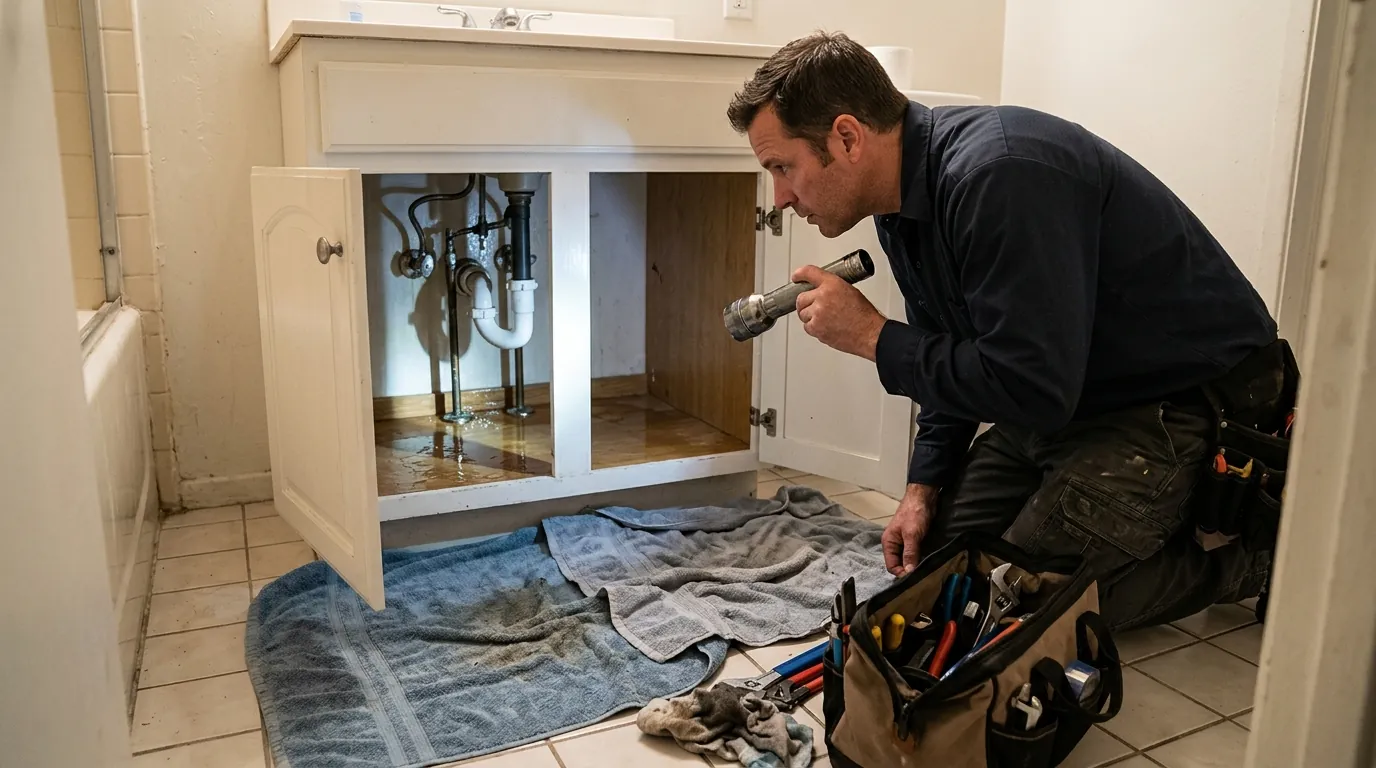
Toilet repair covers the tank parts that control filling and flushing, the wax or foam seal between the bowl and the floor flange, the bolts and flange that hold the bowl down, and the supply valve and line. You need it when the toilet runs, flushes weakly, rocks, leaks at the base or the valve drips. Most repairs are finished in one visit.
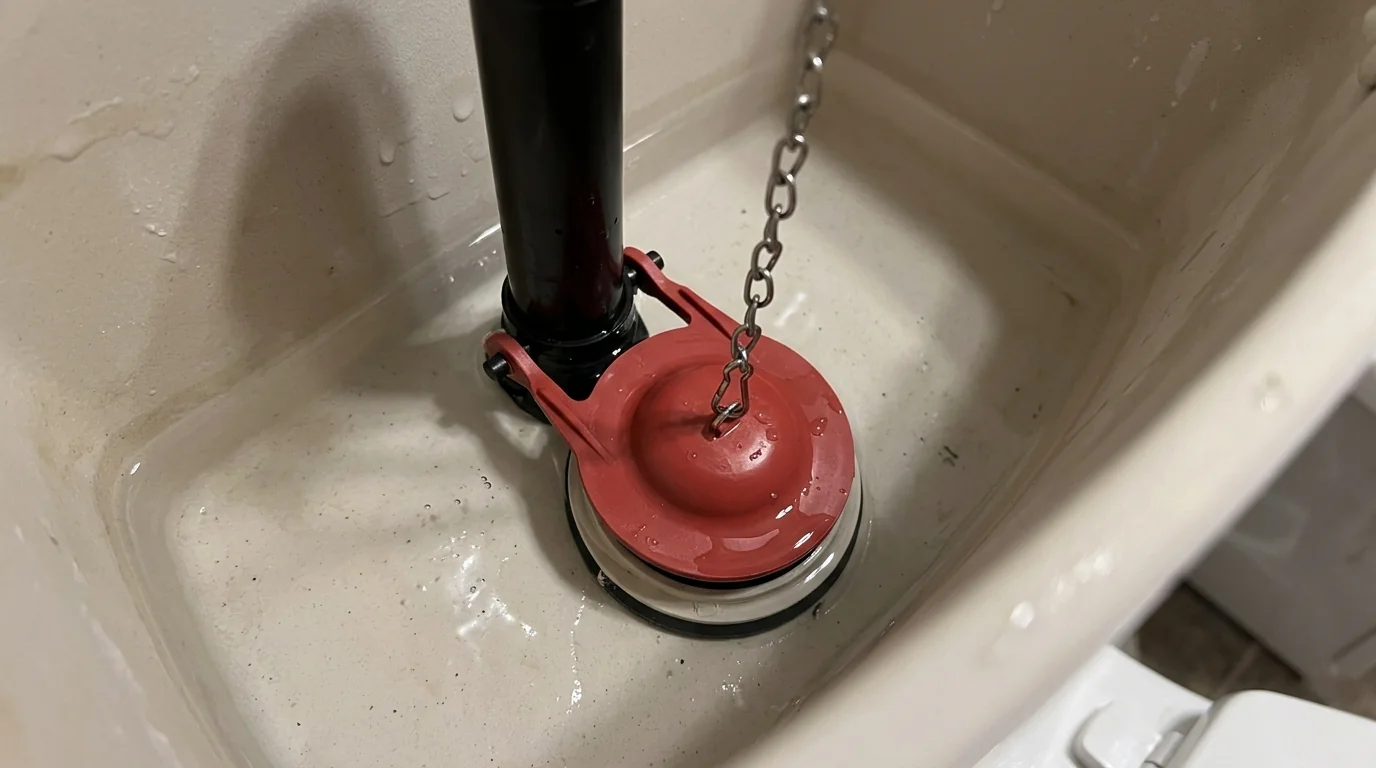
A running toilet is almost always one of two parts. The flapper at the bottom of the tank lets water slip into the bowl when its rubber hardens or warps, and the fill valve keeps topping off the tank to replace it. Or the fill valve itself fails to shut off and sends water down the overflow tube.
Hard LA water is rough on both. Scale stiffens rubber flappers and clogs the small passages in fill valves, so parts that last much longer in softer water regions often wear out faster here. We replace the flapper and fill valve as a pair on an older toilet, set the water level to the line on the tank, and adjust the chain so the flapper seals every time.
A running toilet can quietly add a lot to a water bill. If you have a bill jump and no visible leak, a toilet is the first thing to check before calling for a hidden leak search.
When a toilet leaks at the floor, we pull it. That means shutting the supply, draining the tank and bowl, removing the bolts and lifting the bowl off. Underneath we can see whether the wax ring was crushed, whether the flange sits too low below the finished floor, or whether the flange itself has cracked or rusted away.
Cast iron flanges in older LA houses often corrode at the bolt slots, and a bowl that has rocked for months can break the flange ring. We repair those with a stainless repair ring or replace the flange, use a thicker or stacked seal when the floor has been raised by new tile, and shim the bowl so it sits solid before the bolts are snugged down.
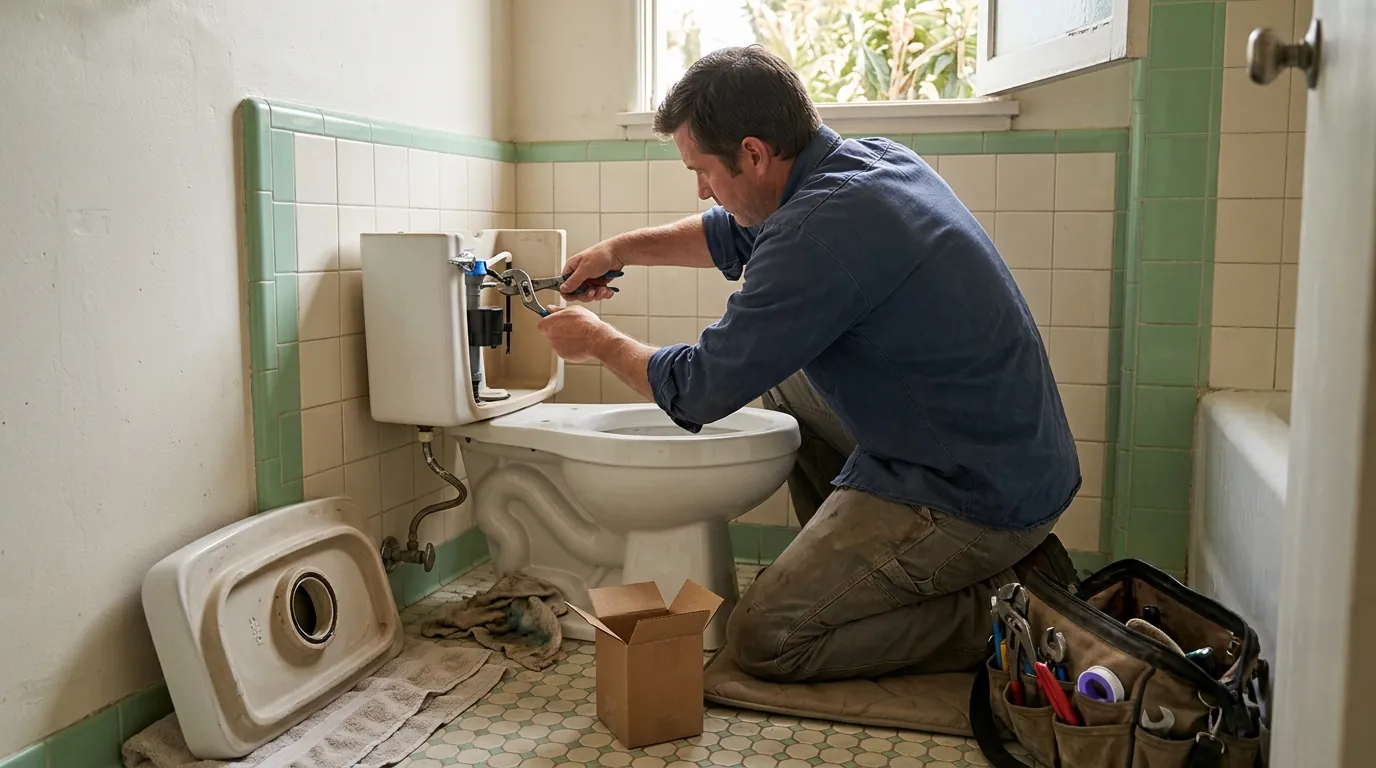
A sluggish flush can come from mineral scale in the rim jets, a low tank level, or a partial clog in the trap. We clear the trap with a closet auger, check the jet and rim holes, and set the tank level correctly. Sometimes the toilet is fine and the problem is the line it drains into.
If the toilet gurgles when the washer drains, or the tub fills when you flush, the blockage is downstream in the main line, not in the toilet. That needs a drain line cleared from a cleanout rather than more plunging.
Most toilets are worth repairing. Tank parts are inexpensive, and a well-set bowl can last for decades. Replacement makes more sense when the porcelain is cracked, when an old high-volume toilet keeps clogging, or when parts for an unusual model are hard to find.
Older toilets from before the low-flow era can use far more water per flush than current models, which adds up in a household with several people. If yours is cracked or keeps needing work, our toilet installation service covers removing the old one and setting a new high-efficiency model.
Warning signs
Typical pricing
The price depends on which parts failed, whether the toilet has to be pulled from the floor, and the condition of the flange and subfloor underneath.
| Job | Typical LA range |
|---|---|
| Flapper and fill valve replacement on a running toilet | $150 to $325 |
| Pull and reset with new wax seal and closet bolts | $225 to $450 |
| Flange repair or replacement during a reset | $350 to $750 |
| Angle stop and supply line replacement behind the toilet | $175 to $350 |
These are typical ranges, not a quote, and the price rises if the subfloor is rotted, the flange is cast iron, or the toilet is an unusual model. See every job in our LA price guide.
On the job
We check the tank parts, water level, flush, base seal, bolts and supply valve to find what actually failed.
You hear what is worn, what it costs to fix, and whether replacement would make more sense for that toilet.
Flapper, fill valve, flush valve, seal, bolts, flange or supply line are swapped with stock from the truck.
If the bowl came off, it goes back on a new seal, shimmed solid and bolted without overtightening the porcelain.
We flush repeatedly, check for leaks at the base and supply, and confirm the tank shuts off cleanly.
Hard water across most of the region leaves white crust in rim holes, jets and fill valves, which is why flappers and fill valves fail sooner here. Older houses near downtown and in neighborhoods like Highland Park and Boyle Heights often have cast iron flanges that rust at the bolt slots. Valley homes built on slabs set the toilet directly on concrete, so a long-running base leak spreads under tile rather than dripping into a crawlspace. Toilets in rental units and apartment buildings see heavy use, and a single running toilet can noticeably raise a building's shared water bill.
Questions we hear
The new flapper may not match the flush valve size, the chain may be too short or too long, or the flush valve seat may be pitted so no flapper can seal. The fill valve can also be set too high, sending water down the overflow tube. We check all three and replace the flush valve if the seat is worn.
It is worth fixing soon. A small leak at the base usually means the wax seal has failed, and water can soak into the subfloor or spread under tile for months before you see real damage. Pulling the toilet and resetting it on a new seal is a short job if caught early.
Many older toilets can be repaired, though some vintage tank parts are no longer made and need adapted modern replacements. The cast iron flange underneath often needs attention too. If the porcelain is sound and the bowl flushes well, repair is usually worth it. A cracked tank or bowl means replacement.
Tank part replacements usually take under an hour. Pulling and resetting a toilet on a new seal takes one to two hours, longer if the flange needs repair or the bowl needs shimming on uneven tile. We carry common parts, so most toilet repairs are finished in a single visit.
Coverage
These are the communities that call us for this most often, with their main ZIP codes. The same 24/7 line covers every one of our 68 service areas.
Often booked together
New toilets set on a sound flange with a fresh seal and supply line, shimmed level, caulked properly, with the old fixture hauled away.
See the detailsKitchen, bathroom, laundry and floor drain clearing with sized cables and cutters, plus a clear explanation of what caused the clog and how to avoid the next one.
See the detailsReplacement of seized or leaking main shutoffs and fixture stop valves, swapping old gate and multi-turn valves for quarter-turn ball valves.
See the detailsSofteners sized to your household and water hardness, plumbed at the main with a bypass, a proper drain and a separate unsoftened line where you want one.
See the detailsCall the line any hour. A plumber answers, asks what you are seeing and tells you what happens next.