Pressure Regulator Replacement
We gauge your house water pressure, replace failed pressure reducing valves at the main, and set them to a safe level that protects pipes and fixtures.
See the detailsRepairs & emergencies
Emergency PlumbingLeak DetectionSlab Leak RepairBurst Pipe RepairToilet RepairFaucet RepairGarbage Disposal RepairShower Valve RepairPressure Regulator ReplacementOutdoor Spigot RepairDrains & sewer
Drain CleaningMain Line Clog ClearingHydro JettingSewer Camera InspectionSewer Line RepairTrenchless Sewer ReplacementSewer Cleanout InstallationStorm & Yard Drain CleaningWater heaters
Water Heater RepairWater Heater ReplacementTankless Water Heater InstallationTankless Water Heater ServiceHeat Pump Water Heater InstallationWater Heater Earthquake StrappingHot Water Recirculation PumpPipes, gas & water lines
Whole-House RepipingMain Water Line ReplacementShutoff Valve ReplacementGas Line RepairGas Line InstallationSeismic Gas Shutoff ValveBackflow TestingWater Softener InstallationWhole-House Water FiltrationFixtures, remodels & property
Toilet InstallationFaucet & Sink InstallationKitchen PlumbingBathroom Remodel PlumbingADU PlumbingPlumbing InspectionApartment Building PlumbingCommercial PlumbingGrease Trap ServiceCity of Los Angeles
Los AngelesResedaWinnetkaCanoga ParkWest HillsTarzanaChatsworthPorter RanchGranada HillsNorth HillsLake BalboaPanorama CityValley GlenSun ValleyPacoimaSylmarSunland-TujungaSan PedroWilmingtonMission HillsValley VillageHarbor CityLA and Ventura county cities
Santa ClaritaSan FernandoBurbankGlendalePasadenaCalabasasThousand OaksSimi ValleySanta MonicaInglewoodHawthorneTorranceCarsonLong BeachComptonMore LA County cities
DowneyNorwalkLakewoodEl MonteWest CovinaWhittierPomonaAlhambraArcadiaCovinaBeverly HillsCulver CityRedondo BeachBellflowerSouth GateOrange County and Inland Empire
AnaheimSanta AnaIrvineHuntington BeachOrangeFullertonGarden GroveCosta MesaRancho CucamongaOntarioCoronaCounties
Los Angeles CountyVentura CountyOrange CountySan Bernardino CountyRiverside CountyA pipe is leaking and the main shutoff will not budge, or the stop valve under the sink drips every time you touch it. Old valves fail exactly when you need them, and replacing them ahead of an emergency is quick work.
Shutoff valve replacement swaps the main house valve and the small stop valves under sinks, behind toilets and at the water heater. Old multi-turn gate and compression stops seize with scale and corrosion. We replace them with quarter-turn ball valves that close fully in one motion, so you can stop water fast during a leak or repair.
Gate valves close by lowering a metal wedge into the flow. After years left open, minerals from hard water lock the wedge or stem in place. When you finally turn the handle, the stem can shear off, or the wedge drops partway and blocks flow without sealing. Either way, the valve fails right when water is spreading across the floor.
Older multi-turn stop valves under sinks and toilets use rubber washers that harden over time. The handle may turn, but water keeps seeping past. Packing around the stem dries out too, so the first turn in years often starts a drip.
Quarter-turn ball valves avoid both problems. A drilled ball rotates ninety degrees to open or close, seals with durable seats, and is far less likely to seize from scale.
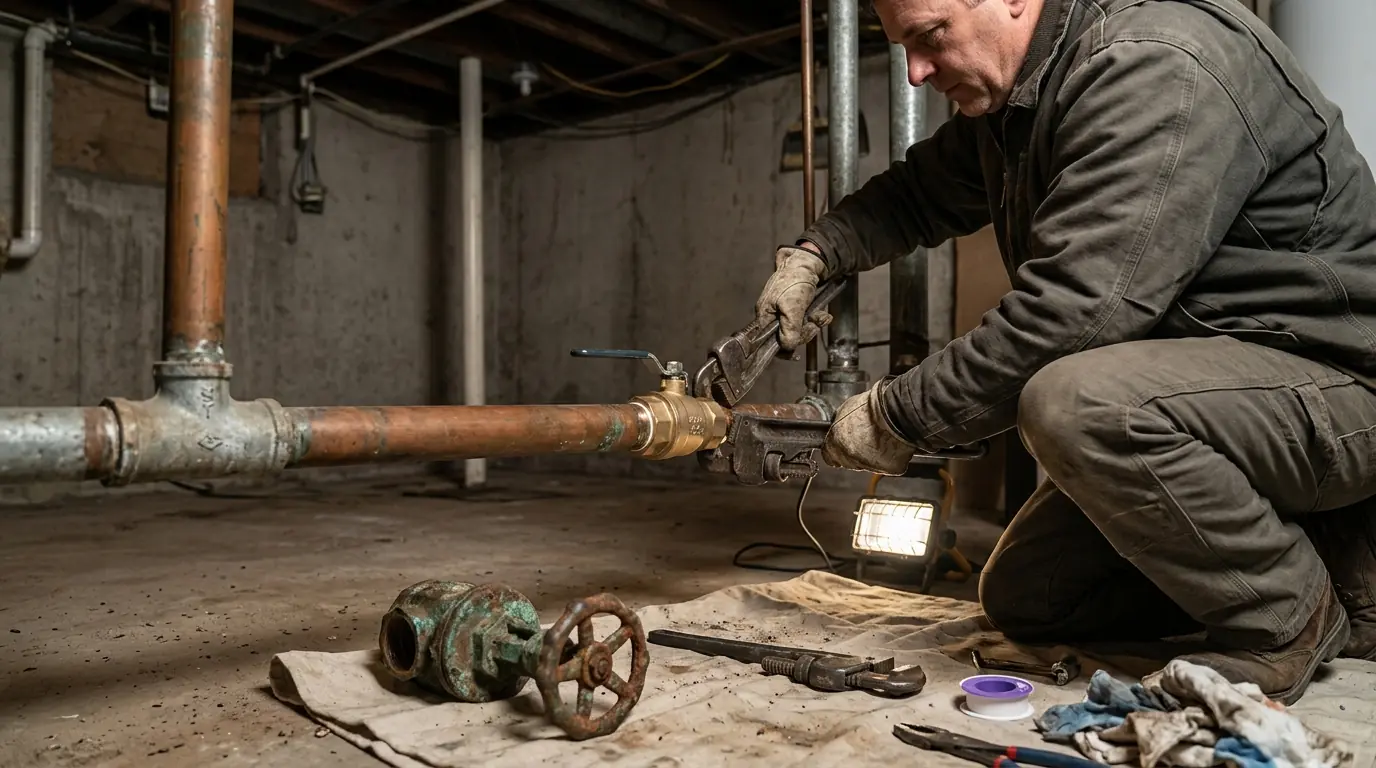
Your main shutoff is usually on the front wall near the hose bib, in the garage, or where the service line enters the house. We shut water at the meter, cut out the old valve, and install a full-port ball valve so it does not restrict flow. On galvanized lines we use transition fittings that limit corrosion between dissimilar metals.
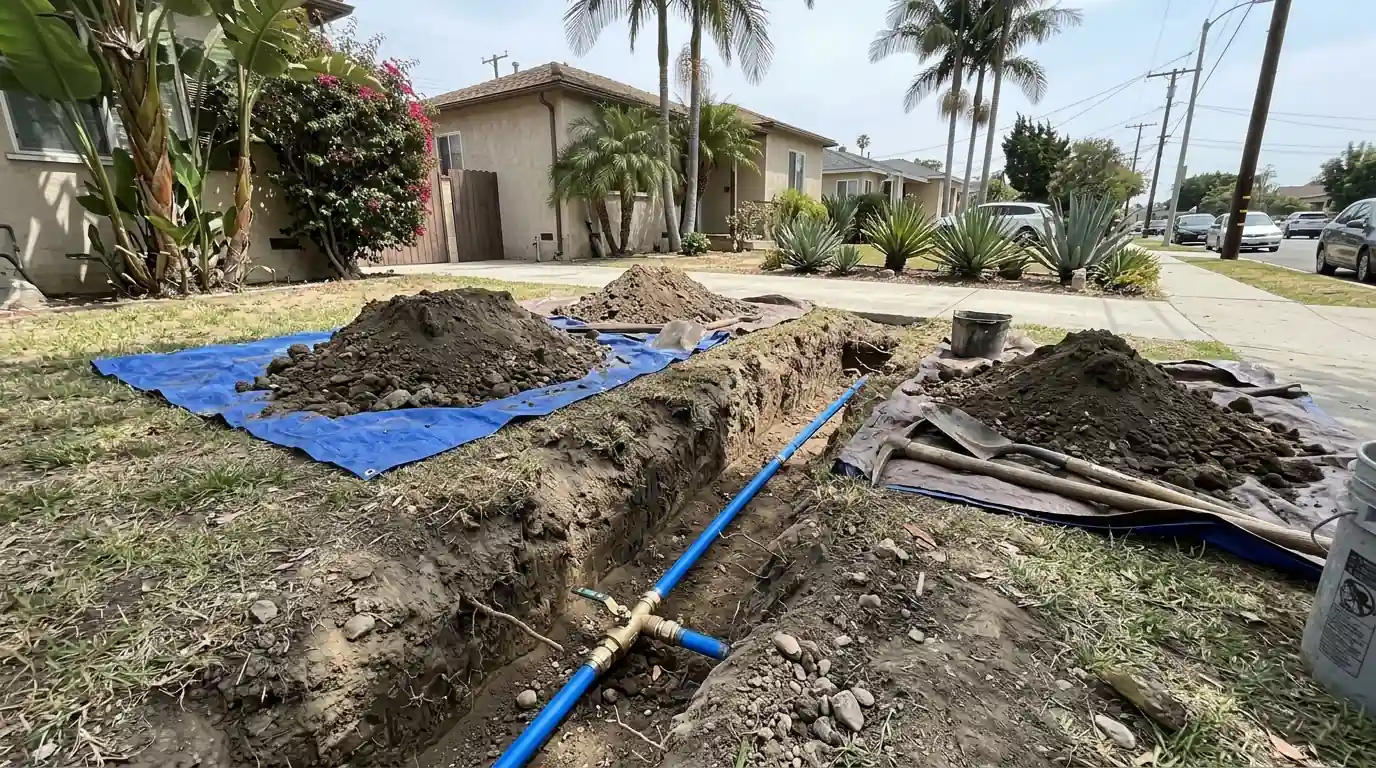
If the house has no main shutoff at all, we add one in an easy-to-reach spot. While the water is off, we often check the pressure regulator nearby, since many LA homes have regulators that have quietly failed. Our regulator replacement can be done in the same visit.
Once the new valve is in, we open the water slowly, purge air from the house lines and check every fitting for drips before leaving.
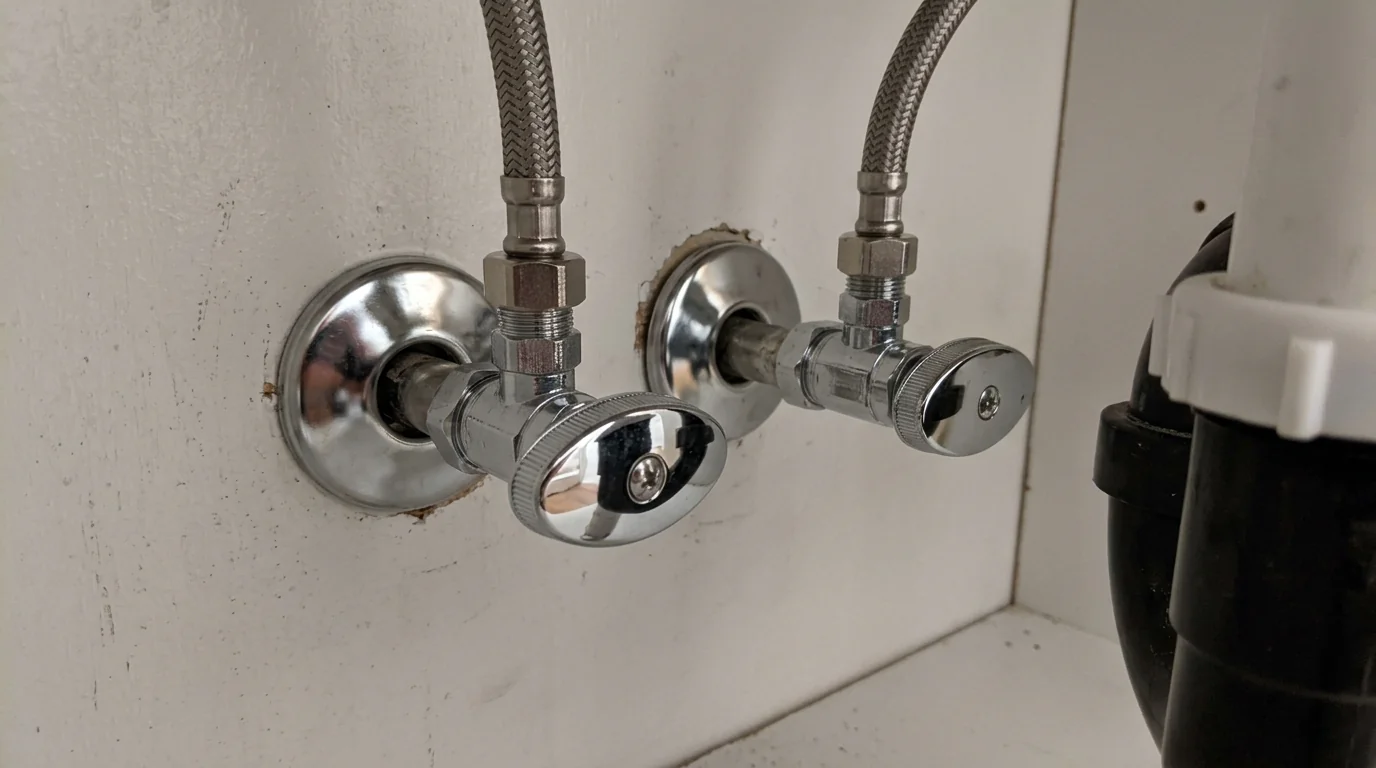
Every toilet, sink, dishwasher, ice maker and washing machine should have its own stop valve so you can shut off that one fixture without killing water to the house. We replace old multi-turn stops with quarter-turn versions and fit new braided supply lines at the same time, since old rubber or plastic supply tubes burst without warning.
Doing the whole house at once saves a separate trip every time a fixture needs work. It also means that if a toilet fill valve sticks or a faucet cartridge fails, you can stop the water on the spot. Pair this with a toilet repair or faucet repair when we are already there.
The water heater should have a cold inlet shutoff as well. If it is a gate valve, we replace it, because draining or servicing a heater with a valve that will not close turns a small job into a large one.
When we finish, we show you where the main shutoff is, how to close it, and where the gas meter shutoff sits. In a quake, a burst line or a failed supply hose, those few minutes matter. Our first fifteen minutes guide lays out what to do while you wait for help.
Test your shutoffs once or twice a year by closing and reopening them. A valve that moves regularly is much less likely to seize. If any valve feels gritty or drips when turned, call us before it fails outright.
For homes with older galvanized plumbing, valve work often reveals how far the pipe corrosion has gone. If fittings crumble when we cut them, we will tell you, and repiping may be the next logical step.
Hard water across Los Angeles is the main reason valves seize here. Calcium and magnesium deposits build up on stems and seats, especially in valves left open for years. Older homes in neighborhoods like Valley Glen and Van Nuys often still have original gate valves on galvanized lines that crumble when disturbed. In hillside homes, the main shutoff is sometimes buried in a planter or hidden behind a retaining wall, so we relocate it to an easier spot. Earthquakes are another reason to know your valves: after strong shaking, quickly shutting water can limit damage from broken lines.
Warning signs
On the job
We find the main shutoff, the meter valve and every fixture stop, then test which ones close fully.
If the main is being replaced, we close the meter valve or coordinate with the water department where needed.
Old valves are cut out and replaced with quarter-turn ball valves and new supply lines at each fixture.
We reopen water slowly, purge air and sediment from the lines and check every new fitting for leaks.
We point out the main shutoff and key fixture stops so you can act fast next time.
Typical pricing
Price depends on valve location and access, pipe material, and how many valves are replaced in one visit.
| Job | Typical LA range |
|---|---|
| Single fixture stop valve with new supply line | $150 to $300 |
| Whole-house fixture stops, typical three-bedroom home | $700 to $1,600 |
| Main house shutoff, accessible location | $350 to $800 |
| Main shutoff where none existed, new tee and valve | $500 to $1,100 |
These are typical ranges, not a quote; corroded galvanized pipe, buried or boxed-in valves, wall access and added regulator work change the final price. See every job in our LA price guide.
Questions we hear
Most often on an exterior wall facing the street, near a hose bib, or in the garage near where the line enters. In some older homes it is buried in a box near the foundation or missing entirely. If you cannot find yours, we can locate it, replace it if needed and add one if there is none.
Some homeowners do, but compression fittings on old copper can be stubborn, and an overtightened or cross-threaded valve can leak inside the cabinet for weeks before anyone notices. If the old valve is soldered or threaded onto galvanized pipe, the risk of breaking the pipe goes up. We usually replace all fixture stops in one visit.
Gate valves seize and fail to seal after years of sitting open, which is common with LA hard water. A ball valve closes with a quarter turn, seals reliably, and is far less likely to stick. In a burst pipe emergency, being able to stop the water in one motion saves floors, walls and cleanup costs.
There is no fixed schedule. Replace any valve that will not turn, drips when moved or fails to stop the water. Gate valves and old multi-turn stops from the original construction are good candidates during any other plumbing work, especially in homes that already need a new main water line.
Coverage
These are the communities that call us for this most often, with their main ZIP codes. The same 24/7 line covers every one of our 68 service areas.
Often booked together
We gauge your house water pressure, replace failed pressure reducing valves at the main, and set them to a safe level that protects pipes and fixtures.
See the detailsWhole-house repiping for Los Angeles homes with corroded galvanized or pinholing copper, using copper or PEX routed through attics and walls instead of the slab.
See the detailsBurst lines, sewage backups, failed water heaters and gas smells handled around the clock, starting with the shutoff steps you can take before we arrive.
See the detailsReplacement of the private water service line between the meter and your house, in copper or approved plastic, by trenching or trenchless pull methods.
See the detailsCall the line any hour. A plumber answers, asks what you are seeing and tells you what happens next.