Water Heater Replacement
Failed or aging tank water heaters swapped for new gas or electric units, with seismic straps, venting, relief piping, gas connections and the permit handled.
See the detailsRepairs & emergencies
Emergency PlumbingLeak DetectionSlab Leak RepairBurst Pipe RepairToilet RepairFaucet RepairGarbage Disposal RepairShower Valve RepairPressure Regulator ReplacementOutdoor Spigot RepairDrains & sewer
Drain CleaningMain Line Clog ClearingHydro JettingSewer Camera InspectionSewer Line RepairTrenchless Sewer ReplacementSewer Cleanout InstallationStorm & Yard Drain CleaningWater heaters
Water Heater RepairWater Heater ReplacementTankless Water Heater InstallationTankless Water Heater ServiceHeat Pump Water Heater InstallationWater Heater Earthquake StrappingHot Water Recirculation PumpPipes, gas & water lines
Whole-House RepipingMain Water Line ReplacementShutoff Valve ReplacementGas Line RepairGas Line InstallationSeismic Gas Shutoff ValveBackflow TestingWater Softener InstallationWhole-House Water FiltrationFixtures, remodels & property
Toilet InstallationFaucet & Sink InstallationKitchen PlumbingBathroom Remodel PlumbingADU PlumbingPlumbing InspectionApartment Building PlumbingCommercial PlumbingGrease Trap ServiceCity of Los Angeles
Los AngelesResedaWinnetkaCanoga ParkWest HillsTarzanaChatsworthPorter RanchGranada HillsNorth HillsLake BalboaPanorama CityValley GlenSun ValleyPacoimaSylmarSunland-TujungaSan PedroWilmingtonMission HillsValley VillageHarbor CityLA and Ventura county cities
Santa ClaritaSan FernandoBurbankGlendalePasadenaCalabasasThousand OaksSimi ValleySanta MonicaInglewoodHawthorneTorranceCarsonLong BeachComptonMore LA County cities
DowneyNorwalkLakewoodEl MonteWest CovinaWhittierPomonaAlhambraArcadiaCovinaBeverly HillsCulver CityRedondo BeachBellflowerSouth GateOrange County and Inland Empire
AnaheimSanta AnaIrvineHuntington BeachOrangeFullertonGarden GroveCosta MesaRancho CucamongaOntarioCoronaCounties
Los Angeles CountyVentura CountyOrange CountySan Bernardino CountyRiverside CountyA cold shower, a pilot that will not stay lit or a puddle by the tank usually has a specific, fixable cause. We test the heater, find the failed part and tell you plainly whether repair still makes sense.
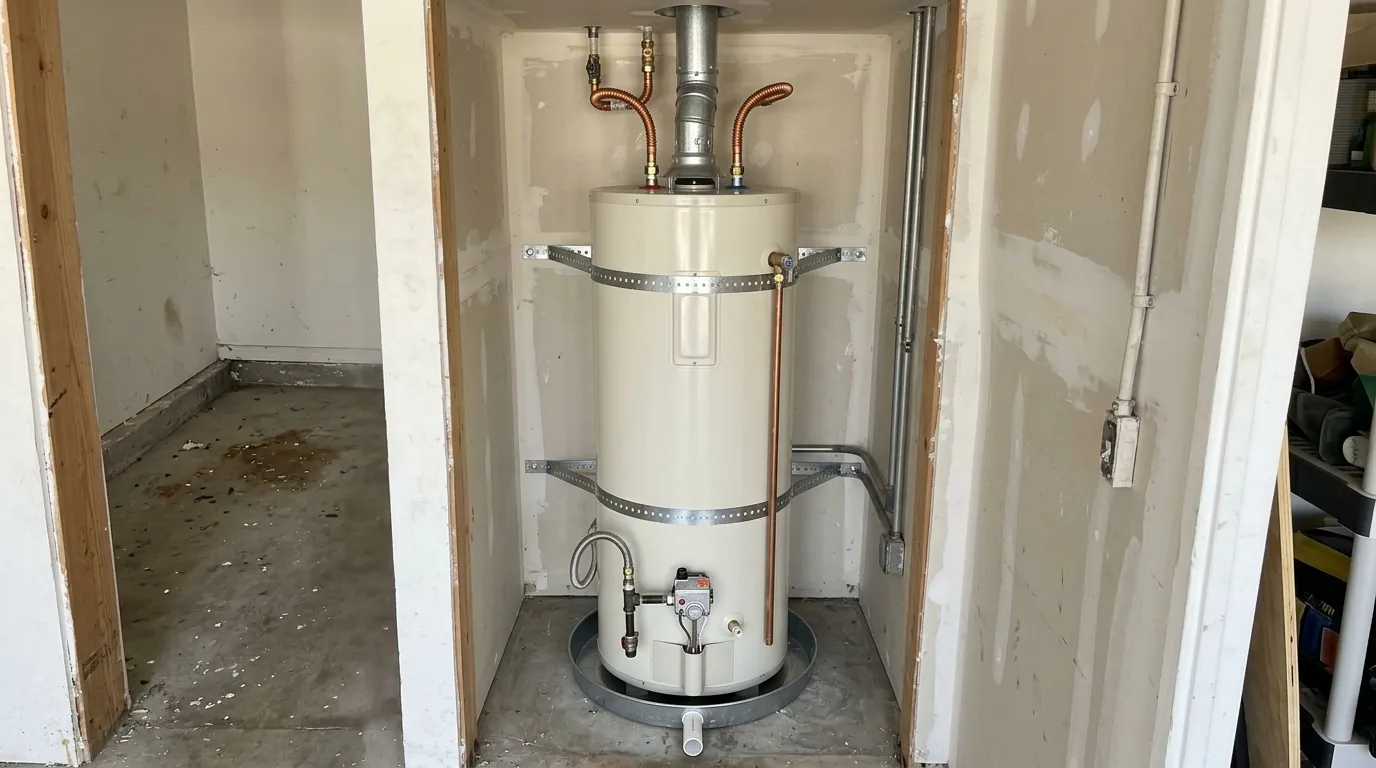
Water heater repair restores a tank heater that has stopped heating, heats poorly, leaks or makes noise. On gas units the usual causes are a thermocouple, a flame sensor, a gas valve or a dirty burner; on electric units, elements and thermostats. We test before replacing parts, and we tell you when the tank itself has failed and repair no longer pays.
Warning signs
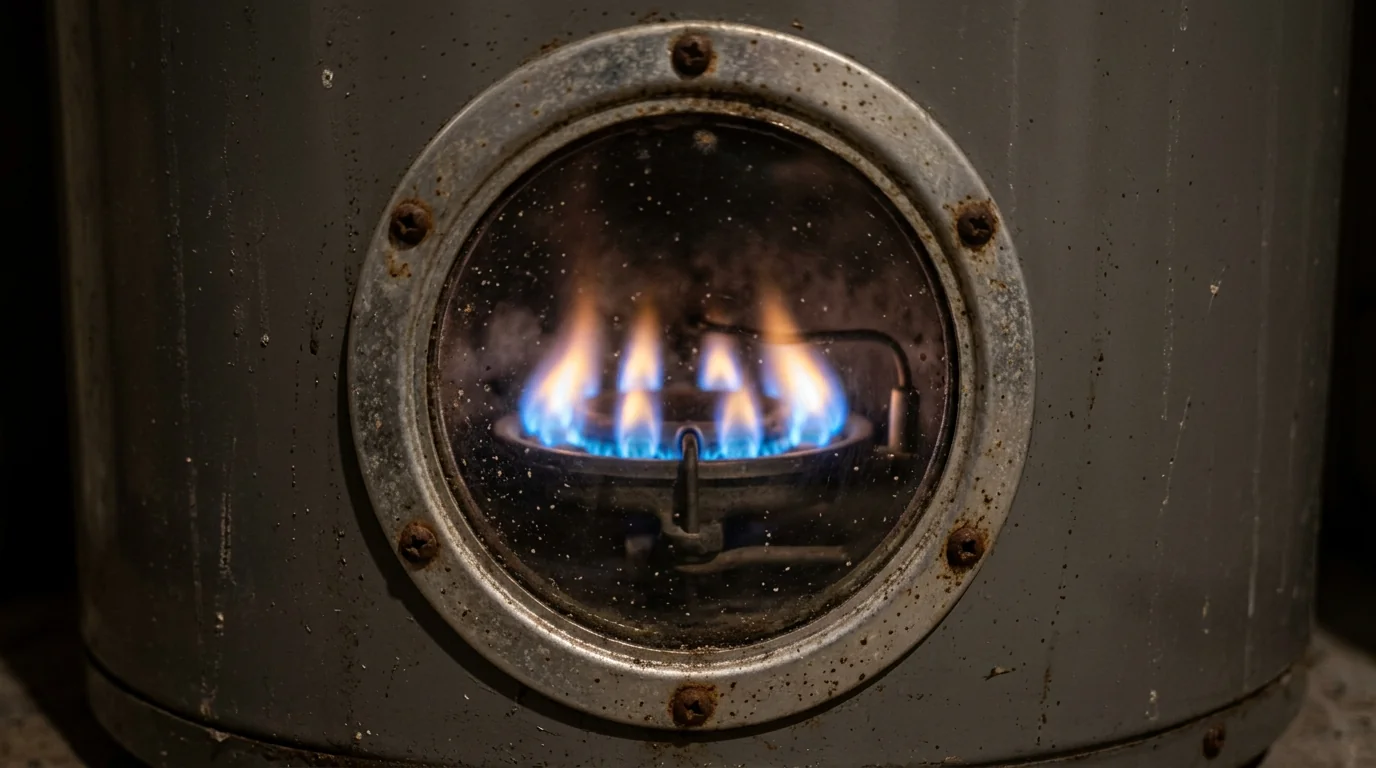
On a standard atmospheric gas heater, the thermocouple is the most common failure. It is a small copper probe that sits in the pilot flame and tells the gas valve the pilot is lit. When it weakens, the valve shuts off gas as a safety measure and you lose hot water. Replacing it takes under an hour.
Newer low-emission heaters use a flame arrestor at the bottom and a sealed combustion chamber. Lint and dust from a nearby laundry area can clog the arrestor screen, starving the burner of air and tripping the heater off. Some of those units also use a thermopile and an electronic gas control, which we test with a meter rather than guessing.
Burners collect rust flakes and debris that fall from the flue. A dirty burner produces a lazy yellow flame, heats slowly and can create soot. Cleaning the burner and checking the flue draft are part of every gas heater repair we do.
Electric tanks have two heating elements and two thermostats. The upper element heats first, then hands off to the lower one. If you get a small amount of hot water and then cold, the lower element or its thermostat is usually at fault. No hot water at all often traces back to a tripped high-limit switch or a failed upper element.
We check each element with a meter at the heater rather than swapping parts on a hunch. Hard water scale builds up on elements and causes them to overheat and burn out, so a heater with one failed element often has a second one close behind it. Draining and flushing the tank during the repair extends the life of the new parts.
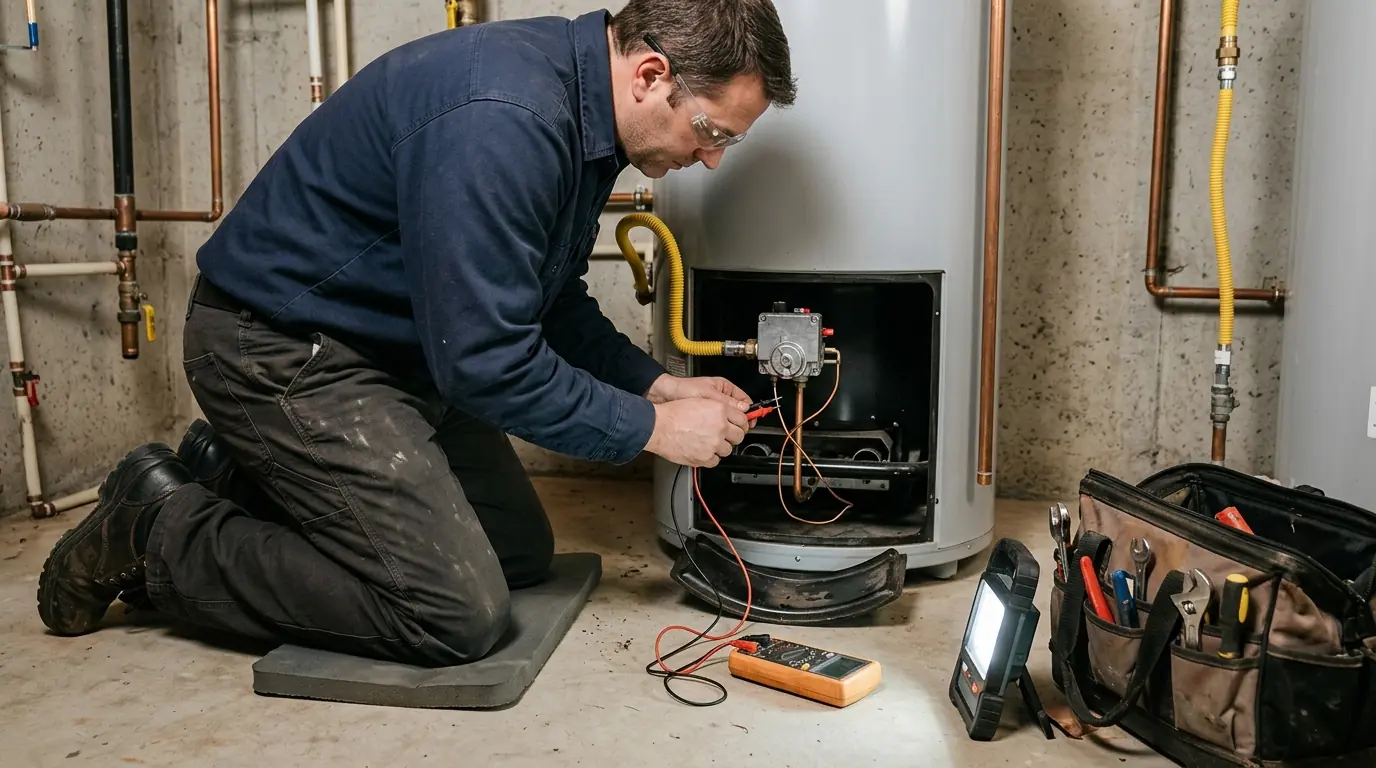
A tank that leaks from the body itself, not from a fitting or valve, cannot be repaired. The steel has rusted through under the glass lining and it will only get worse. Leaks from the drain valve, relief valve or pipe connections at the top are a different story and are usually simple fixes.
Age matters too. Most tank heaters in Los Angeles last roughly 8 to 12 years, and less where the water is hard and the tank was never flushed. Spending several hundred dollars on a gas valve for a 13-year-old heater rarely makes sense. In that situation we price a new tank installed alongside the repair so you can compare.
A water heater combines gas, flame, pressure and hot water, so every repair visit includes a safety pass. We test the relief valve and confirm its discharge pipe runs to an approved location. We check that the flue is connected, slopes upward and draws properly with a match or smoke test.
California requires residential water heaters to be braced with two straps, one in the upper third and one in the lower third of the tank. If yours is missing a strap or the straps are loose, we point it out, and proper seismic strapping can be added the same visit. Our article on checking your water heater straps shows what to look for. We also check the gas flex connector and the sediment trap on the gas line.
On the job
We start with your description: no hot water at all, short hot water, noise, leaking or smell. Each one points to a different set of parts.
We check pilot flame, thermocouple output, gas pressure, element resistance and thermostat function with meters, not guesses.
We look for body leaks, corrosion at fittings, flue draft and relief valve condition, and check the age on the data plate.
You get the cost of the repair and, if the heater is near the end of its life, a replacement price to compare.
We replace the failed part, relight or reset, and run hot water at a fixture until the temperature recovers normally.
Much of the water delivered across Los Angeles comes from the Colorado River and the State Water Project, and it is hard. That mineral load settles as scale on tank bottoms and electric elements, shortening heater life and causing the popping noise many homeowners hear. Our guide to hard water damage explains the effect on fixtures and heaters. Heaters sit in garages in most Valley tract homes, and in closets, attics or service porches in older houses near downtown. The 1994 Northridge earthquake toppled many unstrapped tanks and broke their gas lines, which is why California requires two straps on every residential tank.
Typical pricing
The failed part and whether it is a common item or a brand-specific control set most of the price. Night and holiday visits can cost more.
| Job | Typical LA range |
|---|---|
| Thermocouple or flame sensor replacement | $200 to $400 |
| Electric element and thermostat repair | $250 to $550 |
| Gas control valve replacement | $450 to $900 |
| Relief valve or drain valve replacement | $200 to $450 |
| Flush, anode rod and burner service | $250 to $500 |
These are typical ranges, not a quote; heater brand, part availability, access in attics or closets and after-hours timing change the cost. See every job in our LA price guide.
Questions we hear
The most common cause is a worn thermocouple or flame sensor that no longer signals the gas valve. Other causes include a clogged flame arrestor on low-emission models, a dirty pilot orifice, or a draft blowing through a garage or closet. We test the pilot circuit to confirm which one it is before replacing anything.
No. Leaks at the drain valve, the relief valve or the pipe connections on top are often simple repairs. If water is coming from the tank body itself, usually seen as rust and a steady drip from beneath the jacket, the tank has failed and has to be replaced. We find the source before recommending either.
Most repairs take one to two hours, including testing and relighting. Common parts like thermocouples, elements and relief valves we carry on the truck. Brand-specific gas controls may need a supply house trip, which can stretch it to the same afternoon or the next day depending on availability.
Relighting a pilot by following the label on the heater is fine for most homeowners. If it will not stay lit after one or two tries, or you smell gas, stop. Repeated relighting with a failed thermocouple does not fix anything, and gas valve work should be left to a plumber who can test for leaks afterward.
Coverage
These are the communities that call us for this most often, with their main ZIP codes. The same 24/7 line covers every one of our 68 service areas.
Often booked together
Failed or aging tank water heaters swapped for new gas or electric units, with seismic straps, venting, relief piping, gas connections and the permit handled.
See the detailsTwo-strap seismic bracing for tank water heaters in Los Angeles, anchored into framing or masonry, with flexible connectors and a gas shutoff check.
See the detailsDescaling flushes, inlet screen cleaning, error code diagnosis and part repairs for gas tankless water heaters across Los Angeles, built around our hard water.
See the detailsWe trace gas leaks with gauges and detectors, repair or replace damaged pipe and fittings, and pressure test the line before your appliances go back on.
See the detailsCall the line any hour. A plumber answers, asks what you are seeing and tells you what happens next.