Faucet & Sink Installation
New kitchen, bath, bar and laundry sinks with faucets fitted to the deck, fresh angle stops and supply lines, and a trap that lines up.
See the detailsRepairs & emergencies
Emergency PlumbingLeak DetectionSlab Leak RepairBurst Pipe RepairToilet RepairFaucet RepairGarbage Disposal RepairShower Valve RepairPressure Regulator ReplacementOutdoor Spigot RepairDrains & sewer
Drain CleaningMain Line Clog ClearingHydro JettingSewer Camera InspectionSewer Line RepairTrenchless Sewer ReplacementSewer Cleanout InstallationStorm & Yard Drain CleaningWater heaters
Water Heater RepairWater Heater ReplacementTankless Water Heater InstallationTankless Water Heater ServiceHeat Pump Water Heater InstallationWater Heater Earthquake StrappingHot Water Recirculation PumpPipes, gas & water lines
Whole-House RepipingMain Water Line ReplacementShutoff Valve ReplacementGas Line RepairGas Line InstallationSeismic Gas Shutoff ValveBackflow TestingWater Softener InstallationWhole-House Water FiltrationFixtures, remodels & property
Toilet InstallationFaucet & Sink InstallationKitchen PlumbingBathroom Remodel PlumbingADU PlumbingPlumbing InspectionApartment Building PlumbingCommercial PlumbingGrease Trap ServiceCity of Los Angeles
Los AngelesResedaWinnetkaCanoga ParkWest HillsTarzanaChatsworthPorter RanchGranada HillsNorth HillsLake BalboaPanorama CityValley GlenSun ValleyPacoimaSylmarSunland-TujungaSan PedroWilmingtonMission HillsValley VillageHarbor CityLA and Ventura county cities
Santa ClaritaSan FernandoBurbankGlendalePasadenaCalabasasThousand OaksSimi ValleySanta MonicaInglewoodHawthorneTorranceCarsonLong BeachComptonMore LA County cities
DowneyNorwalkLakewoodEl MonteWest CovinaWhittierPomonaAlhambraArcadiaCovinaBeverly HillsCulver CityRedondo BeachBellflowerSouth GateOrange County and Inland Empire
AnaheimSanta AnaIrvineHuntington BeachOrangeFullertonGarden GroveCosta MesaRancho CucamongaOntarioCoronaCounties
Los Angeles CountyVentura CountyOrange CountySan Bernardino CountyRiverside CountyA faucet that drips all night, a handle that grinds, or a cabinet floor that is always damp. We take the faucet apart, find the worn part and replace it, or tell you plainly when the faucet is not worth saving.
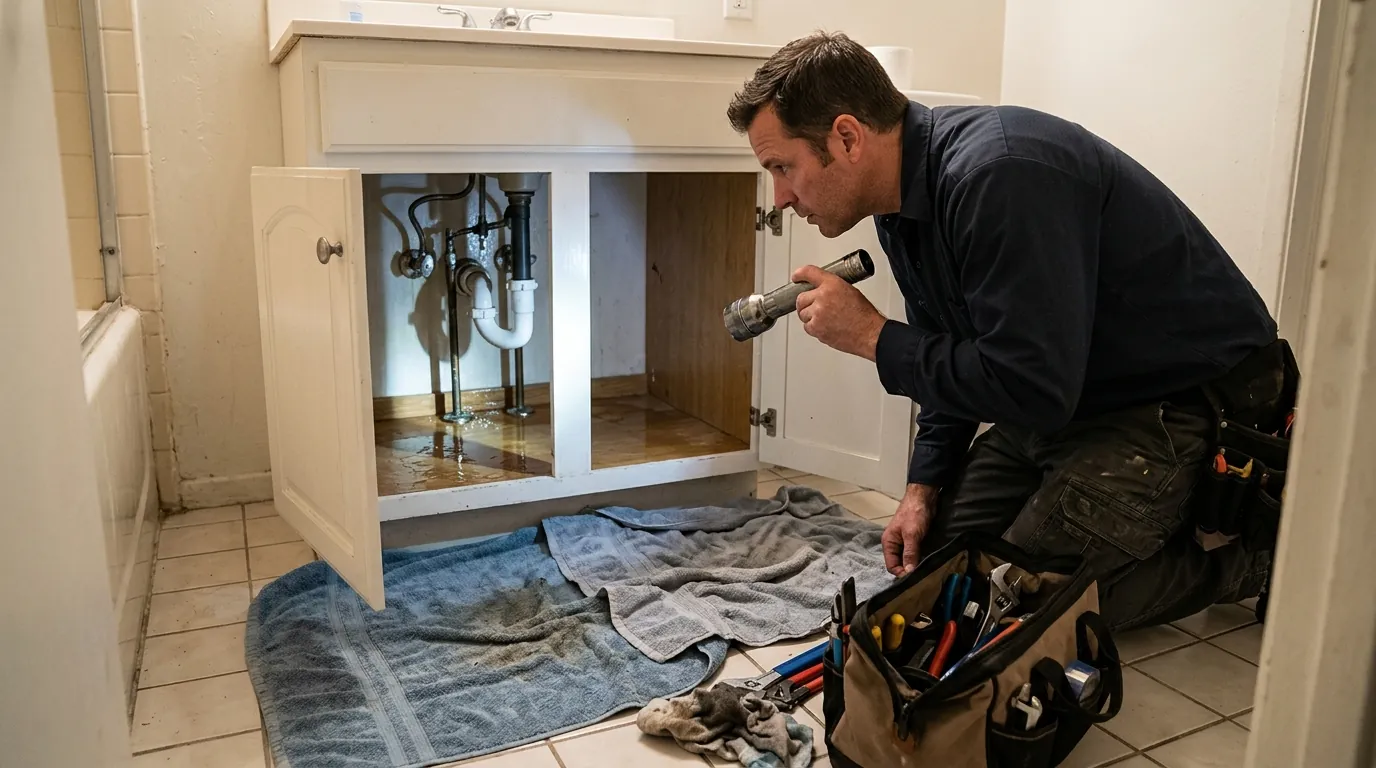
Faucet repair means finding which internal part has failed and replacing it: a cartridge, a compression washer and seat, an O-ring, a diverter, or the supply lines and stops underneath. You need it when the spout drips, the base leaks, the handle is stiff, flow drops, or water collects in the cabinet. Most kitchen, bath and laundry faucets can be repaired in one visit.
Older two-handle faucets use compression valves. Each handle presses a rubber washer down onto a brass seat. When the washer hardens or the seat gets pitted, water slips past and the spout drips. We replace the washer and either dress the seat smooth or swap it for a new one.
Most faucets installed in the last few decades use cartridges or ceramic discs instead. A cartridge controls both volume and temperature in a single-handle faucet. When it wears, you get drips, stiff movement or poor mixing. The fix is a new cartridge that matches the brand and model, which we identify from the faucet body and the old part.
Ball-type faucets, common in older kitchens, have their own kit of springs, seats and O-rings. Each style fails in its own way, and knowing which one you have is half the diagnosis.
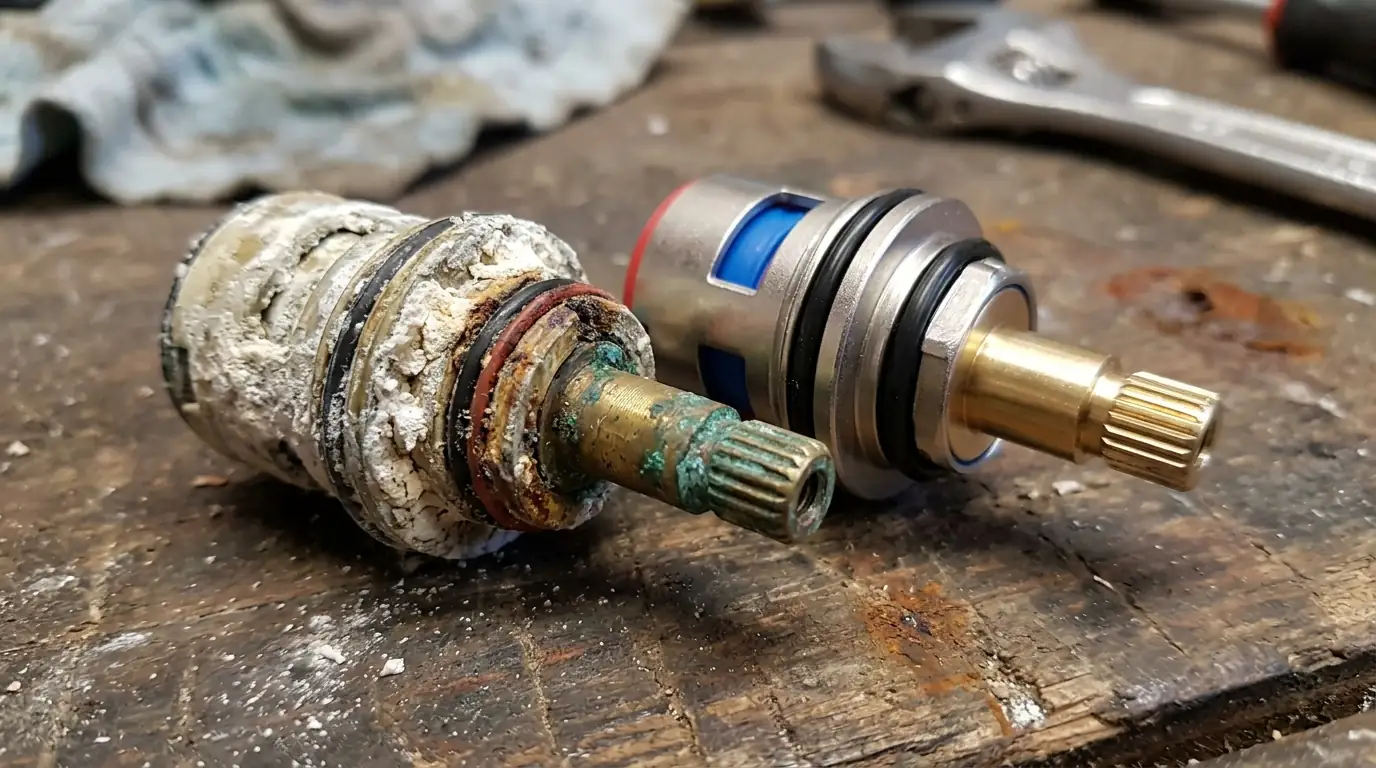
Much of the water supplied across Los Angeles comes from the Colorado River and the State Water Project, and both are hard. Calcium and magnesium leave white crust on aerators and inside cartridges, where they grind against seals every time the handle moves. That scale is why faucets here often wear out sooner than the same model would elsewhere.
Cleaning the aerator every few months helps, and so does replacing a stiff cartridge before it cracks. For houses where scale keeps coming back on every fixture, a water softener treats the problem at the source. Our article on what hard water does to LA fixtures covers the signs in more detail.
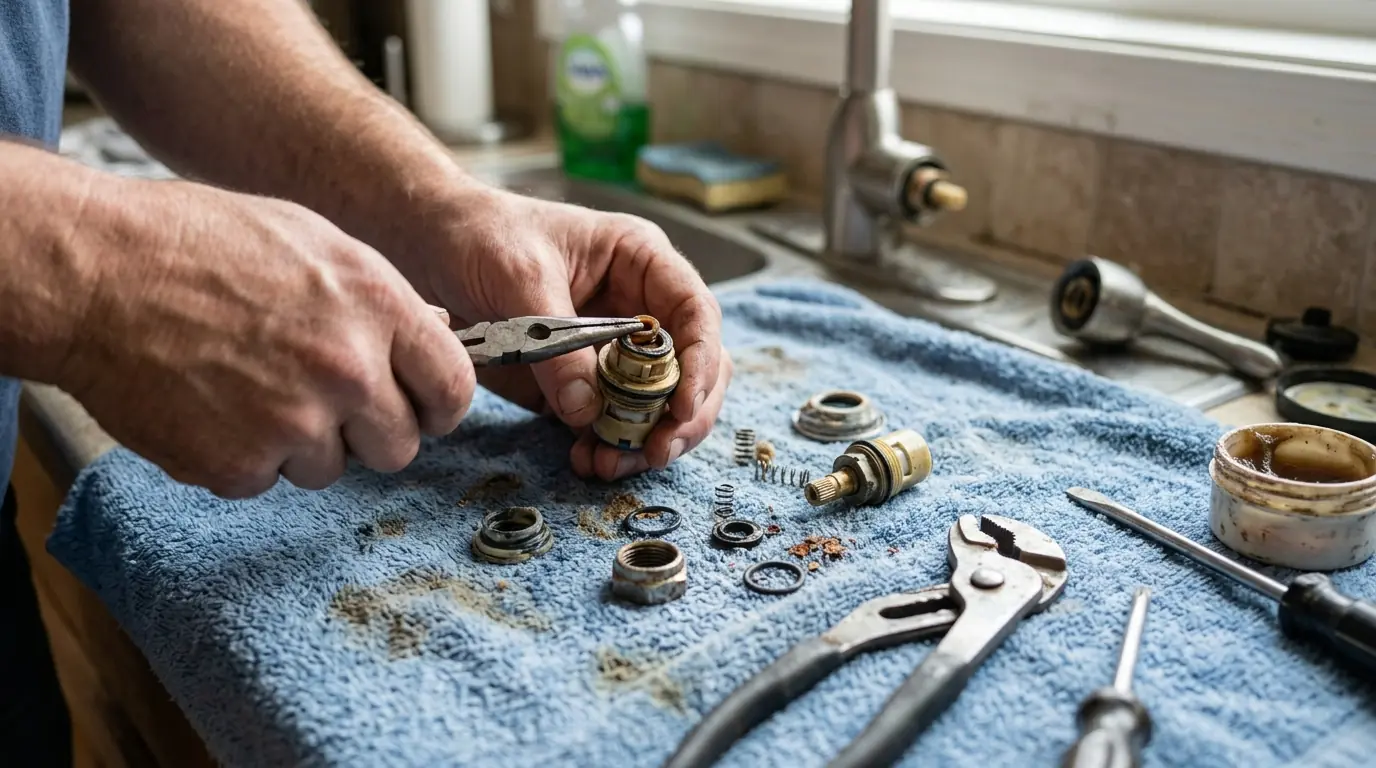
Not every faucet leak comes from the faucet. The two angle stops under the sink and the supply lines that run up to the faucet are common culprits. Old chrome stops seize from scale, and the rubber washers inside them dry out and weep at the stem. Plastic supply nuts can crack when overtightened.
We usually replace old stops with quarter-turn valves and new braided lines whenever we are under the sink. That way you have valves that will actually close the next time something leaks, and you avoid a call when the old ones fail.
A solid brass faucet from a known brand is usually worth repairing. Parts are available, and a new cartridge can make it feel new again. Inexpensive faucets with plastic bodies or no-name cartridges are harder to source and sometimes cost nearly as much to fix as to replace.
If the body is cracked, the finish is flaking, or parts for your model are no longer made, replacement is the better choice. We can handle that through our faucet and sink installation service, and on a remodel, through kitchen plumbing work that updates the whole sink setup.
Warning signs
Typical pricing
Price depends on the faucet type, the brand and availability of parts, and whether the stops and supply lines under the sink also need replacing.
| Job | Typical LA range |
|---|---|
| Cartridge replacement on a single-handle kitchen or bath faucet | $175 to $375 |
| Compression washer and seat repair on a two-handle faucet | $150 to $325 |
| Angle stop and supply line replacement under a sink | $175 to $375 |
| Tub and shower spout or diverter repair | $175 to $400 |
These are typical ranges, not a quote, and the price changes with the brand, the cost and availability of parts, and how seized the old valves are. See every job in our LA price guide.
On the job
We close the stops under the sink, open the faucet and look at the style, brand and the parts that have worn.
The cartridge, washer, seat or O-ring is matched by brand and model so the replacement fits correctly.
Scale is cleaned from the faucet body and the worn part is replaced, with new O-rings and seals where needed.
Stops and supply lines are inspected and replaced if they are seized, corroded or weeping.
We run the faucet through its full range, check for drips and look under the sink for any seepage.
Scale from hard water is the main reason faucets fail early across Los Angeles, Ventura and Orange counties. Many older homes still have original chrome angle stops from decades ago that will not close, and some still have rigid copper or chrome supply tubes that crack when disturbed. Laundry faucets in garages and utility rooms see scale buildup in the hose threads and handles. In rental units and apartment buildings, dripping faucets add steadily to the water bill, so property managers often have us repair several units in one visit.
Questions we hear
The new cartridge may be the wrong model, the seat or O-rings may be worn, or scale in the faucet body may keep it from sealing. On two-handle faucets, both sides may need attention. We clean the body, match the cartridge by brand and model, and replace the seats or seals that are worn.
Often yes. We can usually identify the faucet by the shape of the cartridge, the handle and the body. If parts for an unbranded or discontinued model cannot be found, we will tell you, and replacing the faucet may be more practical than chasing a part.
Outdoor hose bibs use similar washers and stems but face sun, scale and sprinkler overspray. A leaking stem or a cracked body usually means replacing the spigot. Our outdoor spigot service covers those, including adding a vacuum breaker so garden hose water cannot siphon back into the house supply.
If only one faucet is slow, it is usually a clogged aerator or a scaled cartridge. If every fixture in the house has weak flow, the cause is more likely a failing pressure regulator, a closed or scaled main valve, or old galvanized pipe narrowed by rust. We check the faucet first, then measure house pressure if needed.
Coverage
These are the communities that call us for this most often, with their main ZIP codes. The same 24/7 line covers every one of our 68 service areas.
Often booked together
New kitchen, bath, bar and laundry sinks with faucets fitted to the deck, fresh angle stops and supply lines, and a trap that lines up.
See the detailsSofteners sized to your household and water hardness, plumbed at the main with a bypass, a proper drain and a separate unsoftened line where you want one.
See the detailsReplacement of seized or leaking main shutoffs and fixture stop valves, swapping old gate and multi-turn valves for quarter-turn ball valves.
See the detailsKitchen drains, dishwasher and ice maker hookups, pot fillers, gas range connections and remodel rough-in for Los Angeles houses and condos.
See the detailsCall the line any hour. A plumber answers, asks what you are seeing and tells you what happens next.