Shower Valve Repair
Cartridge swaps, stem rebuilds and full valve replacements for showers that drip, scald or won't hold a temperature, done with as little tile damage as possible.
See the detailsRepairs & emergencies
Emergency PlumbingLeak DetectionSlab Leak RepairBurst Pipe RepairToilet RepairFaucet RepairGarbage Disposal RepairShower Valve RepairPressure Regulator ReplacementOutdoor Spigot RepairDrains & sewer
Drain CleaningMain Line Clog ClearingHydro JettingSewer Camera InspectionSewer Line RepairTrenchless Sewer ReplacementSewer Cleanout InstallationStorm & Yard Drain CleaningWater heaters
Water Heater RepairWater Heater ReplacementTankless Water Heater InstallationTankless Water Heater ServiceHeat Pump Water Heater InstallationWater Heater Earthquake StrappingHot Water Recirculation PumpPipes, gas & water lines
Whole-House RepipingMain Water Line ReplacementShutoff Valve ReplacementGas Line RepairGas Line InstallationSeismic Gas Shutoff ValveBackflow TestingWater Softener InstallationWhole-House Water FiltrationFixtures, remodels & property
Toilet InstallationFaucet & Sink InstallationKitchen PlumbingBathroom Remodel PlumbingADU PlumbingPlumbing InspectionApartment Building PlumbingCommercial PlumbingGrease Trap ServiceCity of Los Angeles
Los AngelesResedaWinnetkaCanoga ParkWest HillsTarzanaChatsworthPorter RanchGranada HillsNorth HillsLake BalboaPanorama CityValley GlenSun ValleyPacoimaSylmarSunland-TujungaSan PedroWilmingtonMission HillsValley VillageHarbor CityLA and Ventura county cities
Santa ClaritaSan FernandoBurbankGlendalePasadenaCalabasasThousand OaksSimi ValleySanta MonicaInglewoodHawthorneTorranceCarsonLong BeachComptonMore LA County cities
DowneyNorwalkLakewoodEl MonteWest CovinaWhittierPomonaAlhambraArcadiaCovinaBeverly HillsCulver CityRedondo BeachBellflowerSouth GateOrange County and Inland Empire
AnaheimSanta AnaIrvineHuntington BeachOrangeFullertonGarden GroveCosta MesaRancho CucamongaOntarioCoronaCounties
Los Angeles CountyVentura CountyOrange CountySan Bernardino CountyRiverside CountyThe walls are open, the old tub is out, and now the tile setter needs the valve at the right depth and the drain in the right spot. Bathroom remodel plumbing decides whether the finished room works.
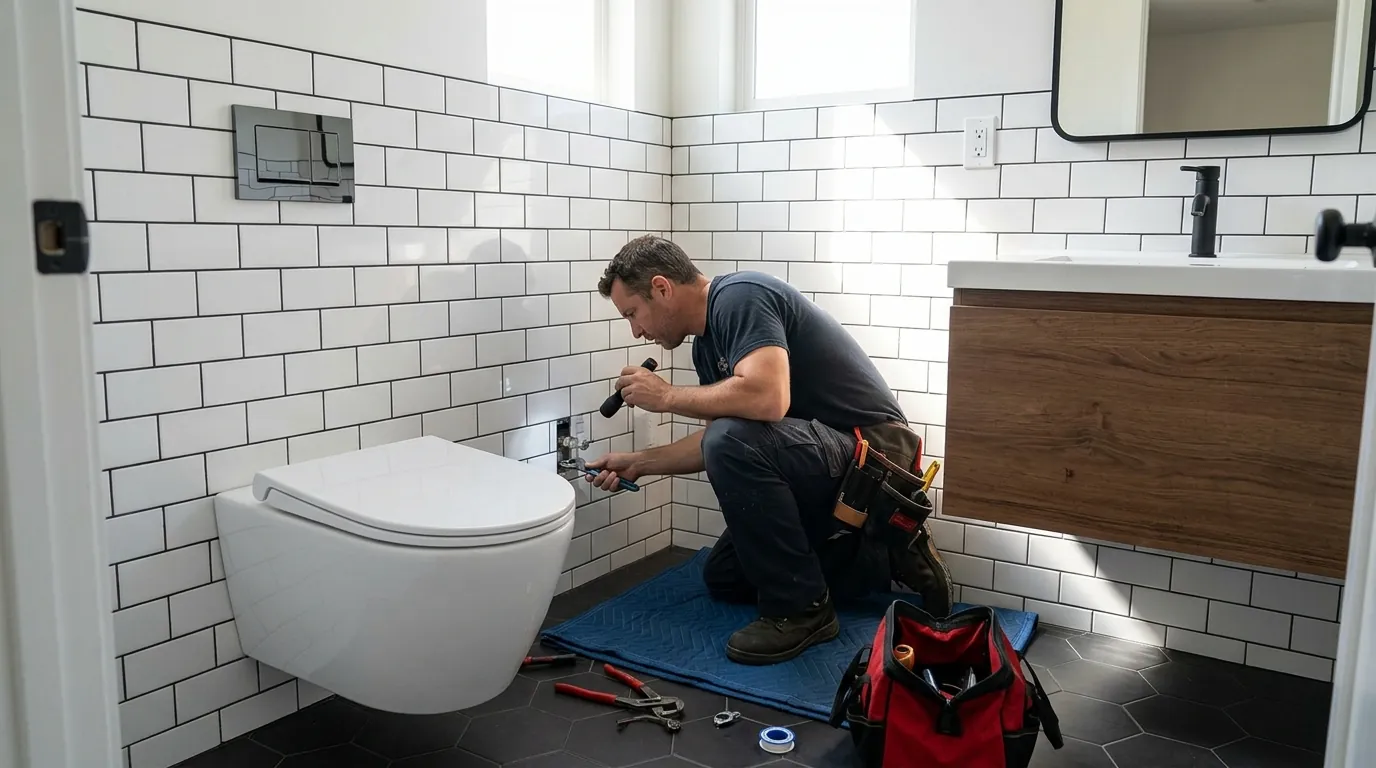
Bathroom remodel plumbing is the work done while walls and floors are open: moving or replacing drains, vents and supply lines, setting the shower valve and drain, roughing in the vanity and toilet, then installing fixtures after tile. You need it any time a remodel changes fixture positions, converts a tub to a shower, or exposes old galvanized or cast iron pipe.
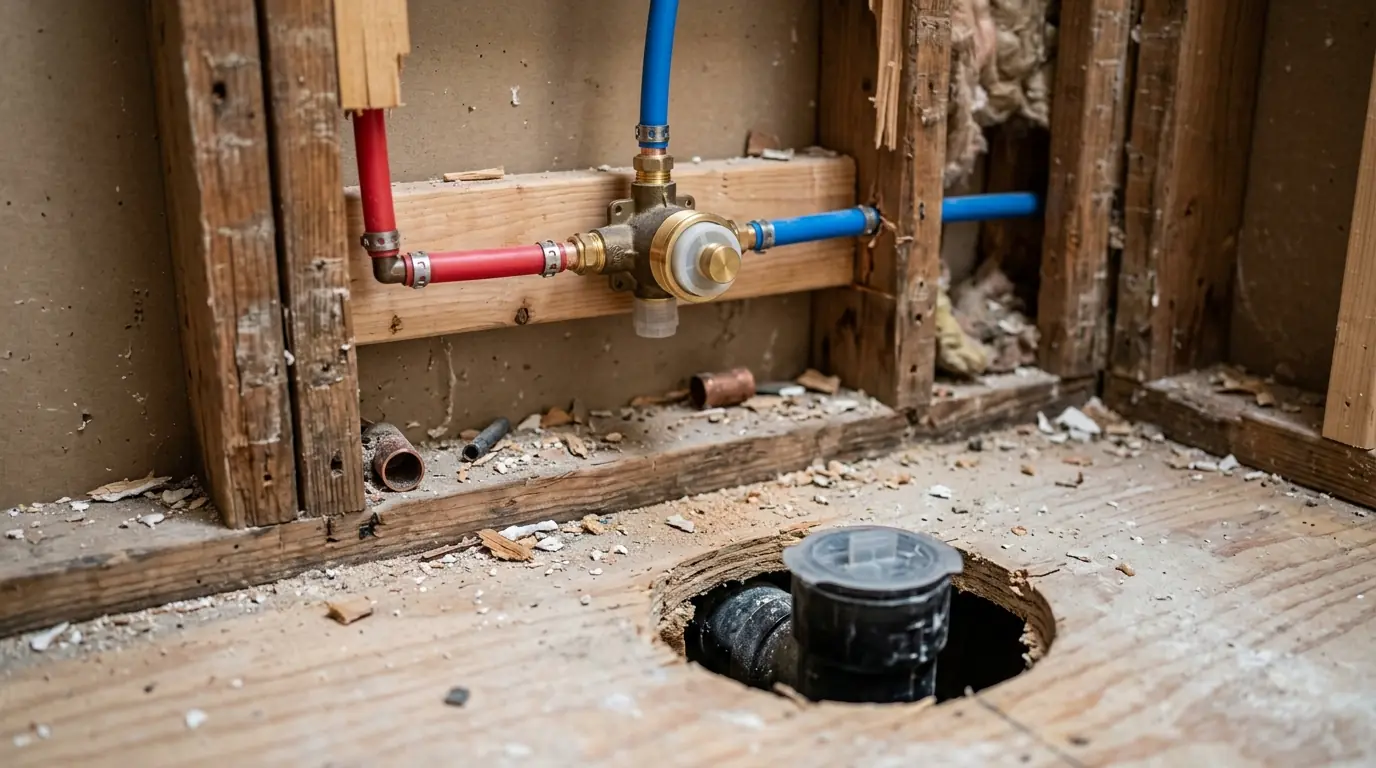
The shower valve is the most expensive part of a bathroom to get wrong, because fixing it means removing tile. We set the valve body at the depth the trim kit calls for, measured from the finished wall surface, including backer board, waterproofing and tile thickness. If the depth is off, the trim will not seat or the cartridge will stick out.
We pick a pressure-balancing or thermostatic valve that matches the trim you bought, then cap and pressure test it before the walls close. For a valve that is failing in a room you are not remodeling, our shower valve repair work can often save the wall.
Curbless and linear drain showers need the floor dropped or built up so water runs to the drain. On a slab that can mean cutting and lowering the area, which we plan with the contractor before demo.
Many Los Angeles bathrooms from the 1950s and 1960s still have galvanized supply lines inside the walls and cast iron or galvanized drains below. Galvanized rusts closed on the inside, which is why old showers lose pressure. Opening the walls is the cheapest time you will ever have to replace it.
We run PEX or copper from the nearest good joint to every fixture and set new stops. If the rest of the house has the same pipe, consider repiping the whole house at the same time, since the bathroom is often the hardest part to reach. Our article on patching versus a full repipe walks through that choice.
On the drain side, we inspect the cast iron or galvanized lines exposed by demo and replace cracked sections with ABS or PVC, using shielded couplings where we tie into old pipe.
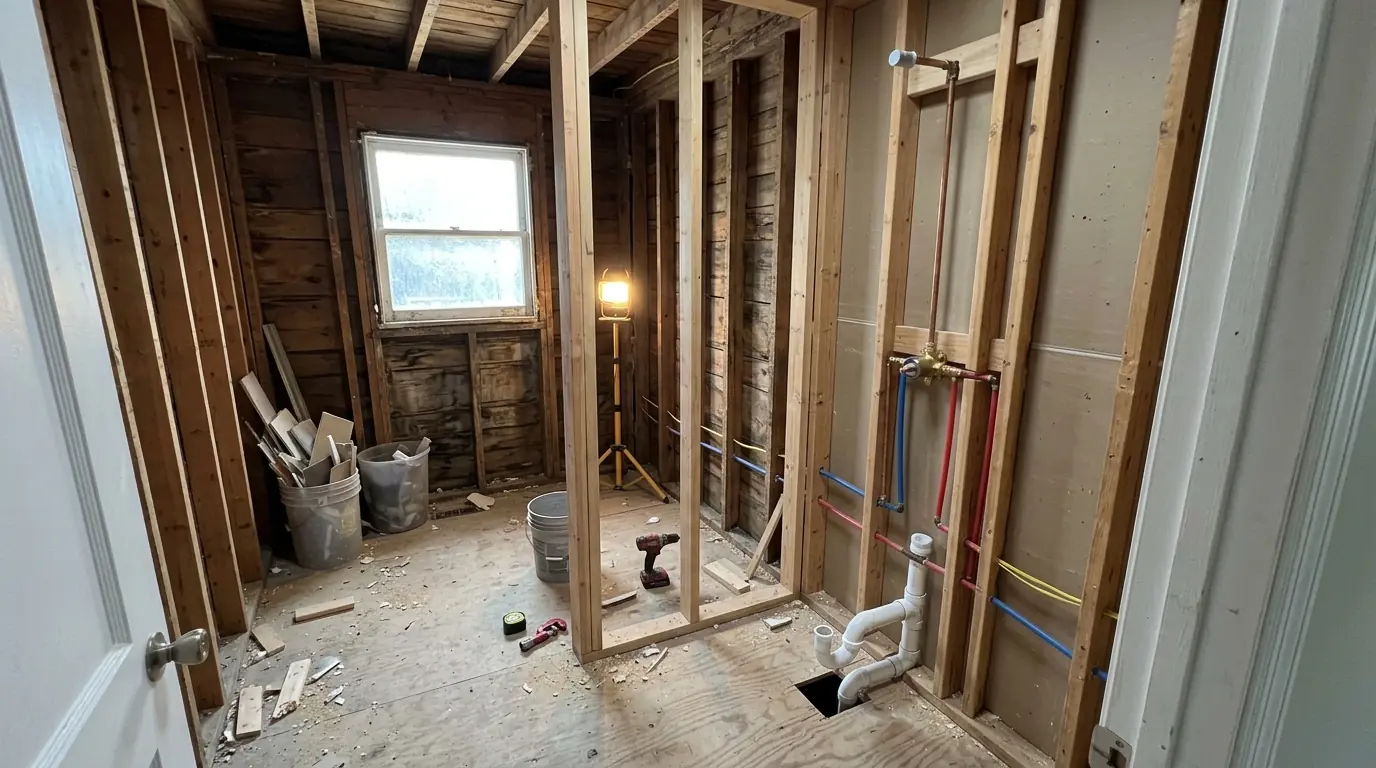
A toilet needs a 3-inch drain and a vent within a set distance, and its flange has to sit at the finished floor height. Moving it a few feet on a raised floor is usually simple from below. On a slab it means breaking concrete, trenching to the drain line and patching the slab.
Double vanities need a drain for each sink or a continuous waste setup, plus supply lines to each spot. A freestanding tub needs a floor drain location chosen before the tub arrives, because there is no wall to hide the connection behind. For setting the new bowl itself, see our toilet installation page.
Plumbing happens in two trips. Rough-in comes after demo and framing: pipes, valves, drains and vents go in and get pressure tested. Then the inspector looks at everything while it is still visible. Only after that do drywall, waterproofing and tile go in.
Finish plumbing comes after tile and paint: trim kits, the shower head, faucets, the toilet and the vanity drain. If the tile setter needs the valve depth or the drain height confirmed, we come out for that, since a small adjustment then saves tearing out finished work later.
Warning signs
Typical pricing
Costs depend mostly on how many fixtures move, whether the floor is a slab, and how much old pipe needs to go.
| Job | Typical LA range |
|---|---|
| Replace shower valve and trim, walls already open | $450 to $1,100 |
| Tub-to-shower conversion drain and valve rough-in | $1,200 to $3,000 |
| Re-plumb one bathroom with new supply and drain lines | $2,500 to $6,000 |
| Move a toilet on a slab, including trenching | $1,800 to $4,500 |
| Finish set: toilet, vanity faucet and shower trim | $500 to $1,200 |
These are typical ranges, not a quote, and slab cutting, hidden damage, permit fees and fixture choices move the final number. See every job in our LA price guide.
On the job
We review the new layout, fixture models and trim kits with you or your contractor before demo starts.
Once walls and floors are open, we look at the existing pipe and flag anything that should be replaced.
Drains, vents, supply lines and the shower valve go in at the right heights and depths, then everything is pressure tested.
We meet the building inspector, or coordinate the visit, before any wall gets covered.
Trim, faucets, toilet and drains are installed and every fixture is run and checked for leaks.
Postwar tract homes across the San Fernando Valley often have small baths on concrete slabs with galvanized or early copper supply, so any fixture move involves concrete work. Older homes in the hills and central neighborhoods tend to sit on raised floors, which makes rough-in quicker from below. Hard water leaves scale in old valves and shower heads, one reason pressure drops in original baths. Permits for remodel plumbing in the City of Los Angeles go through LADBS, and cities such as Pasadena, Santa Monica and Glendale run their own inspections with their own scheduling.
Questions we hear
Moving or adding drains, vents or supply lines, or replacing a shower valve inside an open wall, generally needs a permit. In the City of Los Angeles that goes through LADBS, and the inspector checks rough-in before walls close. Simple fixture swaps in the same spot often do not, but ask before you start demo.
Yes. The drain usually moves and needs a new trap below the floor, and the valve may need to move higher. On a slab we cut the concrete to relocate the drain. We also make sure the shower pan or curbless floor slopes properly to the new drain.
Plan for two visits at minimum: rough-in after demo and framing, and finish after tile and paint. Many jobs add a short visit in between so the tile setter can confirm valve depth and drain height, which avoids rework later.
Yes, if it is exposed. Galvanized rusts from the inside and loses flow, and the open walls make replacement far cheaper than it will ever be again. If the rest of the house is galvanized too, ask about repiping the whole house during the same project.
Coverage
These are the communities that call us for this most often, with their main ZIP codes. The same 24/7 line covers every one of our 68 service areas.
Often booked together
Cartridge swaps, stem rebuilds and full valve replacements for showers that drip, scald or won't hold a temperature, done with as little tile damage as possible.
See the detailsNew toilets set on a sound flange with a fresh seal and supply line, shimmed level, caulked properly, with the old fixture hauled away.
See the detailsWhole-house repiping for Los Angeles homes with corroded galvanized or pinholing copper, using copper or PEX routed through attics and walls instead of the slab.
See the detailsNew kitchen, bath, bar and laundry sinks with faucets fitted to the deck, fresh angle stops and supply lines, and a trap that lines up.
See the detailsCall the line any hour. A plumber answers, asks what you are seeing and tells you what happens next.