Emergency Plumbing
Burst lines, sewage backups, failed water heaters and gas smells handled around the clock, starting with the shutoff steps you can take before we arrive.
See the detailsRepairs & emergencies
Emergency PlumbingLeak DetectionSlab Leak RepairBurst Pipe RepairToilet RepairFaucet RepairGarbage Disposal RepairShower Valve RepairPressure Regulator ReplacementOutdoor Spigot RepairDrains & sewer
Drain CleaningMain Line Clog ClearingHydro JettingSewer Camera InspectionSewer Line RepairTrenchless Sewer ReplacementSewer Cleanout InstallationStorm & Yard Drain CleaningWater heaters
Water Heater RepairWater Heater ReplacementTankless Water Heater InstallationTankless Water Heater ServiceHeat Pump Water Heater InstallationWater Heater Earthquake StrappingHot Water Recirculation PumpPipes, gas & water lines
Whole-House RepipingMain Water Line ReplacementShutoff Valve ReplacementGas Line RepairGas Line InstallationSeismic Gas Shutoff ValveBackflow TestingWater Softener InstallationWhole-House Water FiltrationFixtures, remodels & property
Toilet InstallationFaucet & Sink InstallationKitchen PlumbingBathroom Remodel PlumbingADU PlumbingPlumbing InspectionApartment Building PlumbingCommercial PlumbingGrease Trap ServiceCity of Los Angeles
Los AngelesResedaWinnetkaCanoga ParkWest HillsTarzanaChatsworthPorter RanchGranada HillsNorth HillsLake BalboaPanorama CityValley GlenSun ValleyPacoimaSylmarSunland-TujungaSan PedroWilmingtonMission HillsValley VillageHarbor CityLA and Ventura county cities
Santa ClaritaSan FernandoBurbankGlendalePasadenaCalabasasThousand OaksSimi ValleySanta MonicaInglewoodHawthorneTorranceCarsonLong BeachComptonMore LA County cities
DowneyNorwalkLakewoodEl MonteWest CovinaWhittierPomonaAlhambraArcadiaCovinaBeverly HillsCulver CityRedondo BeachBellflowerSouth GateOrange County and Inland Empire
AnaheimSanta AnaIrvineHuntington BeachOrangeFullertonGarden GroveCosta MesaRancho CucamongaOntarioCoronaCounties
Los Angeles CountyVentura CountyOrange CountySan Bernardino CountyRiverside CountyA pipe just let go and water is pouring out of a wall, a ceiling or the ground. We stop the flow, cut out the damaged section and find out why it failed so the next fitting is not right behind it.
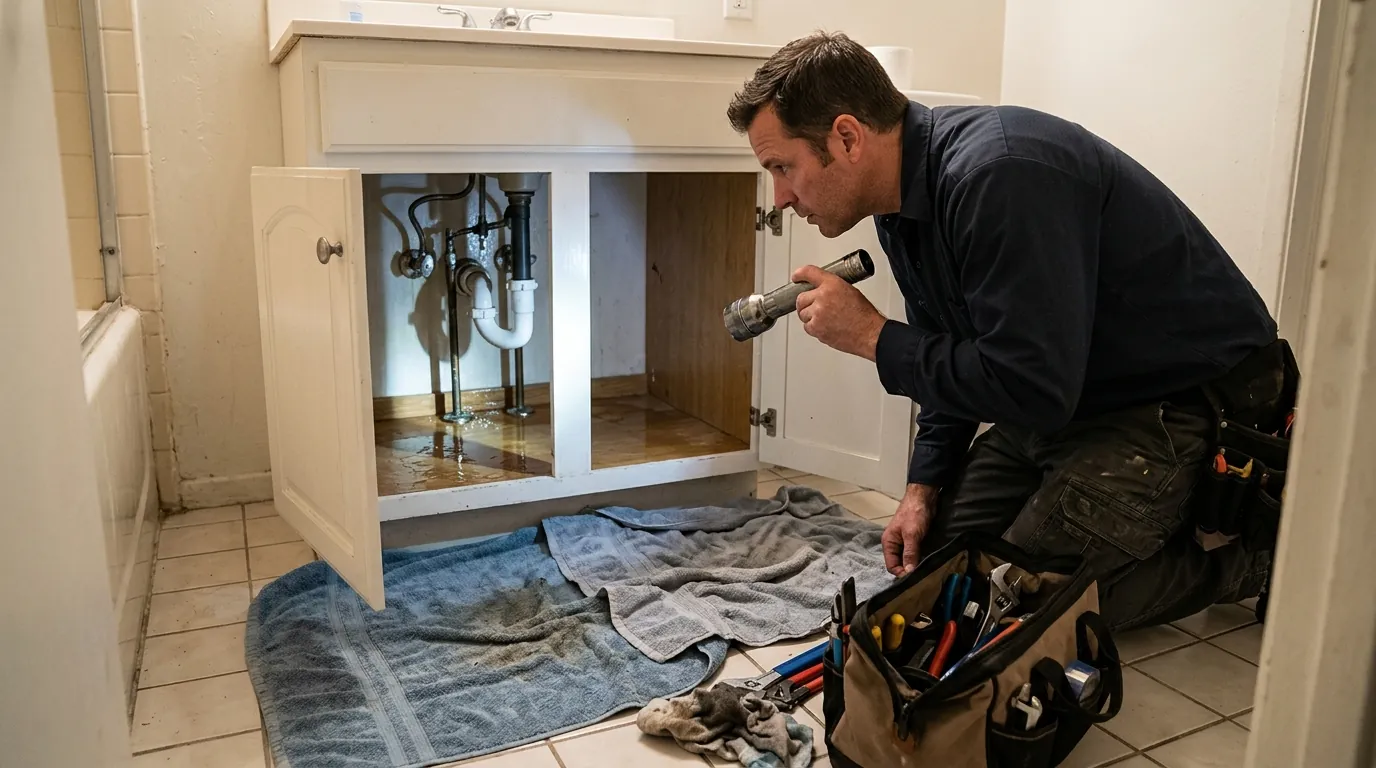
Burst pipe repair means stopping the water, opening just enough wall, ceiling or ground to reach the failure, cutting out the damaged section and installing new pipe and fittings that are pressure tested before anything is closed. In LA, pipes burst mostly from corrosion, high pressure, old fittings and ground movement, not freezing. Shut the main valve first, then call us.
Warning signs
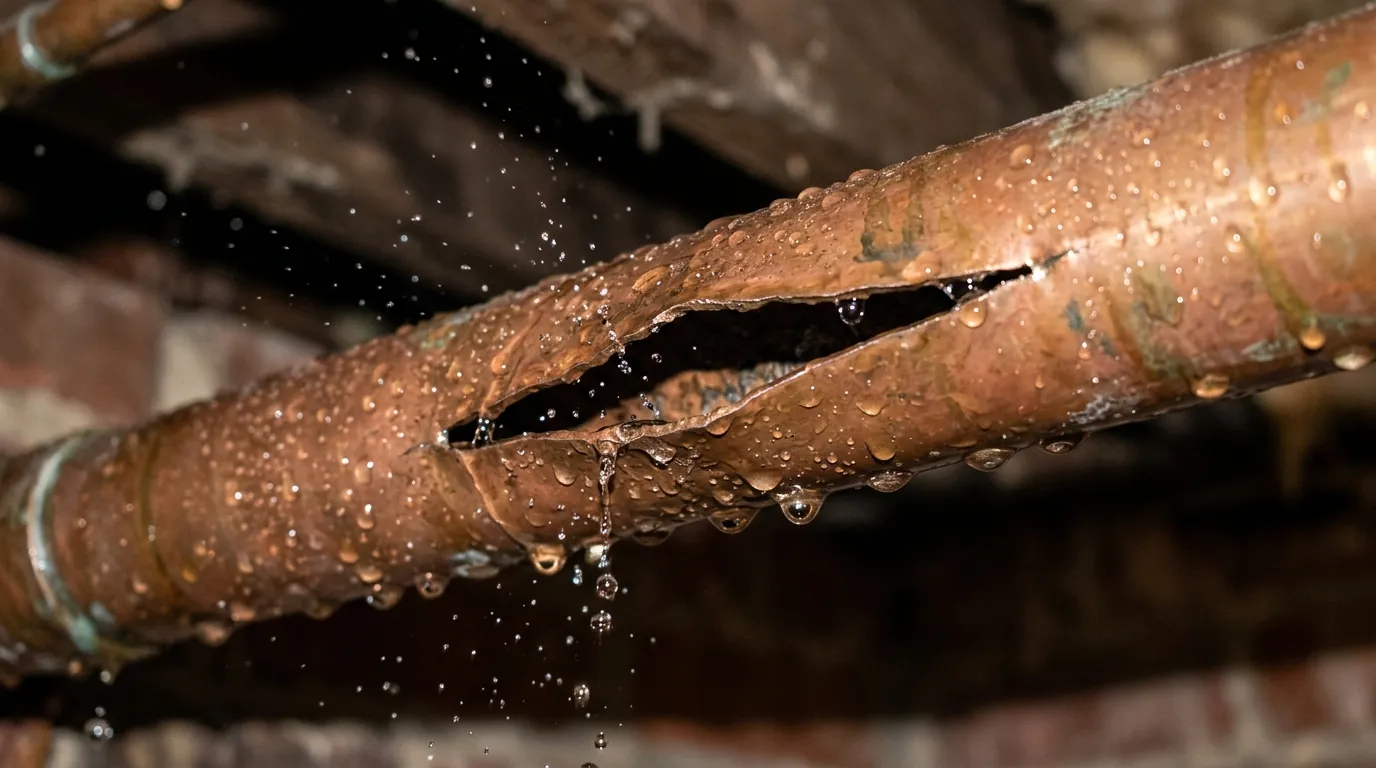
Freezing is rare in the LA basin, though it does happen in the high desert and mountain communities. In most of the region, burst pipes come from corrosion, pressure and age. Galvanized steel rusts from the inside, and the threaded ends are the thinnest point. When that last bit of metal gives out, the joint lets go at full street pressure.
High static pressure is the second big cause. Many neighborhoods, especially at the bottom of hills, get water at well above what household plumbing is meant to handle. When the pressure regulator at the house fails, every pipe and fitting sits under that extra load day and night. Our pressure regulator service often follows a burst pipe repair for exactly that reason.
Ground movement is the third. Earthquakes, settling soil and tree roots can bend or shear a pipe where it enters the house or runs under a walkway.
We open the wall, ceiling or crawlspace only as wide as needed to reach sound pipe on both sides of the break. Copper gets cut back to clean metal and joined with new copper and soldered or press fittings. Galvanized gets cut out and transitioned to copper or PEX with a dielectric or approved transition fitting so the old and new metal do not corrode each other.
For PEX, a failed fitting or a section damaged by a nail or screw gets replaced with new pipe and crimp or expansion fittings. Underground breaks in the yard get dug out by hand near other utilities, repaired, and backfilled once the test holds.
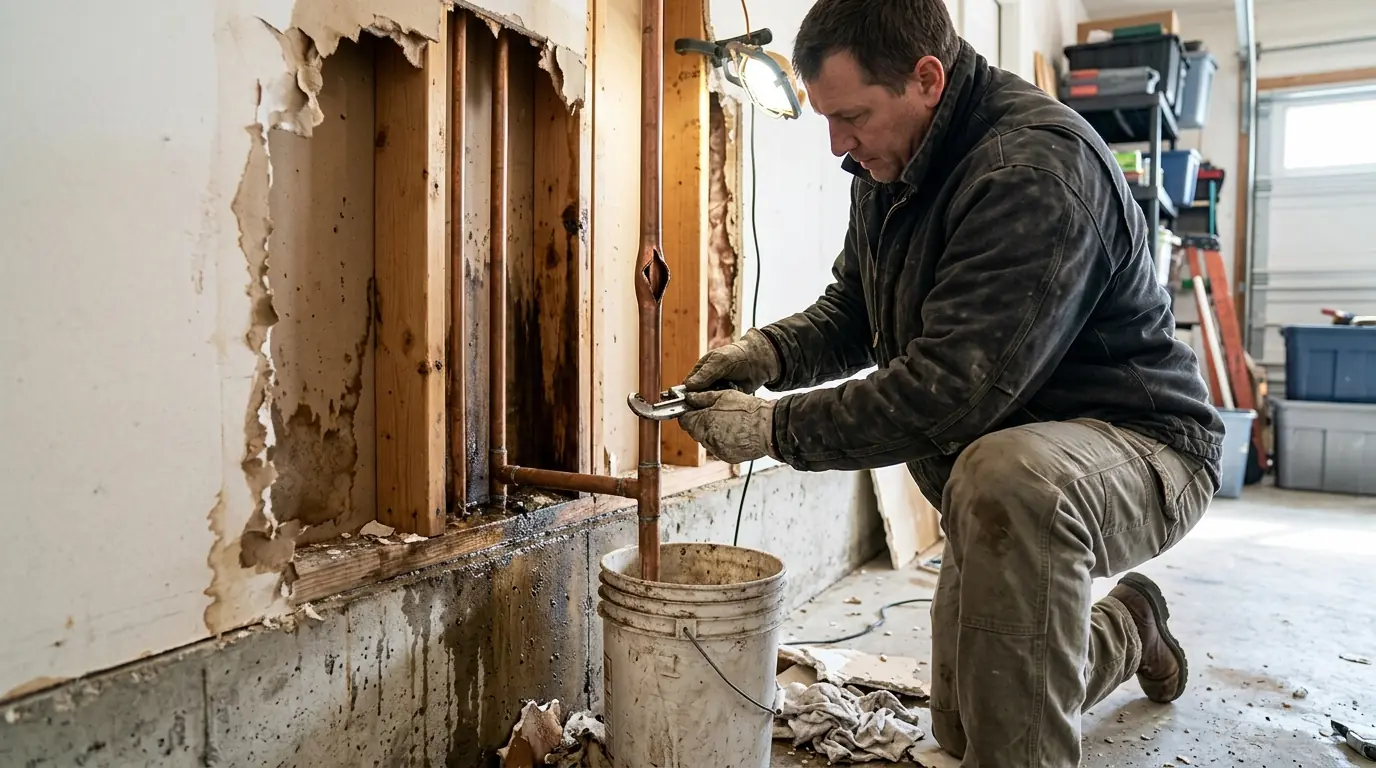
Patching a burst without asking why it happened is how the same house calls again in two months. We check static pressure with a gauge on a hose bib, look at the pipe we removed for internal rust or pitting, and check the condition of the fittings on either side of the repair.
If the cut section is mostly rust and the rest of the house is the same galvanized pipe, we tell you plainly. Our article on deciding between a patch and a repipe lays out how to think about that choice.
Once the new pipe holds under pressure, we leave the wall or ceiling opening clean and ready for drywall. Wet drywall, insulation and subfloor need to dry before they are closed, and a large soak may need professional drying equipment so mold does not start in the cavity.
Take photos of the damage, the opened wall and the failed pipe before anything is thrown away. If water traveled beyond what is visible, a moisture check with our leak detection tools can show how far it went inside walls or under flooring.
On the job
We confirm the main valve is closed, open low fixtures to relieve pressure, and cut power to any wet electrical circuits.
We cut an access opening large enough to reach undamaged pipe on both sides of the break.
The failed section is removed and replaced with new copper or PEX and the right transition fittings.
Water is restored slowly and the repair is checked under full pressure, along with the nearby fittings.
We measure house pressure and look at the removed pipe so you know whether more failures are likely.
Pre-war bungalows and 1950s houses throughout the city still carry galvanized lines that are well past their expected life. Houses on hillside lots and in canyon neighborhoods often sit on high street pressure, which strains every joint when a regulator fails. The 1994 Northridge earthquake broke pipes across the Valley, and some repairs from that period used quick fixes that are now aging. Freezing is a real risk only in places like the Antelope Valley and the mountain communities. In older apartment buildings near downtown and down in San Pedro, a single burst riser can affect several units at once.
Typical pricing
Cost depends on where the break is, what the pipe is made of, how much has to be opened to reach it, and whether it happens after hours.
| Job | Typical LA range |
|---|---|
| Burst pipe repair in an accessible wall, crawlspace or garage | $350 to $900 |
| Galvanized section cut out and transitioned to copper or PEX | $450 to $1,200 |
| Burst pipe inside a finished ceiling under a bathroom | $600 to $1,500 |
| Underground service line break between meter and house | $800 to $2,500 |
These are typical ranges, not a quote, and the price changes with after-hours timing, pipe depth, access, and how many fittings need replacing. See every job in our LA price guide.
Questions we hear
Close the main water valve, usually near the front hose bib, and turn off electricity to any wet area. Open a low faucet to drain the lines and move valuables out of the water. Then call us. Our guide to what to do in those first fifteen minutes walks through every step in order.
A single failed section of galvanized can be cut out and replaced with copper or PEX using proper transition fittings. That stops the leak. If the pipe we remove is badly rusted inside, the rest of the system is likely similar, and more failures are probable. We show you the removed pipe so you can judge it yourself.
Most burst pipes in a reachable wall, crawlspace or garage are repaired in one to three hours once we are on site. Underground or slab breaks take longer and sometimes get a temporary isolation overnight so the rest of the house has water, with the full repair finished the next day.
Pipes usually fail after years of hidden wear. Internal rust, thinning copper or a fitting under constant high pressure can look fine from outside until the last bit of metal gives out. A sudden pressure spike, such as a valve closing quickly, can be the final push. We check pressure after every burst for that reason.
Coverage
These are the communities that call us for this most often, with their main ZIP codes. The same 24/7 line covers every one of our 68 service areas.
Often booked together
Burst lines, sewage backups, failed water heaters and gas smells handled around the clock, starting with the shutoff steps you can take before we arrive.
See the detailsWhole-house repiping for Los Angeles homes with corroded galvanized or pinholing copper, using copper or PEX routed through attics and walls instead of the slab.
See the detailsReplacement of seized or leaking main shutoffs and fixture stop valves, swapping old gate and multi-turn valves for quarter-turn ball valves.
See the detailsReplacement of the private water service line between the meter and your house, in copper or approved plastic, by trenching or trenchless pull methods.
See the detailsCall the line any hour. A plumber answers, asks what you are seeing and tells you what happens next.