Gas Line Installation
New gas piping sized to your meter and appliance load, run to ranges, dryers, pool heaters, fire pits and barbecues, permitted and pressure tested.
See the detailsRepairs & emergencies
Emergency PlumbingLeak DetectionSlab Leak RepairBurst Pipe RepairToilet RepairFaucet RepairGarbage Disposal RepairShower Valve RepairPressure Regulator ReplacementOutdoor Spigot RepairDrains & sewer
Drain CleaningMain Line Clog ClearingHydro JettingSewer Camera InspectionSewer Line RepairTrenchless Sewer ReplacementSewer Cleanout InstallationStorm & Yard Drain CleaningWater heaters
Water Heater RepairWater Heater ReplacementTankless Water Heater InstallationTankless Water Heater ServiceHeat Pump Water Heater InstallationWater Heater Earthquake StrappingHot Water Recirculation PumpPipes, gas & water lines
Whole-House RepipingMain Water Line ReplacementShutoff Valve ReplacementGas Line RepairGas Line InstallationSeismic Gas Shutoff ValveBackflow TestingWater Softener InstallationWhole-House Water FiltrationFixtures, remodels & property
Toilet InstallationFaucet & Sink InstallationKitchen PlumbingBathroom Remodel PlumbingADU PlumbingPlumbing InspectionApartment Building PlumbingCommercial PlumbingGrease Trap ServiceCity of Los Angeles
Los AngelesResedaWinnetkaCanoga ParkWest HillsTarzanaChatsworthPorter RanchGranada HillsNorth HillsLake BalboaPanorama CityValley GlenSun ValleyPacoimaSylmarSunland-TujungaSan PedroWilmingtonMission HillsValley VillageHarbor CityLA and Ventura county cities
Santa ClaritaSan FernandoBurbankGlendalePasadenaCalabasasThousand OaksSimi ValleySanta MonicaInglewoodHawthorneTorranceCarsonLong BeachComptonMore LA County cities
DowneyNorwalkLakewoodEl MonteWest CovinaWhittierPomonaAlhambraArcadiaCovinaBeverly HillsCulver CityRedondo BeachBellflowerSouth GateOrange County and Inland Empire
AnaheimSanta AnaIrvineHuntington BeachOrangeFullertonGarden GroveCosta MesaRancho CucamongaOntarioCoronaCounties
Los Angeles CountyVentura CountyOrange CountySan Bernardino CountyRiverside CountyIf you smell gas near the water heater, the range or the meter, the leak has to be found and fixed before anything gets relit. We trace it, repair it and prove the line holds pressure.
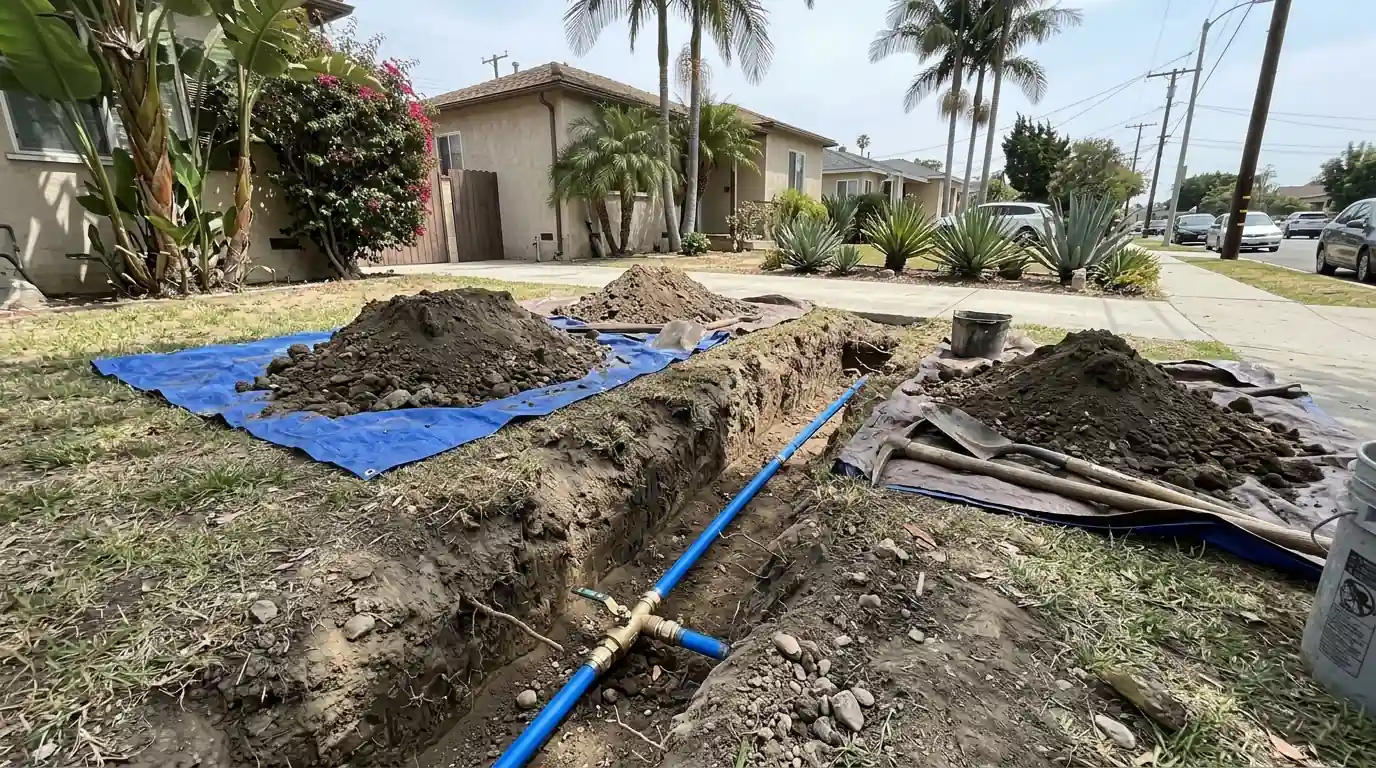
Gas line repair means locating a leak or damaged section, shutting off the supply, replacing the bad fitting, valve, connector or pipe, and pressure testing the system before appliances are relit. You need it when you smell gas, hear hissing, find corroded pipe or get a red tag from SoCalGas. If the smell is strong, leave the building first and call SoCalGas or 911 from outside.
Warning signs
Get everyone out of the building before you do anything else. Don't flip switches, unplug appliances or use a phone inside, since any of these can spark. Once you're outside and well away from the house, call SoCalGas or 911 and let them check the leak and shut off the supply.
After the utility has made the site safe, call us for the repair, including nights and weekends through our after-hours plumbing line. SoCalGas locates the hazard and turns off or tags the meter or appliance, but the fix on your side of the meter is plumbing work. We find the exact source, repair it and pressure test the line so service can be restored.
If you know where the meter shutoff is and can reach it safely from outside, a quarter turn with a wrench so the tang sits crosswise to the pipe closes it. Only SoCalGas should turn the meter back on.
Most leaks we find are at joints, not in the middle of a pipe. Threaded black iron fittings loosen as a house settles, and pipe dope applied decades ago dries out and cracks. Under raised-floor homes in Valley Glen and similar neighborhoods, those joints sit in a crawlspace nobody visits until there's a smell.
Appliance connectors are the next common source. Old uncoated brass flex connectors behind ranges and dryers can crack at the flare nut. We swap them for coated stainless connectors with a new shutoff valve at the stub.
Buried lines fail differently. Steel pipe run underground to a pool heater, a detached garage or a backyard barbecue corrodes from the outside, especially where sprinklers keep the soil damp. Those leaks show up as dead plants or a meter dial that creeps while every appliance is off.
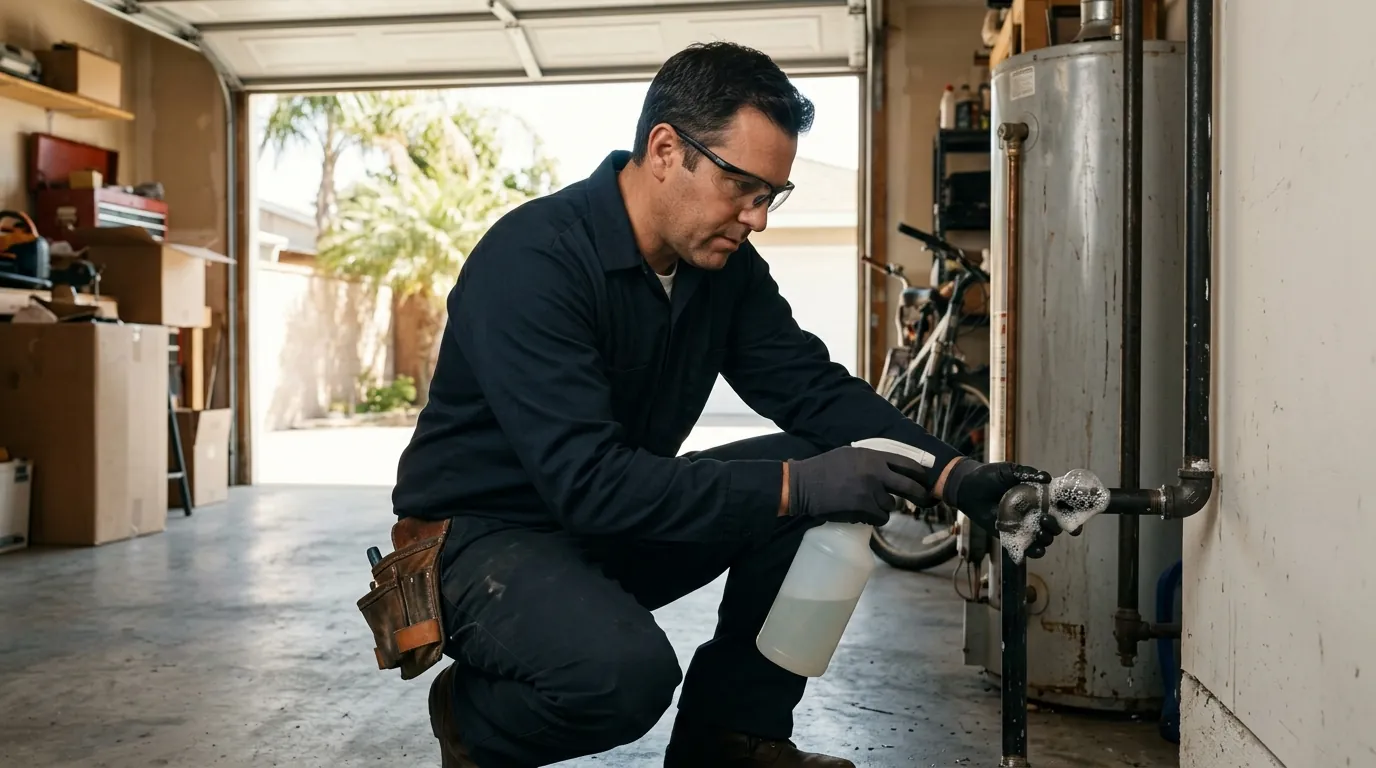
A single leaking union or valve is a straightforward repair: we shut the gas, remove the bad part, install new fittings with the right sealant and test. When a whole run is pitted, patching one joint just moves the leak a few feet, so we replace that section back to sound pipe.
For crawlspace and attic runs we usually stay with black iron to match what's already there. Where access is tight, corrugated stainless steel tubing threads through framing with fewer joints, but it has to be tied into the home's electrical grounding to protect it from lightning arcs. Buried replacements go in polyethylene pipe with a tracer wire and steel risers at each end.
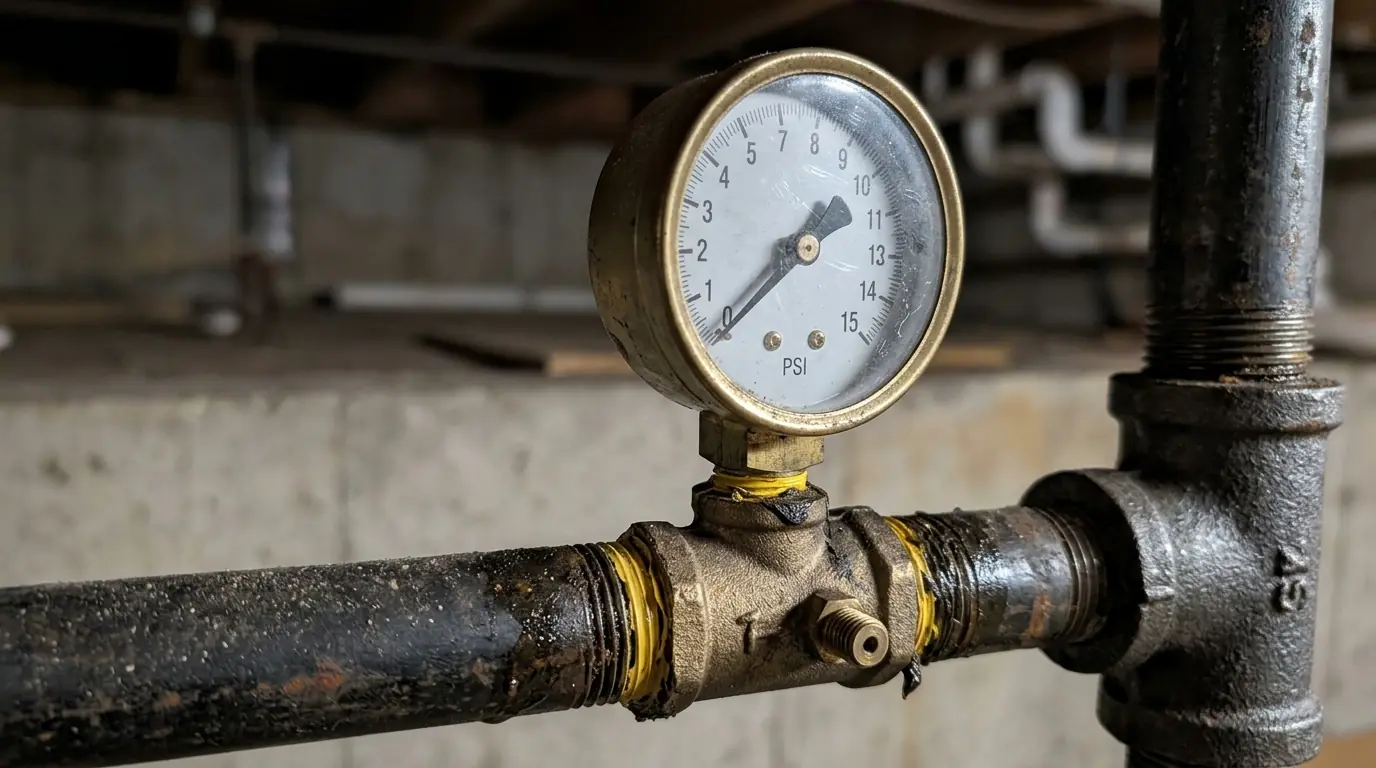
A gas repair isn't finished when the wrench comes off. We cap the open ends, pressurize the system with air above normal operating pressure and watch a gauge through a hold period. If the needle drops, there's still a leak.
When the work needs a permit, the inspector from LADBS or your city's building department watches the same test and signs off. Then SoCalGas can turn the meter back on if it was shut, and the appliances get relit one at a time.
On the job
We make sure the utility has cleared the hazard, then walk the line from the meter to each appliance with a combustible gas detector.
Soap solution on joints and an electronic sniffer narrow it to the exact fitting. For buried pipe we isolate sections and test each one.
With gas off at the meter, we replace the failed fitting, valve, connector or pipe section using materials that match the system.
We pressurize the piping with air and hold it on a gauge. No drop means the system is tight.
If a permit applies we meet the inspector, then restore gas, relight pilots and check each burner flame for a clean blue color.
The 1994 Northridge earthquake showed how gas lines fail here: water heaters tipped, rigid connectors snapped and broken lines fed fires in homes across the Valley. Many houses still have the same black iron that rode out that shaking, with joints that have flexed through every smaller quake since. Expansive clay soils in parts of the Valley also move slabs and porch steps, straining the riser where pipe enters the house. Pair a repair with two properly placed heater straps and, if you don't have one yet, a seismic shutoff at the meter.
Typical pricing
The price depends on how easy the leak is to reach, whether the pipe is buried or in a crawlspace, and whether a permit and inspection are needed.
| Job | Typical LA range |
|---|---|
| Leak search and pressure test | $250 to $600 |
| Replace an appliance flex connector and shutoff valve | $175 to $400 |
| Repair a leaking fitting or short section in a crawlspace | $400 to $1,100 |
| Replace a corroded buried line to a pool heater or garage | $1,500 to $4,500 |
These are typical ranges, not a quote; trench length, concrete or hardscape removal and permit fees change the final number. See every job in our LA price guide.
Questions we hear
Call SoCalGas or 911 first, from outside the building, whenever you smell gas. They respond to hazards, shut off the supply and tag what they find. The repair on your side of the meter is plumbing work, so once the utility leaves, call us to fix the leak, pressure test the piping and get service turned back on.
Often, yes. A connector, valve or accessible fitting is usually repaired and tested in one visit. If the work needs a permit, the inspection and the SoCalGas relight may happen the next day or later, depending on the building department's schedule. Buried line replacements take longer because of trenching and backfill.
Swapping an appliance connector usually doesn't. Replacing or extending piping generally does, and that permit goes through LADBS inside the City of LA or your own city's building department elsewhere. The inspector watches the pressure test, which gives you a written record that the repair holds.
Not if the leak is at the range or anywhere you can smell it. Close the appliance shutoff valve if you can reach it safely, keep the area ventilated and don't relight anything. If the smell is in more than one room, leave the house and call SoCalGas from outside.
Usually the pipe is moving. A line strapped too loosely, a connector yanked every time the dryer slides out, or a slab shifting in clay soil keeps stressing the joint. We look for the movement and fix the support, not just the threads, so the leak doesn't come back.
Coverage
These are the communities that call us for this most often, with their main ZIP codes. The same 24/7 line covers every one of our 68 service areas.
Often booked together
New gas piping sized to your meter and appliance load, run to ranges, dryers, pool heaters, fire pits and barbecues, permitted and pressure tested.
See the detailsAn earthquake-actuated valve at the gas meter that closes automatically in strong shaking, installed on a braced riser, permitted and tested.
See the detailsFailed or aging tank water heaters swapped for new gas or electric units, with seismic straps, venting, relief piping, gas connections and the permit handled.
See the detailsBurst lines, sewage backups, failed water heaters and gas smells handled around the clock, starting with the shutoff steps you can take before we arrive.
See the detailsCall the line any hour. A plumber answers, asks what you are seeing and tells you what happens next.